Rotator cuff surgery repairs a torn tendon in the shoulder, but the repair is only the beginning. After surgery, the tendon needs time to heal back to the bone before the shoulder can safely handle lifting, reaching, or resistance again.
Waiting can feel frustrating, especially when you want to use your arm normally. Most w4people can return to light daily activities within about three months. Full rotator cuff surgery recovery often takes six to 12 months or longer, especially after larger tears.
This guide to rotator cuff surgery recovery walks through the typical timeline, what physical therapy may include, and how to protect the repair as your shoulder heals.
Key Takeaways
- Rotator cuff surgery recovery is gradual because the repaired tendon needs time to heal back to the bone.
- The first several weeks usually focus on sling use, pain control, swelling management, and protecting the repair.
- Physical therapy often happens in four phases: protection, assisted motion, building strength, and returning to activities.
- Tear size, tissue quality, age, overall health, and your surgeon’s protocol can affect recovery time.
- Sharp pain, sudden weakness, a pop in the shoulder, fever, worsening redness, or symptoms that feel unusual should be reported to your surgical team.
Quick Navigation
- Arthroscopic vs. Open Rotator Cuff Repair
- Rotator Cuff Surgery Recovery Timeline
- Phase 1: Protecting the Repair (Weeks 1 to 6)
- Phase 2: Starting Assisted Shoulder Motion (Weeks 6 to 12)
- Phase 3: Building Strength Around the Repair (Months 3 to 6)
- Phase 4: Getting Back to More Activities (Months 6 to 12 and Beyond)
- Sleeping, Driving, and Daily Life During Recovery
- Warning Signs to Watch For After Rotator Cuff Surgery
Arthroscopic vs. Open Rotator Cuff Repair
Most rotator cuff repairs are done arthroscopically. That means the orthopedic surgeon uses a small camera and makes small incisions instead of one larger incision. This approach may reduce soft tissue irritation and help the incision sites heal more easily.
The important thing to know is that smaller incisions do not mean the tendon heals faster. Whether you had arthroscopic or open surgery, the repaired tendon still needs time to reattach to the bone.
Tear size often matters more than the surgical approach. A smaller tear may recover faster than a large or complex tear, but your surgeon’s instructions should guide your timeline.
Rotator Cuff Surgery Recovery Timeline
Rotator cuff surgery recovery usually happens in phases. These are general guidelines, not deadlines. Your orthopedic surgeon and physical therapist will decide when to move to the next phase based on your repair, pain, motion, strength, and tissue healing.
| Phase | Typical timing | Main goals |
| Protecting the repair | Weeks 1 to 6 | Use the sling, manage pain and swelling, and begin gentle motion when cleared. |
| Starting assisted shoulder motion | Weeks 6 to 12 | Add supported shoulder movement while the tendon continues to heal. |
| Building strength around the repair | Months 3 to 6 | Build rotator cuff and shoulder blade strength with light, controlled resistance. |
| Getting back to more activities | Months 6 to 12 and beyond | Work toward job, sports, and long-term activity goals. |
It can be tempting to judge healing progress only by pain, but pain is not the whole story. Your shoulder may feel better before the repair is ready for lifting or resistance.
Phase 1: Protecting the Repair (Weeks 1 to 6)
The first several weeks post-op are about protection. The repaired tendon is still vulnerable, so the goals are to manage pain, limit swelling, use the sling as directed, and keep nearby joints from getting stiff.
What to Expect Right After Surgery
You will usually go home with your arm in a sling. Some people also have an abduction pillow, which holds the arm slightly away from the body to reduce tension on the repair.
If a nerve block is used, your shoulder and arm may feel numb at first. As it wears off, follow your surgical team’s instructions for pain medication, ice, and positioning.
Sling Use and Activity Guidelines
Your sling protects the repair while the tendon begins the healing process. Many people wear it for four to six weeks, including while sleeping. The exact treatment plan depends on tear size, repair type, and your orthopedic surgeon’s protocol.
During this phase, you may be told to avoid:
- Lifting with the arm that had surgery.
- Raising the arm using your shoulder muscles.
- Reaching behind your back or across your body.
- Pushing up from a chair with the arm that had surgery.
- Driving until your surgeon clears you.
These limits help protect the surgical repair during the part of recovery when it is least ready for stress.
Early Physical Therapy
Physical therapy often starts within the first one to two weeks, but timing varies. Early therapy is gentle and usually focuses on safe positioning, pain management and swelling control, and motion that does not require the repaired tendon to work.
During this phase, your plan may include:
- Ice packs and positioning to help manage pain and swelling.
- Hand, wrist, and elbow exercises to limit stiffness.
- Shoulder shrugs or pendulum exercises, if your surgeon allows them.
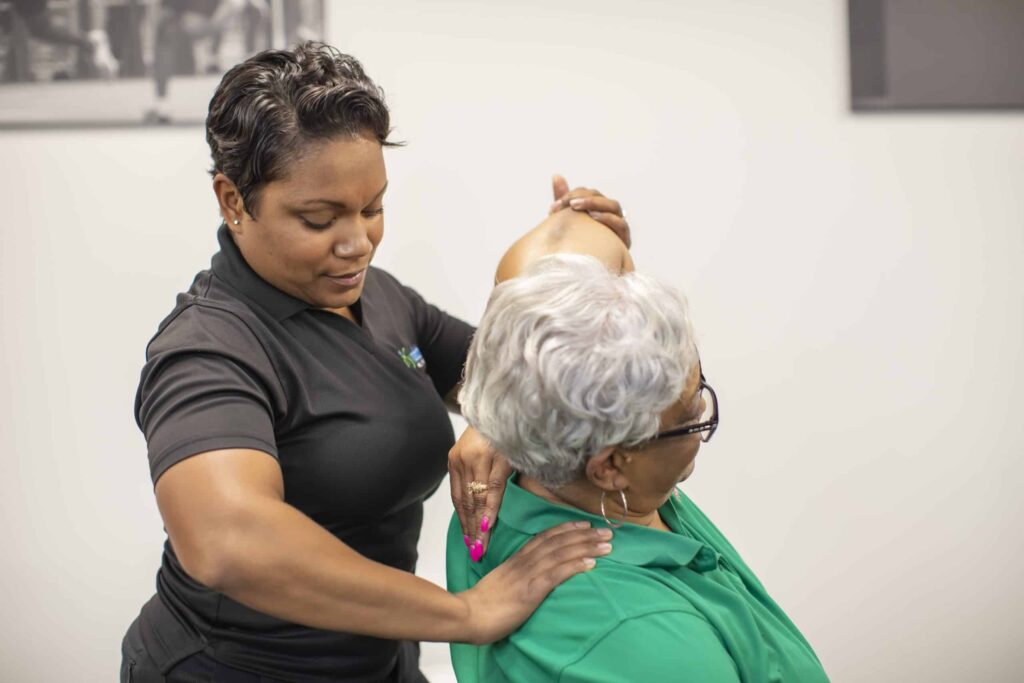
- Passive shoulder motion guided by your physical therapist.
- Help learning how to dress, bathe, sleep, and move without stressing the shoulder.
This stage can feel slow, but slow is the point. A good early plan protects the repair, so the rest of rotator cuff surgery recovery can move forward safely.
Phase 2: Starting Assisted Shoulder Motion (Weeks 6 to 12)
After a follow-up appointment, your orthopedic surgeon may clear you to begin using the shoulder a little more, depending on how the repair is healing. This phase is still protective. The goal is to restore motion without pulling too hard on the repaired tendon.
Active-assisted motion means starting to move your shoulder with support. You may use your other arm, a pulley, a cane, or guidance from your physical therapist, so the repaired rotator cuff does not have to do the work on its own yet.
Therapy may focus on:
- Moving the shoulder through a safe range of motion without forcing it.
- Using supported motion to reduce stiffness while the tendon continues healing.
- Keeping the elbow, wrist, and hand moving comfortably.
- Relearning light daily movements without lifting or reaching suddenly.
- Watching for pain, guarding, or motion limits that may mean the shoulder needs more time.
Lifting, pushing, pulling, and sudden reaching are still usually limited. Even if the shoulder feels better, the tendon is still healing into the bone.
Phase 3: Building Strength Around the Repair (Months 3 to 6)
Strength work usually begins only after the repaired tendon has had more time to heal into the bone. At this stage, the goal isn’t to “test” the shoulder. It’s to add gentle, controlled resistance so the tendon, rotator cuff muscles, and shoulder blade muscles can start working together again.
The timing matters. Too much stress too early can irritate the repair or slow progress, while the right amount of gradual resistance helps rebuild strength over time.
This phase may include:
- Isometric exercises, where you gently tighten the muscles without much shoulder joint movement, such as pressing lightly into a wall or towel.
- Light resistance bands or small weights, if cleared, to begin strengthening without over-stressing the repair.
- Rotator cuff exercises for controlled rotation and arm position.
- Shoulder strengthening exercises to help the shoulder blade and upper arm move well together.
- Light functional practice, such as controlled reaching or carrying small items, when approved.
- Posture and body mechanics work to reduce unnecessary stress on the repair.
This phase can feel encouraging because your arm may finally start to feel more useful. Consistency matters more than force here. Pushing too hard can irritate the repair and slow progress.
Our physical therapists follow your orthopedic surgeon’s rotator cuff repair protocol and use strength, motion, and function milestones to guide each phase. Learn more about our post-surgical treatment and orthopedic therapy services.
Phase 4: Getting Back to More Activities (Months 6 to 12 and Beyond)
By six months, many rotator cuff repairs are ready for more demanding activity. Recovery is still continuing, especially for endurance, overhead control, and repeated movements needed for work, sports, or daily tasks.
Your physical therapist may help you work toward goals such as:
- Reaching higher shelves or cabinets without muscle compensation.
- Building endurance for repeated reaching, lifting, or job tasks.
- Gradually returning to approved exercise or recreational activities.
- Practicing sport-specific or work-specific movements when cleared.
- Improving rotator cuff and shoulder blade control as the arm gets tired.
- Creating a long-term home exercise program to help maintain shoulder function.
Return-to-work or return-to-sport timing depends on the size of the repair and what the activity requires. You may be able to return to desk work earlier than heavy lifting, overhead work, throwing, swimming, or manual labor.
A shoulder that feels good at three or four months may still need more strength and endurance before higher-demand activity is safe. Your surgeon and physical therapist can help you decide when each activity belongs back in the plan.
Sleeping, Driving, and Daily Life During Recovery
Small adjustments can make rotator cuff surgery recovery easier day to day, especially during the first several weeks.
Sleeping
Many people sleep more comfortably in a recliner or propped up with pillows after rotator cuff surgery. Lying flat can pull on the shoulder or make swelling feel worse.
Avoid sleeping on the side of your surgery during the protection phase unless your orthopedic surgeon says it is safe. Your sling or pillow setup should support the arm without forcing the shoulder into an uncomfortable position.
Bathing and Dressing
Loose clothing and button-front shirts are often easier while you are in a sling. Your surgical team will tell you when it is safe to shower and how to care for incisions.
When you take the sling off for bathing or dressing, keep the affected arm close to your body and avoid reaching, lifting, or twisting the shoulder beyond your instructions.
Driving
You should not drive while wearing a sling or taking pain relief medication that affects alertness. Most people need clearance from their surgeon before driving again. It’s usually after you stop using a sling because that’s when you’ll be able to control the vehicle safely.
Going Back to Work
A desk job with minimal arm use may be possible within a few weeks depending on shoulder pain, medication, and surgeon instructions. Jobs that require lifting, gripping, overhead work, or repeated arm use usually take longer.
Modified duty may be an option before full return. If your job is physically demanding, ask your surgeon or physical therapist which tasks should stay off-limits and for how long.
Warning Signs to Watch for After Rotator Cuff Surgery
Some soreness, stiffness, swelling, and fatigue is normal after rotator cuff surgery. What matters is a sudden change, symptoms that keep getting worse, or signs that something may be wrong with the incision or repair.
Call your orthopedic surgeon or seek medical guidance if you notice:
- Worsening redness, warmth, drainage, or swelling around the incision.
- A fever above 101 degrees Fahrenheit.
- A sudden pop or sharp pain in the shoulder, especially with new weakness.
- A sudden loss of motion that you had before.
- New or worsening numbness, tingling, or weakness down the arm or into the hand.
- Pain that suddenly gets worse or does not improve as expected.
A pop with sudden weakness during the protection phase should be reported right away. It does not always mean the tendon re-tore, but it is worth checking.
Talk to a Physical Therapist About Rotator Cuff Surgery Recovery
Rotator cuff surgery recovery can feel slow because the repaired tendon needs time to heal back to the bone. A physical therapist can help you understand what is safe at each phase, build motion and strength at the right pace, and work toward the activities that matter most to you.
Find an Ivy Rehab location near you, or explore our post-surgical treatment, orthopedic therapy services, and shoulder pain resources to learn more.
References
- American Academy of Orthopaedic Surgeons. “Rotator Cuff Tears.” OrthoInfo.
- American Academy of Orthopaedic Surgeons. “Rotator Cuff Tears: Surgical Treatment Options.” OrthoInfo.
- American Academy of Orthopaedic Surgeons. “Rotator Cuff and Shoulder Conditioning Program.” OrthoInfo.
- American Academy of Orthopaedic Surgeons. “Shoulder Surgery Exercise Guide.” OrthoInfo.
- American Physical Therapy Association. “Physical Therapy Guide to Rotator Cuff Tear.” ChoosePT, 2025.
- Thigpen, C.A., et al. “The American Society of Shoulder and Elbow Therapists’ consensus statement on rehabilitation following arthroscopic rotator cuff repair.” Journal of Shoulder and Elbow Surgery, 2016.

Before you go
Find the right therapy today.
Discover how Ivy Rehab can help you get back to doing what you love.