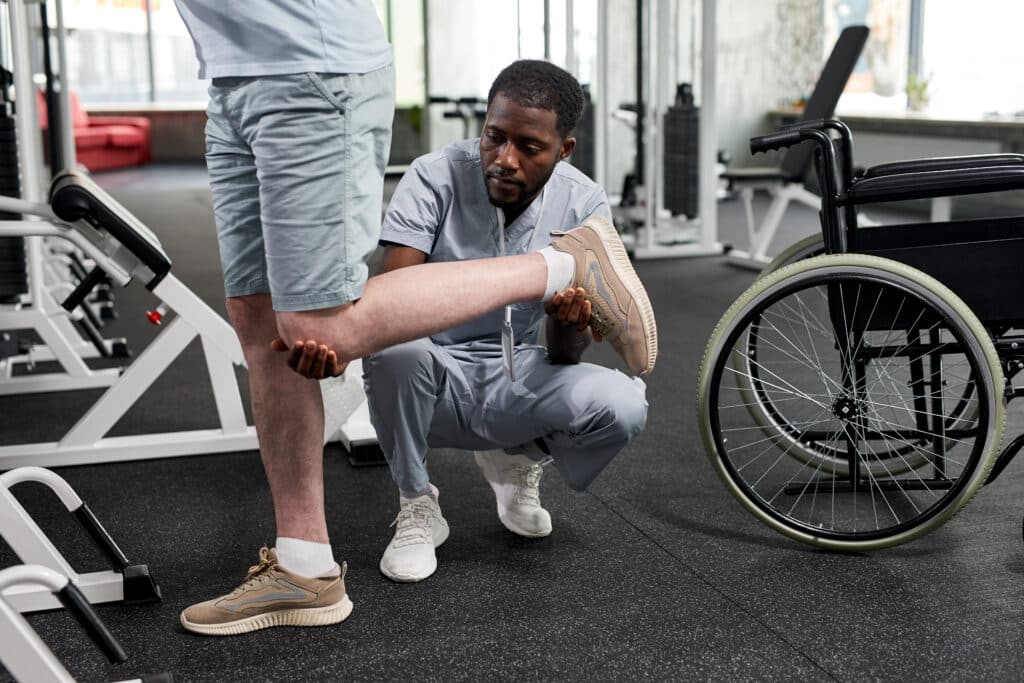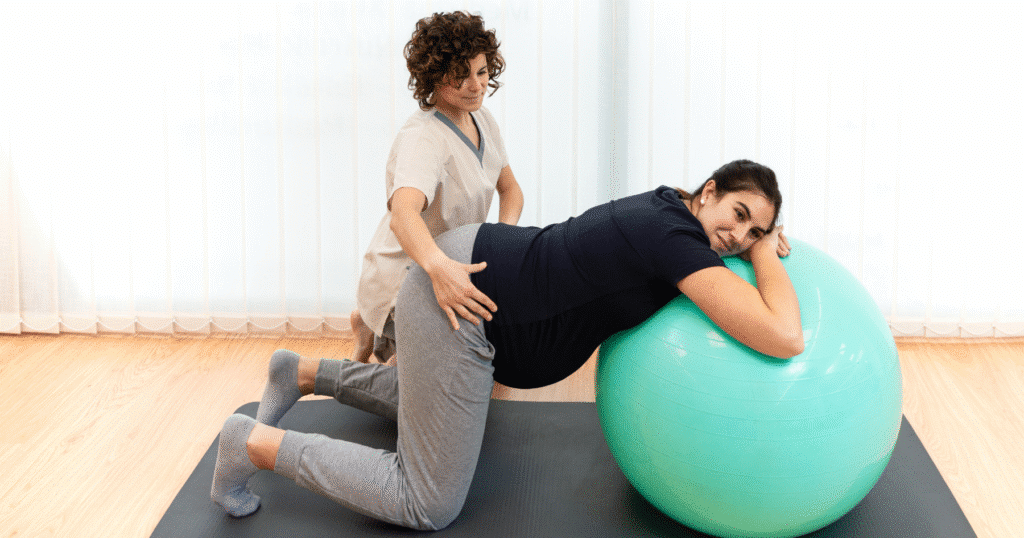
After an injury, the body gets a little… creative—and it does so for a good reason.
It changes how it moves to avoid pain or protect a weak area, often without asking for permission first.
These muscle compensation patterns can be helpful at the start, like a short-term backup plan. Over time, though, they can quietly place extra stress on other muscles and joints throughout the kinetic chain.
Physical therapy helps spot muscle compensation early and guide the body back to more efficient, balanced movement before small workarounds turn into bigger problems.
Muscle Compensation Definition
A clear muscle compensation definition is a change in how the body moves or which muscles are used when something is not working normally.
In simple terms, muscle compensation happens when one area cannot do its job well, so another muscle or a group of muscles steps in to help.
That backup plan can keep you moving in the short term, but if it sticks around too long, it often creates new issues elsewhere.

Why Muscle Compensation Happens After Injury
Muscle compensation patterns often develop because your body is trying to protect you. It’s smart—but not always strategic.
Here are a few of the most common ways compensation shows up:
Pain Avoidance
People naturally shift load away from painful areas, often without realizing it.
This can change how you walk, lift, or move during exercise, sometimes in ways that feel normal but are anything but, especially when gait training physical therapy is needed to restore a more efficient walking pattern.
Weakness or Loss of Control
After an injury, the nervous system may reduce activation in certain muscles, a process called muscle inhibition.
When that happens, nearby muscles pick up the slack—even if they are not built for the job.
Stiffness and Limited Motion
When a joint or muscle loses range of motion, the body finds another way to get the task done.
Over time, this creates new movement habits that reinforce muscle compensation patterns, even after the original issue improves.
Common Muscle Compensation Patterns
Muscle compensation can show up in many different ways, depending on the injury, and often follows predictable patterns.
Common examples include:
- Limping after a lower-body injury.
- Overusing the opposite leg.
- Shrugging the shoulder during arm movement.
- Arching the lower back during hip or core weakness.
- Using the hamstrings or back extensor muscles instead of the glutes.
These patterns can start off subtle, but they tend to become more noticeable (and more stubborn) over time. For example, research shows that after a shoulder injury, the body may start relying on nearby muscles to compensate, like the posterior deltoid and biceps brachii, stepping in when the rotator cuff is not doing its job.
Muscle Compensation Pain
Muscle compensation pain often shows up when other areas are asked to do more than they were designed to handle, which is where things can start to snowball.
That extra workload can lead to soreness, fatigue, or even new injuries in areas that were never part of the original problem, such as back or shoulder pain.
It is not uncommon for people to feel pain somewhere completely different than where they were first injured, which can be confusing without the right guidance.
Signs a Compensation Pattern May Be Causing Problems
Muscle compensation patterns are not always obvious, but your body usually leaves a few clues.
- Pain that shifts to another body part.
- Ongoing tightness or fatigue.
- Difficulty moving normally.
- Imbalance during walking, lifting, or exercise.
- Symptoms that return when activity increases.
If these sound familiar, it may be a sign that your body is still relying on compensation rather than moving the way it was designed to—and that’s something you can improve.
Do Muscles Compensate for Height?
Some people ask whether muscles compensate for height differences or body proportions.
Height itself is not the issue, but factors such as leg-length differences, posture, and spinal alignment can influence how forces are distributed throughout the body.
When those factors are off, they can contribute to muscle compensation patterns over time if not addressed.

How Physical Therapy Helps Correct Compensation Patterns
Physical therapy focuses on identifying the root cause of muscle compensation and restoring better, more efficient movement—so your body doesn’t have to keep working around the problem.
That process typically starts with a closer look at how your body is actually moving:
Movement Assessment
A physical therapist looks at your functional movement patterns as a whole, not just where it hurts.
This includes strength, mobility, posture, gait, and task-specific movement patterns, often drawing on principles of orthopedic therapy.
The goal is to find where the compensation begins, not just where it shows up.
Restore Strength and Mobility
Treatment focuses on improving the weak, stiff, or painful area.
As those areas improve, the body no longer needs to rely on compensation to get through daily activities.
Movement Retraining
Patients learn how to move more efficiently again, with better control and less strain.
This might include walking, lifting, squatting, reaching, or sport-specific tasks, all practiced in ways that support long-term progress.
Personalized Therapy for Lasting Relief
Experience tailored physical therapy programs designed to alleviate pain and restore function.
Why Early Treatment Matters
The longer muscle compensation patterns stick around, the more likely they are to create new problems, even in areas that were never injured to begin with.
Addressing them early helps reduce unnecessary strain, supports a smoother recovery, and keeps small issues from turning into long-term setbacks.
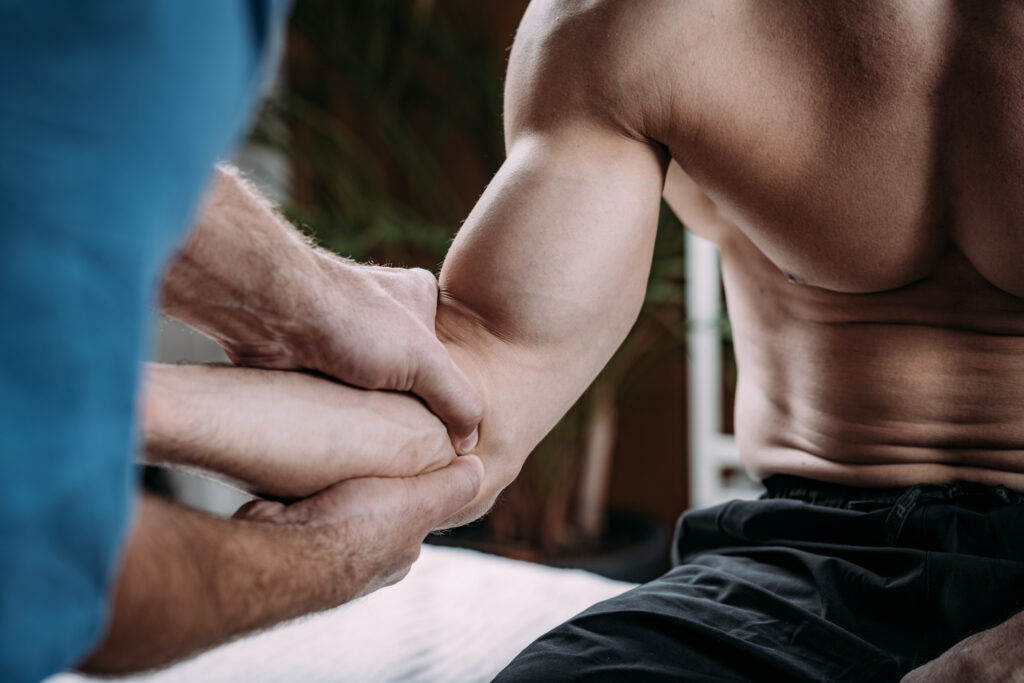
Why Choose Ivy Rehab for Post-Injury Movement Problems
Ivy Rehab provides personalized, non-surgical care to address muscle compensation patterns and restore movement.
Our physical therapists focus on finding the true source of the problem and building a plan that helps you move better, feel better, and get back to what you enjoy.
Getting You Back to Natural Movement
Muscle compensation patterns are common after injury, but they are not something you have to live with.
With the right physical therapy plan, you can address the root cause, reduce muscle-compensation pain, and move with greater balance, confidence, and control.
Ready to move better without compensation? Find a location near you.
References
- Veen, Egbert J. D., et al. “Compensatory Movement Patterns in Symptomatic Rotator Cuff Tears.” Clinical Orthopaedics and Related Research. 2020. https://pmc.ncbi.nlm.nih.gov/articles/PMC7899608/
- Escorpizo, Reuben. “Defining the Principles of Musculoskeletal Disability and Rehabilitation.” Best Practice & Research Clinical Rheumatology. 2014. https://pubmed.ncbi.nlm.nih.gov/25481421/
- Kaple, Nikita, et al. “Therapeutic Effect of Movement Control Exercises Combined With Traditional Physiotherapeutic Rehabilitation in Non-Specific Low Back Pain.” Cureus. 2024. https://pmc.ncbi.nlm.nih.gov/articles/PMC11228404/

Before you go
Find the right therapy today.
Discover how Ivy Rehab can help you get back to doing what you love.