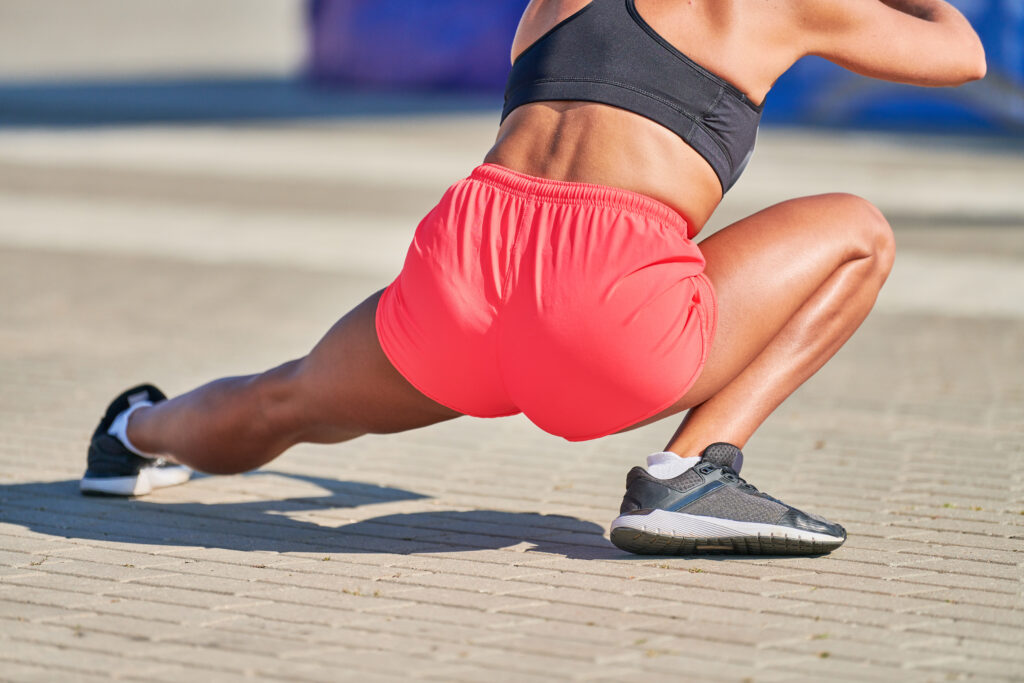
The glutes do a lot of heavy lifting, literally and figuratively. They power your steps, support your posture, and help keep your body moving smoothly through just about everything you do. When glute activation is limited, though, other areas like the lower back, hips, and knees tend to pick up the slack (and not always happily).
Over time, that compensation can lead to discomfort, reduced performance, or recurring injuries. Research shows back pain is incredibly common, with 70–80% of people experiencing it at least once in their lifetime. Physical therapy helps improve glute activation, build strength, and restore better movement patterns so your body works the way it’s supposed to, efficiently, confidently, and with less wear and tear.
Why Glute Strength Matters
The glute muscles are some of the strongest and most important muscles in the body, and they like to be treated that way. This muscle group supports hip extension, controls movement, and stabilizes the pelvis during activity.
Strong glutes contribute to:
- Better balance and single-leg control.
- Improved walking and running mechanics.
- Reduced the risk of strain on the knees and lower back.
- More efficient movement during exercise and daily tasks.
When your glutes are doing their job, everything else tends to fall into place a little easier.
What Is Glute Activation?
Glute activation refers to how effectively the glute muscles turn on and contribute during movement. It’s not just about strength; it’s about timing, coordination, and muscle engagement working together.
Some people have strong glutes but still struggle with proper glute activation. This often happens when the glutes become inactive and other muscles, like the hamstrings or lower back, step in and take over.
Learning how to activate glutes properly is the foundation for building strength that actually shows up where it matters: real-life movement.
Signs You May Need Better Glute Activation
Poor glute activation doesn’t always announce itself loudly. Sometimes, it shows up in small movement patterns that add up over time.
Common signs include:
- Hip weakness or fatigue during activity.
- Knees collapsing inward during squats or lunges.
- Low back discomfort during lifting or standing.
- Difficulty controlling single-leg balance.
- Recurring hip, knee, or IT band discomfort.
If these feel familiar, your glutes may just need a little more attention and a smarter plan.
How to Activate Glutes
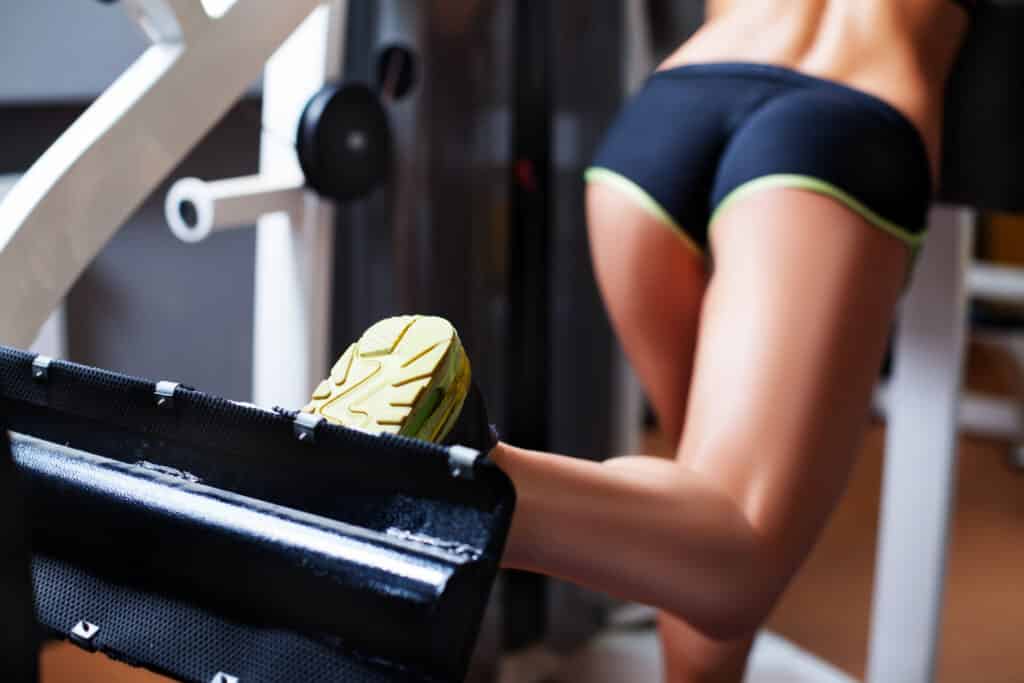
Learning how to activate the glutes starts simply. Before jumping into heavy glute strength training, it’s important to build awareness and control first.
Here’s how to start building that connection step by step:
Low-Level Activation Drills
These glute activation exercises help “wake up” the muscles in a low-load environment:
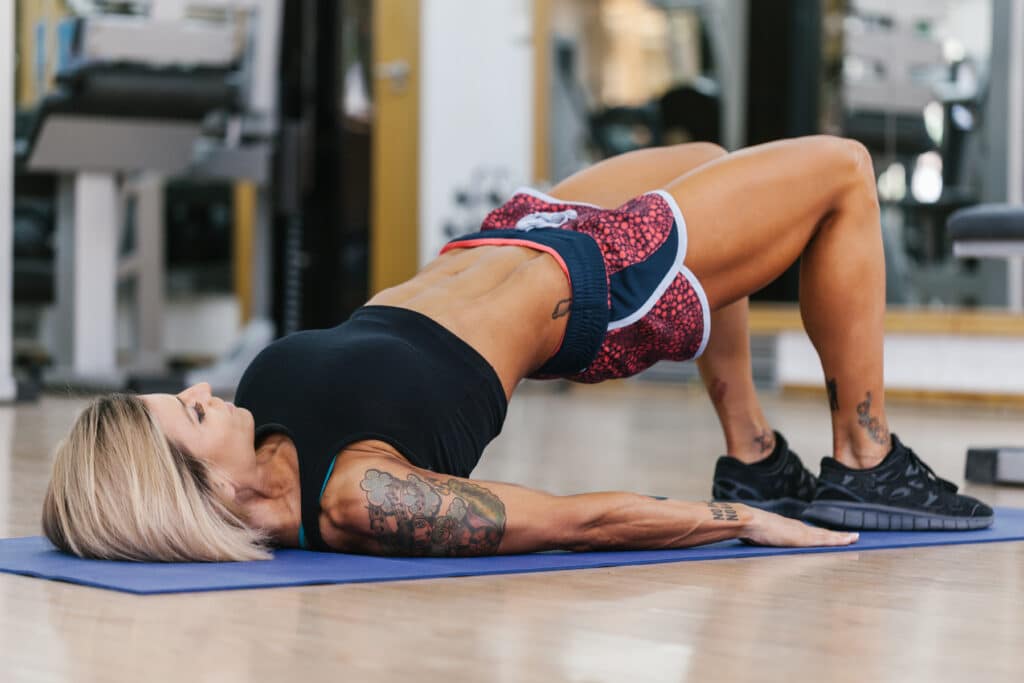
- Glute bridges: Focus on squeezing the glutes without arching the lower back.
- Clamshells: Keep hips steady while activating the outer hip muscles, particularly the gluteus medius and minimus.
- Fire hydrants: Lift the leg, keeping the opposite leg straight, while maintaining trunk and pelvic control.
These movements may look simple, but done well, they make a big difference in how your glutes show up during bigger movements.
Movement Quality and Positioning
How you perform each exercise matters just as much as the exercise itself (arguably more):
- Keep the core engaged to avoid excessive low-back movement.
- Maintain a neutral pelvis during exercises.
- Move slowly and with control to contract and feel the glutes working, maintaining tension throughout.
Dialing in movement quality ensures the right muscles are doing the work, not just the loudest ones.
Glute Activation Exercises That Build Toward Strength
Activation is the starting point, but long-term change comes from building strength. Strength training for glutes helps your body handle real-world demands with more confidence and less strain.
Here’s how that progression typically looks as you build strength:
Bodyweight Strength Work
These exercises bridge the gap between activation and strength:
- Bridges and single-leg bridges.
- Reverse lunges.
- Lateral band walks.
These movements start to challenge the glutes while keeping control front and center.
Progressive Strength Training for Glutes
As strength improves, adding resistance builds more power and stability:
- Hip thrusts: One of the most effective ways to strengthen glutes.
- Single-leg deadlifts: Improve strength and balance at the same time.
- Step-ups or split squats: Build control during functional movement.
This is where strength training for glutes begins to translate into how you move day to day.
How to Strengthen Glutes Safely
A strong plan for how to strengthen glutes isn’t about doing more; it’s about progressing smarter:
- Start with activation and awareness.
- Progress to controlled strength exercises.
- Add single-leg and functional movement patterns.
- Gradually increase resistance and complexity.
Consistency beats intensity early on, and that’s what leads to lasting results.
How Physical Therapy Helps
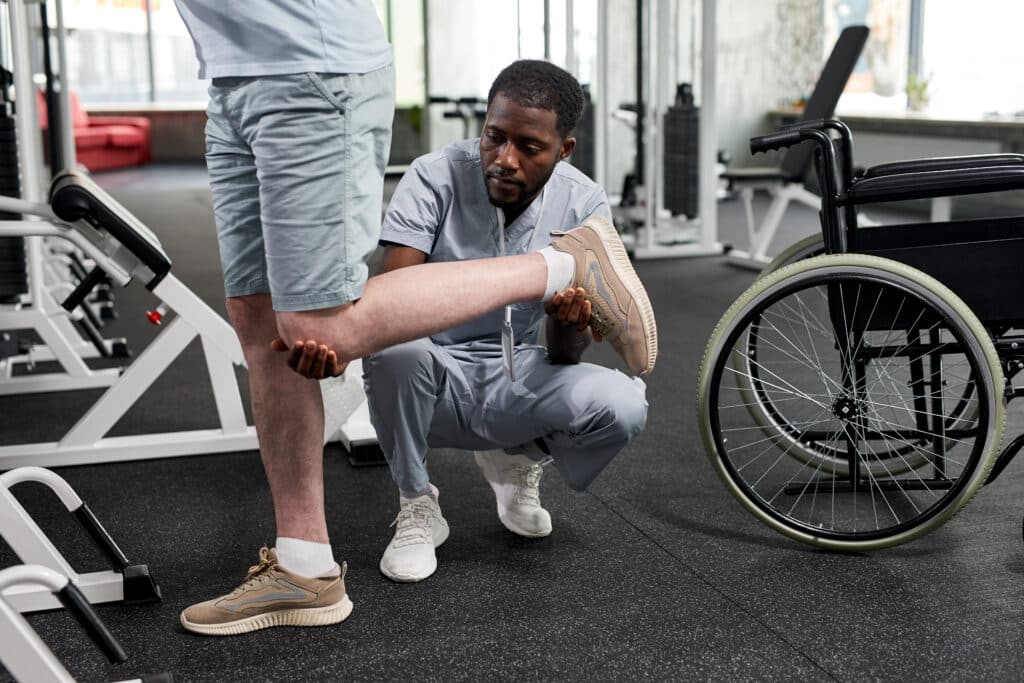
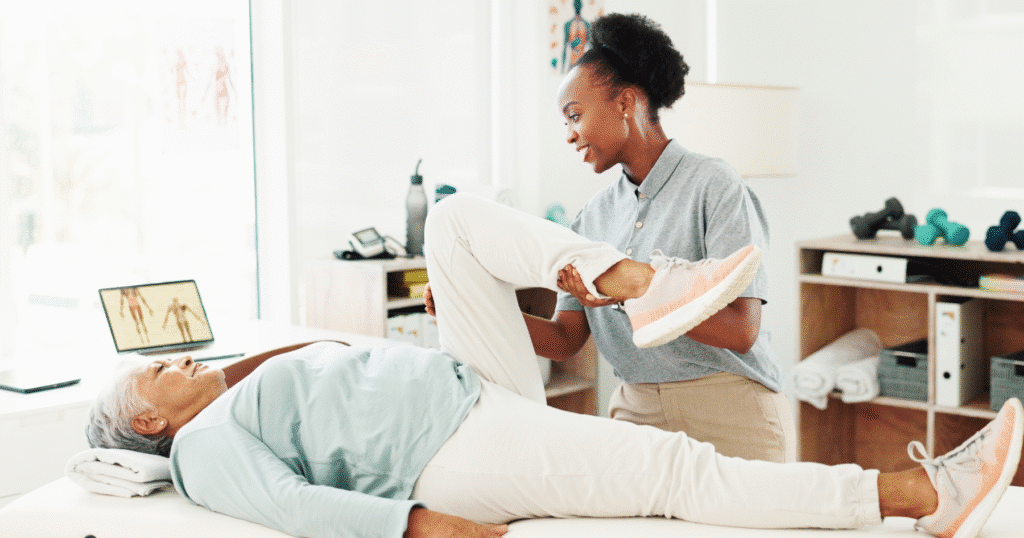
Physical therapy looks at the bigger picture: not just that your glutes need work, but why.
Here’s how that process comes to life during your care:
Assessment and Exercise Selection
A PT evaluates:
- Hip strength and muscle activation patterns.
- Balance and single-leg control.
- Movement during squats, walking, or running.
From there, your plan is built around what you need, not a generic checklist.
Progression for Function and Activity
As strength improves, PT helps carry those gains into real-life movement:
- Walking and stair navigation.
- Running and sport-specific movement.
- Lifting and daily tasks.
Because stronger glutes are great, but stronger glutes that actually improve your life? Even better.
Reclaim Your Strength and Mobility
Experience tailored physical therapy programs designed to alleviate pain and restore function.
Who Benefits Most From Glute Strengthening with PT?
Glute strengthening with PT can help a wide range of individuals:
- People with hip, knee, or low back pain.
- Athletes returning from injury.
- Individuals with poor balance or movement control.
- Anyone looking to improve strength and reduce injury risk.
In many cases, even small improvements in glute activation can lead to noticeable changes in how you move and feel.
Why Choose Ivy Rehab for Glute Strengthening
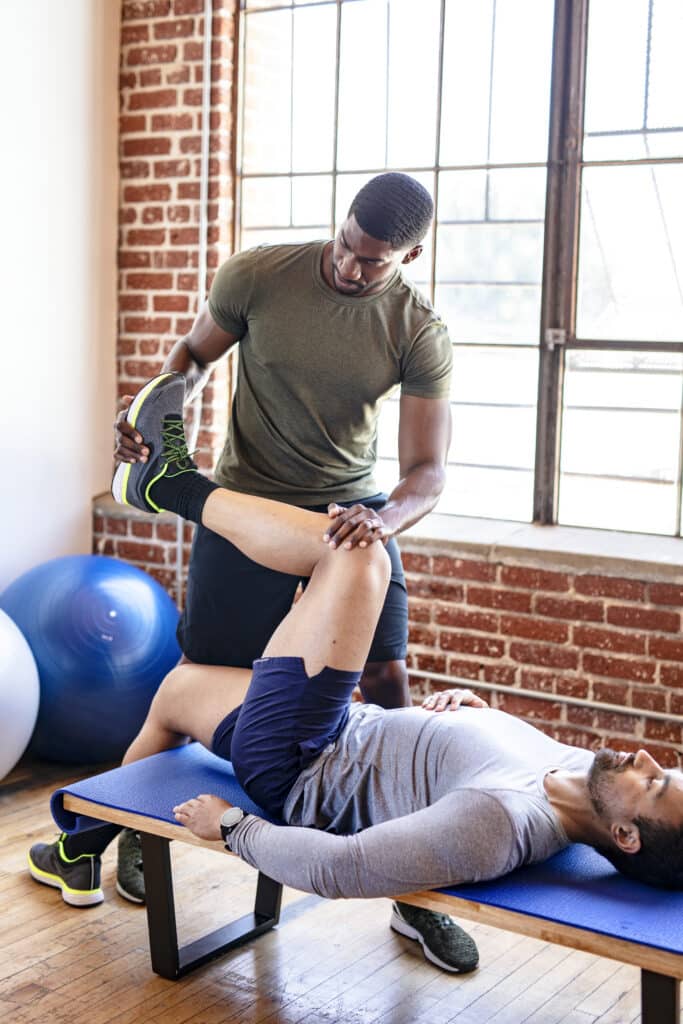
Ivy Rehab focuses on personalized, movement-based care that meets you where you are and helps you move forward with confidence.
Patients can expect:
- One-on-one evaluation and treatment.
- Individualized exercise programs.
- Focus on proper movement and muscle activation through personalized care.
- Guidance for long-term strength and injury prevention.
It’s a thoughtful, goal-focused approach designed to help you feel stronger, move better, and stay that way.
Build Strength, Move Better, and Feel the Difference
Glute activation is the foundation for strong, stable movement. Without it, other areas of the body often end up working overtime.
With the right mix of glute-activation exercises and progressive strength training, you can improve control, reduce discomfort, and move with greater ease. Physical therapy provides the structure, support, and progression needed to get there safely and keep you moving forward.
Ready to feel stronger and move with confidence? Find a clinic near you and get started with physical therapy at Ivy Rehab.
References
- Ahn, S.-E., Lee, M.-Y., Lee, B.-H. (2024). Effects of Gluteal Muscle Strengthening Exercise-Based Core Stabilization Training on Pain and Quality of Life in Patients with Chronic Low Back Pain. Medicina (Kaunas). https://pmc.ncbi.nlm.nih.gov/articles/PMC11205821/
- DiStefano, L.J., Blackburn, J.T., Marshall, S.W., Padua, D.A. (2009). Gluteal Muscle Activation During Common Therapeutic Exercises. J Orthop Sports Phys Ther. https://www.ncbi.nlm.nih.gov/pmc/articles/PMC2704347/
- Selkowitz, D.M., Beneck, G.J., Powers, C.M. (2013). Which Exercises Target the Gluteal Muscles While Minimizing Activation of the Tensor Fascia Lata? J Orthop Sports Phys Ther. https://pubmed.ncbi.nlm.nih.gov/23160432/

Before you go
Find the right therapy today.
Discover how Ivy Rehab can help you get back to doing what you love.