
Swelling can feel uncomfortable, frustrating, and hard to manage, especially when it does not improve with rest or elevation. For some people, ongoing swelling may be a sign of lymphedema, a condition that affects how fluid moves through the body.
Lymphedema can make an arm, leg, hand, foot, chest, or other area feel heavy, tight, achy, or difficult to move. It can also affect daily routines, clothing fit, mobility, skin health, and overall comfort.
The good news is that lymphedema treatment can help patients reduce swelling, improve function, and learn long-term management strategies. At Ivy Rehab, therapy is focused on helping patients feel more comfortable, more informed, and more in control of their daily lives.
Connect with Ivy Rehab today to build a long-term lymphedema management plan that fits your life.
What Is Lymphedema?
Lymphedema is swelling that occurs when lymph fluid builds up in the body’s tissues. The lymphatic system helps move fluid, waste, and immune cells throughout the body. When that system is damaged, blocked, underdeveloped, or not working efficiently, fluid can collect and cause swelling.
Lymphedema can be primary or secondary. Primary lymphedema is related to how the lymphatic system develops. Secondary lymphedema happens because of another condition, treatment, injury, or procedure that affects lymph flow.
Many people associate lymphedema with cancer treatment, especially surgery or radiation that involves lymph nodes. However, it can also be connected to trauma, infection, surgery, chronic swelling, vascular concerns, or other medical conditions.
Who Is Most at Risk?
Some patients have a higher risk of developing lymphedema because of medical history, treatment history, or changes to the lymphatic system.
Risk factors may include:
- Cancer surgery involving lymph node removal
- Radiation therapy
- Previous injury or trauma
- Infection
- Chronic swelling
- Certain vascular conditions
- Family history of lymphatic conditions
Patients who have had breast cancer treatment, pelvic cancer treatment, melanoma treatment, or other procedures involving lymph nodes may be advised to monitor for swelling or heaviness. That does not mean lymphedema will definitely develop, but it does mean early signs should be taken seriously.
Signs You Should Seek Therapy for Swelling
Lymphedema can start gradually. Some patients notice mild swelling at first, while others describe heaviness, tightness, or discomfort before visible swelling becomes obvious.
Signs that may be worth discussing with a healthcare provider or therapist include:
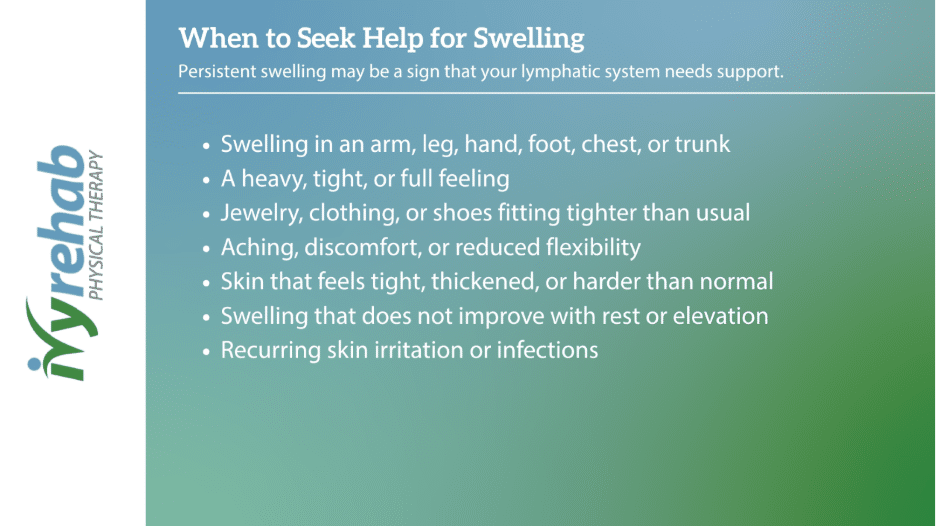
- Swelling in an arm, leg, hand, foot, chest, or trunk
- A heavy, full, or tight feeling
- Clothing, jewelry, or shoes feeling tighter on one side
- Aching or discomfort in the affected area
- Reduced flexibility or range of motion
- Skin feeling tight, thickened, or harder than usual
- Recurring skin irritation or infections
- Swelling that does not improve as expected
Early treatment can make a meaningful difference. The sooner lymphedema is identified, the sooner patients can learn strategies to reduce swelling, protect skin, and support long-term function.
What Does Lymphedema Treatment Look Like?
Lymphedema treatment is personalized. The right plan depends on the location and severity of swelling, medical history, skin condition, mobility, lifestyle, and patient goals.
A typical therapy plan may include complete decongestive therapy, often called CDT. This approach can include several components:
- Manual lymphatic drainage
- Compression bandaging or garments
- Therapeutic exercise
- Skin care education
- Self-management training
Manual lymphatic drainage is a gentle, specialized technique designed to help move lymph fluid toward areas where it can drain more effectively. Compression helps prevent fluid from building back up. Exercise supports muscle pumping, which helps move fluid through the body. Skin care reduces the risk of irritation and infection.
The plan may change over time as swelling improves and the patient becomes more confident with long-term management.
What to Expect During a First Lymphedema Therapy Session
The first session usually begins with a thorough evaluation. Your therapist will ask about your symptoms, medical history, surgeries, cancer treatments, swelling patterns, skin changes, activity level, and daily challenges.
They may also assess:
- Swelling measurements
- Skin condition
- Range of motion
- Strength
- Mobility
- Pain or discomfort
- Functional limitations
- Current compression garments or bandaging, if used
From there, your therapist will explain what they are seeing and create a treatment plan based on your needs. Some patients may begin with swelling reduction and bandaging. Others may focus on education, exercise, compression garment planning, or self-care strategies.
A good treatment plan should feel clear and manageable. Patients should understand why each part of treatment matters and how it supports long-term comfort.
How Therapy Improves Daily Function and Quality of Life
Lymphedema not only affects swelling. It can change how someone moves, dresses, works, exercises, sleeps, and participates in daily activities.
Therapy can help by reducing heaviness and discomfort, improving mobility, and teaching patients how to manage symptoms more confidently. For example, a patient with leg swelling may work on walking tolerance, balance, and safe exercise. A patient with arm swelling may work on shoulder motion, strength, and comfort with reaching or lifting.
As swelling becomes better managed, patients may notice:
- Easier movement
- Less heaviness
- Better comfort in clothing or shoes
- Improved ability to exercise
- Greater confidence with daily routines
- Better understanding of how to manage symptoms
The goal is not only to reduce swelling. The goal is to help patients return to the activities that matter most to them.
At-Home Practices for Long-Term Management
Lymphedema is often a long-term condition, which means self-management is an important part of care. Therapy helps patients learn what they can do between visits and after discharge.
At-home strategies may include:
- Wearing compression as recommended
- Preforming prescribed exercises
- Practicing self-manual lymphatic drainage if taught by a therapist
- Caring for skin daily
- Monitoring for changes in swelling or skin condition
- Avoiding cuts, burns, or irritation to the affected area when possible
- Staying active in a safe, consistent way
Patients should always follow their therapist’s or physician’s specific guidance, especially when compression, infection risk, or cancer history is involved.
Why Skin Care Matters
Skin care is a major part of lymphedema management. Swelling can place extra stress on the skin, and even small cuts or cracks can increase the risk of infection.
Patients may be encouraged to keep skin clean and moisturized, check the affected area regularly, and protect the skin during activities like gardening, cooking, shaving, or exercising. If redness, warmth, sudden swelling, fever, or pain develop, patients should contact a healthcare provider promptly.
These small daily habits can help reduce complications and support long-term control.
Regaining Comfort and Control
Living with lymphedema can feel overwhelming at first. Patients may worry about swelling getting worse, not knowing what to do, or feeling limited by discomfort.
Therapy helps turn uncertainty into a plan.
With the right treatment, patients can better understand their condition, reduce swelling, protect their skin, and build routines that support everyday life. Lymphedema treatment is not only about managing fluid. It is about helping patients feel more comfortable, capable, and in control.
If you are dealing with persistent swelling, heaviness, or tightness, Ivy Rehab can help. Schedule an evaluation to learn whether lymphedema treatment may support your comfort and long-term health.

Before you go
Find the right therapy today.
Discover how Ivy Rehab can help you get back to doing what you love.