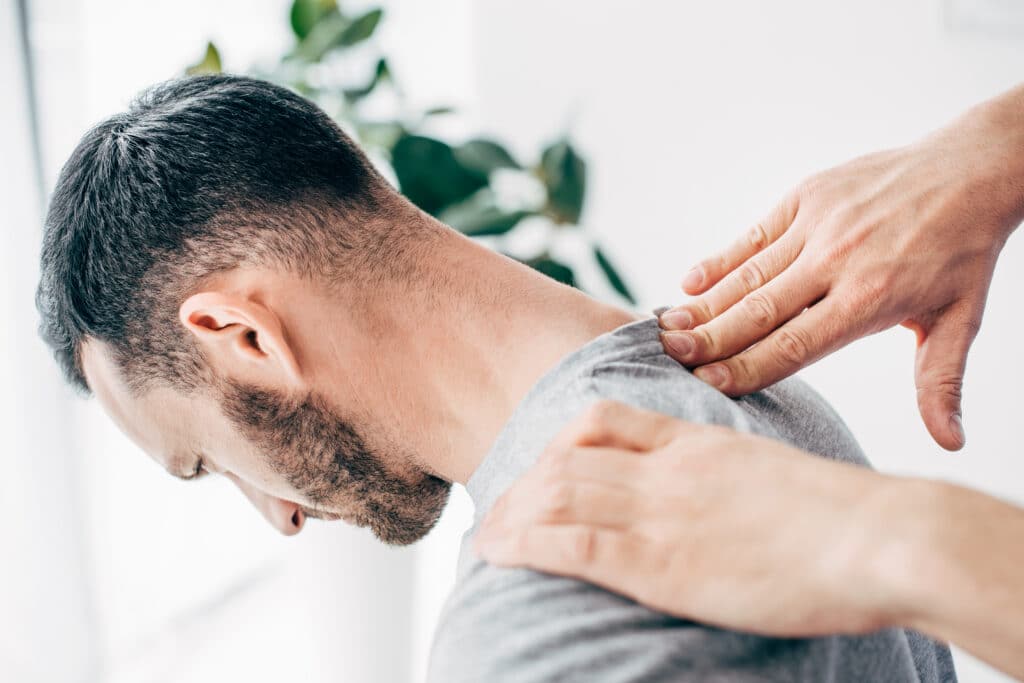


Hip bursitis can cause pain on the outside of your hip when you walk, climb stairs, stand for a long time, or lie on your side. The pain often comes from irritation around the bursa, one of the small fluid-filled sacs that help reduce friction near the hip joint.
The most common type is trochanteric bursitis, which affects the outside of the hip. Outer hip pain can also involve the glutes, hip tendons, iliotibial band, or movement patterns that place extra strain on the area.
That’s why hip bursitis exercises can help. The right plan can reduce pressure on the irritated area, build hip strength, and make daily activities like walking or climbing stairs feel easier.
Key Takeaways
- Hip bursitis often causes pain on the outside of the hip, especially when walking, climbing stairs, lying on the affected side, or standing for long periods.
- The best hip bursitis exercises usually focus on the glutes, hip abductors, and gentle stretches that reduce strain without flaring pain.
- Clamshells, side-lying leg raises, and standing hip abduction can help strengthen the muscles that support the hip joint.
- During flare-ups, avoid lying on the affected leg, crossing your legs, or pushing through sharp hip bursitis pain.
- Physical therapy can help if pain keeps coming back, limits daily activities, or makes it hard to exercise safely.
Quick Navigation
- What Causes Hip Bursitis Pain
- Walking Tips During a Flare-Up
- Hip Bursitis Exercises to Try
- Positions and Activities to Avoid During Flares
- Treatment Options for Hip Bursitis
What Causes Hip Bursitis Pain
Hip bursitis pain often starts when the outside of the hip gets more pressure or friction than it can tolerate. This can happen after suddenly walking faster, running, climbing stairs, or exercising. It can also happen when the hip muscles aren’t supporting movement well.
Common contributors include:
- Weak glutes or hip abductors that make the hip work harder during walking.
- A tight iliotibial band, also called the IT band, that increases pressure over the outside of the hip.
- Repeated pressure from lying on your side, sitting with your legs crossed, or standing with weight shifted onto one hip.
- A sudden increase in hills, stairs, running, or long walks.
For many people, the issue isn’t one single movement. It’s the total load on the hip over time.

Walking Tips During a Flare-Up
You usually don’t need to stop walking completely during a hip bursitis flare-up. The goal is to keep moving at a level your hip can tolerate.
During a flare-up, try to:
- Walk on flat ground instead of hills or stairs when possible.
- Take shorter steps so the affected leg doesn’t stretch too far behind you.
- Use a railing when climbing stairs to reduce stress on the hip.
- Avoid standing with all your weight shifted onto the painful hip.
If walking keeps worsening your symptoms, a physical therapist or healthcare provider can assess whether strength, balance, footwear, or another hip problem is contributing to the strain.
Hip Bursitis Exercises to Try
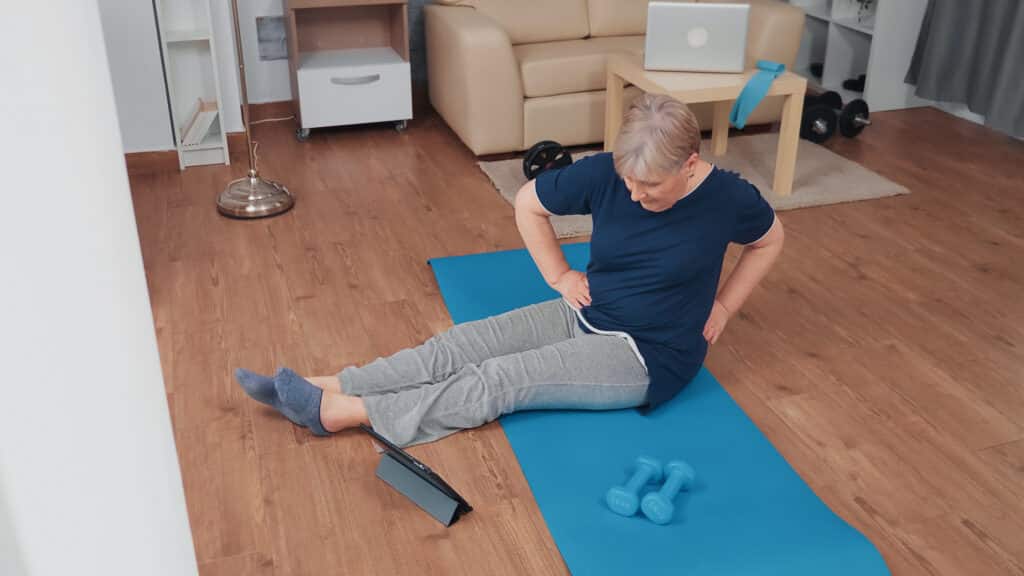
Hip bursitis exercises should feel controlled, not painful. Start with a small range of motion, move slowly, and stop if pain gets worse or lingers afterward. This is general health information, not medical advice.
Clamshell Exercise
Lie on your side with your knees bent and your hips stacked. Keep your feet together, then slowly lift your top knee without rolling your pelvis backward. Slowly lower the top knee.
Clamshells help strengthen the glutes and hip rotators without putting much pressure on the outer hip. Start with eight to 10 reps on each side.
Side-Lying Leg Raises
Lie on your side with the affected leg on top if that position is comfortable. Keep the top leg straight and your body in a straight line. Lift the top leg a few inches, then lower it slowly.
Side-lying leg raises work the hip abductors, especially the gluteus medius. Keep the movement small at first, and avoid letting the top leg drift forward.
Standing Hip Abduction
Stand tall near a counter or chair for support. Keep your leg straight and move the affected leg out to the side without leaning your body. Slowly return to the starting position.
Standing hip abductions help build hip control in weight-bearing positions. Start without a resistance band, then add one only when the movement feels easy and pain-free.
Gentle Hip and Leg Stretches
Gentle stretches for the piriformis, hip flexors, hamstrings, and IT band area may help some people feel less tight. Keep stretches mild. A stretch shouldn’t cause sharp pain on the outside of the hip.
If stretching makes hip bursitis pain worse, back off and focus on strengthening first.
Positions and Activities to Avoid During Flares
During a flare-up, the hip often needs less pressure and better support. Small position changes can reduce irritation while your strength plan starts to work.
Try to avoid:
- Lying on the affected hip without padding.
- Crossing the affected leg over the opposite leg while sitting.
- Standing with all your weight shifted onto one hip.
- Pushing through stairs, hills, or long walks when pain is clearly increasing.
- Aggressive stretches that pinch or press on the outside of the hip.
Most people can gradually resume activities once pain calms and hip strength improves.
Treatment Options for Hip Bursitis
Treatment options depend on how long you’ve had symptoms, what triggers pain, and whether there’s also another hip problem. A healthcare provider may recommend rest from painful activities, ice or heat, over-the-counter medication when appropriate, or, in some cases, a corticosteroid injection for short-term pain relief.
Ivy Rehab’s physical therapy for hip pain and orthopedic therapy services can help you safely work through hip bursitis exercises and adjust your plan during flare-ups.
FAQs
Can I Walk With Hip Bursitis?
Yes, if walking doesn’t sharply increase pain. Shorter walks on flat ground are usually easier than walking up hills, going up stairs, or covering long distances during a flare-up. If pain keeps building as you walk, reduce the distance and talk with a healthcare professional.
What Is the Best Exercise for Hip Bursitis?
Clamshells and side-lying leg raises are common starting exercises because they strengthen the glutes and hip abductors with minimal impact. The best exercise depends on your pain level, strength, and what movements trigger symptoms.
What Should I Avoid With Hip Bursitis?
Avoid lying on the affected side, crossing your legs, standing with weight shifted onto one hip, and pushing through painful stairs or hills during flare-ups. These positions can add pressure to the irritated bursa and surrounding tissues.
Talk to a Physical Therapist About Hip Pain
Hip bursitis can be stubborn, but the right exercises and activity changes can help. A plan that builds strength without causing a flare-up usually works better than total rest or pushing through pain.
Find an Ivy Rehab Therapy location near you if hip bursitis pain is limiting your walks, sleep, stairs, or daily routine. A physical therapist can help you understand what’s adding strain and build a treatment plan that supports easier movement.
References
- Hip Bursitis. OrthoInfo. Accessed March 2026. https://orthoinfo.aaos.org/en/diseases–conditions/hip-bursitis
- Physical Therapy Guide to Hip Bursitis. ChoosePT. Accessed March 2026. https://www.choosept.com/guide/physical-therapy-guide-hip-bursitis
- Physical Therapy Guide to Greater Trochanteric Bursitis. ChoosePT. Accessed March 2026. https://www.choosept.com/guide/physical-therapy-guide-greater-trochanteric-bursitis
- Education Plus Exercise Versus Corticosteroid Injection Use Versus a Wait and See Approach on Global Outcome and Pain From Gluteal Tendinopathy. BMJ. Accessed March 2026. https://www.bmj.com/content/361/bmj.k1662
- Utility of Clinical Tests to Diagnose MRI-Confirmed Gluteal Tendinopathy. British Journal of Sports Medicine. Accessed March 2026. https://bjsm.bmj.com/content/51/6/519

Before you go
Find the right therapy today.
Discover how Ivy Rehab can help you get back to doing what you love.