
There is a quiet truth about Alzheimer’s disease and dementia that families often learn the hard way: Memory is not the only thing that changes.
Walking, balance, and standing up from a chair can all start to feel different. Even the route from the bedroom to the bathroom can become more complicated than it used to be, especially when throw rugs, dim lighting, pets underfoot, and one very suspicious coffee table decide to join the care team.
That’s why waiting until after a fall can leave families reacting under pressure instead of planning with more calm and confidence.
Neurological rehabilitation for Alzheimer’s and dementia patients can help support safer movement, fall prevention, mobility, strength, and quality of life. It can also give families something they may be craving more than another well-meaning pamphlet: practical help for the real moments that happen at home.
For families who are noticing changes in walking, standing, or getting around the home, Ivy Rehab’s physical therapy services can offer a place to ask better questions, build a practical plan, and stop treating mobility changes like something everyone just has to “figure out.”
What Is Physical Therapy for Dementia and Alzheimer’s?
This kind of care focuses on helping people move as safely, comfortably, and confidently as possible. A physical therapist may work on strength, balance, walking, transfers, endurance, caregiver education, and home exercise support.
Alzheimer’s disease is the most common type of dementia, but the two terms aren’t interchangeable. That matters. A person’s diagnosis, stage of disease, communication style, home setup, energy level, and support system can all affect what therapy should look like.
The goal is safer movement that fits real life. Life with dementia already asks enough of families, and nobody needs one more impossible expectation.
That may mean walking to the mailbox, getting out of bed with less help, or helping a caregiver assist with transfers without hurting their own back. These may look like small goals on paper, but in a family’s day-to-day life, they can mean everything.

Why Movement Matters for Brain Health and Daily Life
Movement does more than build muscles. Regular physical activity may support strength, circulation, mood, sleep, balance, and everyday function, all of which can matter when someone is living with Alzheimer’s disease or another form of dementia.
But let’s be honest: Most families aren’t asking for a complicated exercise routine with color-coded resistance bands, a motivational playlist, and a clipboard. They are asking, “How do I help Mom get to the bathroom safely?” or “Why is Dad suddenly afraid of the stairs?” or “Is it normal that walking across the kitchen now takes so much effort?”
Those questions may sound ordinary, but they’re often where daily life gets harder, and where the right support can make a meaningful difference.
Ivy Rehab’s neurological rehabilitation services can support people whose movement, balance, coordination, or walking has been affected by neurological conditions.
How Physical Therapy Helps Dementia Patients
Physical therapy for dementia can help families understand what’s changing and what kind of support may help. A physical therapist can assess walking, strength, balance, posture, transfers, endurance, and safety during everyday movement.
That assessment matters because “they’re just slowing down” isn’t always the full story. Slower walking may point to weakness, shuffling may suggest balance changes, and avoiding movement can be a sign of fear. When someone starts holding furniture while walking, the home may have quietly turned into a balance beam.
Physical therapy for dementia patients may include hands-on guidance, simple exercises, caregiver coaching, home safety education, and strategies that make movement easier to repeat. The plan should feel practical, respectful, and connected to the person’s daily routines.
Here are a few ways physical therapy may support safer movement:
Walking and Mobility Support
A physical therapist can look at walking speed, stride length, steadiness, endurance, and safety. They may also watch for shuffling, furniture walking, hesitation, drifting, or getting tired quickly.
Walking support may include practice in the clinic, at home, or in community-like settings. No one is training for a walking contest here. The goal is to help the person move as safely as possible in the places they actually need to go.
Strength and Balance Training
Strength and balance can affect transfers, stairs, walking, and fall risk. Therapy may include lower-body strengthening, supported balance work, posture activities, and functional movements like getting in and out of a chair.
For people with dizziness, unsteadiness, or balance concerns, Ivy Rehab Physical Therapy also offers vestibular rehabilitation when appropriate.
Safer Transfers and Daily Movement
Transfers are the everyday movements that help someone get from one position or place to another. These may include rolling in bed, sitting up, standing from a chair, using the bathroom, taking stairs, or moving through the home.
Transfers usually don’t get a dramatic soundtrack, but they deserve attention. A difficult transfer can turn a normal morning into a stressful one for both the person and the caregiver.
A physical therapist can teach safer techniques for the person and the caregiver. That support can make daily routines feel more manageable for everyone involved.

Physical Therapy Exercises for Dementia Patients
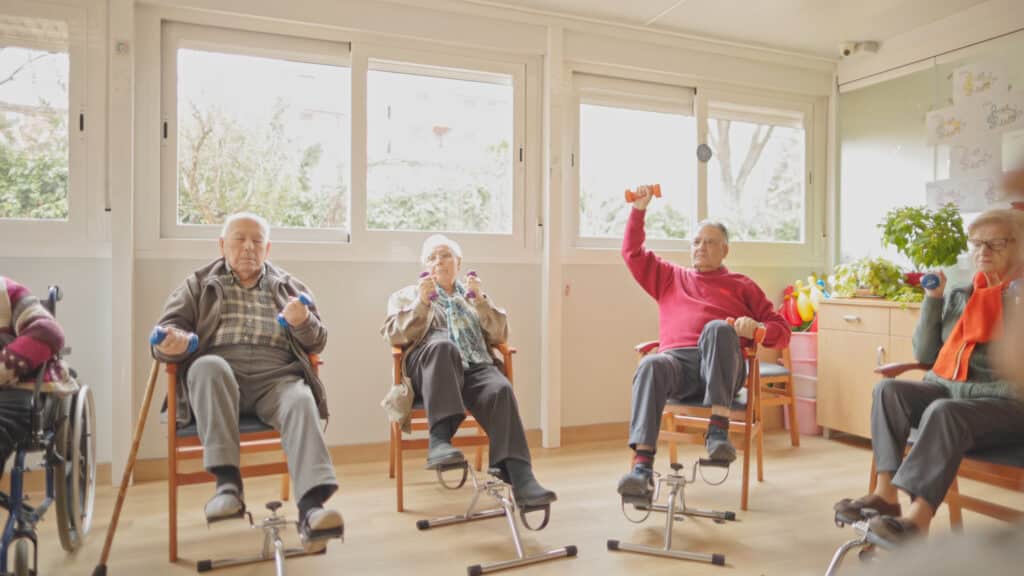
Physical therapy exercises for dementia patients should be simple, safe, repeatable, and matched to the person’s current ability. Exercises should also account for medical history, energy level, fall risk, home environment, and stage of dementia.
Here’s the truth about exercise plans: Fancy doesn’t matter nearly as much as follow-through. The most useful plan is one the person can do safely, again and again, without adding more stress to an already full day.
Some people do best with short movement sessions throughout the day. Others respond well to familiar routines, clear cues, demonstration, or doing exercises at the same time each day. Over time, that kind of repetition can help movement feel less stressful and more familiar.
These sections explain how simple activities and familiar routines can help:
Simple Movement Activities
A physical therapist may recommend activities such as:
- Short walks with appropriate support.
- Sit-to-stands from a sturdy chair.
- Seated marching.
- Gentle stretching.
- Heel raises at a counter.
- Supported balance activities.
These movements may look simple, but simple doesn’t mean insignificant. They can support strength, circulation, confidence, and everyday function. When safety is a concern, families should ask a physical therapist before starting or changing an exercise routine.
Why Routine and Repetition Help
Memory changes can make new instructions harder to follow. Familiar routines and repeated cues can help movement feel more predictable.
A physical therapist may teach caregivers how to use short phrases, gentle pacing, visual cues, or “watch me” demonstrations. The right cue can make a hard moment feel calmer, while an unclear one can leave everyone feeling like they’re suddenly speaking different languages in the same kitchen.
Alzheimer’s, Dementia, and Fall Prevention
Alzheimer’s disease and other forms of dementia can increase fall risk in several ways. Several changes can play a role, including balance, attention, vision, strength, reaction time, and awareness of hazards.
The numbers show why this matters. In the United States, more than 14 million adults ages 65 and older, or about 1 in 4, report falling each year, according to the Centers for Disease Control and Prevention. About 37% of those who fall report an injury that requires medical treatment or limits activity for at least one day.
Here’s another truth worth saying gently and clearly: A home can be full of love and still be full of dangerous fall risks.
Loose rugs, clutter, poor lighting, stairs, bathrooms, pets, cords, slippery floors, uneven surfaces, and that one corner of the rug everyone says they’ll fix “this weekend” can all play a role.
Fall prevention shouldn’t feel like taking independence away. Done thoughtfully, it can make the environment, routine, and movement plan safer so the person can keep doing as much as possible with the right support.
These sections cover signs of rising fall risk and ways therapy may help reduce it:
Signs Fall Risk May Be Increasing
A loved one may benefit from a fall-risk conversation if they are:
- Shuffling or taking smaller steps.
- Holding walls, counters, or furniture while walking.
- Walking more slowly than usual.
- Avoiding movement because they’re afraid of falling.
- Having trouble standing from a chair.
- Experiencing recent falls or near-falls.
These signs don’t mean a fall is unavoidable, but they can be a helpful signal to ask for support before a scary moment becomes the reason everyone finally pays attention.
How Physical Therapy Can Help Reduce Risk
A physical therapist can assess strength, walking, balance, endurance, and safety during everyday movement. They may recommend balance training, strengthening exercises, walking practice, assistive devices when appropriate, caregiver education, and home safety guidance.
For families looking for more support with steadiness, Ivy Rehab’s aging therapy services can help address balance, mobility, fall prevention, and everyday movement concerns with a practical plan.

What Physical Therapists Wish Every Alzheimer’s and Dementia Family Knew
Families often carry a lot: worry, love, responsibility, exhaustion, guilt, and the pressure to make the right choice, even as the choices keep changing.
Physical therapists understand that Alzheimer’s and dementia care involves movement, dignity, patience, safety, and the daily problem-solving that happens when nobody is watching.
One thing they often wish families knew is this: Asking for support early can be one of the most caring, practical choices a family makes.
- Movement changes are common and not a personal failure.
- Waiting for a fall isn’t the only time to ask for help.
- Simple routines can make a meaningful difference.
- Caregivers need support and body mechanics education, too.
- Safety and independence can both matter at the same time.
- The care plan should change as the person’s needs change.
Families don’t have to figure out every transfer, cue, or safety concern on their own. Caregiving is hard enough without pretending trial and error is the only teacher available.
When to Ask About Physical Therapy
Families often wonder whether it is “too early” for therapy, and that question makes sense. Nobody wants to overreact, especially when life already feels full of appointments, decisions, and hard conversations.
Early support can be a gift because it gives families more information, more options, and more time to practice strategies before things feel urgent. A small mobility change today can become a bigger caregiving challenge later if no one has a chance to look at it.
It may be time to ask about physical therapy if your loved one has:
- Trouble walking safely.
- New or worsening balance changes.
- A fall or near-fall.
- Difficulty getting out of a chair.
- Less interest in moving around.
- A growing need for caregiver assistance.
Families can also explore Ivy Rehab Physical Therapy’s direct access information to better understand when a physician referral may or may not be required, depending on state rules and insurance requirements.

Where Occupational Therapy May Fit In
While this article focuses on physical therapy, physical and occupational therapy for dementia patients may work together when daily routines become harder. Occupational therapy often focuses on self-care, home safety, daily activities, caregiver strategies, and meaningful routines.
Occupational therapy may be especially helpful when memory, attention, hand function, fatigue, or home setup affects daily tasks. Ivy Rehab’s occupational therapy services can support people who need help participating in everyday activities with more safety and confidence.
An occupational therapist may help with dressing, bathing, bathroom safety, meal routines, adaptive tools, energy conservation, cueing strategies, and caregiver education. They may also suggest changes that make the home easier to navigate.
The goal is to make important routines safer, calmer, and more doable. Perfect isn’t available, and pretending it is only makes families feel worse.
What Care Looks Like at Ivy Rehab
Your visit starts with listening. A therapist will ask about your loved one’s movement changes, fall history, home setup, daily routines, caregiver concerns, and what feels the most difficult right now.
This care should go beyond handing families a packet of exercises and wishing them luck. The most useful plan is one that can survive contact with real life, where people get tired, routines get messy, and the dog always seems to be standing exactly where no one needs the dog to be.
Here’s what that support may include:
Therapy Built Around the Person
Therapy should consider the person’s needs, home setup, caregiver support, and daily routines. A person who wants to keep walking to the mailbox may need a different plan than someone who needs help transferring safely from bed to chair.
This kind of care works best when the family’s real concerns are part of the conversation.
Support for Families and Caregivers
Caregivers may learn safer ways to assist standing, walking, stairs, and transfers. They may also receive education on home exercise, fall-risk warning signs, cueing, pacing, and body mechanics.
That support matters because caring for someone else shouldn’t mean ignoring your own safety.
Find Steadier Ground With the Right Support
Alzheimer’s disease and dementia can change daily life, but families don’t have to wait for a fall or major mobility change to ask for support. Physical therapy can’t cure Alzheimer’s or dementia, but it can help support strength, balance, walking, safer movement, caregiver confidence, and quality of life.
If you’re noticing changes in how your loved one moves, stands, walks, or gets through daily routines, it may be time to explore your options.
Find an Ivy Rehab Physical Therapy location near you to talk with a team member about care that fits your family’s needs.
References
- American Physical Therapy Association. “Physical Therapy Guide to Alzheimer’s Disease.” ChoosePT. https://www.choosept.com/guide/physical-therapy-guide-alzheimers-disease
- National Institute on Aging. “What Is Alzheimer’s Disease?” National Institutes of Health. https://www.nia.nih.gov/health/alzheimers-and-dementia/what-alzheimers-disease
- Centers for Disease Control and Prevention. “Alzheimer’s Disease and Dementia.” https://www.cdc.gov/alzheimers-dementia/index.html
- Centers for Disease Control and Prevention. “Older Adult Falls Data.” (2026). https://www.cdc.gov/falls/data-research/index.html
- American Occupational Therapy Association. “Occupations and Everyday Activities.” https://www.aota.org/practice/domain-and-process/occupations-everyday-activities

Before you go
Find the right therapy today.
Discover how Ivy Rehab can help you get back to doing what you love.