
Some children communicate through spoken words. Others communicate through gestures, signs, sounds, eye movements, switches, devices, or a creative combination of all the above.
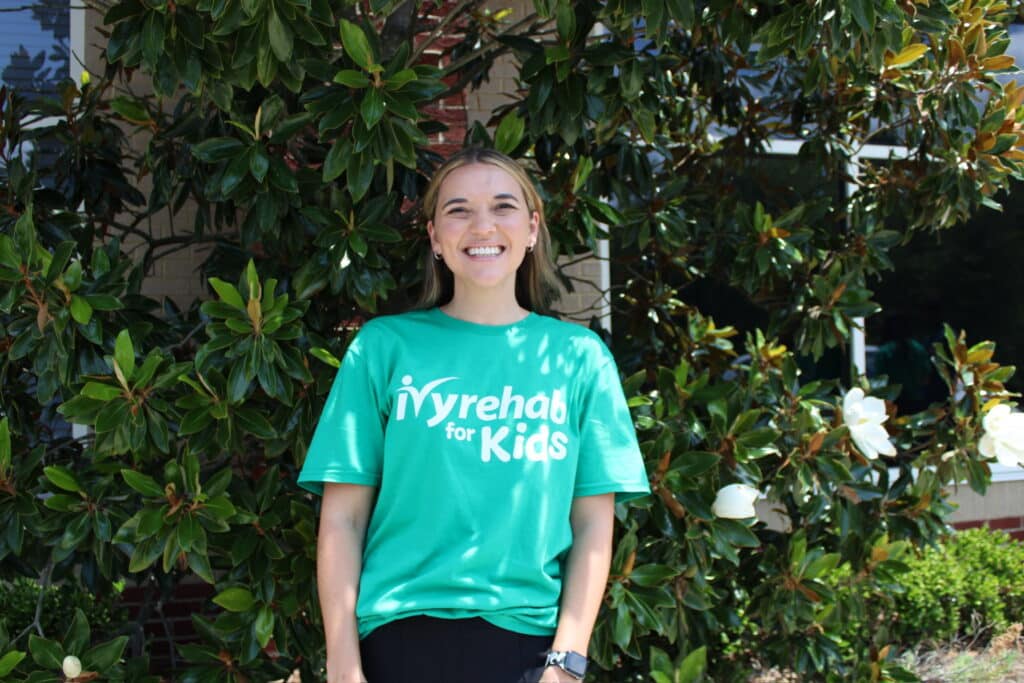
For Kendall Harrington, a speech-language pathologist at Ivy Pediatric Therapy, the goal is not to fit every child into a narrow definition of communication. Instead, she helps each child find a way to express themselves that works for their body, abilities, family, and everyday life.
That philosophy comes to life in her work with Grayson, a joyful, determined child who receives physical therapy, occupational therapy, and speech therapy. Because of his visual impairment and medical complexity, many traditional communication systems simply weren’t built with his needs in mind.
With support from Kendall, his family, specialists, and his therapy team, Grayson is learning to communicate through a customized augmentative and alternative communication (AAC) system designed specifically for him.
Grayson’s story is a reminder that communication doesn’t have to look one particular way to be meaningful. Every child deserves a way to share their thoughts, preferences, questions, opinions, and yes—even their sense of humor—with the world.
Kendall’s Path to Pediatric Speech Therapy
Kendall knew early in life that she wanted to work with children with disabilities.
“I knew I wanted to work with kids with disabilities from a young age,” she shared. “I ended up finding the speech-language pathology career and it just clicked.”
Before discovering speech-language pathology, she considered careers in special education and psychology. Speech therapy offered the perfect blend of relationship-building, problem-solving, and communication support.
“I’ve always loved working with kids,” Kendall said. “Once I learned more about speech-language pathology, it felt like the perfect combination of everything I was interested in.”
Today, her approach is grounded in a few core beliefs:
- Therapy should be child-led.
- Families should be active partners in care.
- Listening comes before problem-solving.
- Communication access matters.
- There is no single “right” way to communicate.
“Every child communicates differently,” she said. “Our job is to figure out how they communicate best and help build from there.”
Those values shape every interaction she has with children and families at Ivy Pediatric Therapy.
While clinical expertise matters, trust is often where meaningful progress begins.
Meet Grayson: A Small Child With a Big Team Behind Him
Before Kendall talks about communication systems, devices, or therapy goals, she talks about Grayson.
“He is an absolute joy,” she said. “He works so hard.”
Grayson is social, engaged, and eager to connect with the people around him. He smiles often, laughs easily, and has a way of brightening a room before anyone has even finished setting up therapy equipment.
“He’s always willing to work,” Kendall said. “No matter what we’re asking him to do, he gives it his best effort.”
He has a large support team that includes therapists, school-based providers, medical specialists, and family members who work together to support his growth and communication.
According to Kendall, one thing everyone seems to agree on is how much they enjoy working with him.
“I don’t think I’ve met anyone who’s worked with Grayson who doesn’t absolutely love him,” she said. “His personality just shines through.”
And that’s exactly the point. Before Grayson is a therapy client, AAC user, or medical case, he’s a child with interests, relationships, preferences, and a personality worth getting to know.
Why Traditional AAC Systems Were Difficult for Grayson
Many AAC systems rely on visual information, such as pictures, symbols, or words displayed on a screen. For many children, those systems work well.
For Grayson, they weren’t the right fit.
Because he is visually impaired and medically complex, his team needed to consider factors like vision, hearing, positioning, head control, and physical access when choosing a communication system.
“Most AAC systems are designed around visual access,” Kendall explained. “For Grayson, we had to think differently because vision wasn’t going to be the primary way he accessed communication.”
Instead of asking Grayson to adapt to a communication tool, his team found a tool that could adapt to him.
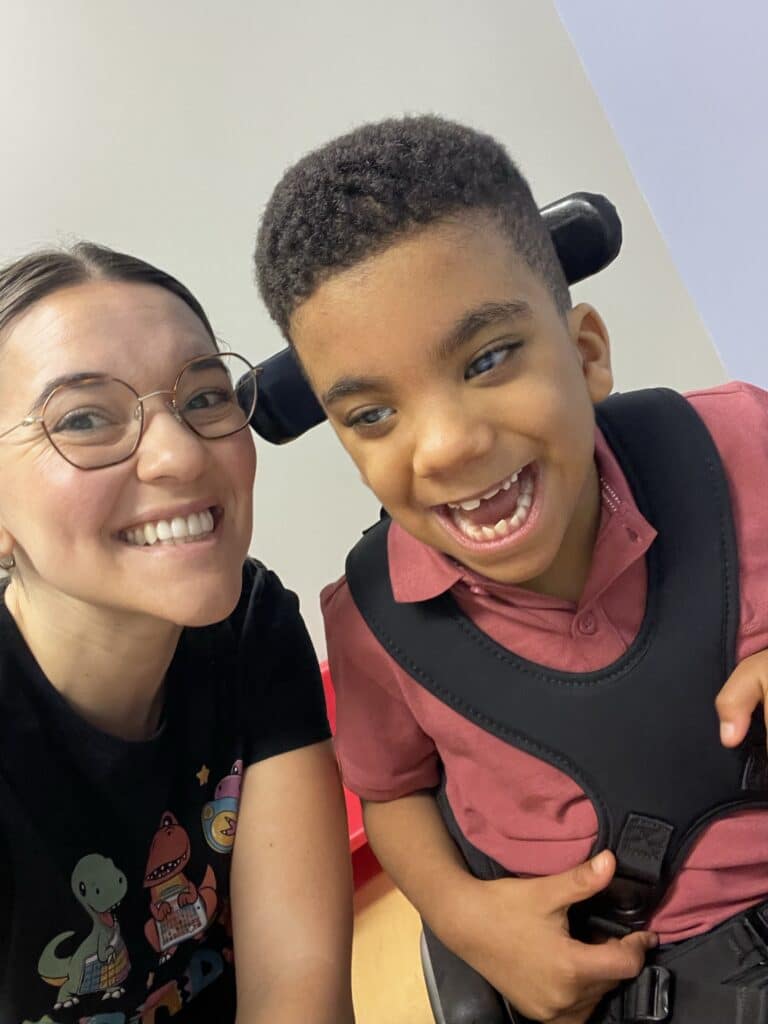
Grayson uses an AAC device mounted on his wheelchair with a head-array system and two switches positioned on either side of his head. Through auditory scanning, the device reads options aloud. He uses one switch to move through choices and the other to select the option he wants.
He already communicates in many ways, including vocalizations, laughter, eye movements, and some signs. Looking upward can sometimes indicate “yes.”
“He’s always communicating,” Kendall said. “Our goal is to help him have more reliable ways to share what he’s thinking.”
The process may take longer than selecting a picture on a screen, but it gives Grayson meaningful access to communication—and that’s what matters most.
Of course, communication access involves more than the device itself.
What Grayson Has Taught Kendall
One of Kendall’s strongest professional beliefs is assuming competence—the idea that children often understand far more than they can currently express.
Grayson has reinforced that lesson again and again.
During therapy, Kendall noticed he repeatedly navigated to a section of his device related to his wheelchair. At first, she thought it might be accidental. But as the pattern continued, she realized he may have been asking questions about what would happen next in therapy.
The experience reminded her that when children have meaningful access to communication, they often reveal understanding, curiosity, and preferences that others may not have recognized before.
As Grayson has gained access to his communication system, he has used it in increasingly meaningful ways. He has asked to FaceTime family members, identified familiar community members, and communicated about routines and upcoming activities.
For Kendall, Grayson has reinforced several important lessons:
- Family involvement matters.
- Parent advocacy is powerful.
- Assuming competence is essential.
- Children often understand more than they can express.
These moments are a reminder that communication is about connection, participation, and relationships—not just requesting items or answering yes-or-no questions.
Progress May Look Different for Every Child
Kendall encourages families to think broadly about timelines and progress. Progress is not always measured by spoken words or dramatic milestones.
Sometimes progress looks like:
- Increased independence.
- Reduced frustration.
- Making choices.
- Participating more fully in daily routines.
- Using a device with greater purpose.
- Expressing preferences.
- Building confidence.
A child independently making a choice. A successful interaction at school. A question that wasn’t possible to ask six months ago. These moments may seem small from the outside, but they can be life-changing for families.
Progress can also include family comfort and confidence with AAC.
For many parents, AAC is unfamiliar at first. Learning about communication systems, devices, and strategies takes time.
As Kendall notes, helping families feel comfortable using AAC at home is progress too.
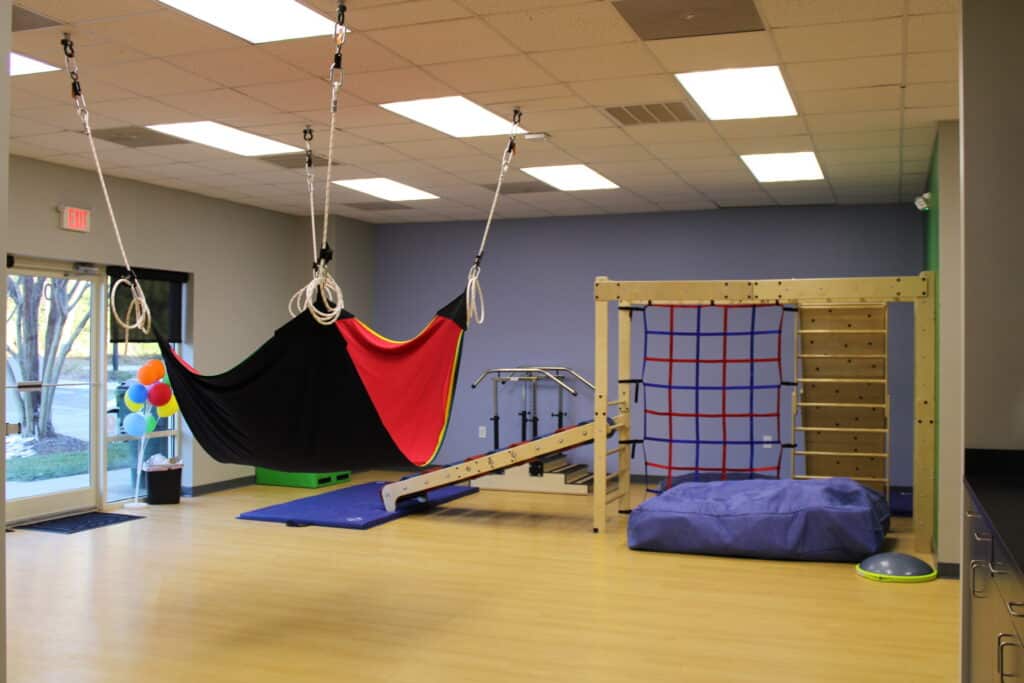
How Ivy Pediatric Therapy Supports Specialty Pediatric Care
Supporting children with complex communication needs requires time, collaboration, and specialized knowledge.
At Ivy Pediatric Therapy, Kendall benefits from resources that help make that possible, including:
- An AAC clinical team.
- Access to AAC specialists.
- Continuing education opportunities.
- Continuing education funding.
- Administrative time for care coordination.
- Collaboration with occupational therapists and physical therapists.
- A team-oriented clinic environment.
“One of the things I appreciate most about Ivy is having access to other clinicians who are knowledgeable about AAC,” Kendall said. “You don’t have to figure everything out on your own.”
These supports allow clinicians to spend time coordinating care, solving challenges creatively, and developing individualized solutions for children like Grayson.
Find Support for Your Child’s Communication Journey
Grayson’s story is ultimately a story about access.
It is about a joyful child with thoughts, preferences, questions, relationships, and a desire to connect. It is about a family that advocates tirelessly. It is about a team that believes communication should fit the child, not the other way around.
If you’re ready to explore communication support for your child, find an Ivy Rehab for Kids location near you and connect with a team that believes every child deserves a way to be heard.
References
- American Speech-Language-Hearing Association (ASHA). “Augmentative and Alternative Communication (AAC).” https://www.asha.org/public/speech/disorders/aac/
- AssistiveWare. “AAC and Communication Resources for Families.” https://www.assistiveware.com/
- Beukelman, D. R., & Light, J. C. Augmentative and Alternative Communication: Supporting Children and Adults With Complex Communication Needs (excerpt). Paul H. Brookes Publishing, 2020. https://brookespublishing.com/wp-content/uploads/2020/05/BeukelmanExcerpt0506-1.pdf