Summer has a great publicist. It arrives with promises of lazy mornings, carefree afternoons, and a welcome break from the hustle of the school year. School’s out, the calendar opens up, and many families look forward to a season that feels a little lighter.
But for many neurodivergent kids, summer can feel harder, not calmer.
When the school year ends, familiar routines can disappear almost overnight. Wake-up times shift. Meals happen at different times. Days may include more noise, more heat, more transitions, more travel, and more open-ended time. For children who rely on predictability, that kind of freedom can feel less like a vacation and more like being handed a puzzle without the picture on the box.
The good news? You don’t need a color-coded activity calendar worthy of a project manager. A few flexible routines and sensory-friendly strategies can make summer feel more manageable—and often more enjoyable—for the whole family.
Common Summer Sensory Challenges for Kids
Summer introduces sensory experiences that may not be part of your child’s usual school-year routine. Some children love these experiences. Others may find them uncomfortable or overwhelming.
Common summer sensory challenges include:
- Hot weather and bright sunlight.
- Loud pools, parks, parties, or fireworks.
- Sticky sunscreen, bug spray, sand, or wet clothing.
- Changes in meals, sleep, screen time, or activity levels.
- Travel, crowds, and unfamiliar places.
- Long stretches of open-ended time with unclear expectations.
These experiences can add up quickly, especially when your child’s usual routine has changed. A pool day may not be “just” a pool day. It might include sunscreen, a loud locker room, slippery surfaces, cold water, wet clothing, bright sun, transitions, and the disappointment of leaving before your child feels ready.
Many parents have experienced the moment when a child melts down in the parking lot after what seemed like a fun outing. Often, it wasn’t one thing that caused the reaction—it was the accumulation of many sensory and emotional demands throughout the day.
When you look at it that way, it becomes clear that a simple summer outing can ask a lot from one nervous system.

Signs Your Child May Need More Structure or Sensory Support
Every child is different, but there are some common signs that your child may need more predictability, more sensory support, or a calmer rhythm.
You may notice:
- More meltdowns, shutdowns, or irritability.
- Trouble moving from one activity to another.
- Asking the same questions again and again.
- Avoiding outings or becoming upset before leaving home.
- Seeking more jumping, climbing, squeezing, or rough-and-tumble play.
- Covering ears, hiding, withdrawing, or asking to leave noisy places.
- Having a harder time falling asleep or waking up.
These signs do not mean your child is being difficult. They may be showing you that their body needs clearer expectations, more sensory support, or a reset before the next part of the day.
How to Create Structure Without Over-Scheduling Summer
Structure does not have to mean planning every minute. In fact, many families do better with “daily anchors” instead of a strict schedule.
Daily anchors are a few predictable parts of the day that stay mostly consistent, even when the rest of the day changes.
Try starting with these simple supports:
- Keep morning routines simple and familiar. A predictable start can help the rest of the day feel less overwhelming.
- Use the same meal and snack windows when possible. Hunger and thirst can make regulation harder.
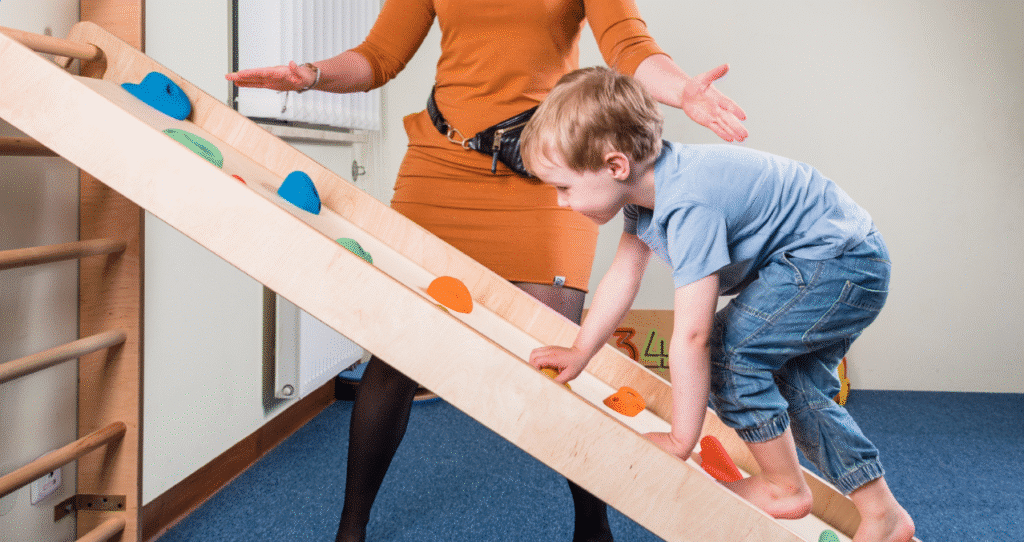
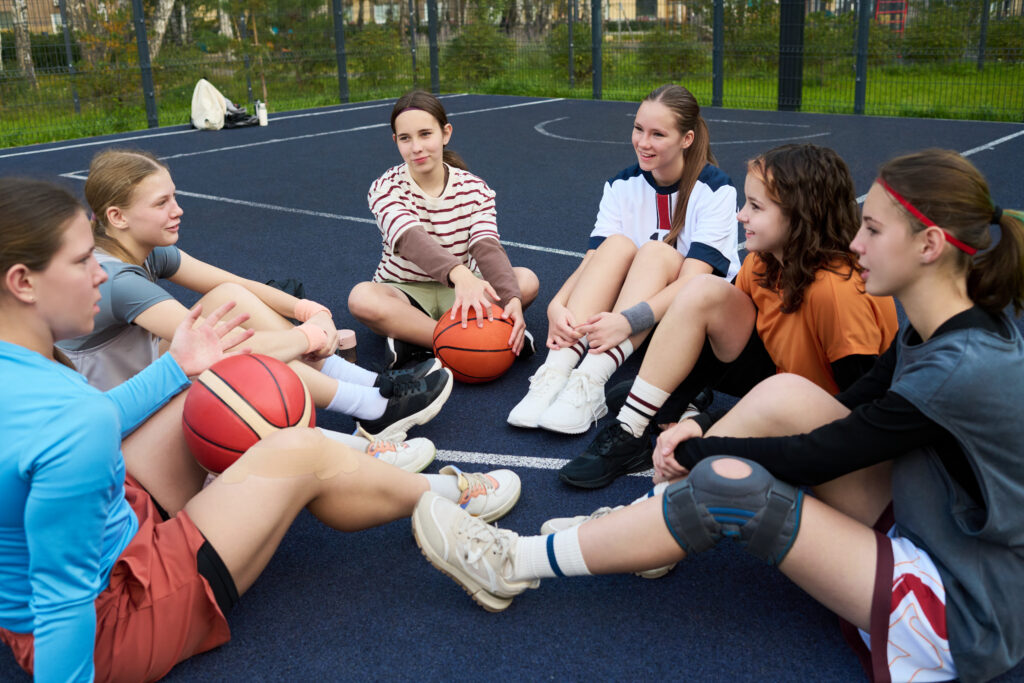
- Plan one movement activity each day. Swimming, walking, jumping, biking, playground time, or an indoor obstacle course can help many children feel more organized.
- Build in quiet time. A short daily reset can help children decompress before the next activity.
- Protect bedtime routines. Sleep plays a major role in emotional regulation, attention, and flexibility.
- Preview the day. A quick morning check-in can help your child understand what to expect.
The goal is not perfection. The goal is enough predictability to help your child feel supported while still leaving room for summer fun, rest, spontaneity, and the occasional last-minute ice cream stop.

Visual Supports Can Make Summer Feel More Predictable
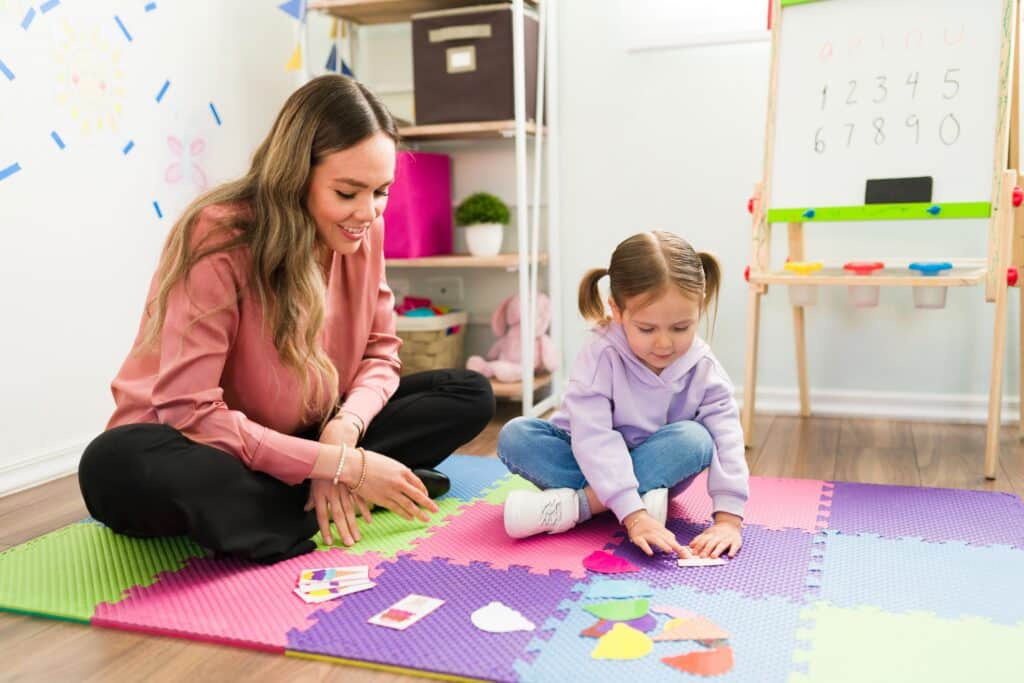
Visual supports can reduce the pressure on memory, attention, and verbal processing. Instead of needing to hold the whole day in their mind, your child can see what is coming next.
Helpful visual supports may include:
- Picture schedules for younger children.
- Whiteboard schedules for the day.
- First/then boards for transitions.
- Sticky notes with activity choices.
- Timers for screen time, leaving the house, or ending an activity.
- Simple calendars for camps, trips, therapy, or family events.
For example, you might use a first/then statement like, “First sunscreen, then sprinkler.” Or you might write a simple plan: “Lunch, quiet time, then park.”
Visual supports can also help with changes. If plans shift because of weather, a closed pool, or a tired sibling, showing the new plan can make the change feel less sudden and easier to process.
For many children, seeing the plan on paper can be much more reassuring than hearing it once and trying to remember it all day.
Offer Choice Within Boundaries
Too many choices can feel overwhelming. No choices can feel frustrating. Offering two or three realistic options gives your child a sense of control within a predictable framework.
Try choices like:
- “Do you want to play outside before lunch or after lunch?”
- “Do you want headphones or a quiet break before we go to the party?”
- “Do you want water play or a sensory bin this afternoon?”
- “Do you want to read in your room or listen to an audiobook on the couch?”
Choices should be options you can follow through on. When children know their choices are clear and realistic, they often feel more confident, capable, and less overwhelmed.
As adults, we generally appreciate having some say in our day. Children often respond similarly when they feel their preferences are being considered.

Sensory Break Ideas for Summer Days
Sensory breaks work best when they are built into the day before things feel too hard. Instead of waiting until your child is already overwhelmed, try adding small moments of movement, quiet, pressure, or calming input throughout the day.
Summer sensory break ideas include:
- Jumping, climbing, animal walks, or obstacle courses.
- Carrying groceries, pushing a laundry basket, or helping with yard work.
- Water play with cups, sprinklers, buckets, or supervised pool time.
- Sidewalk chalk, bubbles, finger painting, or sponge painting.
- Quiet time with dim lights, calming music, or noise-reducing headphones.
- Deep pressure, such as a firm hug, pillow squishes, or a weighted lap pad if appropriate.
- Sensory bins with rice, beans, sand, or water, based on the child’s age and safety needs.
Choose activities based on your child’s age, preferences, supervision needs, and safety considerations. What feels calming for one child may feel uncomfortable for another, so it is perfectly OK to experiment and notice what helps.
How Occupational Therapy Can Support Summer Routines
If summer routines, sensory sensitivities, or transitions feel especially hard, occupational therapy can help.
Pediatric occupational therapy focuses on helping children participate more comfortably and confidently in everyday activities. Occupational therapists work with children and families to better understand sensory preferences, motor needs, daily routines, transitions, and regulation strategies. They can help identify what supports your child’s body and brain, then turn those supports into practical tools you can use at home, during outings, at camp, while traveling, or before school starts again.
Occupational therapy is not about changing who your child is. It is about helping them feel supported, understood, and more comfortable participating in daily life. The goal is to build on strengths, reduce barriers, and help children engage in the activities that matter most to them.
Families can also explore Ivy’s full range of pediatric therapy services to learn about additional supports that may benefit their child, including pediatric speech therapy and Applied Behavior Analysis (ABA) therapy.
A Little Structure Can Create More Freedom
Summer doesn’t need to be perfectly planned to be successful. It also doesn’t need to be completely unstructured to feel fun.
For many neurodivergent kids, a little predictability creates more room for joy. When children know what to expect and have the sensory support they need, they may feel more comfortable exploring, playing, resting, and connecting with family.
Remember, the goal isn’t to create the “perfect” summer. It’s to create a summer that works for your child and your family.
If you’re ready to find support for your child, explore an Ivy Rehab location near you and connect with a pediatric therapy team that can help.
References
- Centers for Disease Control and Prevention. “Data and Statistics on Children’s Mental Health.” (2024). https://www.cdc.gov/children-mental-health/data-research/index.html
- Child Mind Institute. “Summer and Sensory Processing Issues.” (2025). https://childmind.org/article/summer-and-sensory-processing-issues/
- VizyPlan. “Summer Regression: How to Protect Your Child’s Progress During the School-to-Summer Transition.” (2026). https://www.vizyplan.com/blog/summer-regression-how-to-protect-your-childs-progress-during-the-school-to-summer-transition
- Acclaim Autism. “Routines Matter: Why Kids with Autism Need Predictable Structure During Summer.” (2025). https://www.acclaimautism.com/blog/routines-matter-why-kids-with-autism-need-predictable-structure-during-summer/
- Monarch Assessment. “What to Do When the Summer Boredom Hits: Structure Without Pressure.” (2025). https://www.monarchassessment.com/post/what-to-do-when-the-summer-boredom-hits-structure-without-pressure
- National Institute of Mental Health. “Autism Spectrum Disorder.” (2024). https://www.nimh.nih.gov/health/topics/autism-spectrum-disorders-asd

Before you go
Find the right therapy today.
Discover how Ivy Rehab can help you get back to doing what you love.