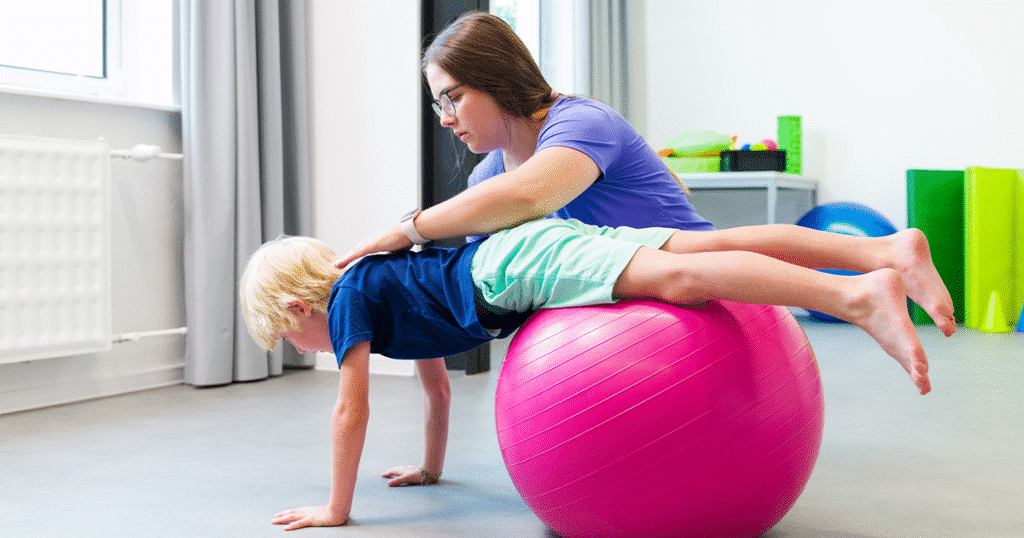
At Ivy Rehab for Kids, the foundation of pediatric physical therapy goes beyond exercises and milestones; it’s about creating a strong, stable base from which children can thrive. Jill Owen, a seasoned Pediatric Physical Therapist and current Pediatric PT Residency Program Director at Ivy Rehab, recently sat down to talk about one essential yet often overlooked component of childhood development: core stability.
In this conversation, Jill breaks down the connection between a child’s physical foundation and their ability to perform everyday tasks, from chewing and swallowing to using assistive communication devices and learning through play. She emphasizes the crucial role core stability plays in supporting posture, balance, and motor function, highlighting how it underpins whole-child wellness and development. Whether you’re a parent, educator, or pediatric care provider, her insights offer a powerful reminder of how physical therapy supports whole-child wellness.
Early support leads to stronger outcomes. Connect with an Ivy Rehab for Kids specialist near you.
Why Core Strength and Stability Are the Key to Childhood Development
One of the most valuable takeaways from Jill’s perspective is how core stability acts as the foundation for nearly every developmental skill a child learns. Core stability relies on the strength and coordination of the core muscles, including the abdominal muscles, which are essential for posture, balance, and motor control. Whether a child is learning to chew and swallow safely or operate a communication device, having a strong core is vital.
“Core stability is kind of the foundation that kids need for any skills,” Jill explains. “But especially when it comes to chewing and swallowing, because those skills are so complex… they require coordination from a lot of different systems.”
Here’s why it matters:
- Without adequate core stability and strong core muscles, a child’s ability to perform daily activities, such as sitting upright, participating in sports, or completing tasks like dressing and writing, can be significantly impacted.
- This added effort detracts from their ability to focus on complex tasks such as speech, feeding, or motor planning.
- When posture becomes automatic through core strength, kids can focus more easily on learning and social interaction.
From W-Sitting to 90/90: Simple Fixes That Support Core Engagement
Jill also highlights a common posture that many parents and therapists notice in children with low muscle tone: W-sitting. In this position, the child’s bottom is on the ground, with legs splayed out in a “W” shape behind them.
“That position is not great for their hips,” she notes. “It doesn’t require a lot from them when it comes to core stability or postural stability.”
To encourage better posture and core engagement, Jill recommends a 90/90 sitting position, which looks like sitting in a chair and helps maintain a neutral spine for optimal alignment:
- Feet flat on the floor
- Ankles, knees bent at 90 degrees, and hips bent at 90 degrees
- Trunk supported as needed to maintain upright posture and a neutral spine
“That’s a perfect quick fix for those low-tone sitters,” she adds.
This small shift can make a big impact in helping children build the postural control they need to master more advanced physical and cognitive skills.
Feeding Therapy: Where Core Meets Coordination
In feeding therapy, core strength is even more essential. The act of eating, chewing, swallowing, and coordinating breath and body demands a lot from a child’s neuromuscular system.
The pelvic floor plays a key role in supporting posture and stability during feeding, as its activation helps maintain proper alignment and balance, enabling more effective and safer functional movements.
“The stronger their core is, the more stable they are in that posture,” Jill says. “The less energy and mental attention they have to give to it… which means they’ll have more energy and more attention that they can give to those higher-level feeding skills.”
In other words, core stability and supporting posture reduce the “noise” of effort, allowing the brain and body to focus on learning to chew and swallow safely and effectively. It’s a holistic approach to therapy that connects the dots between movement, strength, and developmental readiness.
Supporting AAC Use Through Core and Motor Coordination
Jill also works closely with speech-language pathologists (SLPs) to support children who use augmentative and alternative communication (AAC) devices. These tools, such as touchscreens or voice-output devices, require precise motor coordination and controlled posture to use effectively. Good upper body strength and trunk control are essential for maintaining the stability needed to access and operate AAC devices efficiently.
“The more mobile or the more upright a kiddo is, the more access they typically have to their environment, but also AAC devices,” she explains.
Children who struggle to maintain posture may have difficulty reaching or interacting with their devices. Jill notes that improving gross motor control often has a positive ripple effect on fine motor skills, such as touchscreen use.
“If we can improve those foundational postural coordination and control pieces… the kid’s going to do a lot better with those more refined motor and motor planning aspects.”
Collaboration Is Key: Working Alongside SLPs and Families
One of the hallmarks of Jill’s work at Ivy Rehab is collaboration, especially with speech-language pathologists like Kate, who co-directs the Pediatric SLP Residency Program. Collaboration with occupational therapists further enhances outcomes for children with complex needs, as these professionals play a key role in evaluating and supporting motor and functional skills.
“Kate and I really just kind of lean into each other’s strengths… When we’re co-treating a kiddo with AAC needs or mobility aid needs, I’m really just gonna listen to exactly what Kate wants.”
This deep respect for interdisciplinary teamwork ensures that each child receives a care plan tailored to their unique communication and mobility needs. By coordinating expertise across therapy disciplines, including occupational therapists, Ivy Rehab creates optimal outcomes for the children they serve.
The Big Three Motor Milestones (And Why They Matter)
When evaluating a child’s development in the first two years of life, Jill watches closely for what she calls the “big three” motor milestones:
- Crawling
- Standing alone
- Walking (with or without assistance)
These milestones are key gross motor activities that reflect a child’s functional mobility and dynamic movement ability. They set the stage not only for physical independence but also for social and cognitive exploration. If a child is delayed in reaching them, early intervention can make all the difference.
Play First: The Heart of Pediatric Therapy
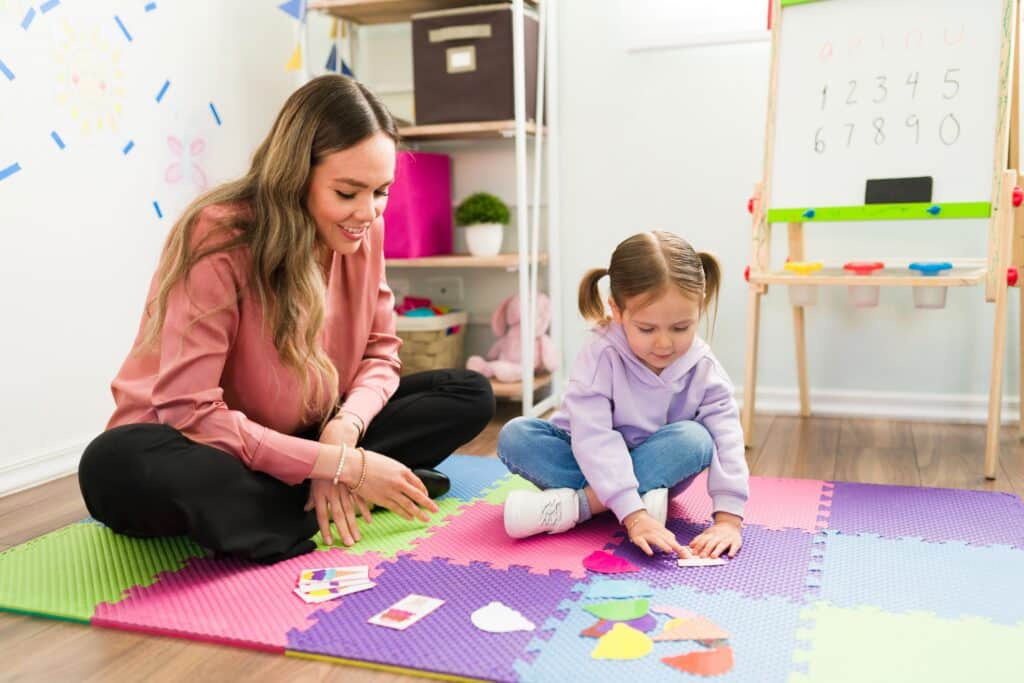
Above all, Jill emphasizes that play should be at the center of every pediatric therapy session.
“Play should always be the priority… That’s how kids learn best, when they are intrinsically motivated or just really happy and feeling calm and ready to play.”
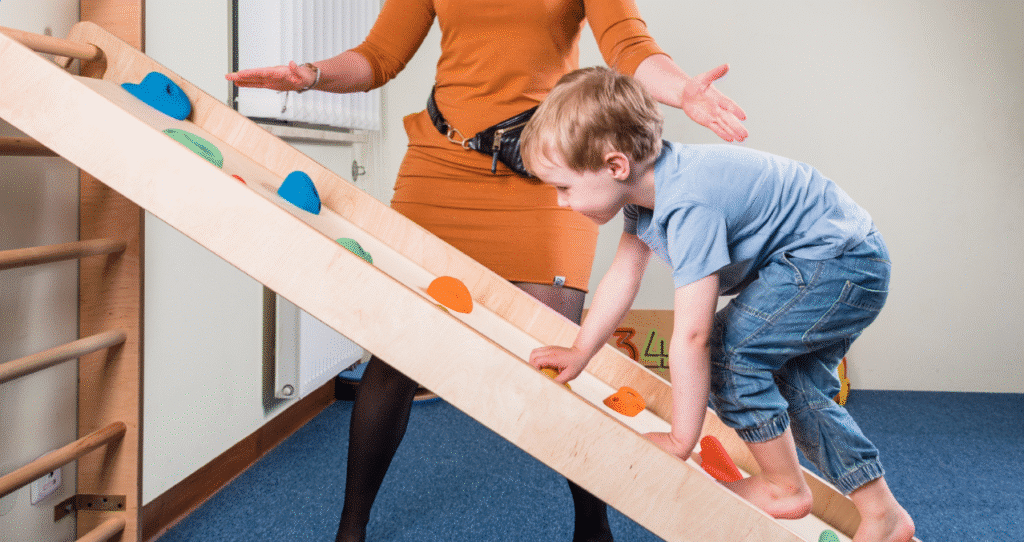
Examples of pediatric exercises that make therapy fun and engaging include animal walks like bear walks and crab walks, using a stuffed animal as a prop or target, and setting up obstacle courses with couch cushions for climbing, crawling, and jumping. Integrating these activities into a child’s routine helps develop core strength, motor skills, and spatial awareness while keeping therapy playful and motivating.
She lets children choose their own toys, joins them in peer spaces if that’s motivating, and always encourages family participation, because parents and siblings often know what makes their child light up.
By following the child’s lead and supporting emotional readiness, therapists can create joyful, effective therapy experiences that unlock real progress.
Why Early Intervention Matters
Whether it’s physical delays, feeding difficulties, or trouble accessing devices, Jill’s advice to families is clear:
“The earlier we can see somebody, the better. Even if it’s just a potential concern that you’re worried about, we can always help.”
The Power of Starting Early
When therapy starts early, it can make a significant difference in long-term outcomes, especially for children with:
- Developmental delays
- Core weakness or poor trunk control
- Difficulty with balance or posture
- Challenges with mobility or coordination
- Needs related to AAC or assistive devices
Pediatric physical therapists are trained to assess and address these concerns with targeted strategies that promote growth, strength, and independence.
Key Interventions Therapists Use
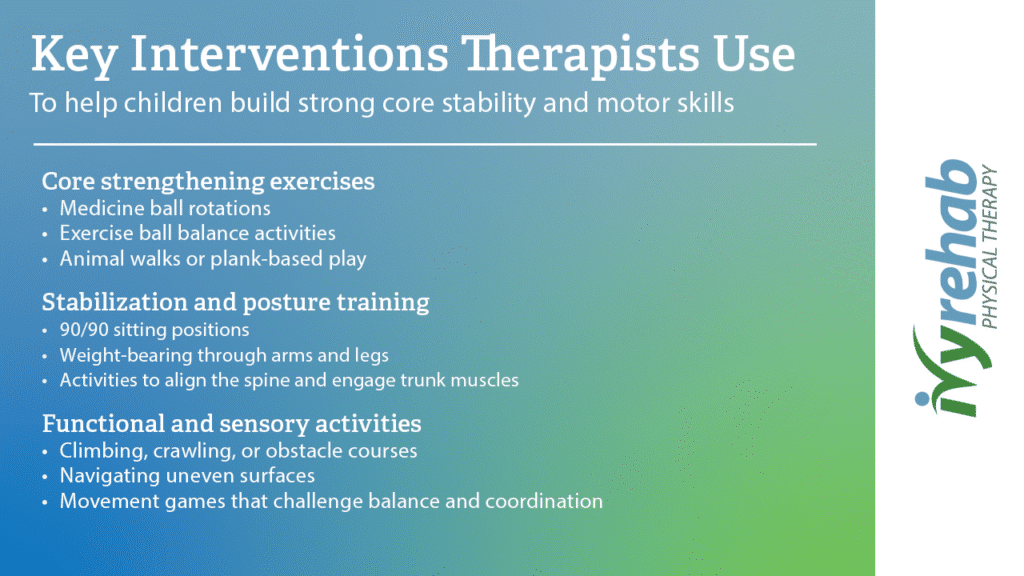
To help children build strong core stability and motor skills, physical therapists may incorporate:
- Core strengthening exercises:
- Medicine ball rotations.
- Exercise ball balance activities.
- Animal walks or plank-based play.
- Stabilization and posture training:
- 90/90 sitting positions.
- Weight-bearing through arms and legs.
- Activities to align the spine and engage trunk muscles.
- Functional and sensory activities:
- Climbing, crawling, or obstacle courses.
- Navigating uneven surfaces.
- Movement games that challenge balance and coordination.
These strategies also support:
- Endurance and stamina.
- Cognitive development through motor planning.
- Sensory integration for children who need help regulating input.
According to a 2025 study published in Healthcare (MDPI), core stability training was found to be effective in improving standing, functional balance, and walking abilities in children with diplegic cerebral palsy. This research reinforces what pediatric therapists see daily: that building trunk strength and postural control creates a stronger foundation for mobility and independence.
The Role of the Shoulder Girdle
Strong upper body and shoulder girdle muscles are critical, especially for children with conditions like cerebral palsy, to support:
- Functional mobility
- Weight-bearing through arms
- Coordination with AAC devices or fine motor tasks
Therapy That Fits the Child
Sometimes therapy is about structured intervention. Other times, it’s about offering guidance, reassurance, or a home program to support growth. But in all cases, early support leads to faster progress and reduces the likelihood of long-term compensations or challenges.
Empowering Families, Building Resilience
Jill Owen’s work is rooted in empowerment, helping children gain confidence in their bodies and giving families the tools to support them every step of the way.
Through evidence-based, compassionate, and playful physical therapy, Ivy Rehab for Kids is building more than strong cores; they’re building strong futures. If you’re wondering whether your child may benefit from pediatric physical therapy, Ivy Rehab is here to help. Reach out to your nearest location or schedule a consultation to get started.

Before you go
Find the right therapy today.
Discover how Ivy Rehab can help you get back to doing what you love.