
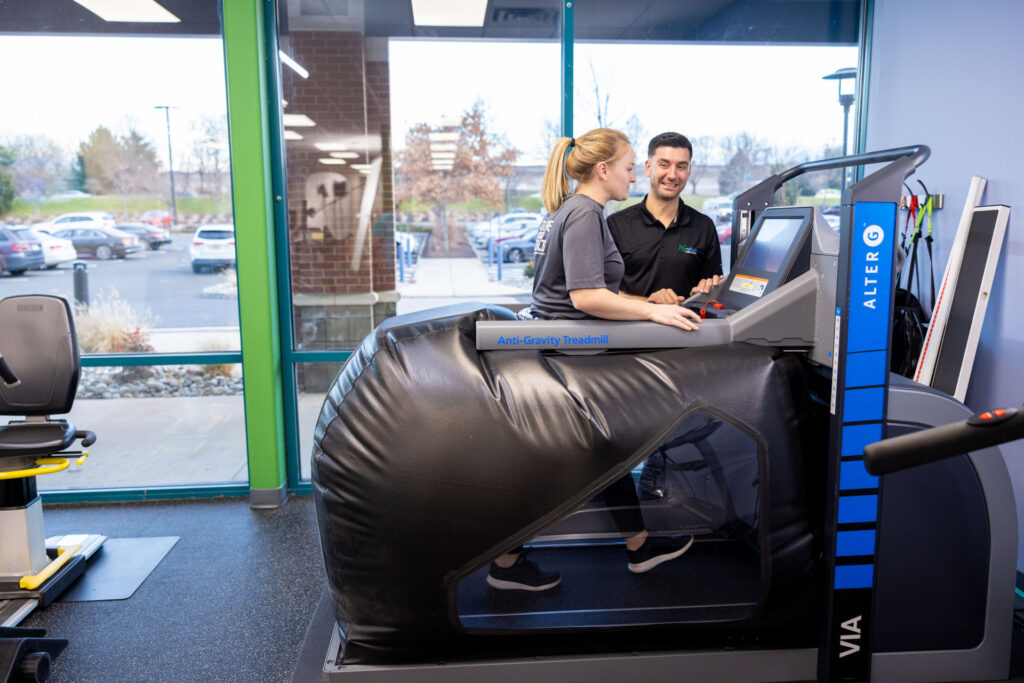
AlterG Anti-Gravity Treadmill
Walking or running can feel out of reach when pain, injury, surgery, or weakness makes full body-weight movement too difficult. The AlterG Anti-Gravity Treadmill helps reduce that load, so you can practice movement with less stress on the body.
What Is the AlterG Anti-Gravity Treadmill?
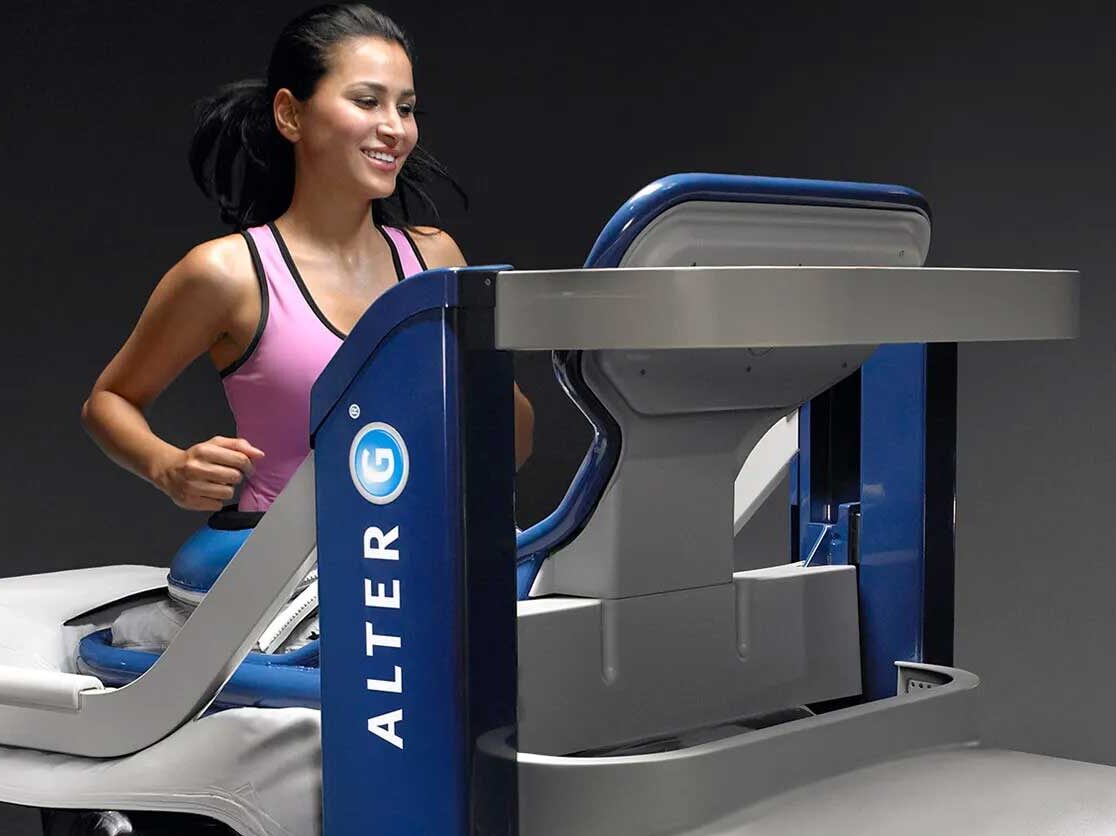
The AlterG Anti-Gravity Treadmill is a specialized treadmill that uses differential air pressure to reduce how much body weight you feel while walking or running.
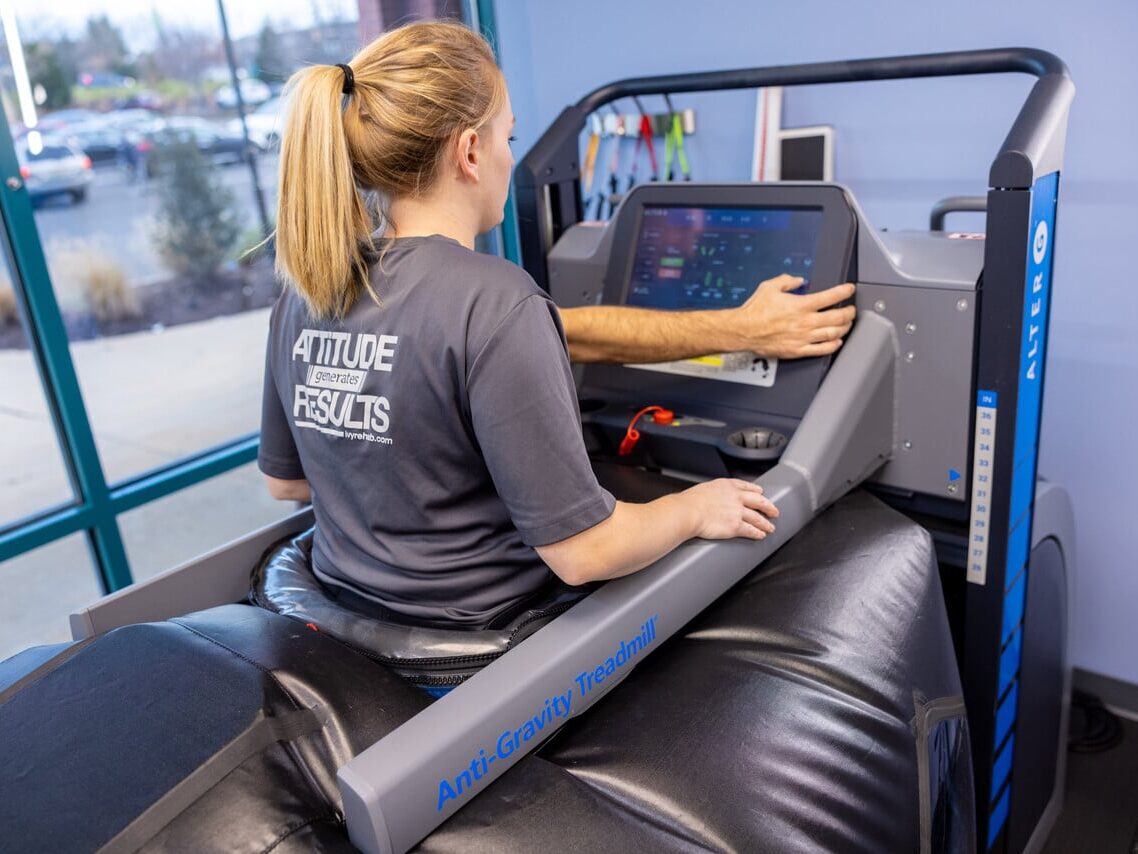
You step into a chamber around the lower body, and the system uses air pressure to gently support part of your weight. The amount of support can be adjusted in small increments, allowing your physical therapist to choose a level that fits your symptoms, strength, and recovery stage.
For some patients, reducing body-weight impact makes movement more comfortable. For others, it allows them to practice gait, walking, jogging, or running mechanics while healing tissue, joint pain, or weakness still limits full-load activity.
The AlterG is often used during orthopedic rehab, sports injury recovery, post-surgical rehab, neurological gait training, and programs for people who need a lower-impact way to move.
AlterG Therapy at Ivy Rehab
The AlterG is not used as a standalone treatment. It is one part of a complete physical therapy plan.
Your physical therapist will first evaluate your condition, symptoms, mobility, strength, balance, walking pattern, and goals. If the AlterG is appropriate, they will choose a body weight setting that helps you move with better comfort and control.
During each session, your physical therapist can monitor your gait, adjust the amount of support, change the speed, and progress the challenge as your body is ready. Your plan may also include strengthening, balance work, range of motion exercises, manual therapy, and functional movement practice.
The goal is to help you build toward real-life movement, not just treadmill time.
Who Can Benefit from AlterG Therapy?
AlterG therapy may help people who need to walk, jog, or run with reduced body-weight impact during rehab.
The AlterG may be helpful if you:
- Are recovering from knee, hip, ankle, foot, or lower extremity surgery.
- Are working through ACL reconstruction rehab or another knee rehabilitation program.
- Have a stress fracture or lower extremity injury that limits full weight-bearing activity.
- Are recovering from an Achilles tendon repair or another soft tissue procedure.
- Have joint pain that makes walking or running at full body weight uncomfortable.
- Need gait training after a neurological condition, such as Parkinson’s disease or stroke.
- Are an athlete or active adult trying to maintain movement and conditioning during recovery.
- Are an older adult who needs a more supported way to practice walking.
If full body-weight movement is too painful or difficult right now, the AlterG may give your rehab a more manageable starting point.
Our AlterG Therapy Services
Post-Surgical Rehabilitation with AlterG
After lower extremity surgery, walking normally can take time. Pain, swelling, weakness, surgical precautions, or weight-bearing limits may affect how you move.
The AlterG may help some patients practice walking with reduced body-weight impact during the rehab process. Your physical therapist can adjust the amount of support based on your procedure, surgeon’s guidance, symptoms, and healing stage.
As you progress, the amount of body-weight support may decrease while walking time, speed, or exercise challenge increases.
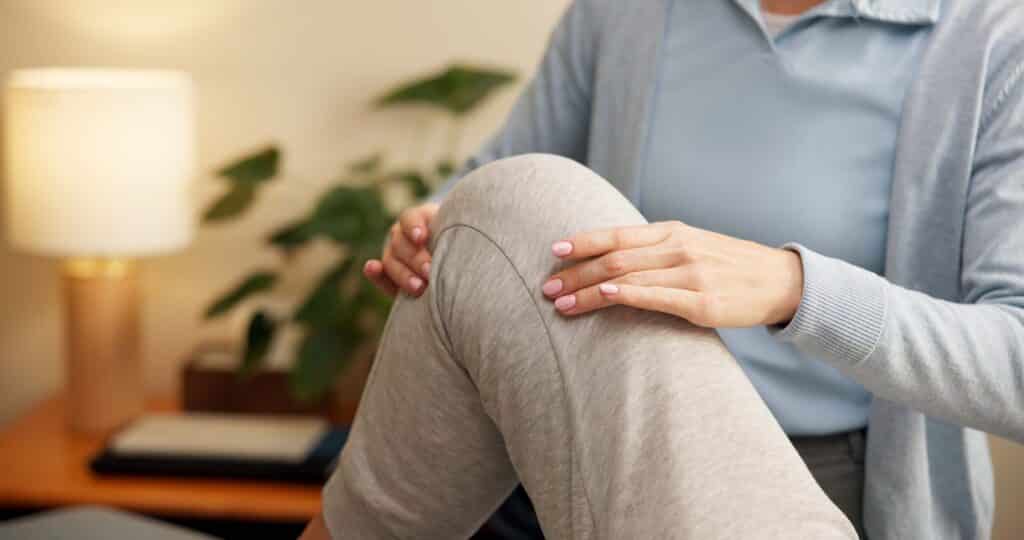
ACL and Knee Rehabilitation
After ACL reconstruction or another knee injury, patients often need to rebuild strength, walking mechanics, balance, and confidence before returning to higher-level activity.
The AlterG may be used to support walking, jogging, or running progressions when full body-weight activity is not yet appropriate or comfortable. Your physical therapist will decide when to add AlterG work based on your recovery stage, knee control, pain, swelling, and rehab goals.
AlterG sessions may be combined with quadriceps strengthening, hip strengthening, balance training, neuromuscular training, and return-to-sport preparation.
Lower Extremity Injury and Stress Fracture Recovery
Stress fractures and other lower extremity injuries often require a careful balance. The injured area needs time to heal, but complete rest can lead to stiffness, weakness, and loss of conditioning.
The AlterG may help some patients continue controlled walking or running-related activity with less body-weight impact. Your physical therapist will guide the progression, so loading increases gradually and matches your medical plan.
Neurological Rehabilitation and Gait Training
For some people with neurological conditions, walking can feel less steady, more tiring, or harder to coordinate. The AlterG can create a supported environment for gait training.
By reducing body-weight impact, patients may be able to practice walking with more confidence and repetition. Your physical therapist may use the AlterG along with balance training, strengthening, coordination work, and other neurological rehabilitation strategies.
Athletic Training and Return-to-Activity Support
Athletes and active adults may use the AlterG during recovery from lower extremity injuries or surgeries. It can help maintain running mechanics, walking tolerance, or aerobic conditioning while the body works back toward full-load activity.
Your physical therapist will match the program to your sport, injury, training demands, and return-to-activity goals. As your recovery progresses, AlterG work may transition into ground-based running, jumping, cutting, or sport-specific movement.
How We Approach AlterG Therapy
Step 1: Evaluation and Body-Weight Setting
Your physical therapist starts by evaluating your condition, symptoms, walking pattern, strength, mobility, balance, medical history, and any surgical restrictions.
If AlterG therapy is appropriate, your physical therapist selects a starting body-weight percentage that helps you move with better comfort and quality. The right setting is based on your current ability, not a generic number.
Step 2: Supervised Walking, Jogging, or Running
Your physical therapist supervises each AlterG session. They may monitor your gait, speed, stride, pain, fatigue, balance, and confidence while you move.
The session may focus on walking mechanics, jogging progression, running form, endurance, or controlled loading of the lower extremity. The amount of support can be adjusted as your symptoms and movement quality change.
Step 3: Progression Toward Full Body-Weight Movement
As your body is ready, your physical therapist may gradually reduce the amount of support, so you work closer to full body weight.
Your care may also include strengthening, balance training, mobility work, manual therapy, and activity-specific exercises. The goal is to help you carry progress from the AlterG into walking, running, work, sports, and daily life.
FAQs
Does the AlterG Feel Uncomfortable?
Most people adjust to the AlterG quickly. The shorts and chamber may feel snug at first, and moving with reduced body weight can feel unusual for the first few minutes.
Your physical therapist will help you get set up, explain what to expect, and adjust the settings, so the session feels right for your body.
How Does the AlterG Anti-Gravity Treadmill Work?
The AlterG uses differential air pressure to support part of your body weight while you walk, jog, or run. You wear special shorts that zip into the treadmill chamber, which helps create a sealed environment around the lower body.
Your physical therapist can adjust the level of body-weight support in small increments. That makes it easier to find a setting that matches your comfort, symptoms, and rehab goals.
Is the AlterG Only for Post-Surgical Patients?
No. The AlterG is often used after surgery, but it may also help with lower extremity injuries, stress fracture recovery, gait training, neurological rehabilitation, joint pain, athletic rehab, and return-to-running programs.
Your physical therapist will determine whether it is appropriate based on your condition, movement quality, and goals.

Take the first step toward relief.
You don’t have to live with back pain. Ivy Rehab’s expert team is ready to help you move better, feel stronger, and enjoy life without limitations. Schedule an appointment today for the best treatment for back pain.