Strong hips are more than a fitness goal. They’re the foundation for safe, confident movement. The hip muscles work as stabilizers every time you climb stairs, step off a curb, or shift your weight to catch your balance. When these muscles are weak, the risk of falls and injuries goes up.
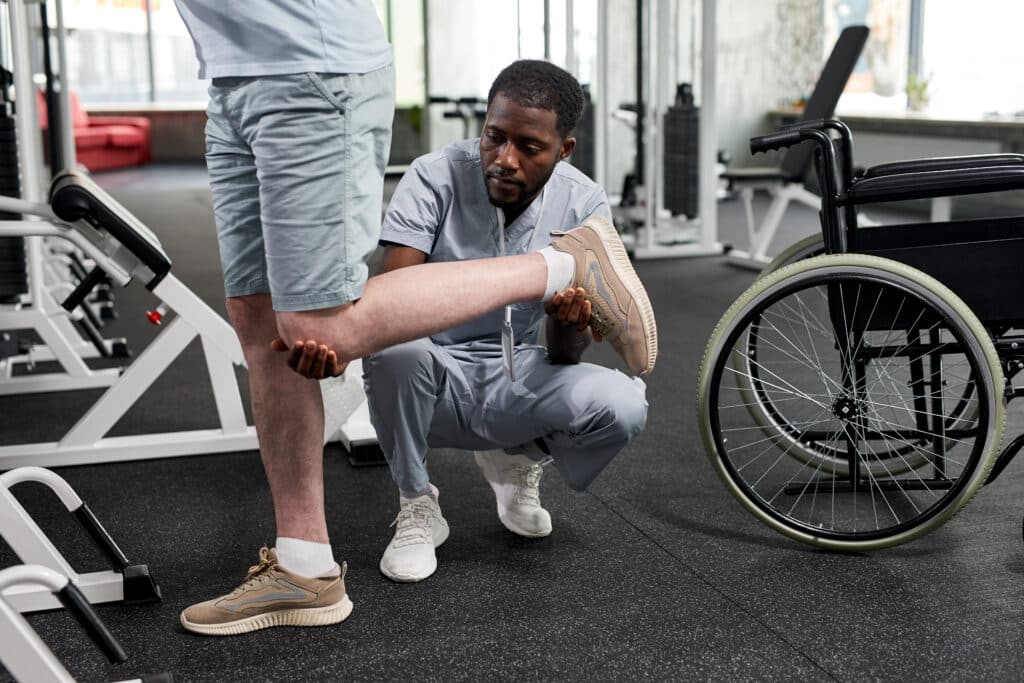
At Ivy Rehab, our physical therapists use evidence-based hip strengthening physical therapy programs to reduce hip pain, restore mobility, and improve balance. These programs are about retraining the body to work with the vestibular system (your inner ear’s balance center), vision, and proprioception (the body’s sense of where it is in space) to keep you steady. Plus, strengthening the hip flexors and thigh muscles is crucial for maintaining good posture and enhancing everyday movement.
Why Hip Strength Matters
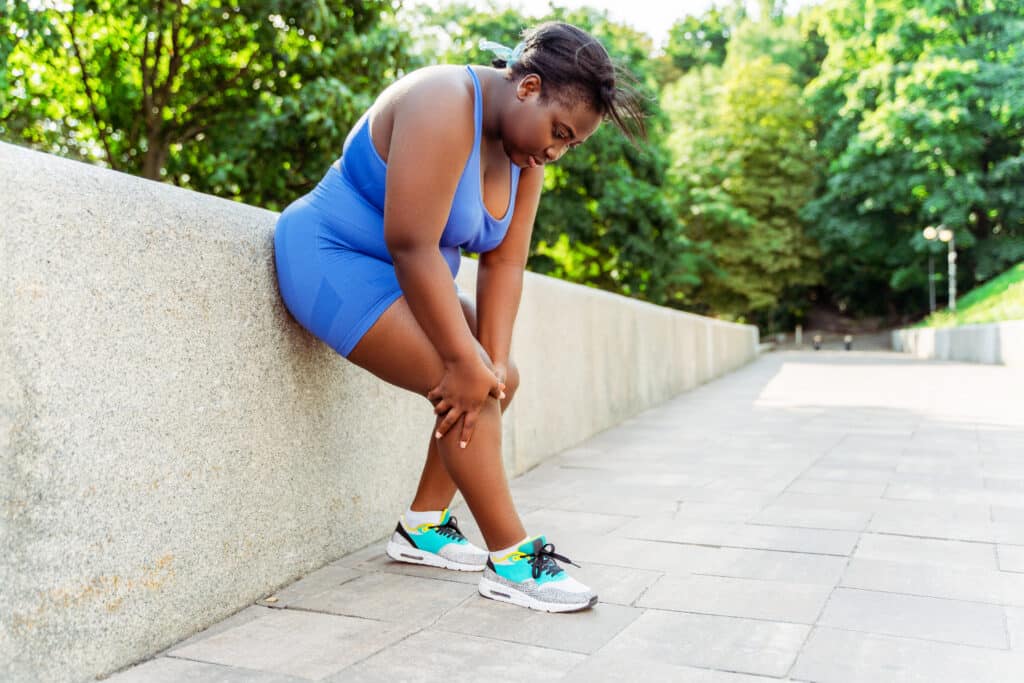
The hips act like the body’s central hub, connecting the upper and lower body, so weakness here changes the way your whole body moves. Weak thigh and hip flexor muscles also result in poor body mechanics, leading to increased fatigue and tightness. Seniors may shorten their stride, shuffle their feet, or widen their stance to feel more stable. These changes burn more energy and increase the risk of tripping.
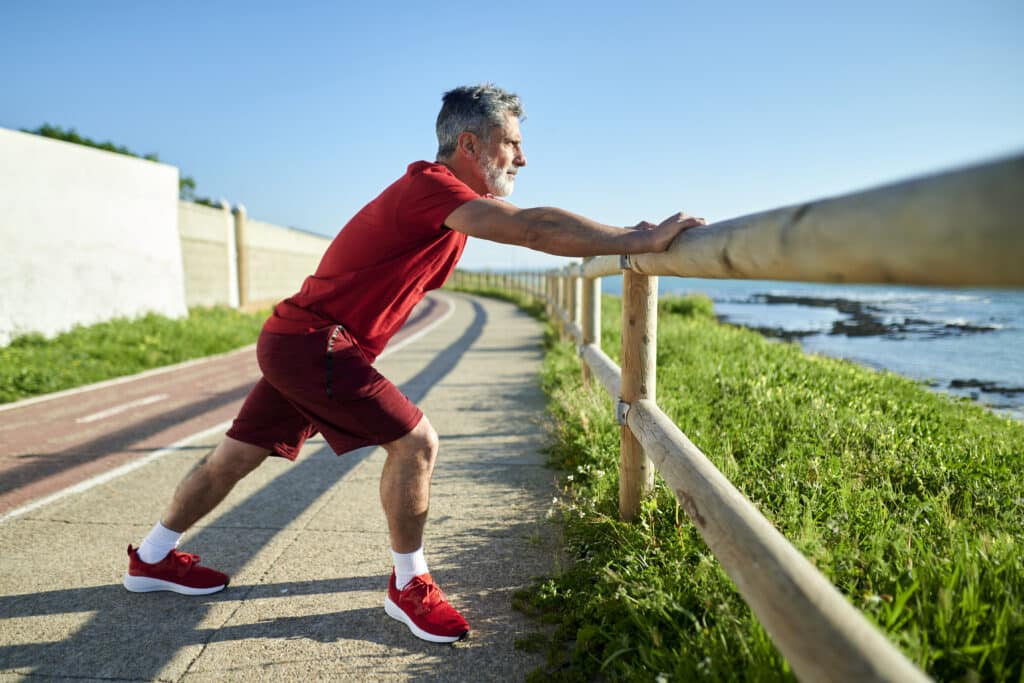
For athletes, hip weakness can throw off alignment and increase stress on the knees and lower back. For older adults, it can mean instability with every step. Pair hip weakness with age-related vision changes or vestibular decline, and the risk of falling climbs even higher.
On the other hand, research shows that strong hip muscles:
- Stabilize the pelvis for smoother walking and running
- Protect the knees and lower back from excess strain
- Support balance and reduce fall risk in older adults
- Improve athletic performance and endurance
If you or someone you care for struggles with hip weakness or unsteadiness, an Ivy Rehab physical therapist can design a program tailored to your goals. Find a clinic near you.
PT-Approved Hip-Strengthening Exercises
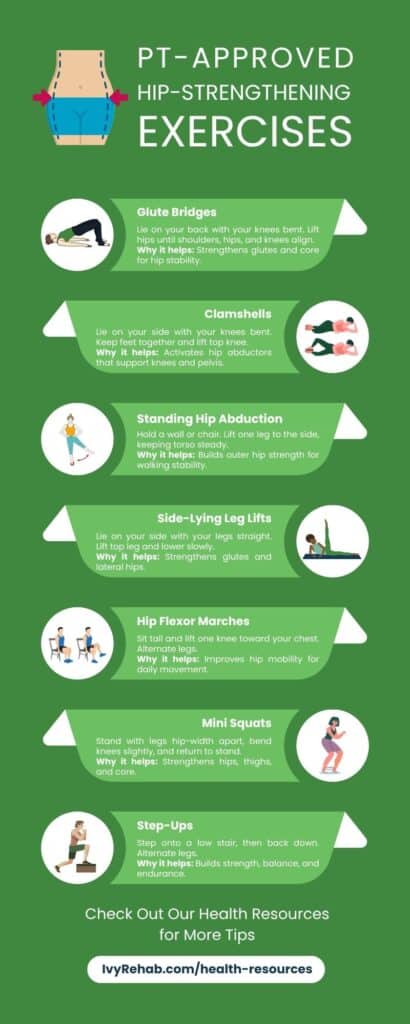
These exercises are commonly used in hip strengthening physical therapy programs that work on multiple muscles for optimal benefit. They target the glutes, hip abductors, and stabilizers, which are muscles that directly influence balance and mobility.
Always check with your physical therapist before starting new exercises, especially if you’ve had surgery or chronic hip pain.
Glute Bridges
- Lie on your back, knees bent, feet flat on the floor.
- Press through your heels to lift your hips until shoulders, hips, and knees form a line.
- Hold for 2-3 seconds, then slowly lower.
- Why it helps: Strengthens glutes and core muscles, improving hip stability and support for daily movements.
Clamshells
- Lie on your side with knees bent, feet together.
- Keep feet touching, lift your top knee as if opening a clamshell.
- Lower with control to feel the burn in your hip muscles.
- Why it helps: Targets the hip abductors, which stabilize your knees and pelvis when walking or climbing stairs.
Standing Hip Abduction
- Stand tall, holding onto a chair or wall for balance.
- Slowly lift one leg out to the side without tilting your trunk.
- Return to start.
- Why it helps: Strengthens the outer hips, essential for stability during walking.
Side-Lying Leg Lifts
- Lie on your side with legs straight.
- Lift the top leg upward without rolling forward or back.
- Lower with control.
- Why it helps: Builds strength in the glutes and lateral hip muscles.
Hip Flexor Marches
- Sit upright in a chair.
- Relax arms, and keep feet flat on the floor to maintain a stable position.
- Lift one knee toward your chest, then lower it back down.
- Alternate legs.
- Why it helps: Improves hip mobility and stability for daily activities like getting out of a car or climbing stairs.
Mini Squats
- Stand with feet hip-width apart, holding a stable surface or placing hands on hips for support.
- Bend knees slightly (no more than 45 degrees), then return to standing.
- Why it helps: Strengthens hips, thighs, and core for functional movements.
Step-Ups
- Step onto a low platform or stair, then return to the floor with controlled movement.
- During each step, maintain a straight posture for maximum thigh muscle activation.
- Alternate legs.
- Why it helps: Mimics daily activities while improving hip strength, balance, and endurance.
Looking for a safe way to start? Make sure to always complete your dynamic stretching exercises and ask your Ivy Rehab therapist about a guided program designed for your age and activity level.
Benefits of Hip Strengthening
Strong hips are about more than standing tall. They influence how safely and efficiently your body moves through the day, reducing tightness and promoting flexibility. When hip muscles weaken, people often rely on compensations: slower walking, reduced step length, or holding onto furniture or railings. These adjustments may feel protective but often increase fatigue and fall risk.
Targeted hip strengthening exercises help restore a natural walking pattern. They improve balance reactions so you’re better able to recover if you stumble. They also take pressure off other joints, like the knees and lower back, which often become painful when the hips aren’t doing their share.
For seniors, stronger hips mean:
- More confidence moving around the house or community
- Lower likelihood of falls and related injuries
- Greater independence with daily activities like shopping, cooking, or driving
For caregivers, stronger hips in a loved one mean less worry about every step they take.
How Physical Therapy Helps
While you can find plenty of exercise lists online, physical therapy ensures you’re doing the right ones, the right way. At Ivy Rehab, every hip-strengthening program begins with an assessment. This may include gait analysis, balance testing (like the Berg Balance Scale or Timed Up and Go), and vestibular screening to understand where stability is breaking down.
From there, physical therapists create a progression that builds strength safely. For example, a patient who recently had a hip replacement might begin with supported glute bridges before advancing to functional exercises like step-ups. An older adult with vestibular issues may start with seated hip strengthening and balance retraining before practicing walking on uneven surfaces.
Personalized Programs
Therapists tailor hip strengthening plans to your age, activity level, and condition. That means a 70-year-old rebuilding balance won’t have the same program as a college athlete recovering from a sprain.
Post-Surgical Recovery
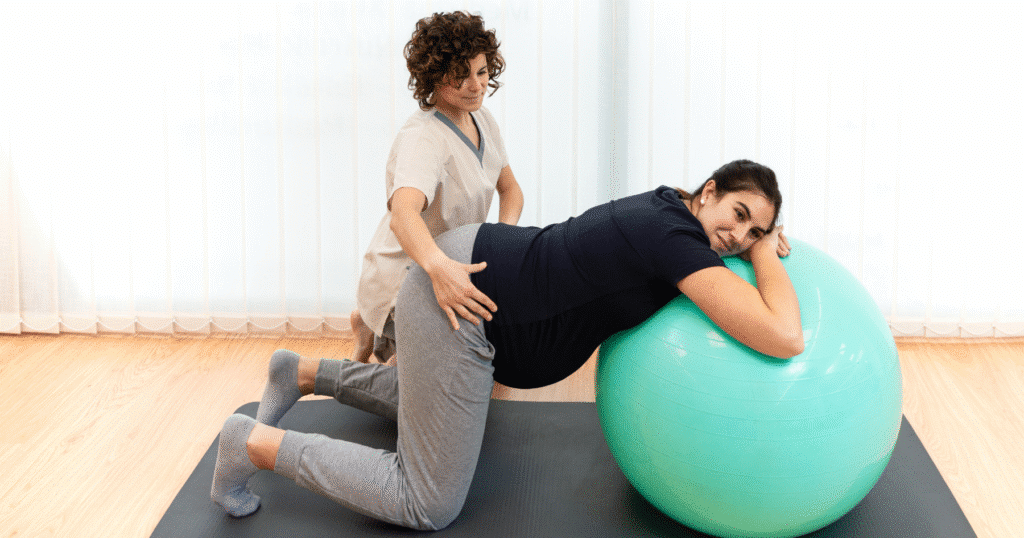
After a hip replacement or injury, physical therapists introduce safe, progressive exercises to restore movement, reduce pain, increase joint flexibility, and build long-term strength.
Fall Prevention & Caregiver Support
For older adults, physical therapists emphasize hip stability, balance training, and confidence building. Caregivers are often included in the process so they know how to support exercises safely at home.
Don’t wait until a fall sets you back. Schedule an appointment and start hip strengthening with Ivy today.
Strengthen Your Hips with Ivy Rehab
Strong hips change what’s possible. They help you walk with steadier steps, recover faster if you stumble, and keep doing the activities that make life enjoyable. For many patients, that means less worry about falling and more freedom to move without hesitation.
At Ivy Rehab, hip strengthening isn’t a one-size-fits-all program. It’s a partnership between you, your therapist and (when needed) your caregiver. With expert guidance, even small, consistent exercises can build the kind of strength that protects your independence.
Improving hip flexibility and strength is essential for reducing injury risks and enhancing overall leg and foot mechanics. Whether you’re managing arthritis, recovering from surgery, or just want to move with more ease, our team is here to help.
If you’re ready to move with more confidence, connect with an Ivy Rehab clinic near you. Let’s take the next step together.
References
- PubMed. “The Role of Hip Abductor Strength in Identifying Older Persons at Risk of Falls: A Diagnostic Accuracy Study.” https://pubmed.ncbi.nlm.nih.gov/32440107/.
- Harvard Health. “Exercise for stronger knees and hips.” https://www.health.harvard.edu/healthbeat/exercise-for-stronger-knees-and-hips.
- CDC. “Facts About Falls.” https://www.cdc.gov/falls/data-research/facts-stats/index.html.

Before you go
Find the right therapy today.
Discover how Ivy Rehab can help you get back to doing what you love.