
Running should feel smooth, efficient, and maybe even a little effortless on a good day. But sometimes, small changes in how you move can quietly add extra stress where you don’t want it.
One of the most common patterns physical therapists see in injured runners is overstriding. It often sneaks in without you realizing it and then overstays its welcome. It often sneaks in without you realizing it and then overstays its welcome.
In fact, more than half of recreational runners experience lower-extremity injuries at some point, underscoring the importance of understanding movement patterns like this.
Overstriding in running occurs when your foot extends in front of your body rather than landing closer to your hips. We’ll break down exactly why that matters in the next section.
Understanding what is overstriding in running and how it influences hip and knee loading can help you improve running performance with less strain. With the right combination of gait analysis, strength training, and form adjustments, most runners can clean this up and feel the difference.
What Is Overstriding in Running?
In simple terms, overstriding is a running pattern in which the lead foot reaches too far forward before contacting the ground, often landing on the heel.
Instead of landing beneath your center of gravity, the foot lands too far in front of the body. That forward reach may feel powerful, but it actually slows you down and increases braking forces.
And here’s the catch: your body still has to deal with that force. Step after step, it adds up.
Over time, overstriding in running may contribute to discomfort, inefficiency, or repetitive stress injuries that can interrupt training.

How Overstriding Affects the Hips and Knees
Running is essentially a controlled series of impacts, with your body absorbing shock and redistributing force through multiple joints.
When stride mechanics change, those forces don’t disappear; they just get redirected.
Two of the most common places they show up are the knees and hips.
Knee Stress
Landing with the foot too far in front of the body often increases impact forces through the knee joint. Research shows that small changes in stride, like increasing cadence, can reduce knee loading by up to 20 percent. The knee ends up doing more of the workload than it signed up for.
This pattern may increase stress on the patellofemoral joint, which sits between the kneecap and femur. Many runners with patellofemoral pain, often called runner’s knee, demonstrate overstriding in running during gait analysis.
Hip Loading and Control
Overstriding doesn’t let the hips off the hook either.
When the foot lands too far forward, the hip muscles have to work harder to stabilize and control the body during each step. If strength or timing is off, things can feel less steady and less efficient.
Improving hip strength and coordination is often a key part of correcting overstriding patterns in running.
Common Problems Linked to Overstriding in Running
A long, reaching stride might feel productive, but your body may disagree over time.
Common issues associated with overstriding in running include:
- Knee pain, especially patellofemoral pain syndrome.
- Shin pain or shin splints.
- Stress-related bone irritation.
- Increased fatigue during longer distance runs.
- Reduced running efficiency.
These issues tend to build gradually because repeated braking forces place extra strain on muscles, joints, and connective tissues.
The good news is that once you identify the pattern, you can start to fix and avoid repeating it.
What Causes Overstriding?
Overstriding rarely shows up overnight. It usually develops slowly, often as the body adapts to other limitations or habits.
A few key factors tend to drive this pattern, and most runners recognize at least one of them.
Low Cadence
Cadence refers to how many steps you take per minute. Runners with lower cadence have been shown to have a significantly higher risk of certain injuries, including up to 6–7 times greater risk of tibial stress injuries. When cadence is lower, overstriders sometimes compensate by reaching farther forward with each step.
It feels like covering more ground, but it often just creates more braking.
A small increase in cadence can make a big difference in reducing this tendency. Many runners aim for around 170–180 strides per minute as a general target. To gradually increase your cadence, try running with a metronome app set to your goal tempo.
Strength and Mobility Limits
Your body works with what it has. If strength or mobility is limited, stride mechanics often adjust to compensate.
Common contributors include:
- Weak hip stabilizing muscles.
- Limited ankle mobility.
- Reduced calf strength.
- Decreased control through the core and pelvis.
Addressing these areas helps create a more natural, efficient stride.
How to Correct Overstriding in Running
If you’re wondering how to correct overstriding in running, the answer is usually not one big change, but several small, smart ones.
Here’s how to start making those changes in a way that feels manageable and actually sticks.
Increase Cadence Gradually
A slightly faster turnover encourages shorter, more efficient strides. Think quicker tempo, not longer ones.
Most adjustments are modest, often around a 5–10 percent increase. Even this small change has been shown to reduce impact forces and improve stress distribution through the hips and knees.
Improve Foot Strike and Landing Position
The goal is simple: land closer to your hips, ideally with a midfoot strike and a slight forward lean, rather than reaching out in front.
When that happens, braking forces decrease and forward momentum improves. Running starts to feel smoother, not harder.
Build Strength and Running Control
Strength training supports better movement. Stronger hips, glutes, calves, and core muscles help you maintain proper control of each step and keep your posture upright.
Running drills, such as A-skips, which engage the hamstrings and build leg turnover and reinforce posture, cadence, and landing position, are also helpful for learning to correct overstriding.
These changes take practice, but they’re very achievable with guidance. In fact, gait retraining programs that include cadence adjustments have been shown to reduce injury risk by up to 62 percent over time.
How Physical Therapy Helps
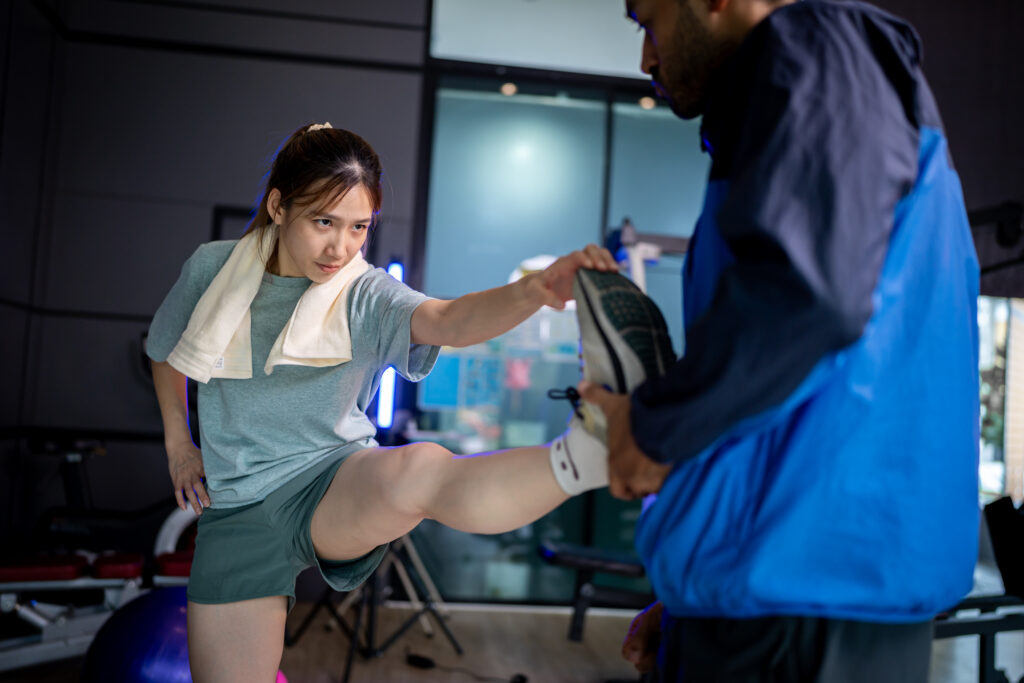
Changing running form isn’t just about trying to “run differently.” It’s about understanding why your body adopted that pattern in the first place.
Here’s what that process looks like in practice.
Running Gait Analysis
A running gait analysis provides physical therapists with a clear view of overstriding in running in real time.
Using treadmill observation or video analysis, therapists evaluate stride length, cadence, foot strike, and overall movement patterns.
This helps support an accurate diagnosis of the source of extra stress.
Exercise and Form Retraining
Once those patterns are identified, treatment becomes targeted and practical.
Plans often include:
- Strength exercises for hips and glutes.
- Mobility drills for ankles and hips.
- Cadence-based running cues.
- Running drills to reinforce better landing mechanics.
These strategies don’t just address symptoms; they help correct the root cause.
Recover Faster, Perform Better
Customized programs to meet your specific athletic goals.
Who Benefits Most From Treatment for Overstriding?
Learning about overstriding in running can help any runner, but some benefit more from hands-on guidance.
These include:
- Runners experiencing recurring knee pain.
- Athletes dealing with shin pain or stress injuries.
- Individuals returning to running after injury.
- Runners who fatigue quickly during training.
Addressing stride mechanics early can help keep small issues from becoming bigger setbacks.
Why Choose Ivy Rehab for Running Form and Injury Prevention
Improving running mechanics isn’t about chasing perfection. It’s about helping your body move more efficiently and with less strain.
Physical therapists at Ivy Rehab Therapy evaluate each runner individually and look at the full picture.
Care focuses on identifying patterns, such as overstriding in running, and on improving strength and control, helping you run with more confidence.
Stronger Strides Start Here
Learning what overstriding in running is gives you insight into why certain aches and injuries show up.
When the foot lands too far ahead of the body, braking forces increase and stress shifts to the hips and knees.
The encouraging part is that this is a very fixable pattern.
With the right mix of strength, cadence adjustments, and movement retraining, runners can improve efficiency, reduce discomfort, and get back to enjoying their runs.
Find an Ivy Rehab Therapy location near you to get started with a personalized running and injury-prevention plan.
References
- Figueiredo, I., et al. (2025). The Influence of Running Cadence on Biomechanics and Injury Prevention: A Systematic Review. Cureus. https://pmc.ncbi.nlm.nih.gov/articles/PMC12440572/
- Princeton Medicine. (2023). Overstride and Running Injuries: Breaking the Cycle for a Healthier Run. https://www.princetonmedicine.com/blog/overstride-and-running-injuries-breaking-the-cycle-for-a-healthier-run

Before you go
Find the right therapy today.
Discover how Ivy Rehab can help you get back to doing what you love.