Many runners notice their quads hurt after running or feel unusually sore compared to the rest of the leg. That deep, burning fatigue in the front of your thighs can feel like proof you worked hard. And sometimes it is. But sometimes, it’s your body quietly waving a flag.
In some cases, this points to quad dominance, a movement pattern where the quads do more of the work than the glutes and hamstrings. Over time, that imbalance can change how force moves through your body, and not always in your favor.
Physical therapy helps runners figure out why sore quads after running keep showing up and, more importantly, how to shift the workload so your entire leg is pulling its weight.
What Does Quad Dominant Mean?
So, what does quad dominant mean in plain English?
It’s when your quadriceps take on more of the workload than they should, while the glutes and hamstrings take a bit of a back seat.
In a well-balanced system, your muscles share the load like a good team. When quad dominance is present, the front of your thigh becomes the overachiever, stepping in for movements like running, squatting, and climbing stairs.
This doesn’t mean your quads are “too strong.” It usually means other muscles aren’t showing up enough to help.
Is Quad Dominance Always a Bad Thing?
Not necessarily. Quad-dominant exercises are part of normal movement, and your quads are essential for running.
The issue isn’t that your quads are working. It’s when they’re working overtime, all the time.
Over time, relying too much on the quads may:
- Increase stress on the knees.
- Reduce efficiency in running mechanics.
- Lead to recurring soreness or fatigue.
A little quad dominance? Not a big deal. A constant pattern of overload without balance? That’s where problems tend to creep in.
Why Runners’ Quads Hurt After Running
If your quads hurt after running, there are a few possible explanations. Not all soreness means something is wrong, but your body is always telling you something.
Here’s how to tell the difference between normal soreness and something worth a closer look.
Normal Training Soreness
Sore quads after running are common after:
- Downhill running.
- Speed workouts or intervals.
- Sudden mileage increases.
This type of soreness is expected, usually short-lived, and tends to improve with recovery. Think of it as your muscles adapting, not breaking down.
Quad Dominance and Overuse
When quad dominance is in play, the quads absorb more repetitive stress than they’re designed to handle alone.
Over time, this can lead to:
- Persistent soreness in runners’ quads.
- Patellofemoral (kneecap) discomfort during or after runs.
- Fatigue that shows up earlier than you’d like.
If your quads hurt after running consistently, even on easier days, it’s worth taking a closer look.
Signs of Quad Dominance in Runners
Quad dominance doesn’t usually announce itself. It shows up in patterns.
Common signs include:
- Persistent quad tightness or fatigue.
- Knee pain during or after running.
- Poor glute muscle activation.
- Limited hip mobility.
- Better tolerance for quad-dominant exercises than hip-driven ones.
You don’t need to check every box. Even one or two of these patterns can influence how you run and how you feel doing it.
What Causes Quad Dominance?
Quad dominance usually builds over time. It’s less about one single cause and more about habits stacking up.
Here’s where those patterns tend to come from.
Glute Weakness or Poor Activation
If the glutes aren’t firing well, hip extension weakens, and the quads step in without hesitation.
This can happen after injury, with low back stiffness, during long stretches of sitting, or with training that doesn’t include enough hip-focused work.
Limited Hip Mobility
Tight hip flexors or restricted hip motion can shift load forward into the quads.
When the hips don’t move well, the body finds a workaround, and the quads often end up doing the extra work.
Movement and Training Habits
Running form, posture, strength routines, and repetition all matter more than most people think.
Examples include:
- Overstriding or heavy heel striking.
- Strength programs focused mostly on squats, with little posterior chain work.
- High training volume without enough balance.
Over time, these patterns quietly reinforce quad dominance.
How to Fix Quad Dominance
Learning how to fix quad dominance isn’t about avoiding your quads. It’s about getting the rest of your muscles back in the conversation.
Here’s how to start shifting the workload back where it belongs.
Strengthen the Posterior Chain
The glutes and hamstring muscles should be active contributors, not spectators. Focus on exercises like:
- Bridges and single-leg bridges.
- Hip hinge movements like deadlifts and Romanian deadlifts.
- Hip thrusts.
- Hamstring curls.
These movements help redistribute the load away from the quads. Done well, you’ll feel more engagement through the back of your hips, not just the front of your thighs.
Improve Core and Hip Control
Strength is important. Control is what makes it useful.
Exercises that build stability include:
- Single-leg balance drills.
- Step-downs.
- Split squats with control.
These help improve alignment and reduce unnecessary strain on the knees.
Use Smarter Quad Dominant Exercises
Quad-dominant exercises aren’t the enemy. They just need better support.
Focus on:
- Proper form and alignment.
- Even weight distribution through the foot.
- Coordinated hip and controlled knee bend through movement.
This allows the entire leg to contribute, instead of leaving your quads to do all the heavy lifting.
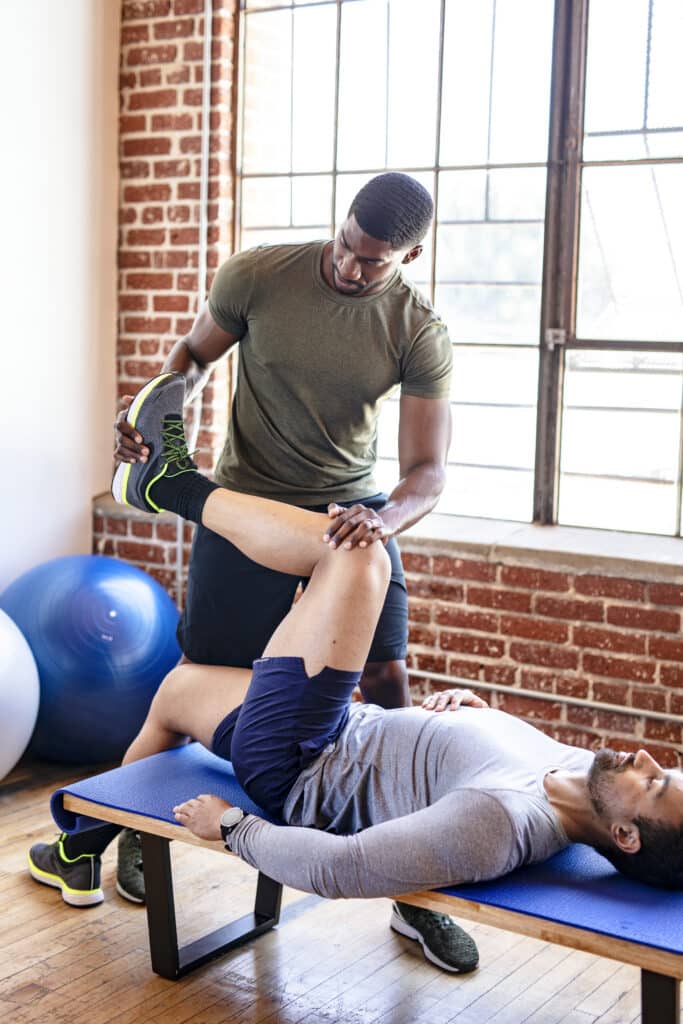
How Physical Therapy Helps
Physical therapy looks beyond where you feel soreness and focuses on why it’s happening in the first place.
Here’s what that looks like when your body is moving in real time.
Movement Assessment
A physical therapist evaluates:
- Glute activation and strength.
- Hip mobility.
- Single-leg control.
- Running mechanics.
This helps pinpoint the root cause of sore quads after running, so you’re not guessing or chasing symptoms.
Strength and Gait Retraining
Treatment is personalized to your movement.
This may include:
- Targeted strengthening and mobility work.
- Running form cues like cadence or stride adjustments.
- Gradual return-to-running progressions.
The goal is simple: help you run more efficiently, with less strain and more consistency.
Recover Faster, Perform Better
Our therapists specialize in helping athletes of all levels return to peak condition.
Why Choose Ivy Rehab for Running-Related Muscle Imbalances
Ivy Rehab takes a PT-first approach to running injuries and performance.
Care focuses on:
- Identifying movement patterns driving pain.
- Building strength and control across the entire lower body.
- Supporting long-term running goals, not quick fixes.
Because better movement doesn’t just feel good, it lasts.
Run Stronger, Not Just Harder
Being a quad-dominant runner isn’t automatically a problem. Most runners go through phases when their quads take on a greater share of the workload.
But when quad dominance leads to recurring soreness, knee pain, or inefficient movement, it’s worth addressing.
With the right plan, you can rebalance how your muscles work together, reduce strain, and get back to running in a way that feels strong, steady, and sustainable.
If you’re ready to get back to running stronger and with less discomfort, we’re here to help. Find a clinic near you and schedule an appointment to start moving with more confidence and control.
References
- American Council on Exercise (ACE). “10 Daily Habits That Can Cause Muscular Imbalances.” Accessed 2026. https://www.acefitness.org/resources/pros/expert-articles/5760/10-daily-habits-that-can-cause-muscular-imbalances/
- Anderson, L.M., Martin, J.F., Barton, C.J., Bonanno, D.R. (2022). What is the effect of changing running step rate on injury, performance and biomechanics? A systematic review and meta-analysis. Sports Medicine – Open. https://pubmed.ncbi.nlm.nih.gov/36057913/
- National Academy of Sports Medicine (NASM). “Corrective Exercise Strategies for Muscle Imbalances.” Accessed 2026. https://www.nasm.org/resources/corrective-exercise
Before you go
Find the right therapy today.
Discover how Ivy Rehab can help you get back to doing what you love.