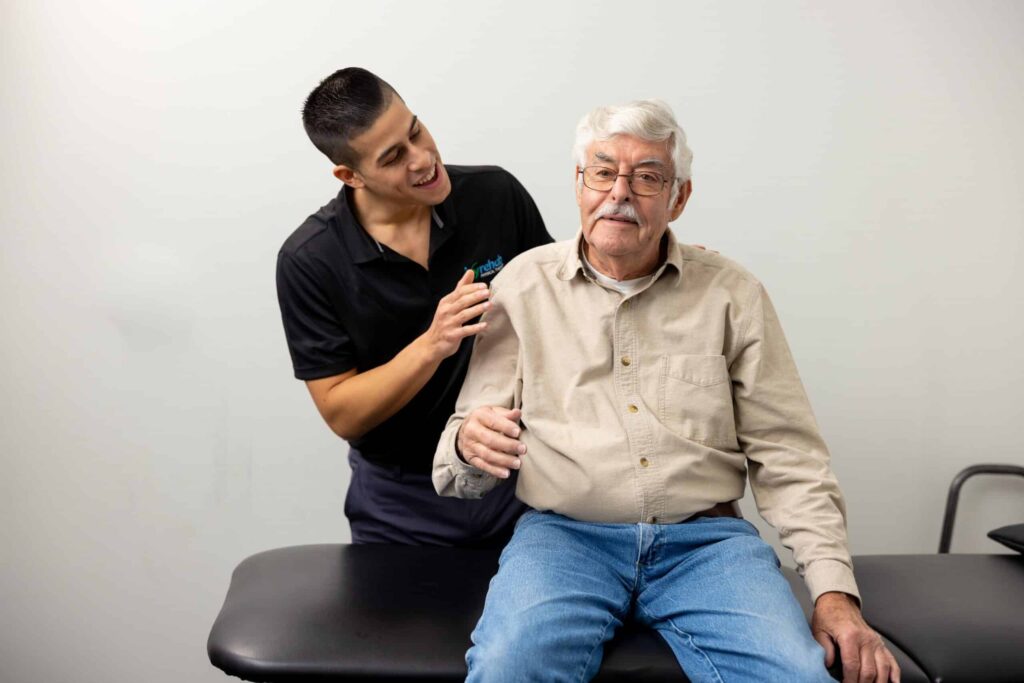
Pain, stiffness, or limited movement may not seem like a big deal at first. Maybe your back has bothered you for months. Maybe your knee hurts when you walk up and down stairs. Maybe you had surgery and aren’t sure what recovery should feel like. You might put off getting it checked, thinking it’ll go away on its own.
A physical therapy consultation can give you a clearer answer. During the complimentary consultation, a licensed physical therapist listens to what’s going on, checks how your body moves, and explains what may help.
If you’re wondering how a physical therapy consultation could benefit you, the biggest value is clarity. You get a better understanding of your options and possible next steps based on your symptoms, daily life, and goals.
Key Takeaways
Here are the main points to know:
- A physical therapy consultation is an evaluation, not just a conversation.
- Your physical therapist may assess movement, strength, balance, flexibility, and daily function.
- Direct Access is available in some form in all 50 states, but insurance rules can vary.
- Physical therapy can help manage pain, support surgery recovery, address balance concerns and chronic conditions, and reduce the risk of future injuries.
- The treatment plan should be specific to your symptoms, lifestyle, and goals, not a generic checklist.
That first visit can also help you decide what to do next, even if you’re not sure about doing physical therapy yet.
Quick Navigation
Use these sections to find what you need:
- What Happens During a Physical Therapy Consultation
- Who Benefits From a Physical Therapy Consultation
- What Physical Therapy Can Help Treat
- Benefits of Physical Therapy Beyond Pain Relief
- How Physical Therapy Compares to Other Options
- Do You Need a Referral?
The sections below walk through each point in order.
What Happens During a Physical Therapy Consultation
A complimentary physical therapy consultation usually takes about 30 minutes. The goal is to understand what hurts, what is not moving well, and what you need to get back to doing.
A Conversation About Your Symptoms
A physical therapist starts by asking about your overall health history, current symptoms, past injuries or surgeries, medications, and daily routines. They may ask when symptoms started, what makes them better or worse, and which physical activities feel harder than they should.
This part matters because pain does not happen in a vacuum. Work, sleep, stress, sports, hobbies, and old injuries can all give helpful clues.

A Movement Exam
Next comes the physical assessment. Depending on your symptoms, a physical therapist may check:
- Range of motion in the joints related to your symptoms.
- Strength in the affected area and nearby muscles.
- Balance, walking, reaching, squatting, or other functional movements.
- Numbness, tingling, radiating pain, or other nerve-related symptoms.
- Joint mobility, soft tissue sensitivity, and areas that feel restricted.
These tests help connect the dots. For example, knee pain may be related to hip weakness, or shoulder discomfort may be from stiffness in the upper back.
A Plain-Language Treatment Plan
Before you leave, the physical therapist will explain what they found and what it means. You learn what the plan may include, how often visits may be helpful, and what you can do at home.
This is also your chance to ask questions. An effective treatment plan should fit your schedule, your comfort level, and the activities that matter most to you.
Who Benefits from a Physical Therapy Consultation
A consultation can help when something hurts, feels limited, or keeps coming back. It may be worth scheduling one if:
- Pain has lasted more than two or three weeks without clear improvement.
- You were recently injured and want to understand what’s going on.
- You’re recovering from surgery and need guidance on safe movement.
- A chronic health condition makes daily tasks harder.
- You notice repeated soreness, tightness, or loss of performance during activity.
- You want to know whether symptoms may need imaging, a specialist referral, or nonsurgical care first.
You don’t have to wait until pain is severe. A consultation can also help identify movement changes early, before they start interfering more with daily life.
What Physical Therapy Can Help Treat
Physical therapists treat many conditions that affect movement, strength, balance, and daily function. Common reasons people get physical therapy include:
- Back, neck, shoulder, hip, knee, ankle, or foot pain.
- Sprains, strains, fractures, tendon irritation, or overuse injuries.
- Recovery after total joint replacement, rotator cuff repair, ACL surgery, spine surgery, or other procedures.
- Sports injuries, return-to-sport needs, or recurring activity-related pain.
- Balance problems, dizziness, fall risk, stroke recovery, Parkinson’s disease, or peripheral neuropathy.
- Chronic pain that affects movement, sleep, work, or everyday routines.
If what you’re dealing with isn’t listed here, a consultation can still help you understand whether physical therapy makes sense.
Ivy Rehab also offers orthopedic therapy services for many muscle, joint, and post-surgical concerns.
Benefits of Physical Therapy Beyond Pain Relief
Many people start physical therapy for pain relief, but it has many more benefits. Physical therapy can help you:
- Move with more comfort during everyday tasks.
- Build strength and stability around irritated or injured areas.
- Improve movement habits that may be adding stress to joints or soft tissue.
- Understand what triggers symptoms and how to respond when they flare up.
- Feel more confident with stairs, lifting, exercise, work tasks, or sports.
Physical therapy can also be part of a broader pain management plan. The CDC notes that nonopioid options are preferred for subacute and chronic pain, and they can be as effective as opioids for many common types of acute pain.
Feeling better after one appointment can be a good start. The bigger goal is helping you move with more comfort and confidence long after you leave the clinic.

How Physical Therapy Compares to Other Options
Physical therapy is often one of the first nonsurgical options to consider for musculoskeletal pain. Here is how it compares with a few common paths.
Physical Therapy vs. Pain Medication
Medication may reduce pain, but it doesn’t always address why it’s happening or why it keeps coming back. Physical therapy looks at strength, mobility issues, movement habits, and daily demands, so the plan addresses what’s behind the symptoms.
For low back pain, the American College of Physicians guidelines recommend starting with non-drug treatment options for many patients, when appropriate.
Physical Therapy vs. Surgery
Surgery is the right choice for some injuries and conditions. For others, a nonsurgical therapy plan may help reduce symptoms, improve physical function, or clarify whether a surgical consult is needed.
A physical therapy consultation can give you more information before you decide. If surgery ends up being the right path, prehab can help you get ready for the procedure and support recovery afterward.
Physical Therapy vs. Waiting It Out
Some aches improve with time. Others linger because the same movement pattern, weakness, stiffness, or daily demand keeps irritating the area.
A consultation helps sort out which situation you may be dealing with. That can save you from guessing or pushing through pain that needs a different approach.
Do You Need a Referral?
In many cases, you can schedule a physical therapy consultation without a physician referral. This is called Direct Access. The American Physical Therapy Association reports that all 50 states, Washington, D.C., and the U.S. Virgin Islands have some form of Direct Access, though rules and limits vary by location.
We explain how Direct Access works and how “no prescription, no problem” can help patients start physical therapy without waiting for a separate doctor’s visit.
Insurance rules are separate from Direct Access laws. Some plans may still require a referral, prescription, or prior authorization for coverage. Checking your insurance before your first visit can help you avoid surprises.
Schedule a Physical Therapy Consultation
A physical therapy consultation gives you a clearer picture of what’s happening and what may help. If you’ve been waiting, guessing, or working around pain, this visit can help you understand your options and move forward with more confidence. That’s how a physical therapy consultation could benefit you: with personalized guidance based on your specific needs, your goals, and the way you actually live.
Find an Ivy Rehab location near you, or learn more about physical therapy services and complimentary screenings.
FAQs
Can Physical Therapy Make Pain Worse?
You might have mild soreness when you start using muscles or doing movements you haven’t done much in a while. Sharp, worsening, or lingering pain is different, and you should tell your physical therapist so the plan can be adjusted.
How Is a Consultation Different from a Regular Physical Therapy Visit?
The first visit helps your physical therapist understand what’s going on and create a plan. Follow-up visits usually include more treatment, hands-on care when appropriate, updates to your home plan, and exercises that change as you improve.
How Many Physical Therapy Sessions Will I Need?
It depends on the condition, severity, goals, and how your body responds. Some people only need a few visits. More complex injuries or post-surgical treatment often take longer. A physical therapist can give you an estimate after the evaluation.
Is Physical Therapy Only for Injuries?
No. Physical therapy can help with surgery recovery, chronic conditions, balance issues, neurological conditions, pelvic floor concerns, prevention goals, and everyday movement problems that do not have a clear injury behind them.
What Should I Bring to a Physical Therapy Consultation?
Prepare for your first visit by gathering your insurance card, a list of current medications, and any imaging reports or medical records related to the issue. Wear comfortable clothes that are easy to move and allow access to the area being evaluated.
References
- Centers for Disease Control and Prevention. “Nonopioid Therapies for Pain Management.” (2025). https://www.cdc.gov/overdose-prevention/hcp/clinical-care/nonopioid-therapies-for-pain-management.html
- Qaseem A, et al. “Noninvasive Treatments for Acute, Subacute, and Chronic Low Back Pain: A Clinical Practice Guideline From the American College of Physicians.” (2017). https://pubmed.ncbi.nlm.nih.gov/28192789/
- American Physical Therapy Association. “State of Direct Access to Physical Therapist Services.” (2025). https://www.apta.org/apta-and-you/news-publications/reports/2025/state-of-direct-access-to-physical-therapist-services

Before you go
Find the right therapy today.
Discover how Ivy Rehab can help you get back to doing what you love.