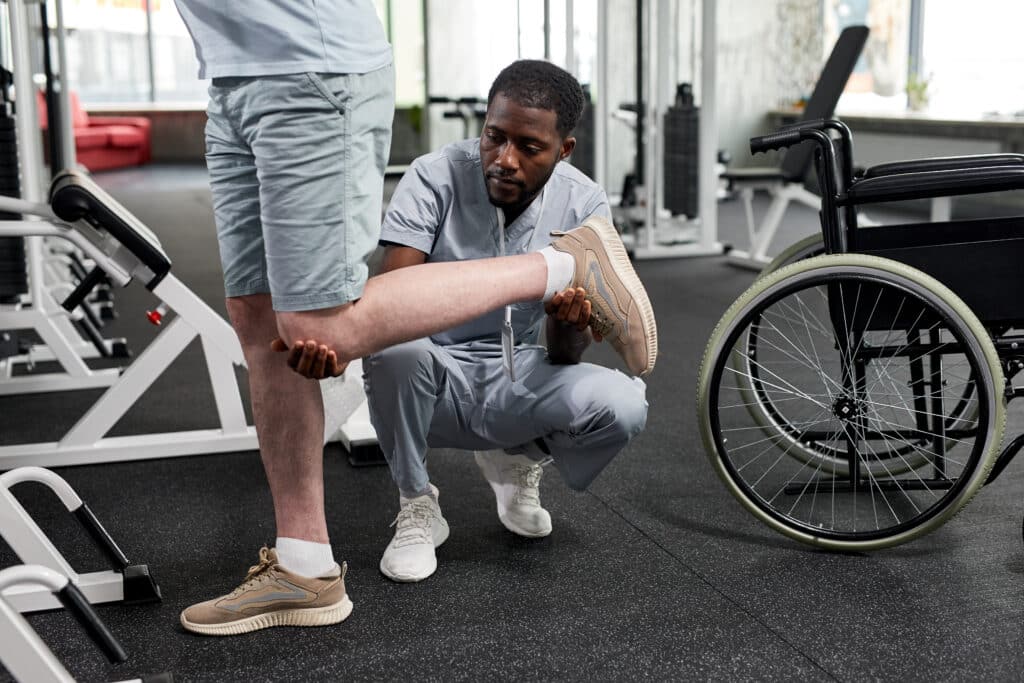
A warehouse employee recovering from a shoulder injury can lift a box comfortably during physical therapy. That’s progress. But back at work, they may need to lift, carry, and stack boxes for hours. One successful lift doesn’t necessarily mean they’re ready for a full shift.
For claims adjusters, nurse case managers, and referring physicians, that distinction has practical consequences. Should the employee continue injury-focused physical therapy, begin work conditioning, or undergo functional testing? The answer affects both the care plan and the worker’s path back to the job.
Understanding the differences between acute therapy, work conditioning, and functional capacity evaluations (FCEs) helps make those decisions more informed. For the injured employee, what’s at stake is more personal than a referral: Will I be able to do my job again?
Key Takeaways
The appropriate rehabilitation service depends on an employee’s current abilities and the physical requirements of their job:
- Acute therapy addresses injury-related limitations in movement, strength, and everyday function.
- Work conditioning develops the endurance and physical capacity needed for sustained, job-specific activities.
- Functional capacity evaluations (FCEs) measure current abilities to help inform work restrictions, accommodations, and return-to-work decisions.
- Care isn’t a fixed sequence. Clinical findings, job requirements, and the purpose of a referral determine which services are appropriate.
The central distinction is simple: Treatment develops ability. Functional testing measures it.
Acute Therapy vs. Work Conditioning: What’s the Difference?
Acute therapy and work conditioning can involve similar exercises, but they serve different priorities. One focuses on restoring function affected by an injury, while the other emphasizes building capacity for sustained occupational demands.
Here’s how those differences influence treatment:
Acute Therapy: Restoring Function After an Injury
After a workplace injury, even familiar movements can become difficult. Reaching overhead, gripping a tool, or climbing stairs may cause discomfort or require more effort than before.
In this context, acute therapy refers to the earlier, injury-focused phase of outpatient physical therapy. The term doesn’t necessarily identify a separate workers’ compensation service category.
A physical therapist evaluates the injury and identifies limitations affecting movement and daily activities. Treatment may include therapeutic exercise, manual therapy, movement retraining, and a gradual increase in physical demands, as appropriate.
For someone recovering from a shoulder injury, therapy might begin with restoring comfortable overhead movement before progressing to heavier lifting.
Work responsibilities should inform care from the beginning. However, the immediate priority is often rebuilding the abilities affected by the injury.

Work Conditioning: Building Capacity for the Job Ahead
Strength and mobility matter, but physically demanding jobs also require stamina. A delivery driver recovering from a knee injury may walk comfortably on level ground but struggle with repeatedly climbing in and out of a truck throughout the day.
Work conditioning addresses these challenges with progressive exercises and simulated job tasks that develop physical capacity over time.
Treatment may involve:
- Progressive strengthening for heavier or repeated tasks.
- Work simulation to practice job-specific movements.
- Endurance training for sustained activity.
- Body mechanics education to reinforce efficient movement.
Sessions are generally longer and more intensive than traditional outpatient physical therapy. But adding minutes isn’t a treatment plan. If it were, the scheduling calendar would qualify as a rehabilitation program.
Functional Capacity Evaluations: Measuring Ability Rather Than Building It
A functional capacity evaluation (FCE) uses standardized testing to document an employee’s physical abilities against relevant job requirements. The functional capacity evaluations offered through Ivy Health may assess tasks such as lifting, carrying, and standing, giving physicians and claims professionals objective findings to inform return-to-work decisions.
An FCE measures capacity. It doesn’t create it. It also can’t follow someone around for an eight-hour shift with a clipboard.
A systematic review published in the Journal of Occupational Rehabilitation examined 20 studies involving nine FCE methods and identified differences in their reliability and validity. FCE findings should therefore be interpreted alongside the employee’s medical condition, treatment history, and job requirements; they don’t replace the treating provider’s medical judgment.
Better Referrals Start with Understanding the Job
A job title doesn’t necessarily tell you what someone’s body does all day. A hotel housekeeper recovering from a knee injury might spend much of the shift standing, bending, and pushing equipment, while an administrative employee with a similar injury may be able to perform essential job functions while alternating between sitting and standing.
The American Physical Therapy Association’s clinical guidance on work participation provides evidence-based recommendations for evaluating and managing limitations that affect an individual’s ability to work. A job description that says “some lifting” is about as useful as a weather forecast that says “some weather.”
Before requesting additional rehabilitation or functional testing, the referring team should provide:
- Essential job functions, including required movements, physical loads, and task frequency.
- Current medical restrictions and relevant precautions established by the treating provider.
- Recent clinical findings, including measurable improvements and remaining limitations.
- A clear referral question explaining what the requested service needs to accomplish.
They also make subsequent reporting more useful. Instead of documenting only that lifting strength has improved, a report can identify demonstrated capacity and explain how it compares with the employee’s job requirements.
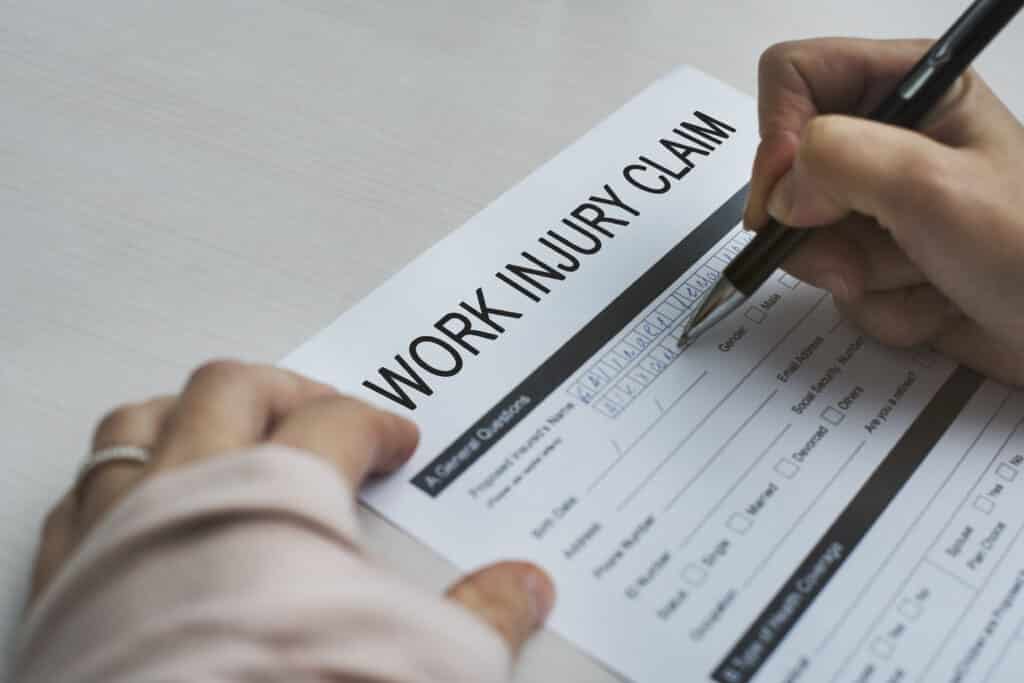
Choosing the Right Level of Care for an Injured Worker
Here’s a truth worth remembering: More treatment isn’t automatically better treatment. Neither is more testing. If no one can explain what the next service is supposed to accomplish, ordering it anyway isn’t a plan. It’s a guess with paperwork.
For professionals navigating different workers’ comp levels of care, four questions can help clarify the decision:
- What’s currently limiting the employee? Identify whether pain, restricted movement, strength, endurance, or another functional concern is interfering with activity.
- Which job demands remain difficult? Compare demonstrated abilities with the requirements of the position.
- What’s still unknown? Determine whether the care team needs further improvement or more information about existing capacity.
- What decision will the referral support? Clarify whether the goal involves treatment planning, functional testing, work restrictions, or another clinical determination.
The answers help distinguish when continued physical therapy, work conditioning, or an FCE may be appropriate.
These decisions must also account for medical necessity, authorization requirements, and the employee’s circumstances.

Functional Testing Isn’t Always Necessary
Treating therapists often gain substantial information about a patient’s functional abilities through ongoing assessment and care.
That information may already be sufficient to design a work conditioning program. Likewise, completing work conditioning doesn’t automatically establish a need for another functional evaluation.
Prepare for the Workday, Not Just the Appointment
A successful therapy session is worth celebrating. But for someone returning to a physically demanding job, the bigger victory is being prepared for the work waiting beyond the clinic doors.
Ivy Health offers workers’ compensation rehabilitation services that connect clinical treatment with workplace requirements. Our teams focus on functional progress while helping referring providers, case managers, and claims professionals understand the employee’s recovery.
Because returning to work shouldn’t mean simply hoping someone is ready. It should mean making decisions based on what they’ve demonstrated and preparing them for what comes next.
Help make the next return-to-work decision count. To refer an injured employee for workers’ compensation rehabilitation, call 1-877-5-IVY-COMP or email [email protected].
References
- American Physical Therapy Association, Academy of Orthopaedic Physical Therapy. “Clinical Guidance to Optimize Work Participation After Injury or Illness: The Role of Physical Therapists.” (2021). https://www.apta.org/patient-care/evidence-based-practice-resources/cpgs/clinical-guidance-to-optimize-work-participation-after-injury-or-illness-the-role-of-physical-therapists
- De Baets, S., et al. “Updating the Evidence on Functional Capacity Evaluation Methods: A Systematic Review.” Journal of Occupational Rehabilitation. (2018). https://pubmed.ncbi.nlm.nih.gov/28988355/

Before you go
Find the right therapy today.
Discover how Ivy Rehab can help you get back to doing what you love.