If you have lower back pain and can’t stand up straight, you’re probably dealing with more than normal stiffness. It might feel like your back is locked, or one move could make the pain worse.
Low back pain is extremely common. The National Center for Complementary and Integrative Health estimates that about 80% of adults experience low back pain at some point in their lives.
Your body may be protecting irritated muscles, joints, discs, or spinal nerves. Common causes include muscle spasms, sciatica from a herniated disc, and spinal stenosis. Knowing the likely cause can help you choose safer next steps, including when it’s time to get help from a physical therapist.
Key Takeaways
- Lower back pain that makes it hard to stand up straight could be from muscle spasms, back strain, sciatica, a herniated disc, or spinal stenosis.
- Sharp pain, stabbing pain, or muscle spasms can make the back muscles tighten and limit range of motion.
- Numbness, tingling, weakness, or pain below the knee can point to nerve compression and should be checked.
- Physical therapy can help identify the underlying cause and build a treatment plan for safer movement and pain relief.
Quick Navigation
- Why Lower Back Pain Can Make It Hard to Stand Up Straight
- Common Causes of Lower Back Pain and Trouble Standing
- What You Can Do at Home
- When to Seek Medical Care
- How Physical Therapy Helps
Why Lower Back Pain Can Make It Hard to Stand Up Straight
Standing up straight takes a lot of effort. Your lumbar spine, hips, hamstrings, and back muscles all have to work together to move your body from bent to upright.
When something in the lower back is irritated, your body may avoid using the area. It can feel like tightness, muscle fatigue, or a sudden block that stops you from straightening all the way.
Sometimes the pain stays in the low back. Other times, it travels into the buttocks or legs, which can point to sciatica or nerve compression.
Common Causes of Lower Back Pain and Trouble Standing
Several health issues can make standing upright painful. Where the pain goes and what makes it worse can help point to the likely cause.
Muscle Spasm or Back Strain
A back strain or sprain can happen after heavy lifting, a quick twist, a fall, or an awkward reach. The muscles may tighten to protect the area, leaving your lower back stuck forward.
This can feel like a sharp catch, stabbing pain, or muscle spasm when you try to straighten. Gentle movement often helps more than staying completely still, as long as symptoms don’t travel into the leg.
Sciatica or a Herniated Disc
Sciatica can happen when the sciatic nerve or one of the spinal nerves that feed into it becomes irritated. A herniated disc can be one cause, especially when pain travels into the leg or foot.
Some people lean forward or to one side to reduce pressure on the irritated nerve. If pain, numbness, or tingling travels below the knee, it’s worth getting checked.
Spinal Stenosis
Spinal stenosis occurs when the spinal canal narrows. Standing upright or walking may increase symptoms, while sitting, bending forward, or leaning on a shopping cart may feel better.
This pattern is often more common in adults with age-related changes in the lumbar spine. Symptoms may build with prolonged standing and ease when the lower back is slightly flexed.
Other Possible Causes
Poor posture, prolonged standing, tight hamstrings, degenerative disc disease, and weak back muscles can all contribute to stress on the lower back. A sprain, pinched nerve, or irritated joint can also make standing upright harder. Less common causes, such as a compression fracture or an infection, need medical care.
What You Can Do at Home
For many mild flare-ups, gentle activity is better than complete rest. ChoosePT notes that bed rest for more than one day can slow recovery from low back pain.
If symptoms are manageable and you don’t have warning signs, try to:
- Take short, easy walks instead of staying in one position for long periods.
- Use ice early if the pain feels sharp, then try heat if the muscles feel tight.
- Try gentle range-of-motion movements, such as pelvic tilts or knee-to-chest stretches, if they do not increase pain.
- Avoid heavy lifting, twisting, or repeated bending while symptoms are flared.
- Use over-the-counter medication, such as ibuprofen, only as directed and if it’s safe for you.
If any movement sends pain down the leg or makes symptoms worse, stop and check with a healthcare provider.
When to Seek Medical Care
Some cases of lower back pain require medical treatment right away. Don’t wait for symptoms that may point to nerve damage, spinal cord involvement, infection, fracture, or another serious problem.
Seek prompt medical care if lower back pain comes with:
- Loss of bladder or bowel control.
- Numbness in the groin, inner thighs, or saddle area.
- New or worsening leg weakness, difficulty lifting the front of your foot, or trouble walking.
- Severe pain after a fall, car crash, or other injury.
- Fever, unexplained weight loss, or pain that doesn’t improve with position changes.
Even if symptoms aren’t an emergency, get checked if pain keeps returning, gets worse, or limits daily life.
How Physical Therapy Helps
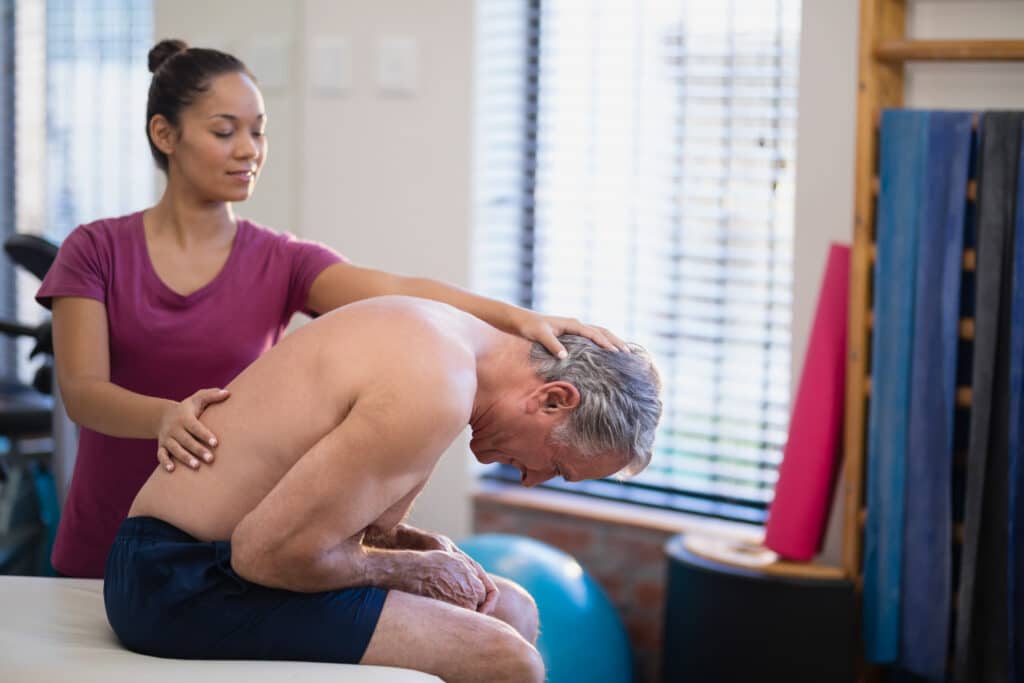
A physical therapist can help identify why standing upright hurts and what movements your back can tolerate. Treatment may include gentle range-of-motion exercises, strengthening exercises, soft-tissue mobilization, pain-relief strategies, and guidance for daily activities.
Ivy Rehab Therapy’s back pain, sciatica treatment, McKenzie Method, and orthopedic therapy services can help you move safely and build a treatment plan that supports real life.
FAQs
Can Sciatica Make It Hard to Stand Up Straight?
Yes. Sciatica can make standing upright painful when nerve irritation increases in that position. Pain may travel from the lower back into the buttock, thigh, calf, or foot.
Should I Stretch If I Can’t Stand Up Straight?
Gentle stretching may help if it eases tightness, but don’t force it. Stop if stretching causes sharp pain, stabbing pain, or symptoms that travel into the leg or foot.
Why Does My Lower Back Hurt, and I Can't Stand Up Straight?
Lower back pain that makes it hard to stand up straight is often due to muscle spasms, back strain, sciatica, a herniated disc, or spinal stenosis. Where pain travels and what positions help or hurt can point to the likely cause.

Talk to a Physical Therapist About Lower Back Pain
Lower back pain can feel scary when you can’t stand up straight, but many causes are treatable. The right plan can help calm pain, restore movement, and reduce the chance of another flare-up.
Find an Ivy Rehab Therapy location near you if lower back pain is limiting work, sleep, walking, prolonged standing, or daily life. A physical therapist can help identify what’s adding strain and build a treatment plan that supports safer movement.
Key Terms
Spinal stenosis: Narrowing of the spinal canal that can put pressure on nerves and make prolonged standing or walking harder.
Muscle spasm: A sudden tightening of the back muscles that can make movement or standing upright difficult.
Sciatica: Pain, numbness, or tingling that travels along the sciatic nerve from the lower back into the buttock, leg, or foot.
References
- Low-Back Pain and Complementary Health Approaches: What You Need To Know. National Center for Complementary and Integrative Health. Accessed March 2026. https://www.nccih.nih.gov/health/low-back-pain-and-complementary-health-approaches-what-you-need-to-know
- Physical Therapy Guide to Low Back Pain. ChoosePT. Accessed March 2026. https://www.choosept.com/guide/physical-therapy-guide-low-back-pain
- Noninvasive Treatments for Acute, Subacute, and Chronic Low Back Pain. American College of Physicians. Accessed March 2026. https://www.acponline.org/sites/default/files/acp-policy-library/guidelines/noninvasive_treatments_for_chronic_low_back_pain_2017.pdf
- Back Pain: Research & Resources. National Institute of Arthritis and Musculoskeletal and Skin Diseases. Accessed March 2026. https://www.niams.nih.gov/health-topics/back-pain/more-info
- Management of Lumbar Spinal Stenosis. BMJ. Accessed March 2026. https://www.bmj.com/content/352/bmj.h6234

Before you go
Find the right therapy today.
Discover how Ivy Rehab can help you get back to doing what you love.