


When every step feels like a negotiation with your knee, hip, or ankle, recovery can stall fast.
Healing tissue often can’t tolerate full body weight immediately. It needs a gradual return. That’s where anti-gravity treadmill physical therapy changes the conversation. This reduces stress on joints and surgical repairs, giving your body space to rebuild strength without overloading healing tissue.
At Ivy Rehab Therapy, this technology isn’t a gimmick. It’s a strategic tool physical therapists use to help you move sooner, more comfortably, and with purpose. The goal is simple: steady progress that sticks.
What Is Anti-Gravity Treadmill Therapy?
Anti-gravity treadmill physical therapy uses specialized equipment to reduce the load on your legs during walking or running. The most widely known system is called AlterG treadmill therapy.
Here’s how it works: after you’re fitted into supportive shorts and zipped into the chamber, differential air pressure gently lifts you upward. Not dramatically. Just enough to unload a percentage of your weight. Research shows that antigravity treadmills can support up to 80% of body weight, allowing patients to begin walking or running earlier with less stress on healing tissue. The original technology was inspired by NASA concepts related to body-weight support and movement in altered loading environments.
The result? Adjustable body-weight support in small, precise increments, often as exact as 1 percent. You can walk or run with less joint impact while still practicing natural movement patterns. It feels lighter, but it’s still real work.
How Anti-Gravity Treadmills Work in Physical Therapy
The technology supports recovery. Your physical therapist directs it.
In anti-gravity treadmill physical therapy, your PT adjusts body-weight support based on your diagnosis, healing timeline, strength, and symptom response. Early sessions may significantly reduce your weight-bearing load. As you improve, that support gradually decreases. This kind of unweighting is useful when gravity would otherwise make exercise too painful or too demanding early in rehab.
This controlled environment allows:
- Precise body-weight adjustments in small increments.
- Safe, supported gait training.
- Gradual return to normal loading patterns.
Research suggests body-weight-supported treadmill training can improve walking mechanics and functional mobility in orthopedic and neurological populations. When applied at the right time, it becomes a powerful bridge between protection and performance.
Who Benefits Most From Anti-Gravity Treadmill PT
Not everyone needs reduced body weight. But for the right patient, it can be a turning point.
Anti-gravity treadmill physical therapy is especially helpful for:
- Runners returning from injury who need to reintroduce impact safely.
- Post-surgical patients recovering from anterior cruciate ligament (ACL) reconstruction, joint replacement, or fracture repair. These sessions can reintroduce walking after surgery while keeping the lower extremities active in a safer, more controlled way.
- Individuals with arthritis or joint pain that limits weight-bearing tolerance.
- Patients with balance or neurological challenges affecting gait.
- Athletes rebuilding endurance through sports physical therapy while protecting healing tissue.
By reducing load without eliminating movement, AlterG treadmill therapy helps preserve cardiovascular fitness and neuromuscular coordination. In other words, you don’t have to choose between healing and conditioning.
Conditions Commonly Treated With Anti-Gravity Treadmill Therapy
This approach is versatile across orthopedic and sports rehabilitation. It can be used across a wide range of cases that affect the lower extremities and tolerance to walking or running.
Common conditions include:
- Stress fractures requiring gradual reintroduction of load.
- Tendon injuries such as Achilles or patellar tendinopathy.
- Recovery after knee and hip surgeries supported by sports physical therapy.
- Low back pain associated with walking intolerance.
- Gait abnormalities following injury or surgery.
Reducing impact while preserving walking mechanics supports safer progression. It’s not about doing less. It’s about doing the right amount. For some patients, that means beginning pain-free gait practice sooner and progressing toward traditional weight-bearing exercises more gradually.
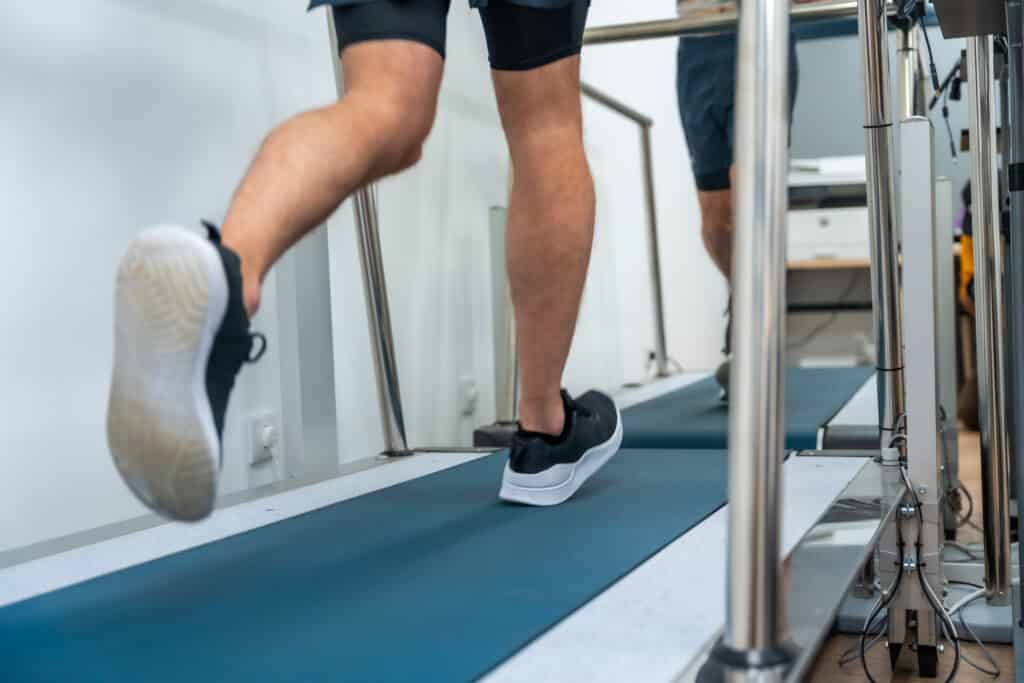
Benefits of Anti-Gravity Treadmill Therapy
Reducing load doesn’t mean reducing effectiveness. In many cases, it allows more focused, more confident practice.
Key benefits of anti-gravity treadmill physical therapy include:
- Less joint and tissue stress during movement.
- Earlier return to walking or running.
- Improved gait mechanics through controlled repetition.
- Reduced fear of movement after injury.
- Safer progression back to full weight-bearing.
Studies in runners suggest reduced-weight treadmill running can maintain aerobic conditioning while decreasing lower-extremity loading. That balance is a win during rehabilitation, especially when you’re eager to move, but your body still needs patience.
Recover Faster, Perform Better
Comprehensive rehabilitation for sports injuries and performance enhancement.
How PTs Use AlterG Treadmill Therapy at Ivy Rehab
Technology alone doesn’t create outcomes. Clinical decision-making does. Your physical therapist determines when, how, and why the treadmill is used.
Gait Assessment & Correction
During anti-gravity treadmill physical therapy, your PT performs a detailed running gait analysis and evaluates stride length, cadence, posture, and joint mechanics. With reduced load, compensations are easier to spot and correct.
Real-time feedback helps refine mechanics while symptoms remain under control. It’s detailed work, but those details matter when you’re building back toward full activity.
Load Progression & Return-to-Impact Planning
Rehabilitation follows a progression. Body-weight support is gradually reduced as strength, tolerance, and confidence improve.
This stepwise approach bridges the gap between protected healing and full-impact activity. AlterG treadmill therapy is often integrated into structured return-to-run or return-to-sport programs, where precision can make the difference between progress and setback.
Integration With Strength & Mobility Training
Treadmill sessions don’t stand alone. They’re paired with targeted strengthening, mobility work, and functional training.
Improved hip strength, ankle mobility, and trunk control enhance carryover when you return to full weight-bearing movement. The treadmill is one tool within a comprehensive, goal-driven rehabilitation plan.
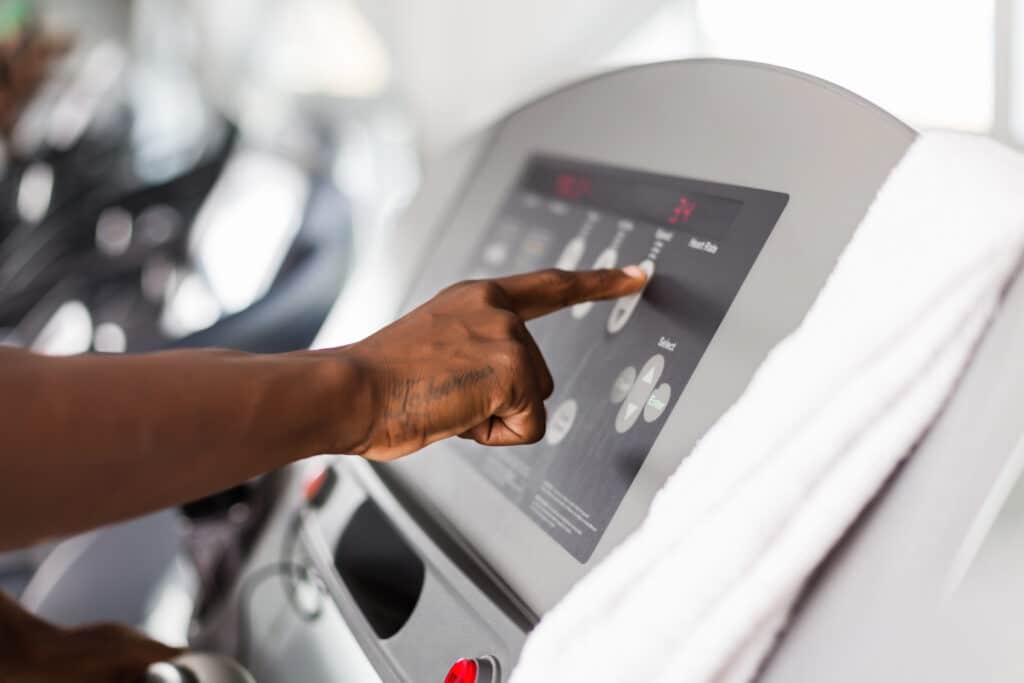
Anti-Gravity Treadmill vs Traditional Treadmill Rehab
A traditional treadmill places full body weight on healing tissue. Early in recovery, that may simply be too much. For those recovering from surgery or injury, putting full weight and load through the body too soon can slow progress or make symptoms worse.
With anti-gravity treadmill physical therapy, reduced load offers:
- Less pain during movement.
- Safer early activity after surgery or injury.
- Better tolerance for longer walking or running intervals.
- Improved confidence during transitional phases.
And confidence isn’t just a nice bonus. Fear of reinjury can subtly change how you move and delay progress. Feeling supported, literally, helps restore normal mechanics and trust in your body.
When Anti-Gravity Treadmill Therapy Is Most Helpful
Timing matters.
Anti-gravity treadmill physical therapy is especially valuable during transitional stages, such as:
- Early return to walking after surgery.
- Transition from non-weight-bearing or partial weight-bearing to full load.
- Structured return-to-run programs for athletes.
It provides a middle ground between rest and full impact. Not too much. Not too soon. Just right for where you are.
What to Expect During a Session at Ivy Rehab
At Ivy Rehab Therapy, sessions are structured, supervised, and fully personalized.
You can expect:
- Individualized body-weight settings based on your condition and goals.
- Close monitoring of symptoms and movement quality.
- Real-time feedback and adjustments.
- Measurable progress tracking across sessions.
Each visit builds on the last. The aim isn’t just to get you moving. It’s to get you moving well, confidently, and independently.
Step Forward With Confidence
Recovery doesn’t have to mean complete rest or a painful trial-and-error approach. Anti-gravity treadmill physical therapy offers a smarter path forward.
By combining advanced technology with expert clinical guidance, Ivy Rehab Therapy helps patients walk, run, and rebuild strength safely and progressively.
If weight-bearing pain is slowing you down, there’s a solution that meets you where you are. Find an Ivy Rehab location and learn how AlterG treadmill therapy can help you take the next step forward.
References
- Cochrane Database of Systematic Reviews. Mehrholz J, Pohl M, Elsner B. Treadmill training and body weight support for walking after stroke. https://pmc.ncbi.nlm.nih.gov/articles/PMC6464779/
- Archives of Physical Medicine and Rehabilitation. Grabowski AM. Metabolic and biomechanical effects of velocity and weight support using a lower-body positive pressure device during walking. https://pubmed.ncbi.nlm.nih.gov/20510989/
- Arthroscopy, Sports Medicine, and Rehabilitation. Vincent HK, Madsen A, Vincent KR. Role of Antigravity Training in Rehabilitation and Return to Sport After Running Injuries. https://pmc.ncbi.nlm.nih.gov/articles/PMC8811491/

Before you go
Find the right therapy today.
Discover how Ivy Rehab can help you get back to doing what you love.