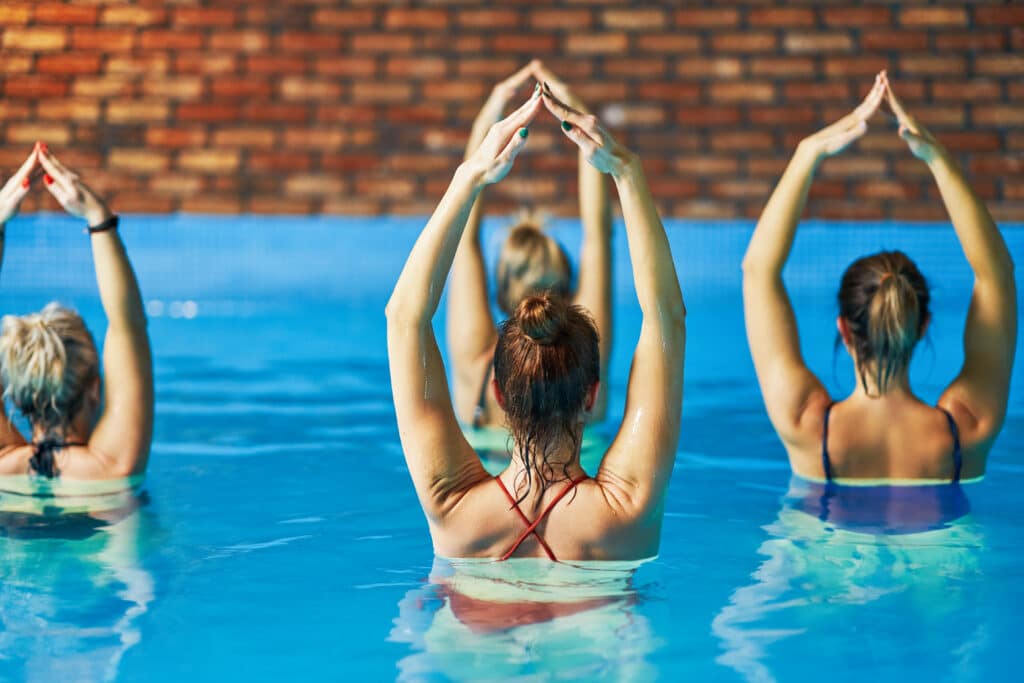

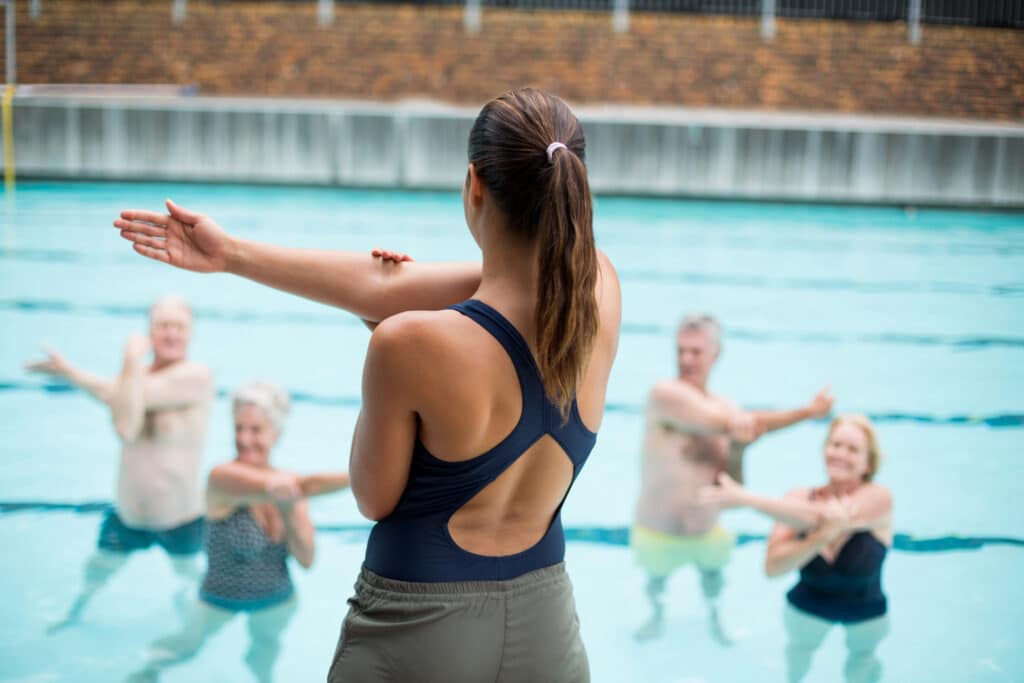
Rotator cuff surgery often puts you in a familiar tug-of-war. You’re eager to get your shoulder moving again, but you know you need to be careful with your recovery. Early in the physical therapy process, it’s common to feel stiff and weak, constantly second-guessing every twinge and movement, wondering if you’ll experience pain.
For many patients who have undergone rotator cuff tear surgery, aquatic therapy can help alleviate the tension. Warm water supports your arm, eases stress on healing tissues, and lets movement feel smoother and less guarded compared to land-based therapy. With PT guidance, the focus stays clear and steady: rebuild comfort and control while honoring your surgeon’s plan.
In this guide, you’ll learn how aquatic PT for shoulder surgery supports recovery, when pool sessions typically begin, and how movements progress from gentle motion to light strengthening exercises.
Why Aquatic Therapy Supports Recovery After Rotator Cuff Surgery
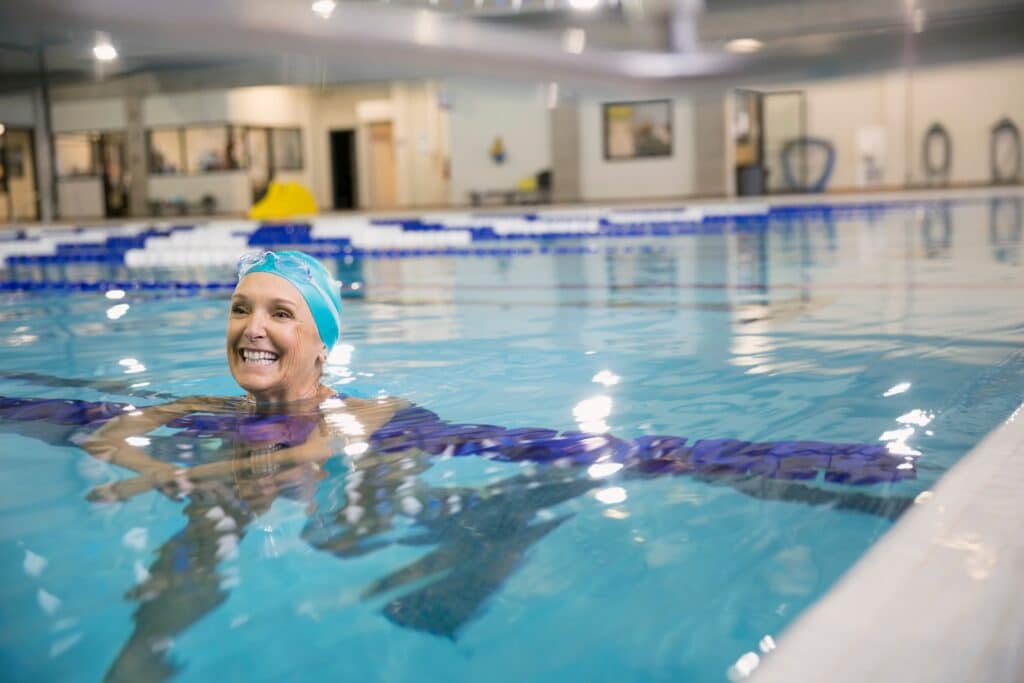
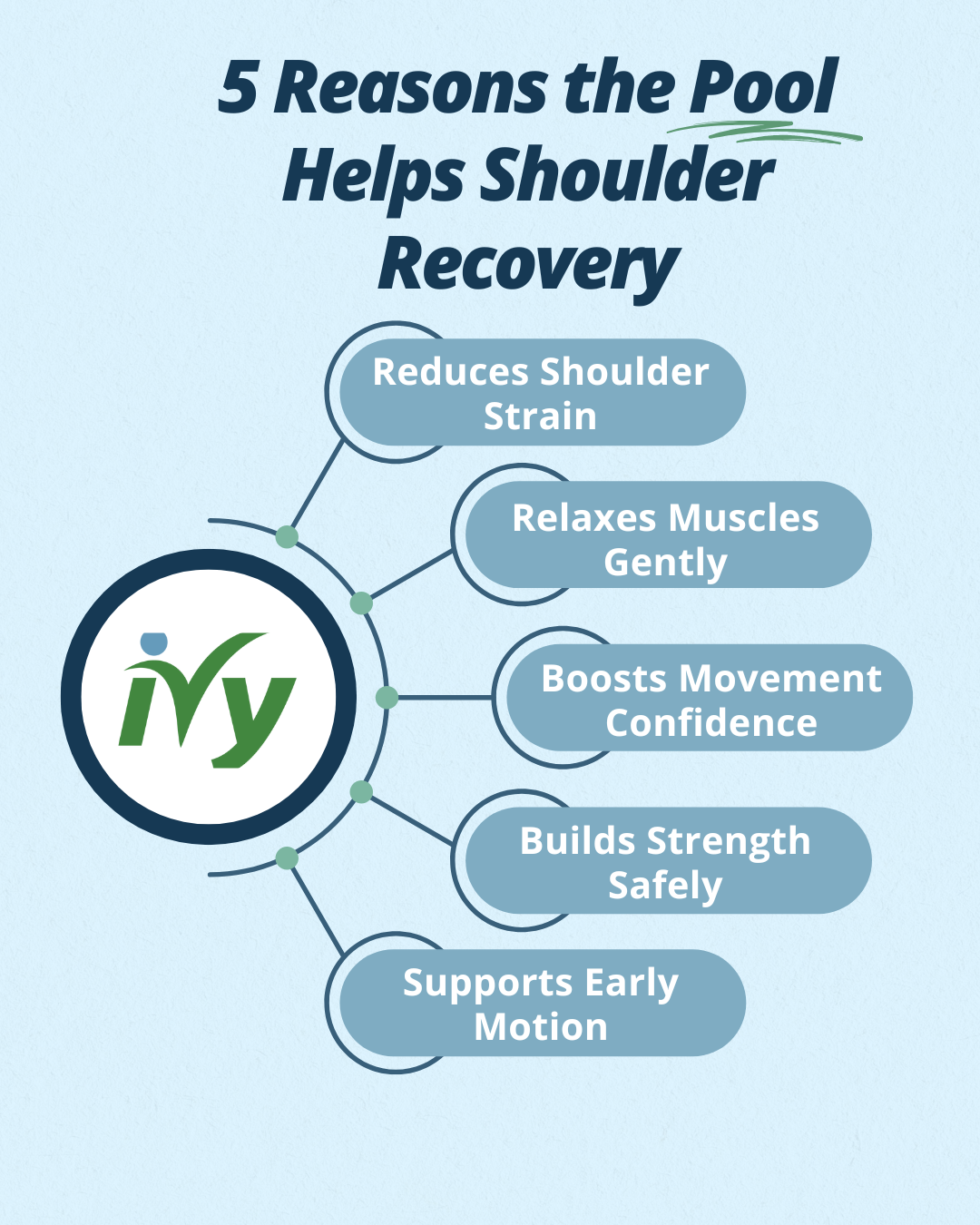
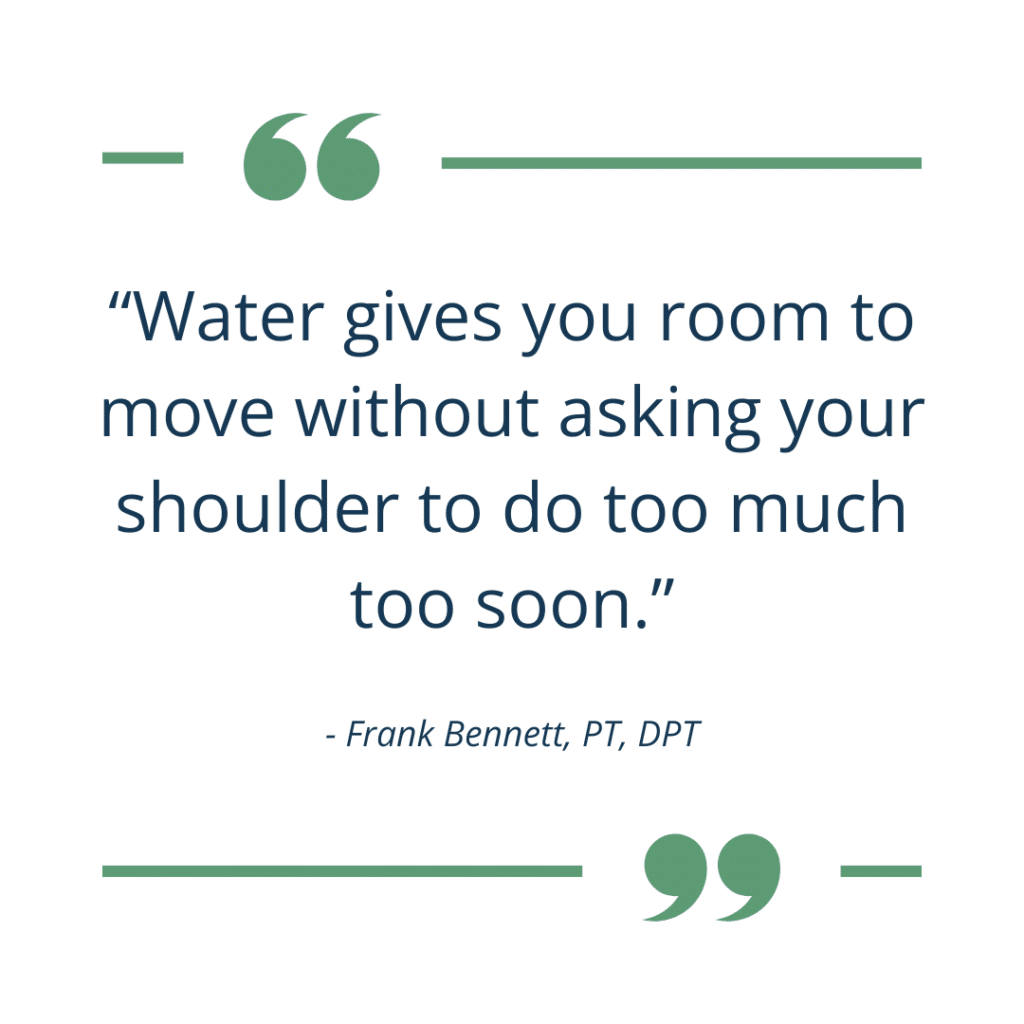
Water gives you room to move without asking your shoulder to do too much too soon. For many patients, that blend of support and freedom makes early rehab feel less intimidating and more approachable. Next, we’ll unpack the four big reasons the pool works so well: buoyancy, water temperature, gentle resistance, and a confidence boost for early motion.
Buoyancy Reduces Shoulder Strain
Buoyancy acts like a helpful assistant, quietly lifting some of the arm’s weight, so your shoulder doesn’t feel like it’s tugging or hanging. That extra support can make controlled motion feel more comfortable.
In practical terms, buoyancy helps you:
- Explore gentle shoulder movement with less strain.
- Focus on smooth mechanics instead of bracing.
- Ease the worry that every movement will hurt.
When movement feels safer, consistency follows. And consistency is where progress tends to show up during rehabilitation.
Warm Water Relaxes Muscles & Reduces Pain
Warm water, typically between 92°F and 98°F, encourages muscles to relax and helps dial down the protective tension that often lingers after surgery. When the shoulder feels calmer, stretching and mobility work usually feel more doable.
A simple tip: Give yourself a few minutes at the start of each session for easy walking or supported arm movement. Think of it as letting your shoulder ease into the work.
Water Resistance Provides Safe Strength Progression
Water offers resistance in every direction, but not from abrupt loading by weights. That makes it useful for controlled activation early on and gradual strengthening later, once your shoulder is ready.
Research suggests water-based rehab supports short-term functional gains after rotator cuff repair. The real key, though, is timing. With PT guidance, resistance is added thoughtfully, allowing strength to build without compromising the repair’s integrity.
Ideal for Patients Hesitant About Early Shoulder Motion
Feeling cautious about moving your arm after surgery is completely normal. The pool can feel like a safety net: steady, supportive, and way less intimidating than moving on land.
That’s where your physical therapist comes in. They’ll cue your breathing, posture, and pacing so each rep stays smooth and efficient. Confidence usually arrives after your body gets proof in the moment that you can move safely without paying for it later.
When Aquatic Therapy Typically Begins
Aquatic therapy closely follows surgeon protocols. In many cases, pool-based PT begins around 4 to 6 weeks after arthroscopic shoulder surgery, depending on the procedure, tissue quality, and healing progress.
Pool sessions usually start once:
- The incision is fully healed and cleared for water.
- Pain and swelling are trending in the right direction.
- Your PT and surgeon agree that the timing fits your plan.
Early sessions focus more on pain-free motion and posture than on strength. Your shoulder isn’t here to prove anything yet. It’s here to heal.
If you’re unsure whether you’re ready for the pool, that’s a good conversation to have with your surgeon and PT. Starting at the right time matters.
Reclaim Your Strength and Mobility
Experience tailored physical therapy programs designed to alleviate pain and restore function.
Benefits of Aquatic PT After Rotator Cuff Surgery
For some patients, water-based exercise allows safe movement earlier than land-based exercise, especially when stiffness or pain makes movement feel like work. Aquatic rehabilitation can also support early confidence as you recover.
Benefits often include:
- Less stiffness and improved shoulder mobility.
- Reduced pain during early movement.
- Easier relaxation and less guarding.
- Gentle strengthening without joint overload.
- Support for posture and shoulder blade control.
Think of the pool as your own personal rehearsal space. You practice clean movement here, then bring it with you when strength work ramps up on land.
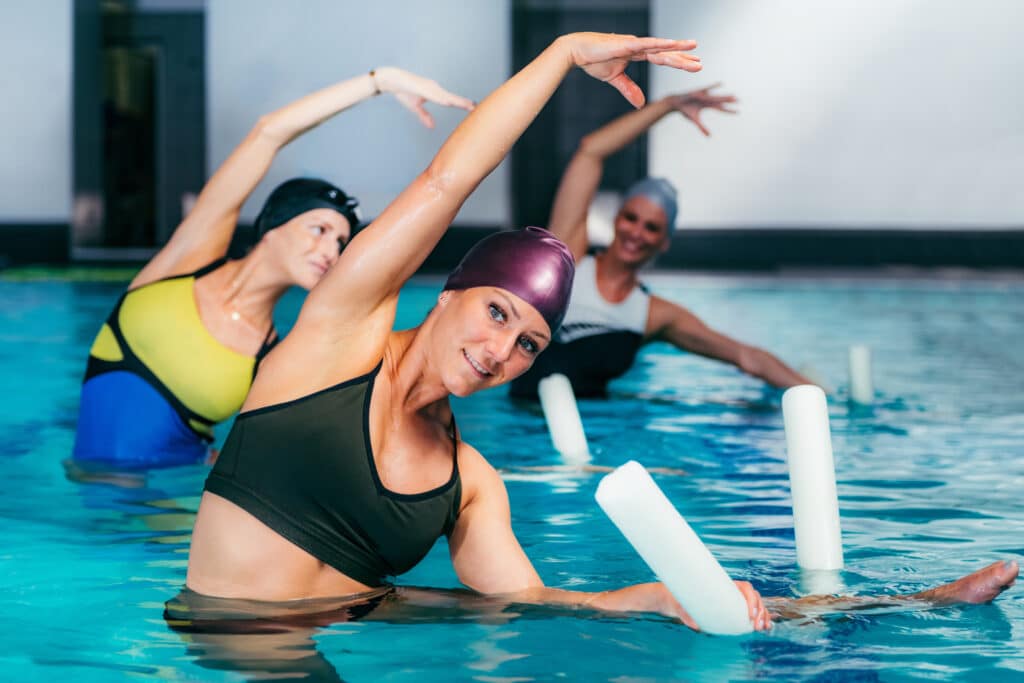
PT-Recommended Aquatic Exercises After Rotator Cuff Surgery
Exercises move from mobility to activation to light resistance. Your PT chooses what fits your healing phase and your surgeon’s precautions.
The exercises below are examples, not a do-it-yourself checklist. After rotator cuff repair, timing and quality matter, and your PT adjusts range and resistance to protect the tendon.
Assisted Shoulder Flexion Using Water Support
Water helps support the arm, so shoulder flexion feels smoother and less effortful. Your PT may guide the arm forward within a comfortable range, often with elbow support.
A common setup includes:
- Standing in chest-deep water.
- Letting the water or a float support the forearm.
- Moving slowly into range, then returning.
A simple tip: Keep your ribcage still. If your back arches to help, your shoulder may be getting a free pass.
Pendulum Movements in Water
Pendulums encourage gentle motion and help ease stiffness. In the pool, the arm often swings more freely and comfortably.
Your PT may cue:
- Small, controlled circles.
- Forward and backward swings.
- Side-to-side motion.
A simple tip: Let the movement flow naturally from a gentle shift in your body. Don’t force it with your shoulders right away.
Scapular Retraction & Depression Exercises
Shoulder blade control sets the foundation for shoulder stability. These exercises help you reconnect with the muscles that guide the shoulder.
Examples include:
- Light shoulder blade setting in tall posture.
- Gentle retraction followed by relaxation.
- Cues like “let your shoulders drop away from your ears,” which encourage relaxation rather than shrugging.
A simple tip: Subtle control beats a hard squeeze. If it looks calm, you’re probably doing it right.
Gentle Water-Assisted External Rotation
External rotation is added only after clearance. Water helps guide smooth motion while limiting strain on your shoulder.
A PT-guided progression may include:
- Elbow tucked at your side.
- Small, comfortable rotation ranges.
- Slow, controlled movement without pinching.
A simple tip: If your neck or biceps feel busier than your shoulder, it’s time for a form check.
Arm Sweeps Through Water at Chest Depth
Chest-depth sweeps introduce light resistance once gentle strengthening is appropriate.
Sessions may include:
- Forward and backward sweeps.
- Small arcs across the body.
- Short sets with generous rest.
A simple tip: Stop before fatigue lifts your shoulder. Quality always wins over quantity.
Core Engagement & Posture Training in Water
Core control supports better shoulder mechanics. Water-based posture work helps limit compensation as your shoulder rebuilds mobility and strength.
Examples include:
- Tall standing with steady breathing.
- Gentle marching while staying stacked.
- Light balance holds with small arm movement.
A simple tip: Think tall spine, soft ribs. Stability without stiffness is the goal.
Safety Guidelines for Water-Based PT After Rotator Cuff Repair
Aquatic therapy is safe when progress follows healing timelines. Each session should protect the repair and respect pain signals.
Key guidelines include:
- Avoid active strengthening too early.
- Skip sudden or overhead movements in the early stages.
- Maintain neutral posture and avoid compensations.
- Begin pool work only after the incision fully heals.
- Let comfort guide movement quality.
If soreness increases later that day or stiffness spikes the next morning, tell your PT. That feedback helps fine-tune the plan.
How Ivy Rehab Guides Aquatic Recovery
At Ivy Rehab, aquatic recovery follows a structured, phase-based plan. Sessions are built around surgeon precautions, movement quality, and your everyday goals.
Depending on location and pool access, recovery may include:
- One-on-one PT guidance in warm water.
- Ongoing monitoring of range, swelling, and movement patterns.
- Gradual introduction of strength and functional tasks.
- Coordination with land-based PT for full recovery.
You’ll also get practical guidance between sessions, such as posture cues and strategies to ease stiffness at home.
When to Transition from Water to Land-Based PT
Aquatic therapy sets the stage for advanced strengthening. Many patients shift more fully to land-based PT around 8 to 12 weeks post-op, depending on progress and guidance.
This transition emphasizes rotator cuff strength and endurance. Your PT helps carry cleaner movement into daily tasks like reaching, dressing, and light lifting.
A good sign you’re ready is when movement feels less guarded, and your home program doesn’t trigger sharp pain afterwards.
Back to Using Your Arm with Confidence
Aquatic therapy provides a supportive and effective path after rotator cuff surgery. With the right timing and PT guidance, rotator cuff tear surgery patients find that aquatic therapy helps restore motion and rebuild trust in their shoulder.
If you’re interested in aquatic PT for shoulder surgery, PT guidance in the pool can support safe movement now and smoother progress on land later.
Ready for warm-water, PT-guided support? Find a location near you.
References
- Lädermann, Alexandre, et al. “Hydrotherapy After Rotator Cuff Repair Improves Short-Term Functional Results Compared With Land-Based Rehabilitation When the Immobilization Period Is Longer.” Journal of Clinical Medicine. Published Feb. 7, 2024. Accessed Dec. 26, 2025. doi:10.3390/jcm13040954. https://www.mdpi.com/2077-0383/13/4/954
- Massachusetts General Hospital Sports Medicine. “Rehabilitation Protocol for Rotator Cuff Repair – Small to Medium-Sized Tears.” PDF. Accessed Dec. 26, 2025. https://www.massgeneral.org/assets/mgh/pdf/orthopaedics/sports-medicine/physical-therapy/rehabilitation-protocol-for-rotator-cuff-repair.pdf
- American Academy of Orthopaedic Surgeons. “Rotator Cuff and Shoulder Conditioning Program.” OrthoInfo. Accessed Dec. 26, 2025. https://orthoinfo.aaos.org/en/recovery/rotator-cuff-and-shoulder-conditioning-programorthoinfo.aaos.org

Before you go
Find the right therapy today.
Discover how Ivy Rehab can help you get back to doing what you love.