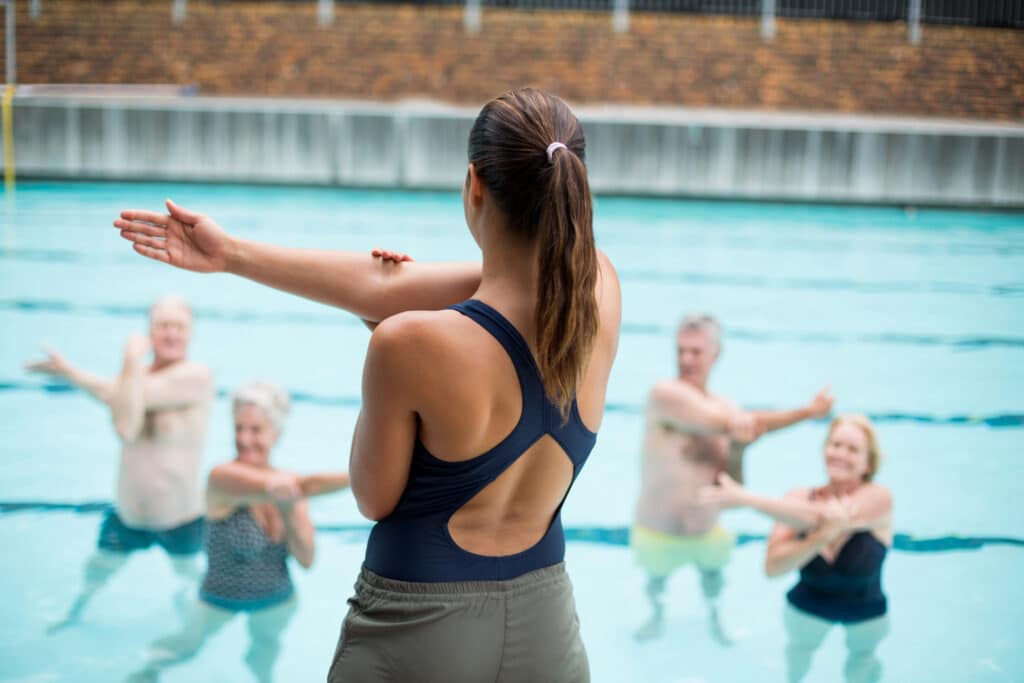


Knee replacement recovery can be challenging when swelling, stiffness, and pain slow your progress. Aquatic therapy can be a safer, low-impact way to start moving again and rebuild comfort, without feeling like every step is a test.
Ivy Rehab physical therapists use pool-based exercises to improve gait, build strength, and bring confidence back to each step. This guide explains how aquatic therapy after knee replacement supports recovery and what to expect from this specialized approach to physical therapy, so that you can feel prepared, not overwhelmed.
Why Aquatic Therapy Helps After Knee Replacement
Warm water can be a welcoming and beneficial place to start moving again after surgery. Think of it as a gentler on-ramp back to walking. Buoyancy lightens the load on your new joint, so gait practice often feels steadier and more manageable. The water’s gentle resistance helps “wake up” key muscles without pounding or sharp discomfort.
In the following sections, we’ll break down how buoyancy, warmth, resistance, and balance work together to support your recovery following knee replacement surgery.
Buoyancy Reduces Joint Load
Buoyancy helps ease stress on your knee joints by reducing the weight it must support. In chest-deep water, joint loading may drop significantly, making early walking practice feel more comfortable and less intimidating.
With that extra support, walking drills and early weight shifts often feel easier to tackle. Many people notice less discomfort when bending and straightening the knee, and confidence tends to grow as each step feels steadier and more in control.
Warm Water Decreases Pain and Swelling
Therapy pools are usually kept at 90 to 95 degrees Fahrenheit. Warm water can help boost circulation and reduce muscle tension around your knee.
Many patients notice easier motion and less stiffness. Some feel the surrounding muscles soften and settle. After a session, you may feel looser and more relaxed. That comfort can make it easier to keep showing up, practicing, and improving your quality of life.
Water Resistance Builds Strength Safely
Water provides steady, all-directional resistance, allowing you to build strength without rushing into extra weights. Speed up, and it pushes back more. Slow down, and it stays gentle, like a built-in dial you control. It’s supportive, but it still makes your muscles show up for work. That’s why many land exercises translate well to the pool, where you can practice familiar moves with extra support when you need it, and a little more challenge when you’re ready.
This makes water therapy for knee replacement recovery helpful for strengthening:
- Your quadriceps.
- Your glute muscles.
- Your hip stabilizers.
Your Ivy Rehab physical therapist can adjust the challenge as you get stronger by changing your speed, water depth, or direction of movement.
Water Improves Balance and Confidence
Water has a built-in “slow mode,” which can make movement feel safer and more controlled. That extra control can help ease your concerns during early gait retraining. With the water supporting you, balance practice often feels more comfortable and a lot less intimidating.
And here’s the sneaky part: the pool still keeps you honest. Those gentle ripples create small, safe surprises, so your stabilizing muscles have to react and adjust. Over time, that can help you feel more ready for real life, like uneven sidewalks, sloped driveways, and all the little bumps you don’t notice until you’re healing.
When Aquatic Therapy Typically Begins After Surgery
When you start pool therapy depends on your surgeon’s clearance and how your incision is healing. Your Ivy Rehab physical therapist will also check swelling, stability, and how your knee handles movement. Safety comes first, especially in the early stages.
For many people, aquatic therapy after knee replacement begins about two to four weeks after surgery. Your incision should be fully healed by then, and pain and swelling should be under control.
In the pool, you’ll start slow and steady. As your knee warms up, you can add speed in small steps, only as long as things stay smooth and controlled.
Early sessions focus on comfort and walking mechanics. Your therapist will also work on knee motion. More intense strengthening usually comes later.
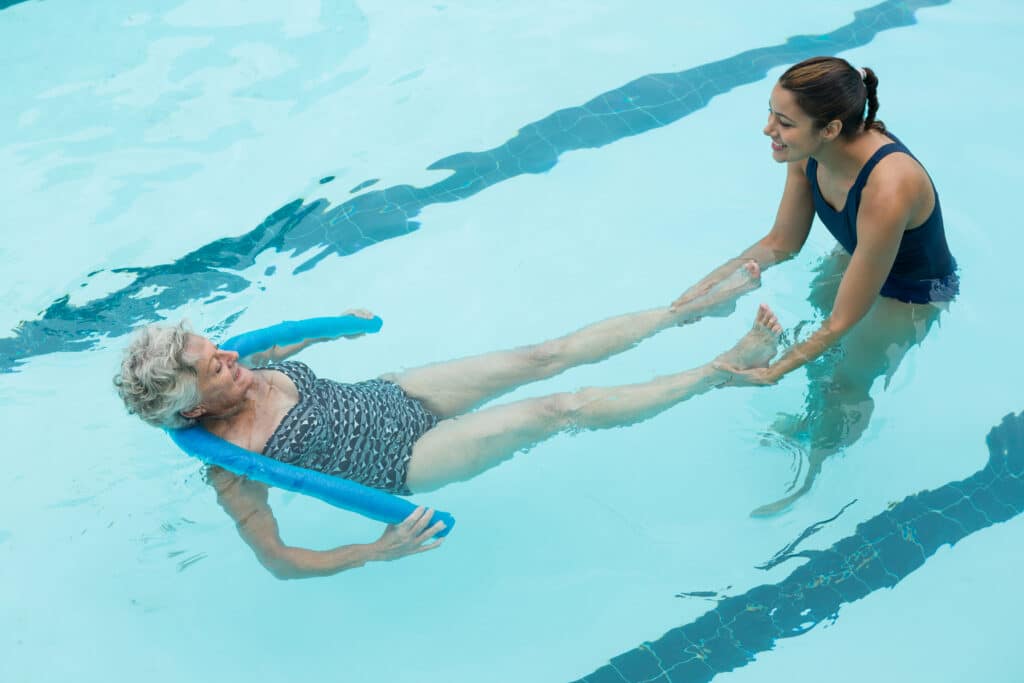
PT-Approved Aquatic Therapy Exercises for Knee Replacement Recovery
These exercises support range of motion, strength, and gait. Start with low reps, and keep discomfort mild, brief, and quick to settle. Your knee is building confidence here, not trying to win a race.
Water Walking (Forward and Backward)
Water walking can retrain gait with less joint stress:
- Walk forward with a tall posture.
- Add backward walking to activate the quadriceps.
- Use handrails for balance, as needed.
Keep your steps small and smooth. If swelling increases later that day, pause and let your PT know. If an underwater bike or treadmill is available, your PT may add it to your plan.
Side-Stepping or Lateral Walks
Lateral walking can strengthen hip muscles that guide knee alignment:
- Step sideways along the pool wall.
- Keep toes facing forward during each step.
- Move with a steady, controlled rhythm.
Start near the wall so you feel secure and can keep your hips engaged during your workout.
Gentle Knee Flexion and Extension at the Pool Wall
This drill supports safe range-of-motion gains:
- Hold the pool wall for support.
- Bend and straighten the knee slowly.
- Stay within a comfortable range.
Aim for gentle progress, not a hard stretch. If movement feels a little easier each week, that’s a win.
Supported Mini Squats
Mini squats can build quadriceps strength with buoyancy support:
- Hold the rail for stability.
- Sit back slightly, then stand up.
- Keep knees aligned over toes.
Stay in shallower water and move at a steady pace. If your knees start to drift inward, reset your stance and slow down.
Hip Strengthening Exercises
Stronger hips can reduce pain and stress on the knee during walking:
- Lift the leg forward, backward, and to the side.
- Keep your trunk upright through each lift.
- Move slowly, with steady control.
Pause for a moment at the top. That control often carries over into steadier walking.
Step-Ups in Water
Step-ups can mimic stairs with less impact:
- Use a pool step if available.
- Step up and down with control.
- Alternate legs for balanced work.
Lead with your stronger leg first, then switch. Quality matters more than speed here.

Benefits of Aquatic PT After Knee Replacement
If land-based exercises still feel painful or shaky, water therapy can feel like hitting the reset button. The water supports your body, so walking and strengthening often feel easier and more controlled. Many people finish a session feeling steadier, not wiped out. Over time, you can build strength and flexibility while giving your knee the breathing room it needs.
Aquatic therapy after knee replacement can also boost confidence for longer walks and stair practice. Water therapy for knee replacement recovery is a popular option for those who want to continue moving while swelling subsides.
Innovative Therapies for Complex Needs
Our specialized programs are designed to address unique health challenges.
Safety Considerations for Aquatic Therapy
Your Ivy Rehab therapist keeps a close eye on safety during every session, including your incision. No heroics needed. We’re aiming for smart, steady progress. It needs to be fully healed before any water-based work begins. In the water, movement should feel controlled and manageable, not forced.
Early on, skip deep squats and twisting. Pay attention to swelling before and after sessions, and tell your therapist right away if you feel sharp pain or numbness.
If anything suddenly feels different, get out of the pool and tell your PT. These simple check-ins help you keep making steady progress while protecting healing tissue.
What to Expect at Ivy Rehab During Aquatic Therapy
Aquatic therapy at Ivy Rehab Therapy is structured, personal, and focused on progress. You’ll work one-on-one with a trained clinician who builds a plan around your goals, moving from mobility to strength to everyday function.
Your PT can pair pool and land sessions as needed. You’ll get coaching on posture and walking mechanics, plus simple home guidance to help you keep the momentum going between visits.
When to Transition from Pool to Land-Based PT
As you get stronger, therapy can gradually shift from the pool to land. Your PT will keep an eye on your walking form, swelling, and how confident you feel with everyday tasks.
You may be ready when walking feels steadier, and your legs feel stronger. You might also notice less swelling after activity. From there, land sessions help you build long-term strength and endurance, so your new knee can keep up with real life.
A Softer Start, a Stronger Stride
Aquatic therapy can be a gentle, confidence-building way to support recovery after a knee replacement. The water provides extra support, so movement often feels safer and more manageable.
With the right guidance, many patients start trading worry for wins, like a steadier walk, smoother steps, and real momentum. Over time, strength and mobility can build in a way that feels more steady and less stressful.
If you’re curious whether aquatic therapy after knee replacement could help you, find a nearby Ivy Rehab Therapy location, and let’s talk through your options, starting with what feels doable right now.
References
- HydroWorx. “Aquatic Therapy Rehabilitation for Total Knee Replacement.” Accessed Dec. 26, 2025. https://www.hydroworx.com/blog/aquatic-therapy-rehabilitation-for-total-knee-replacement/
- American Academy of Orthopaedic Surgeons. “Total Knee Replacement.” OrthoInfo. Accessed Dec. 26, 2025. https://orthoinfo.aaos.org/en/treatment/total-knee-replacement/
- Arthritis Foundation. “In the Swim: Aquatic Exercise for Arthritis.” 2022. Accessed Dec. 26, 2025. https://www.arthritis.org/health-wellness/healthy-living/physical-activity/other-activities/water-exercise-benefits-for-arthritis

Before you go
Find the right therapy today.
Discover how Ivy Rehab can help you get back to doing what you love.