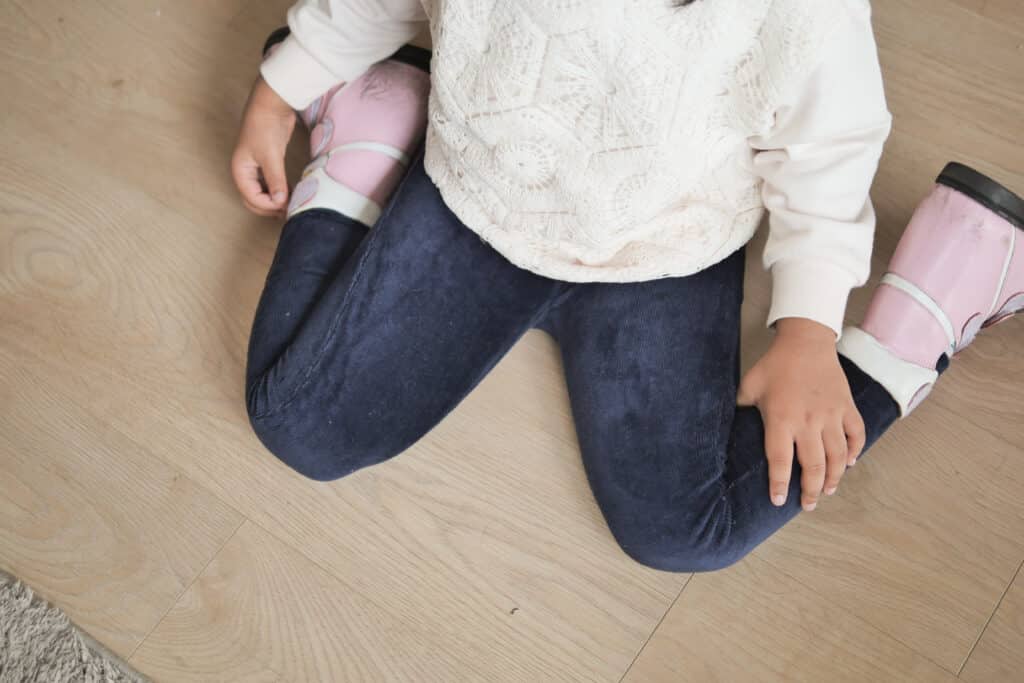
You’ve probably seen it. Your child drops to the floor and settles into a wide W shape with their knees bent in front and feet splayed out to each side. It looks effortless for them, but uncomfortable to everyone else.
Parents often have questions about W sitting, and there’s a lot of conflicting advice. Is it harmful? Is it a sign of something? Do you need to stop it every single time?
For many children, the answer depends on how often they W sit and what else is going on with their movement. Current research shows that W sitting by itself doesn’t cause hip dysplasia in children who are developing normally. It’s worth watching if it becomes the only way your little one sits.
Key Takeaways
- Some W sitting is normal in young children, especially when they move in and out of several sitting positions while playing.
- Frequent or exclusive W sitting may point to lower core strength, muscle tone differences, hip flexibility, or motor skill concerns.
- W sitting can limit how often a child practices trunk rotation, balance, and cross-body movement if it becomes their main sitting position.
- A pediatric physical therapist can evaluate whether W sitting is a concern and suggest practical ways to support movement.
Quick Navigation
- What Is W Sitting?
- Why Do Children W Sit?
- Is W Sitting Actually Harmful?
- Better Sitting Alternatives
- How to Redirect W Sitting
- When Should I Talk to a Physical Therapist?
What Is W Sitting?
W sitting is when a child sits on the floor with their knees bent in front and their feet turned out to each side. From above, the legs form the letter W.
Many young children move in and out of this sitting position during play. On its own, W sitting isn’t automatically a problem. The bigger question is how often your child uses it and whether they can comfortably use other sitting positions as well.
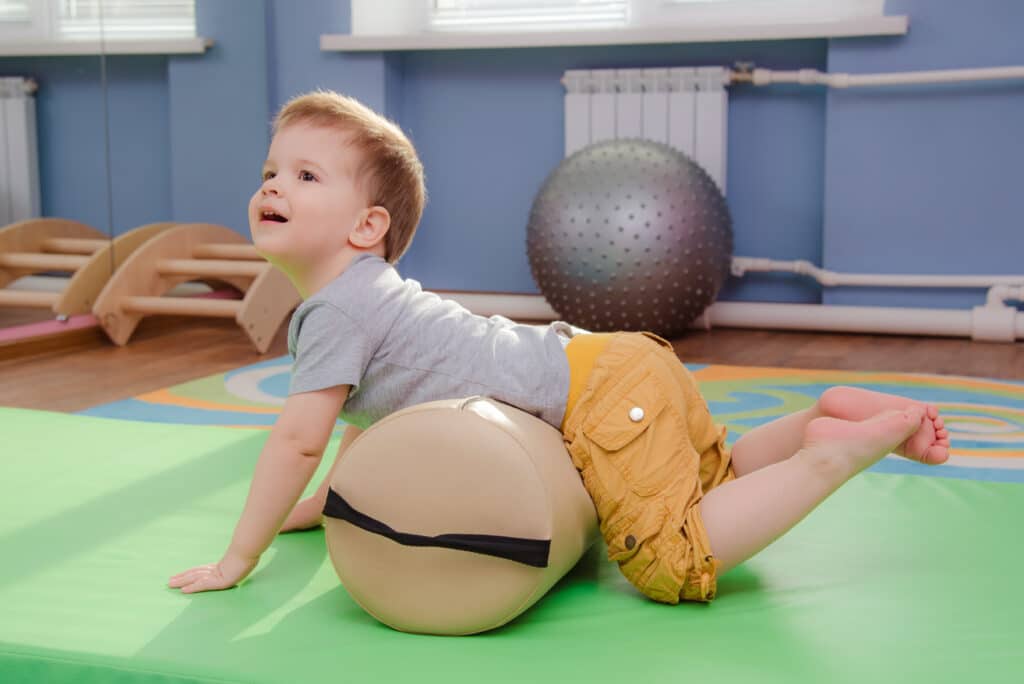
Why Do Children W Sit?
Children often W sit because the position helps them feel steady while they play. It keeps the hips and trunk from moving as much, so they can focus on toys, books, or games without having to work as hard to balance.
Some children use W sitting more often because other positions feel harder. Criss-cross sitting, long sitting, and side sitting may require more core strength, hip mobility, hamstring flexibility, or trunk control.
That doesn’t mean every child who W sits has a problem. It may be time to talk with a pediatric physical therapist if W sitting becomes their main position, they resist other ways of sitting, or they also have delayed milestones, frequent tripping, balance trouble, or pain.
Is W Sitting Actually Harmful?
W sitting isn’t automatically harmful. Many children use it briefly during play, then switch to other positions on their own.
The bigger concern is the pattern around it. If W sitting is the only position your child uses, it may limit how often they practice other movement skills during floor play.
The sections below explain what W sitting may affect when it becomes a frequent habit.
Hip Development
W sitting turns the hips inward while a child sits. Older advice often warned parents that this position could affect hip development, but current research doesn’t show that W sitting causes hip dysplasia in children who are developing normally.
If your child already has hip dysplasia, another hip condition, or an orthopedic concern, ask your pediatrician or orthopedic specialist which sitting positions are safest for them.
Core Muscle Development
W sitting lets the floor and leg position do much of the stabilizing work. That means the core muscles don’t have to work as much to keep the body upright.
If W sitting is the only position your child uses, they may get fewer chances to build trunk strength and control during play. Those skills help with reaching, writing, catching, climbing, and other everyday movements.
Balance and Motor Skills
Children build balance and motor skills when they shift their weight, reach across their bodies, turn their trunks, and move in and out of different positions. W sitting can limit some of that practice because it keeps the hips and pelvis more fixed.
When a child uses several sitting positions, their body gets more chances to practice balance, coordination, and using both sides together. That’s why variety matters more than stopping W sitting every single time.

Better Sitting Alternatives
Encouraging other sitting positions helps your child use different muscles and movement patterns. Good options include:
- Criss-cross applesauce (tailor sitting): Legs crossed in front, back upright. This position challenges core stability and promotes hip flexibility.
- Long sitting: Legs stretched straight out in front. Good for stretching hamstrings.
- Side sitting: Both legs angled to one side. Encourages trunk rotation when practiced on both sides.
- Kneeling or half-kneeling: Excellent for core and hip engagement.
The goal is to use a variety of positions, so your child can practice different ways to balance, reach, shift, and move.
How to Redirect W Sitting
Try not to make a big deal out of W sitting. Calm, consistent cues usually work better than a long explanation or a worried reaction.
A few simple strategies can help:
- Use a short cue, such as “criss-cross” or “change your legs.”
- Show your child a position so they can copy it.
- Offer a small stool, cushion, or chair if the floor feels hard to sit on.
- Place toys slightly to the side so your child has a natural reason to reach, turn, and shift positions.
- Share the cues with caregivers and teachers so your child hears a consistent message.
You don’t need to completely eliminate W sitting. Redirecting it during longer seated activities is a reasonable goal for most children.
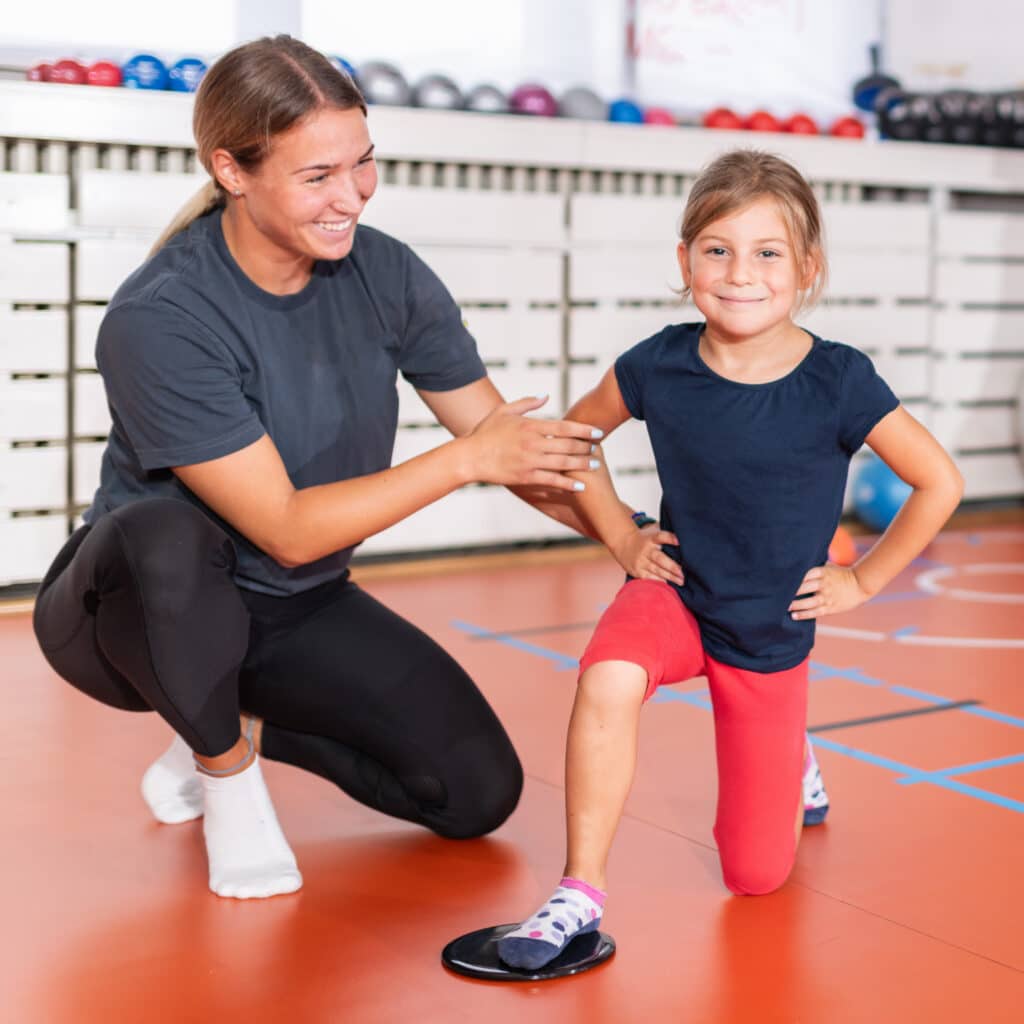
When Should I Talk to a Physical Therapist?
Consider a pediatric physical therapy evaluation if your child:
- W sits almost exclusively and resists other floor sitting positions.
- Has pain, stiffness, or trouble moving out of the W sitting position.
- Is behind on motor milestones like jumping, running, crawling, walking, or stair climbing.
- Has been diagnosed with low muscle tone, hip dysplasia, cerebral palsy, or toe walking.
- Shows difficulty with balance, coordination, or using both sides of the body together.
A pediatric physical therapist can assess strength, range of motion, balance, coordination, and gross motor skills. If fine motor skills, sensory needs, or daily routines are also concerns, pediatric occupational therapy may help.
FAQs
Do Kids Grow Out of W Sitting?
Many children naturally use more sitting positions as they grow, gain strength, and become less flexible. Gentle redirection, especially during longer seated activities, is often more helpful than waiting and hoping the habit fades on its own.
Is W Sitting Associated With Autism?
W sitting by itself is not a sign of autism. Some autistic children may prefer W sitting because of comfort, muscle tone, sensory preferences, or the need for extra stability, but the sitting position alone doesn’t explain why a child uses it.
When Should I Worry About W Sitting?
W sitting may be a concern when it’s the only position your child uses or when they have other motor concerns, such as poor balance, difficulty running, pain, stiffness, or strong resistance to other sitting positions. Those patterns are worth discussing with a pediatric physical therapist or pediatrician.
Why Do Some Children Prefer W Sitting?
W sitting gives children a wide base of support, so they can use their hands to play without working as hard to balance. Children with lower muscle tone, weaker core muscles, or tighter hip and leg muscles may prefer it because other positions feel less comfortable or less steady.
Find a Pediatric Physical Therapist Near You
If you’re concerned about your child’s sitting habits or motor development, a physical therapy evaluation can give you clear information and a practical plan. Ivy Rehab for Kids’ pediatric physical therapy teams work with families to support motor development, posture, balance, and movement in a child-friendly way.
Find an Ivy Rehab for Kids clinic near you to get started.
References
- W-Sitting in Childhood: A Systematic Review. Acta Ortopédica Brasileira. Accessed March 2026. https://www.scielo.br/j/aob/a/WTnxTdLYKNxzCXkx7kVFVSL/?format=html
- W-Sitting and Hip Development. International Hip Dysplasia Institute. Accessed March 2026. https://hipdysplasia.org/w-sitting-and-hip-development/

Before you go
Find the right therapy today.
Discover how Ivy Rehab can help you get back to doing what you love.