Helping Your Child Manage Big Emotions: Signs, Support, and What to Do Next
Every child has big feelings. Frustration, anger, sadness, excitement—these are all part of growing up.
But sometimes, those feelings feel too big to manage.
For some kids, that might look like a meltdown that seems out of proportion to what caused it. For others, it might show up as difficulty calming down, trouble with routines, or challenges with problem-solving.
Devon Albano, occupational therapist and clinic director at Ivy Rehab for Kids, helps families recognize when emotional regulation may need extra support.
“Some common signs that your child may be struggling with emotional regulation include a big meltdown that is disproportionate to the trigger,” she explains.
When those moments happen frequently or feel hard to manage, it may be a sign that a child needs help building emotional regulation skills.
Talk with our team at Ivy Rehab for Kids today about building emotional regulation skills your child can use at home, at school, and in everyday moments.
What Emotional Regulation Looks Like in Kids
The CDC notes that early childhood is a critical period for development, when children begin building the emotional and social skills that support learning, behavior, and overall well-being.
One of those key skills is emotional regulation—the ability to understand, process, and manage emotions in a way that supports a child’s behavior and relationships.
It is not about stopping emotions. It is about helping kids manage them in a way that feels safe and appropriate for their age.
In early childhood, kids are still learning how to:
- Recognize their feelings
- Express emotions appropriately
- Calm their body after distress
- Problem-solve when things do not go as planned
When those self-regulation skills are still developing, kids may feel overwhelmed more easily.
Devon explains that another key indicator is how long it takes a child to recover. “Realistically, we want to see them calm within 15 to 20 minutes,” she says.
If a child cannot calm down within that window or cannot calm down with support from a parent, it may point to challenges with emotion regulation.
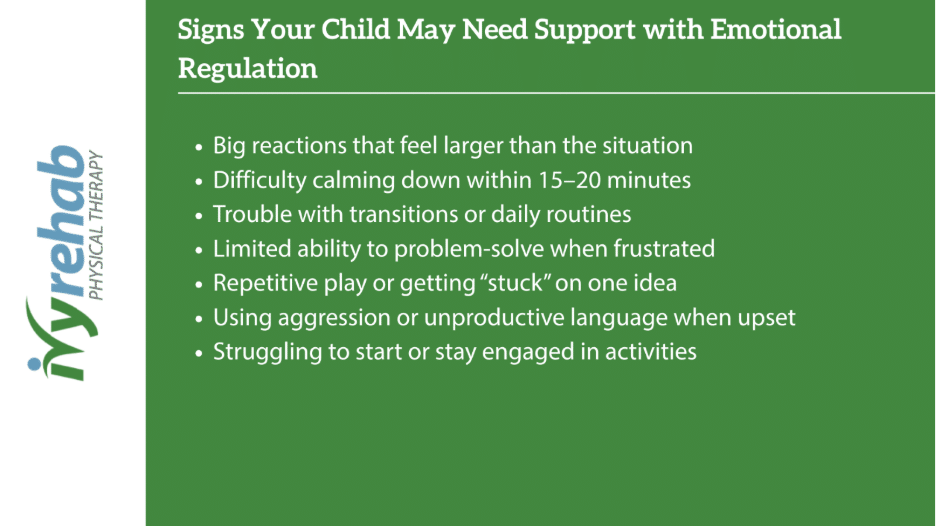
Signs Your Child May Need Support
Some signs of emotional dysregulation are easier to recognize than others.
Devon often sees patterns like:
- Meltdowns that last longer than expected for their age
- Difficulty calming down, even with caregiver support
- Using aggression or unproductive language when upset
- Trouble with transitions or unexpected changes
Parents will sometimes say they feel stuck in these moments. “I don’t know what to do to get them to calm down,” Devon shares as a common concern she hears.
That feeling is important. It often signals that a child needs more structured support to build regulation skills.
How Executive Function Impacts Emotional Regulation
Emotional regulation is closely connected to executive function in children—the mental skills that help kids plan, focus, and follow through.
When executive function is still developing, kids may struggle with:
- Starting or completing daily routines
- Managing free time or boredom
- Creating flexible play ideas
- Adjusting when something does not go as planned
Devon explains, “We’re also going to see your kiddos struggle with free time or boredom, such that they can’t come up with a plan.”
These challenges are not just about behavior. They are about a child’s ability to problem-solve, adapt, and regulate their response in the moment.
How Therapy Helps Kids Learn to Regulate
Emotional regulation therapy for kids focuses on helping children recognize what they feel and learn how to respond.
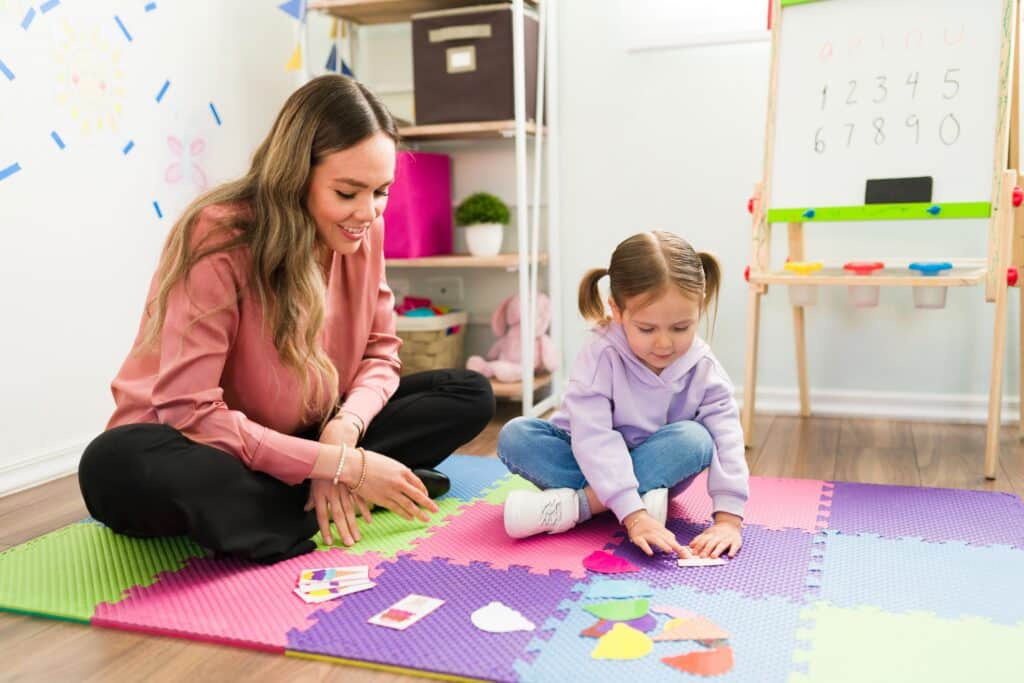
Therapists create a safe space where kids can experience frustration, work through it, and build confidence. Devon describes how she supports this in real time: “In a session, you might hear me say that was a really challenging activity. I see your hands are in a fist. You seem a little frustrated.” This type of labeling helps children connect their physical sensations with their emotions. That awareness is a key foundation for emotional development.
Therapists also create what is often called a “just right challenge”—activities that are difficult enough to feel uncomfortable, but still achievable.
This helps kids practice self-regulation in a controlled, supportive environment.
Teaching Kids to Recognize and Respond to Feelings
One of the most effective ways to support emotional growth is helping kids identify their emotions in real time.
When children can name what they feel, they are better able to:
- Pause before reacting
- Use calming strategies
- Communicate their needs
- Try different choices in challenging moments
Therapists often teach simple, effective tools like:
- Deep breathing to calm the body
- Slowing down the moment to reduce overwhelm
- Practicing responses during play
- Using movement to regulate sensory input
These strategies are practiced during calm moments so children can use them during times of distress.
Why Play Is So Important for Regulation
Play is one of the most effective ways children learn. For younger kids, Devon encourages parents to join in and expand on what the child is already doing.
“If your child plays by crinkling paper, we’re going to crinkle a lot of paper,” she explains. The goal is to build engagement first, then gradually introduce small steps that expand the activity. This helps children learn flexibility, sequencing, and problem-solving skills without feeling pressured.
For older kids, the approach shifts slightly. “We’re going to let them make the plan,” Devon says.
Giving kids ownership over their choices builds confidence and creates natural opportunities to practice adjusting when things do not go as expected.
The Role of Parents and Caregivers
Parents play a critical role in helping children regulate emotions.
Children learn best through connection. When caregivers respond with consistency and support, kids begin to internalize those strategies.
Therapy often focuses on helping families:
- Understand their child’s triggers
- Create predictable routines
- Respond to emotions in a calm, supportive way
- Practice regulation strategies at home
This process is called co-regulation, where adults help children learn to self-regulate over time. When a child feels safe and supported, it becomes easier for them to manage their emotions.
What Progress Looks Like Over Time
Progress in emotional regulation is not always immediate, but it is meaningful. Devon shares some of the changes families notice:
“I’m enjoying my child again.”
She also hears that kids are starting to advocate for themselves.
“I hear kiddos telling me that they advocated for a sensory break at school before they had a meltdown.”
These moments reflect real growth. They show that a child is beginning to understand their emotions, communicate their needs, and take steps to regulate themselves.
Devon emphasizes that regulation is the foundation for many of these changes. “Regulation is really the foundation that makes all of these things possible.”
Building Confidence Through Success
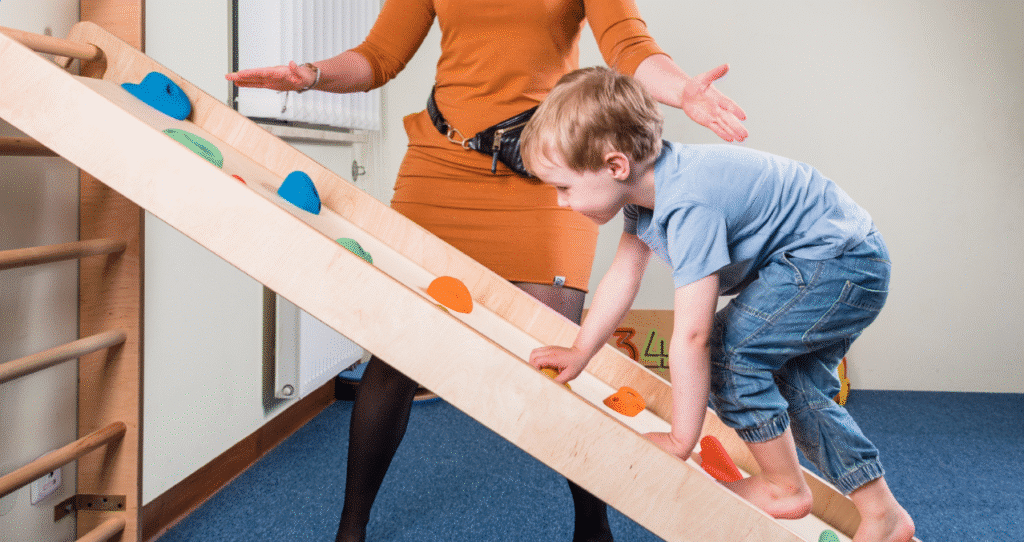
One of the most powerful parts of therapy is watching a child succeed at something that once felt impossible. Devon describes working with a child on a challenging activity that required coordination, timing, and persistence.
“It took him maybe eight to ten tries before he was successful,” she says. But when he got it, everything changed.
“I can’t even describe the beam of pride and happiness that he had.” That moment mattered because the child owned it.
“It was his goal, it was his activity, it was his plan.” That sense of ownership builds motivation, confidence, and long-term emotional growth.
A Foundation for Lifelong Skills
Emotional regulation therapy for kids is not just about managing meltdowns.
It is about building lifelong skills that support:
- Mental health
- Relationships with peers and adults
- Success in school
- Confidence in everyday life
When children learn to understand and manage their emotions, they are better equipped to navigate the world around them.
Wondering How to Better Support Your Child’s Big Feelings?
If your child experiences the world in a big way, the right support can help daily routines feel more manageable. Our team at Ivy Rehab for Kids works with families to build practical, real-life strategies that help kids feel more confident and in control.
Connect with Ivy Rehab for Kids to support your child’s emotional growth with strategies that go beyond the therapy session.

Before you go
Find the right therapy today.
Discover how Ivy Rehab can help you get back to doing what you love.