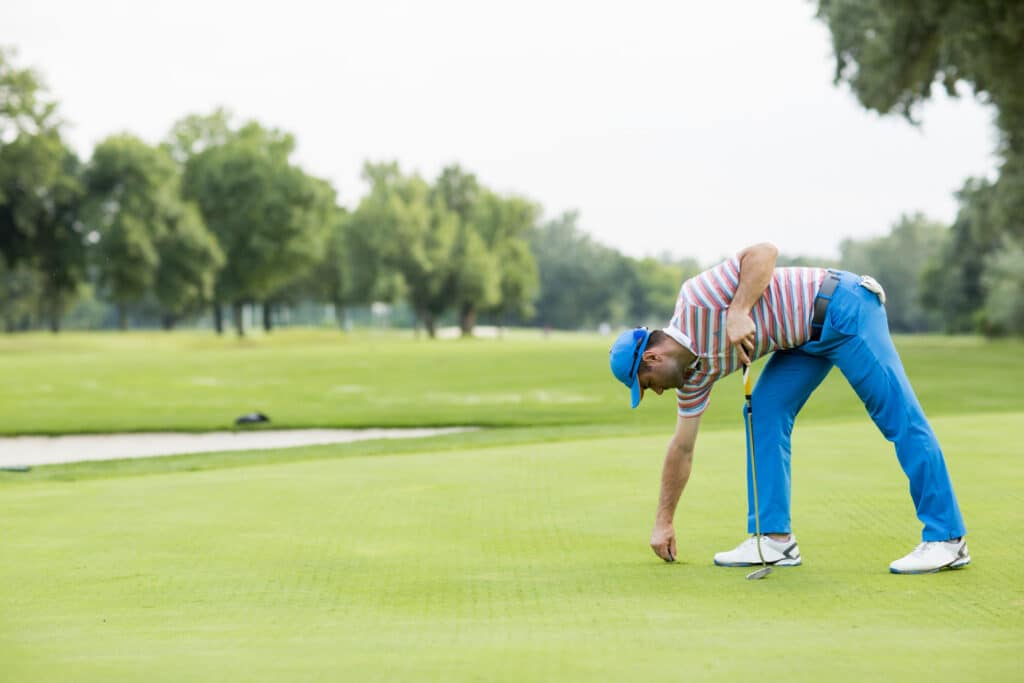
Golf is low impact, but it isn’t low demand. Every swing uses your back, shoulders, elbows, wrists, hips, and knees. Repeat that motion over a round or season, and small issues can turn into pain or injury.
Most golf injuries don’t happen from one bad swing. They build from repeated stress, limited mobility, too much practice too soon, or small movement issues that keep putting pressure in the same place.
The good news is that preventing golf injuries often starts with small, practical changes that help your body handle the demands of the game.
Key Takeaways
- The lower back, elbows, wrists, shoulders, and knees are common injury areas for golfers.
- Many golf injuries are related to overuse, limited mobility, poor preparation, or returning to play too quickly after time away.
- A short dynamic warm-up before a round or range session can help prepare your body for the swing.
- Strength and mobility work away from the course can reduce stress on your back, shoulders, and joints.
- A physical therapist can help identify movement issues, manage pain, and support a safer return to play.
Quick Navigation
- Most Common Golf Injuries
- Why Golf Injuries Happen
- How to Prevent Golf Injuries
- When to See a Physical Therapist
Most Common Golf Injuries
Golf can place stress on several parts of the body at once. These are the areas golfers often notice first:
- Low back pain: The golf swing requires rotation, power, and control. When the hips or mid-back do not move well, the lower back often works harder than it should.
- Elbow and wrist pain: Repeated gripping, forearm rotation, and ground contact can irritate the tendons around the elbow or wrist. Golfer’s elbow is common, but outer elbow pain and wrist sprains can also happen.
- Shoulder pain: The shoulders help guide the club through a wide range of motion. Limited shoulder strength or control can lead to irritation, especially in the rotator cuff.
- Knee pain: The knees absorb rotational force during the backswing, impact, and follow-through. Hip stiffness or past knee issues can make that stress harder to manage.
Pain that happens once may settle with rest. Pain that keeps returning is usually worth a closer look.

Why Golf Injuries Happen
Golf injuries usually follow a pattern, even when the pain seems to come out of nowhere. A sports injury screening can help assess how your body moves, identify factors that may affect your swing, and show where more mobility, strength, or stability may help.
Too Much Too Soon
A common problem is jumping back into long rounds or high-volume range sessions after time away. Your muscles, tendons, and joints need time to adapt, even if your swing still feels familiar. Overuse injuries can happen after winter, a vacation with daily golf, or a sudden push to practice more. Building volume slowly is one of the simplest ways to lower the risk of injury.
Limited Mobility or Strength
The golf swing motion needs hip rotation, mid-back mobility, shoulder control, and core strength. When one area is stiff or weak, another area often takes over. The compensation may not hurt right away. Over time, it can show up as back tightness, elbow soreness, shoulder injuries, or a swing that feels harder to repeat.
Swing Mechanics and Compensation
Some swing issues are due to technique. Others come from the body trying to work around a physical limitation. Knowing the difference can help you choose the right next step, whether that’s coaching, physical therapy, or both.
A golf instructor can help refine your swing mechanics. A sports physical therapist can help identify whether pain, stiffness, or movement limits are changing how you swing the golf club. For many golfers, both perspectives work best together.

How to Prevent Golf Injuries
Golf injury prevention doesn’t require changing everything about how you play. It starts with habits that help your body handle the demands of the sport.
Warm Up Before You Play
A 10-minute warm-up can make a big difference. Moving around before you start can increase blood flow and loosen the areas that drive your swing.
A simple golf warm-up can include:
- A few minutes of brisk walking.
- Arm circles and shoulder rolls.
- Gentle trunk rotations.
- Hip circles or leg swings.
- Slow practice swings that build toward full effort.
Save longer static stretches for after your round of golf. Before you play, a dynamic warm-up usually works better.
Build Strength and Mobility Off the Course
Golf fitness doesn’t need to be complicated. For many players, the biggest wins come from improving hip mobility, mid-back rotation, core control, glute strength, and shoulder stability.
Exercises like dead bugs, bridges, single-leg strength training, open-book stretches, and banded shoulder rotations can support the body parts that the golf swing uses most. The right mix depends on your symptoms, history, and goals.
Manage Practice Volume and Recovery
Range sessions can add up fast. Repeating full swings in a short period of time can place more stress on your body than a full round.
Build up gradually, especially after time away. Alternate harder golf days with lighter activity or rest, and pay attention to soreness after every session.
Do Not Ignore Early Symptoms
A little stiffness after a round isn’t always a problem. Pain that changes your swing technique, lasts more than a day or two, or keeps coming back deserves attention. The goal is to address small issues before they force you to stop playing.

When to See a Physical Therapist
You may want to schedule a physical therapy evaluation if:
- Pain affects your swing or keeps you from finishing a round.
- Symptoms keep coming back after you play.
- Back, elbow, shoulder, wrist, or knee pain lasts more than a few days.
- You notice numbness, tingling, pain that travels down your arm or leg, a joint that catches or gets stuck, or sharp pain.
- You’re coming back after an injury, surgery, or long break from playing golf.
Getting help early can make it easier to return to golf with less pain and more confidence. A physical therapist can assess your movement, explain what may be contributing to pain, and help you build a plan that supports the way you play.
FAQs
Can changing my swing reduce pain?
Sometimes. If your pain is related to technique, swing changes may help. If your swing is compensating for stiffness, weakness, or limited control, physical therapy may need to address those issues first.
Do I need a referral to see a physical therapist for a golf injury?
In many cases, you can schedule a physical therapy evaluation without a physician’s referral. Direct Access rules vary by state and insurance plan, so it’s still a good idea to check your coverage before your first visit.
Does warming up really help prevent golf injuries?
Yes. A warm-up helps prepare your muscles and joints for moving full speed. For playing golf, dynamic stretches and progressive practice swings are usually more useful before a round than long, static stretches.
How long does golfer's elbow take to heal?
It depends on how irritated the tendon is and how long you’ve had symptoms. Mild cases may improve in several weeks with the right changes. More stubborn cases can take longer, especially if the same gripping or swing pattern keeps aggravating the area.
What is the most common golf injury?
Lower back pain is one of the most common golf-related injuries. The swing places repeated rotational stress on the spine, especially when the hips and mid-back are not moving well.
Talk to a Physical Therapist About Golf Injuries
If golf keeps leaving you sore, limited, or nervous about your next round, you do not have to guess your way through it. A physical therapist can help you understand what’s happening and what may help.
Find an Ivy Rehab location near you, or explore our sports injury services, athletic therapy programs, and orthopedic therapy services to learn more.
Key Terms
Sports injury screening: A movement-based check that can help identify strength, mobility, balance, or movement factors that may affect pain, performance, or injury risk.
Golfer’s elbow: Pain or irritation on the inner side of the elbow, often related to gripping, wrist motion, and repeated stress through the forearm.
Rotator cuff: A group of muscles and tendons that help stabilize the shoulder and control rotation during the swing.
Dynamic warm-up: Movement-based preparation, such as arm circles, leg swings, and gentle practice swings, that helps your body get ready for activity.
References
- Gosheger G, et al. “Injuries and Overuse Syndromes in Golf.” American Journal of Sports Medicine, 2003. https://pubmed.ncbi.nlm.nih.gov/12750140/
- McHardy A, et al. “Golf Injuries: A Review of the Literature.” Sports Medicine, 2006. https://link.springer.com/article/10.2165/00007256-200636020-00006
- American Physical Therapy Association. “Physical Therapy Guide to Low Back Pain.” APTA, 2024. https://www.choosept.com/health-centers/parents

Before you go
Find the right therapy today.
Discover how Ivy Rehab can help you get back to doing what you love.