Tension headaches usually feel like steady pressure on both sides of the head. According to the World Health Organization, headache disorders affect about 40% of people worldwide, and tension-type headache is the most common type.
They’re easy to brush off, especially if over-the-counter medicines help for a while. But when tension headaches happen often, they can start to interfere with work, sleep, and daily life. Chronic tension headaches happen 15 or more days per month for more than three months.
Tension headache causes include muscle tension, emotional stress, eye strain, lack of sleep, and neck or upper back stiffness. Physical therapy can help address the neck, posture, and movement patterns that many people don’t connect to the pain.
Key Takeaways
- Tension headaches often feel like steady pressure, tightness, or aching on both sides of the head.
- Common triggers include muscle tension, poor posture, emotional stress, lack of sleep, and eye strain.
- Neck and upper back stiffness can feed headache pain because muscles and joints in the neck can refer pain to the head.
- Physical therapy can help frequent tension headaches by improving neck mobility, deep neck muscle control, posture, and muscle tension.
- Using over-the-counter pain medicines too often can lead to rebound headaches, also called medication-overuse headaches.
Quick Navigation
- What Causes Tension Headaches
- The Neck Headache Connection
- Stress as a Physical Trigger
- Physical Therapy for Tension Headaches
- Self-Care Strategies

What Causes Tension Headaches
Tension headaches can cause a pressing or tightening feeling around the forehead, temples, or base of the skull. Unlike migraines, they usually don’t cause nausea, aura, or strong sensitivity to light.
The most common causes of tension headaches include:
- Muscle tension in the neck, scalp, jaw, or shoulders.
- Sustained forward head posture while working on a computer, phone, or desk.
- Emotional stress or anxiety that makes muscles tighten without you realizing it.
- Lack of sleep or disrupted sleep.
- Eye strain from screens, reading, or other visual tasks.
- Skipping meals or not drinking enough water.
Tension-type headaches are often described by how often they happen. Episodic tension headaches occur fewer than 15 days per month. Chronic tension headaches occur 15 or more days per month, and frequent headaches are a good reason to talk with a healthcare provider.
The Neck-Headache Connection
The muscles at the base of the skull and the joints in the upper neck share pain pathways with the head and face. When those areas become stiff, overloaded, or irritated, the body sends pain signals to the back of the head, the temples, or the forehead.
That’s why neck pain treatment and headache care often overlap. Tension headaches aren’t “just stress” or “only in your head.” They often have a physical pattern that can improve with movement, posture changes, and hands-on treatment.
Stress as a Physical Trigger
Emotional stress can trigger a physical response in the body. Many people tense their necks, shoulders, jaws, or upper backs without realizing it. Over a long workday, low-level muscle tension can lead to tension headaches.
Stress management and physical therapy can work together because they address different parts of the same cycle. You don’t have to eliminate stress completely to feel better. The goal is to reduce the way stress turns into sustained muscle tension.
Relaxation techniques, biofeedback, acupuncture, breathing exercises, and supportive care may help some people manage stress-related symptoms. Stress can also show up as neck or shoulder tightness, which is one reason stress and shoulder pain often overlap.

Physical Therapy for Tension Headaches
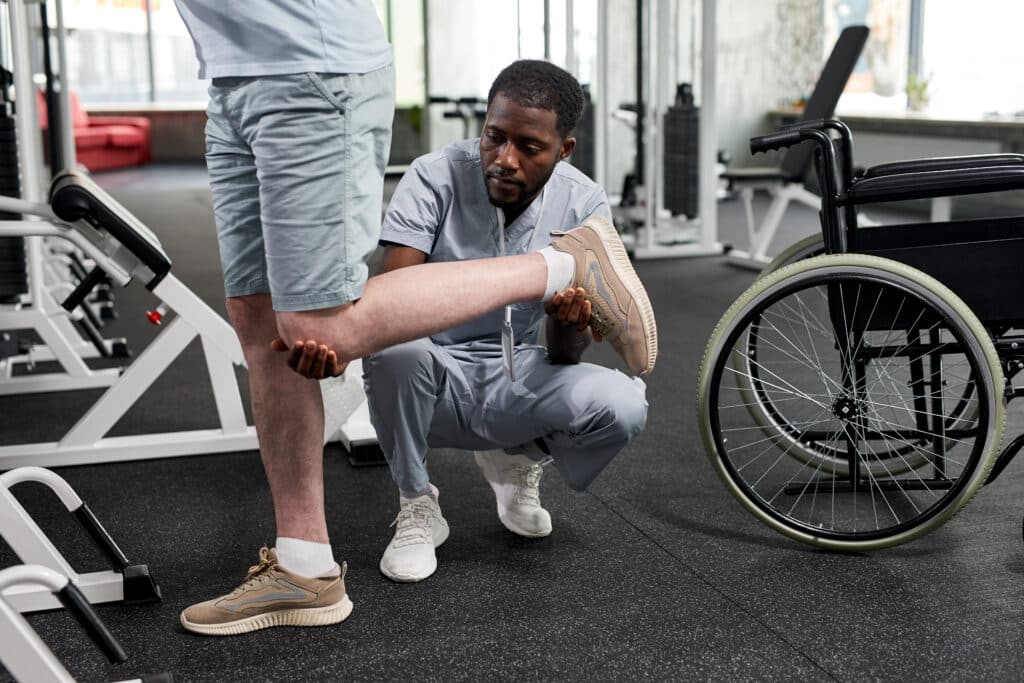
Physical therapy for tension headaches focuses on the neck, upper back, posture, and muscle tension that may be contributing to symptoms. Treatment should match your headache pattern, daily habits, and how your body responds to movement.
Care may include:
- Neck and upper back movement: Gentle joint work can help restore movement in stiff areas and reduce neck load.
- Soft tissue mobilization: Hands-on work can help reduce tension in the muscles at the base of the skull, the upper shoulders, and the jaw.
- Deep neck muscle strengthening: Targeted exercises can improve neck support, so larger surface muscles do not have to work as hard.
- Posture and movement retraining: A physical therapist can help you adjust how you sit, work, drive, lift, or use a phone so your neck isn’t under constant strain.
- A home exercise program: Simple exercises between visits can help reduce headache triggers and support longer-term pain relief.
Ivy Rehab Therapy headache treatment can include evaluation and care for tension-type headaches and neck-related headache patterns. Your physical therapist can also look at other areas, such as the neck, jaw, and upper back, that may be part of the headache cycle.
Self-Care Strategies
Self-care can support headache treatment between visits, especially when symptoms are related to posture, stress, sleep, or screen time. Keep these steps gentle and stop if a movement makes pain worse.
Helpful strategies may include:
- Taking movement breaks every 45 to 60 minutes while sitting at work or during long drives.
- Trying gentle chin tucks to lengthen the back of the neck without forcing the motion.
- Using heat for tight neck or shoulder muscles if it feels soothing.
- Practicing slow, deep breathing or other relaxation techniques when you notice your shoulders or jaw tightening.
- Keeping a consistent sleep schedule, when possible.
These habits don’t replace care when headaches are frequent, severe, or changing. But they can support physical therapy by reducing daily triggers that keep the cycle going.
FAQs
Can Pain Medicine Cause Rebound Headaches?
Yes. Using pain medicine too often can lead to rebound headaches, also called medication-overuse headaches. This can happen with over-the-counter medicines like ibuprofen or acetaminophen, as well as some prescription medications. If you need pain medicine often, talk with a healthcare provider about safer pain management options.
Can Physical Therapy Help Chronic Tension Headaches?
Yes. Physical therapy helps many people with chronic tension headaches, especially when neck stiffness, muscle tension, posture, or jaw tension is part of the pattern. A physical therapist can help improve neck movement, build muscle control, and create a plan that fits your day.
How Long Do Tension Headaches Last?
Timing varies. Episodic tension headaches may last 30 minutes to several hours. Chronic tension headaches can last longer or happen more often, especially when neck tension, stress, sleep problems, or other triggers are not addressed.
What Are Tension Headaches?
Tension headaches are the most common type of headache. They often cause dull, pressing pain on both sides of the head. Many people describe the feeling as a tight band around the forehead, temples, or base of the skull.
When Should I Get Medical Care for a Headache?
Get medical care right away for a sudden, severe headache, headache after a head injury, new weakness or confusion, fever, vision changes, or a headache that feels very different from your usual pattern. You should also talk with a healthcare provider if headaches keep coming back or interfere with daily activities.
Talk to a Physical Therapist About Tension Headaches
Tension headaches happen often, but they don’t have to be your normal. If they keep coming back, physical therapy can help identify the neck, posture, and stress-related patterns that may be part of the cycle.
Find an Ivy Rehab Therapy location near you to connect with care close to home, or learn more about headache treatment services and neck pain treatment.
Key Terms
Rebound headache: A headache pattern that can happen when pain medicine is used too often. This is also called medication-overuse headache.
Tension-type headache: A type of headache that usually causes dull, pressing pain or tightness on both sides of the head.
Cervicogenic headache: A headache that starts in the neck and sends pain into the head. Neck tightness and stiffness can also play a role in tension headaches.
Deep neck flexors: Small muscles in the front of the neck that help support neck position. When they are weak or underused, surface muscles may work harder and stay tense.
References
- Migraine and Other Headache Disorders. World Health Organization. Accessed March 2026. https://www.who.int/news-room/fact-sheets/detail/headache-disorders
- Tension-Type Headache. International Headache Society. Accessed March 2026. https://ichd-3.org/2-tension-type-headache/
- Tension Headache. MedlinePlus. Accessed March 2026. https://medlineplus.gov/ency/article/000797.htm
- Headaches – Danger Signs. MedlinePlus. Accessed March 2026. https://medlineplus.gov/ency/patientinstructions/000424.htm
- Physical Therapy in Tension-Type Headache: A Systematic Review of Randomized Controlled Trials. International Journal of Environmental Research and Public Health. Accessed March 2026. https://www.mdpi.com/1660-4601/20/5/4466

Before you go
Find the right therapy today.
Discover how Ivy Rehab can help you get back to doing what you love.