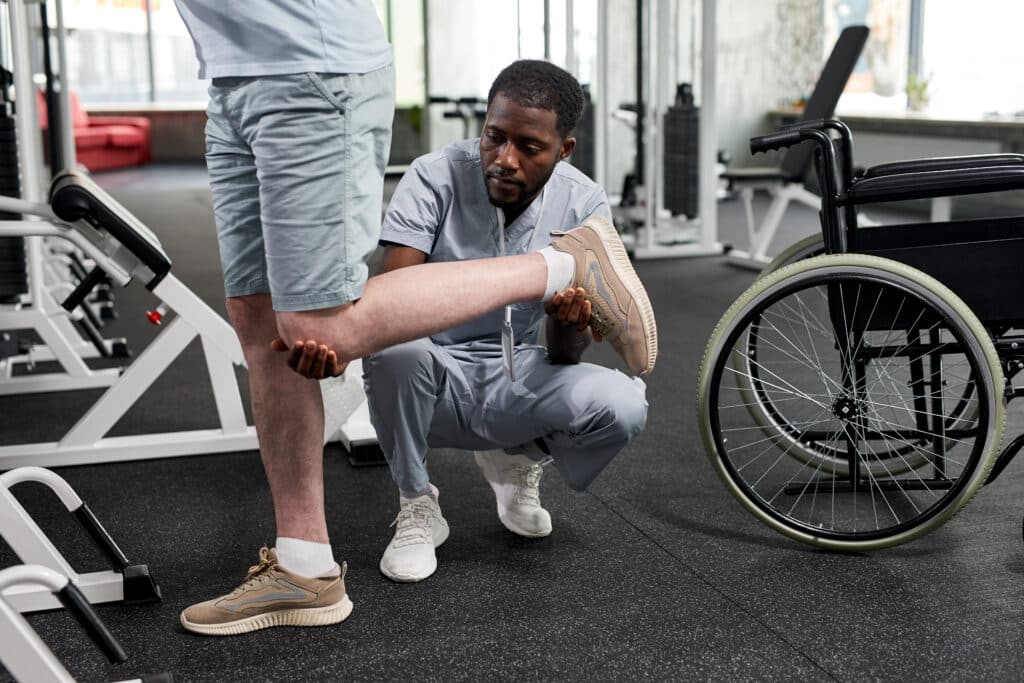
Neck pain when turning your head can make simple things feel harder than they should. Checking a blind spot, looking over your shoulder, working on the computer, or getting out of bed can feel rough when your neck muscles and joints are irritated.
Most neck pain with rotation is mechanical, which means it often comes from the muscles, joints, discs, or soft tissues in the cervical spine. Research published in Mayo Clinic Proceedings found that neck pain affects more than 30% of people each year.
Because neck pain affects how your neck moves and handles daily strain, physical therapy can help identify what’s contributing to the pain and guide the right next steps.
Key Takeaways
- Neck pain when turning your head often comes from muscle strain, joint irritation, poor posture, sleeping position, whiplash, or a pinched nerve.
- Pain on one side of the neck is often linked to muscle tension or joint stiffness, especially if it gets worse with neck movement.
- Seek medical attention for severe neck pain after a car accident, fall, or sports injury, or if symptoms include fever, weakness, numbness, or shooting pains in the arm.
- Physical therapy can help improve range of motion, reduce pain, and support daily activities.
Quick Navigation
- Common Causes of Neck Pain When Turning Your Head
- When to Seek Medical Attention
- Self-Care for Neck Pain at Home
- Gentle Exercises to Try
- How Physical Therapy Helps Neck Pain

Common Causes of Neck Pain When Turning Your Head
Neck pain can come from several places, and the pattern often gives useful clues.
These are some of the most common causes of neck pain when turning your head.
Muscle Strain and Tension
Muscle strain is one of the most common causes of neck pain when you turn your head. Neck muscles can become irritated from sleeping in an awkward position, poor posture, sudden lifting, muscle spasms, or tension in the upper back and shoulder blades.
Joint Stiffness and Poor Posture
Small joints in the cervical spine help guide rotation. When one side gets stiff or irritated, turning your head may feel blocked or painful, especially after long periods of screen time or forward head posture.
Pinched Nerve or Herniated Disc
A herniated disc or arthritis-related joint changes can irritate a nerve root that branches from the spinal cord. This may cause sharp pain, shooting pain, numbness, tingling, or weakness in the shoulder, arm, or hand.
Whiplash or Other Injury
Whiplash can occur after a car accident, a fall, or a sports injury. A healthcare professional may recommend X-rays or a CT scan after trauma, especially if pain is severe or you also have arm pain, numbness, tingling, or weakness.
Arthritis and Other Health Issues
Arthritis and age-related joint changes can also make the neck stiff or painful, especially when you turn your head. Less commonly, neck pain may be caused by another health issue, which is why severe, unusual, or worsening symptoms should be evaluated.
When to Seek Medical Attention
Most neck pain when turning your head isn’t an emergency, but neck pain after a car accident, fall, sports injury, or direct blow to the head or neck should be checked right away.
Seek medical care right away if neck pain comes with:
- Severe neck pain that starts suddenly or keeps getting worse.
- Numbness, tingling, weakness, loss of coordination, or shooting pains in the arm or hand.
- Fever, severe headache, confusion, rash, or a very stiff neck.
- Pain that is severe at night, does not change with position, or comes with unexplained weight loss.
A healthcare provider can help rule out a serious injury, infection, or nerve problem before you start exercising.

Self-Care for Neck Pain at Home
For mild mechanical neck pain, the goal is to calm symptoms while keeping the neck moving gently.
For short-term pain relief, try to:
- Use a heating pad for 15 to 20 minutes to relax muscle tension and support blood flow.
- Gently move your neck throughout the day instead of holding it still for long periods.
- Check your sleeping position and make sure your pillow keeps your neck level.
- Use over-the-counter pain relievers or anti-inflammatory medication, such as nonsteroidal anti-inflammatory drugs (NSAIDs), only if they are safe for you.
- Adjust your screens, books, and phones so you’re not holding your head forward for long periods.
Small posture changes can help if symptoms get worse while working at a desk or using the phone.
Gentle Exercises to Try
Gentle stretching and movement can help many cases of neck pain when turning your head. Start small, move slowly, and stop if pain gets sharp, spreads down the arm, or lingers afterward. Skip any exercise that causes sharp pain, dizziness, numbness, or tingling.
Gentle Cervical Rotation
Sit tall and slowly turn your head to one side as far as feels comfortable. Hold for two seconds, return to the center, and repeat five to 10 times in each direction.
Chin Tuck
Sit or stand tall and gently draw your chin straight backward while keeping your eyes level. Hold for three to five seconds, then relax.
Side-Bending Stretch
Tilt one ear toward the shoulder on the same side until you feel a gentle stretch on the opposite side of the neck. Hold 15 to 30 seconds, then switch sides.
A gentle shoulder blade squeeze can also help your upper back support better neck posture.

How Physical Therapy Helps Neck Pain
Physical therapy can help when neck pain keeps coming back, limits rotation, affects sleep, or makes driving and daily activities harder.
Treatment may include gentle mobility work, strengthening, posture changes, pain management strategies, and hands-on care. Ivy Rehab Therapy’s neck pain resources and orthopedic therapy services can help you build a treatment plan that supports better movement and quality of life.
FAQs
Are There Exercises to Relieve Neck Pain When Turning My Head?
Yes. Gentle cervical rotation, chin tucks, and side-bending stretches can help many people. The right exercises depend on what’s causing the pain and whether symptoms travel into the arm.
How Long Does Neck Pain With Rotation Take to Resolve?
Mild muscle strain may improve within a few days to two weeks. Joint stiffness, whiplash, nerve irritation, and degenerative conditions can take longer.
Why Does My Neck Hurt When I Turn My Head?
The pain usually comes from a strained muscle, a stiff joint, an irritated disc, a pinched nerve, or soft-tissue irritation in the cervical spine. Pain with rotation is often mechanical, especially when it changes with movement and stays on one side of the neck.
Talk to a Physical Therapist About Neck Pain
Neck pain can be frustrating, especially when it limits something as basic as turning your head. The right care can help reduce pain, improve neck movement, and make daily routines feel easier again.
Find an Ivy Rehab Therapy location near you if neck pain is affecting work, sleep, driving, or daily activities. A physical therapist can help you build a treatment plan to move safely and more comfortably.
Key Terms
Whiplash: A neck sprain or soft tissue injury that can happen when the head moves suddenly forward and backward.
Cervical spine: The neck portion of the spine, including seven bones, discs, joints, muscles, nerves, blood vessels, and the spinal cord.
Cervical radiculopathy: Irritation or pressure on a nerve root in the neck, often called a pinched nerve.
References
- Epidemiology, Diagnosis, and Treatment of Neck Pain. Mayo Clinic Proceedings. Accessed March 2026. https://www.mayoclinicproceedings.org/article/s0025-6196(14)00833-7/fulltext
- Physical Therapy Guide to Neck Pain. ChoosePT. Accessed March 2026. https://www.choosept.com/guide/physical-therapy-guide-neck-pain
- Neck Pain – Symptoms and Causes. Mayo Clinic. Accessed March 2026. https://www.mayoclinic.org/diseases-conditions/neck-pain/symptoms-causes/syc-20375581
- Neck Pain – When to See a Doctor. Mayo Clinic. Accessed March 2026. https://www.mayoclinic.org/symptoms/neck-pain/basics/when-to-see-doctor/sym-20050882
- Exercises for Neck Muscle and Joint Problems. NHS inform. Accessed March 2026. https://www.nhsinform.scot/illnesses-and-conditions/muscle-bone-and-joints/neck-and-back-problems-and-conditions/exercises-for-neck-problems/

Before you go
Find the right therapy today.
Discover how Ivy Rehab can help you get back to doing what you love.