

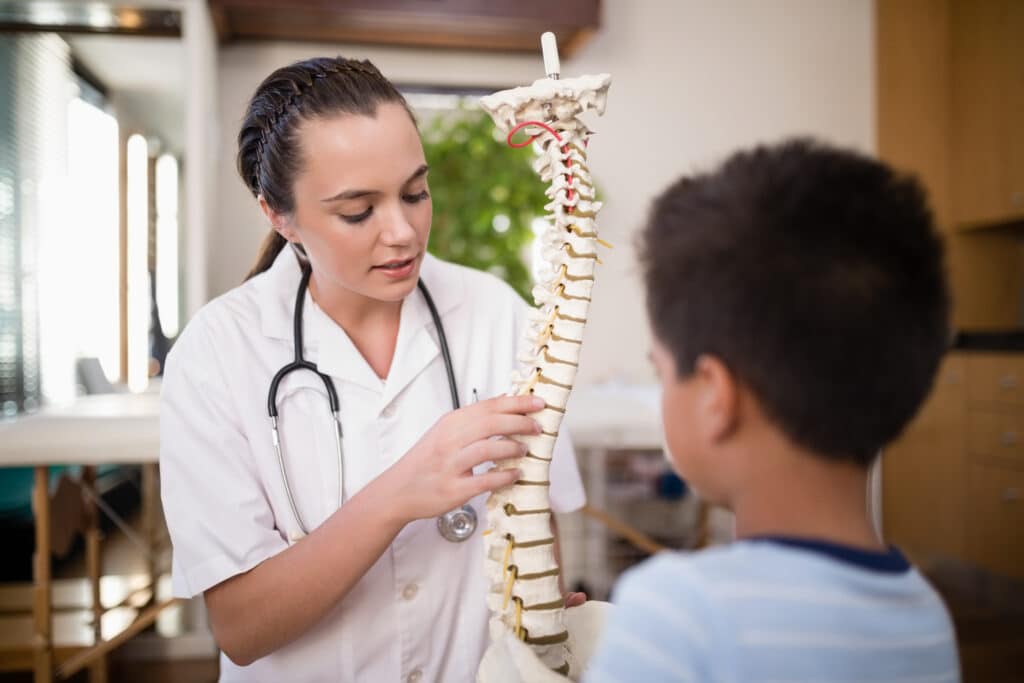
Physical therapy for scoliosis
If you’ve been diagnosed with scoliosis, you may have a lot of questions. You may be wondering how large the curve is, whether it could change, and what treatment will actually help.
Our physical therapists help children, teens, and adults understand scoliosis and create a care plan that fits daily life. For some patients, that means learning Schroth method exercises. For others, it may mean improving posture, strength, mobility, or comfort before or after surgery.
What Is Scoliosis?
Scoliosis is when the spine curves sideways instead of running straight up and down. When viewed from behind, the spine may form a C- or S-shape.
The curve can also involve rotation. That means the spine twists slightly, which may affect how the ribs, shoulders, waist, or hips look or move.
The most common type is adolescent idiopathic scoliosis (AIS). It usually develops during the growth spurt before puberty, and the exact cause is unknown. Scoliosis can also be related to neuromuscular conditions, such as cerebral palsy or muscular dystrophy, or it can develop in adults as the spine changes with age.
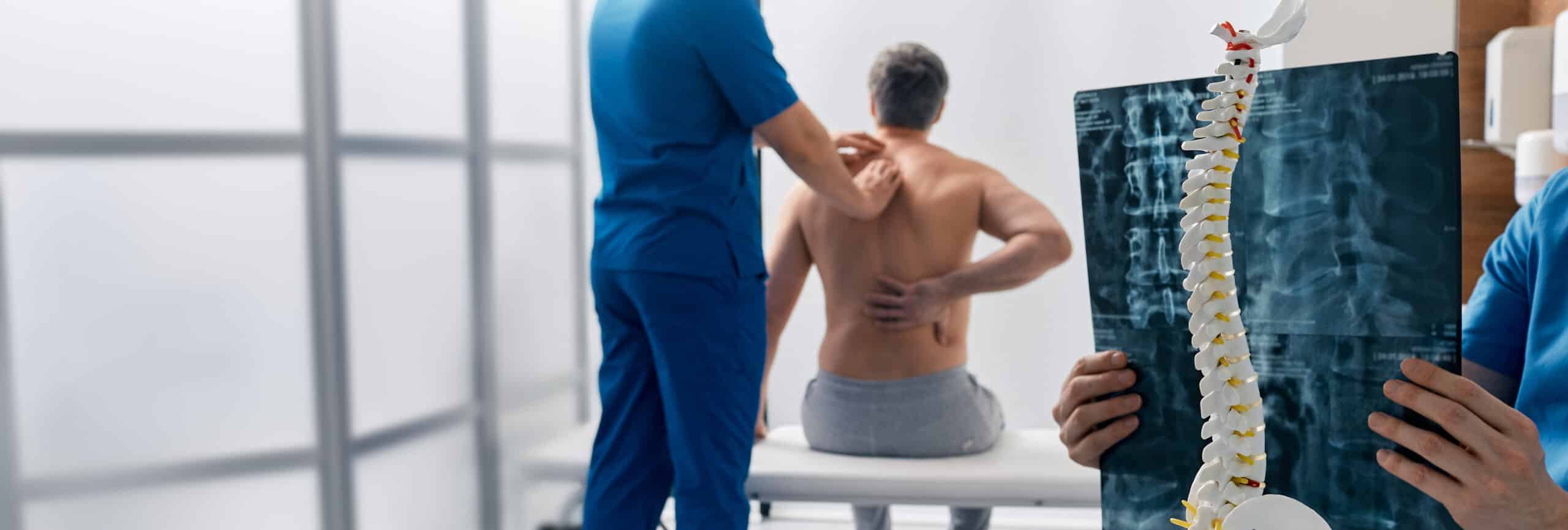
Scoliosis severity is measured with the Cobb angle on an X-ray. Your physician may use that measurement, along with age, growth stage, symptoms, and curve pattern, to guide treatment recommendations.
Scoliosis Therapy at Ivy Rehab
Scoliosis treatment may include physical therapy, bracing, monitoring, or surgery, depending on the type and severity of the curve. Physical therapy can support patients at many points in that process, whether the goal is to build strength, improve movement, manage pain, support a bracing plan, or recover after surgery.
With the right care plan, physical therapy may help improve posture, build strength, reduce pain, support breathing mechanics, and help patients manage scoliosis with more confidence. For children and teens who are still growing, scoliosis-specific exercises may also help manage the risk of curve progression.
Some Ivy Rehab clinics have Schroth Method-certified clinicians. The Schroth Method is a scoliosis-specific approach that looks at the spine in three dimensions. Exercises use targeted positioning, breathing, and muscle activation based on each person’s curve pattern.
Care also varies by age and treatment stage. We work with adolescents, adults, patients who wear a brace, and patients preparing for or recovering from scoliosis surgery.
Who Can Benefit From Scoliosis Therapy?
Scoliosis therapy can help patients with different curve types, symptoms, and care goals. It’s often most helpful when started early, especially for growing children and teens, but adults can benefit too.
Scoliosis therapy may help:
- Adolescents recently diagnosed with idiopathic scoliosis learn exercises that support posture, strength, and curve management.
- Children and teens who wear a brace complement their bracing plan with scoliosis-specific exercises.
- Adults with scoliosis manage back pain, stiffness, posture changes, or limits in daily movement.
- Patients with neuromuscular scoliosis work on strength, positioning, comfort, and function.
- Patients preparing for scoliosis surgery build strength and understand what recovery may involve.
- Patients recovering from spinal fusion surgery rebuild mobility, strength, and confidence with guided care.
Every curve is different. Your therapy plan should reflect that.

Our Scoliosis Therapy Services
Schroth Method Physical Therapy
The Schroth method is a scoliosis-specific exercise approach that addresses the sideways curve and rotation that can happen with scoliosis. Instead of using one general exercise routine, Schroth exercises are matched to the patient’s curve pattern.
Treatment may include postural correction, rotational breathing, balance work, core activation, and exercises that help lengthen and de-rotate the trunk. The goal is to help the body find better alignment and use muscles more evenly.
Research suggests Schroth exercises may help some adolescents with idiopathic scoliosis improve quality of life and manage curve progression as part of a conservative care plan. Results vary by age, curve severity, growth stage, consistency with home exercises, and the full medical plan.
Scoliosis-Specific Exercise Programs
Every scoliosis exercise program is customized to each patient’s needs. Your physical therapist may use Schroth-based exercises, strengthening, mobility work, posture training, or breathing techniques based on your curve pattern, symptoms, age, and daily activities.
Your program may include exercises that support:
- Core and hip strength.
- Spinal mobility.
- Postural awareness.
- Muscle imbalance.
- Balance and coordination.
- Daily movement habits.
- A home exercise program that fits your routine.
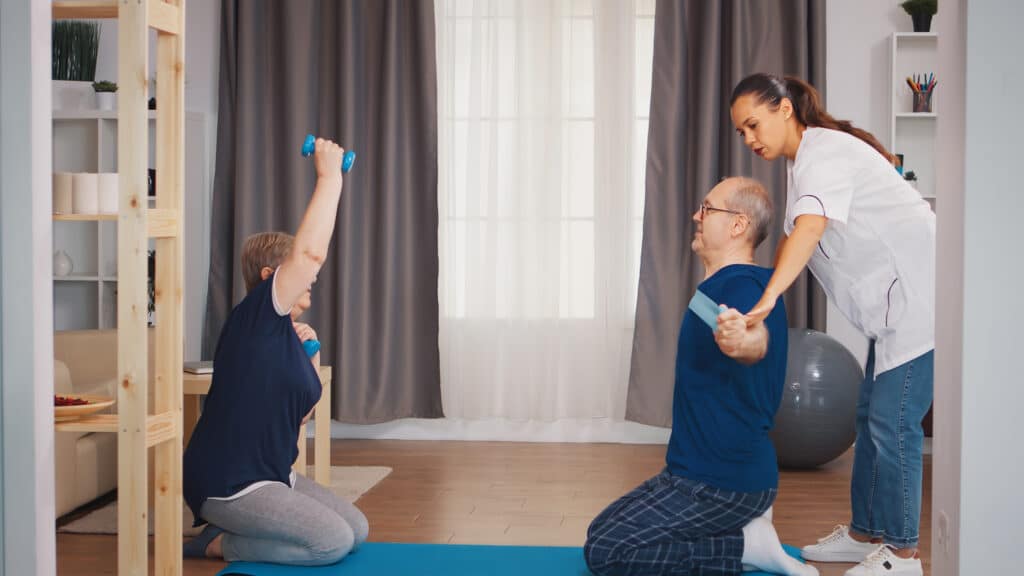
The home exercise program is where a lot of the work carries over. Clinic visits build the foundation, but regular practice helps patients use what they’ve learned at school, work, sports, and in daily life.
Scoliosis Therapy for Children and Teens
For adolescents, scoliosis can change most during growth spurts. That’s why early care and regular monitoring matter.
Therapy helps young patients understand their curve without fear or shame. Sessions may focus on posture, strength, breathing, body awareness, and exercises they can practice at home.
For parents, therapy also brings clarity. Your physical therapist can explain what the exercises are meant to do, how they fit with bracing or physician follow-up, and what changes to watch for as your child grows.
Adult Scoliosis Therapy
Adults with scoliosis may experience back pain, stiffness, muscle fatigue, changes in posture, or discomfort with standing, walking, sitting, or exercise. Physical therapy focuses on how scoliosis affects daily life.
Treatment may include mobility work, strengthening, posture strategies, pain management, and practical ways to protect the spine during everyday activities. For adults considering surgery, therapy may also help with preparation before surgery and rehabilitation afterward.
The goal is better movement, better comfort, and a plan that helps the body work as well as it can.

How We Approach Scoliosis Therapy
Step 1: A Thorough Evaluation
Scoliosis therapy starts with understanding the whole picture. Your physical therapist reviews your symptoms, medical history, activity level, X-ray findings when available, and Cobb angle measurement.
They also look at posture, strength, flexibility, breathing, balance, and how the curve affects movement. For children and teens, growth stage and risk of progression may also shape the plan.
Step 2: A Curve-Specific Care Plan
No two scoliosis curves look exactly alike. Your plan should be just as individualized.
Based on the evaluation, your physical therapist may use Schroth method exercises, other scoliosis-specific exercises, posture training, breathing techniques, strengthening, mobility work, and home exercises. Your plan may also be adjusted as symptoms, strength, growth, or surgical recovery changes.
Step 3: Education and Long-Term Support
Managing scoliosis takes time, and families shouldn’t have to guess their way through it. Education is part of every plan.
We help patients and families understand the curve, practice exercises safely, and build habits that support daily movement. When needed, we can also communicate with physicians, surgeons, or other care team members so therapy fits the larger care plan.
FAQs
Can I Do Scoliosis Exercises at Home?
Yes. Home exercises are an important part of scoliosis care.
Your physical therapist will teach you which exercises to do, how often to do them, and how to use the right technique. That guidance matters, because scoliosis-specific exercises should match your curve pattern and your body.
How long does scoliosis physical therapy treatment usually last?
Treatment duration varies depending on the severity of the curve and individual goals. Many patients attend regular sessions over several months combined with home exercises to maintain progress and improve spinal health.
Is Scoliosis Therapy Different for Children and Adults?
Yes. Children and teens often focus on curve management during growth, posture, strength, and consistency with home exercises. Therapy may also support a bracing plan if a physician recommends one.
Adults usually focus more on pain, stiffness, posture, mobility, strength, and daily function. The exercises may look different, but the goal is the same: helping each person move and feel better with a plan that fits their life.
What Is the Schroth Method?
The Schroth method is a scoliosis-specific physical therapy approach. It uses exercises, breathing techniques, and posture correction based on a patient’s unique curve pattern.
Schroth exercises are different from general strengthening exercises because they address the three-dimensional nature of scoliosis. That means the treatment considers the curve, rotation, and body asymmetry together.
When Should Scoliosis Therapy Start?
Scoliosis therapy can be useful for children, teens, and adults, but timing matters most during growth. For children and teens, the curve may be more likely to change while the body is still growing.
If your child has been diagnosed with scoliosis, your physician can recommend the right care path, which may include physical therapy, bracing, monitoring, or another treatment option.
Related Physical Therapy Services
Scoliosis care may connect with other physical therapy services, depending on age, symptoms, and treatment needs.
Related services include:

Start living your best life.
Begin your journey close to home.
