

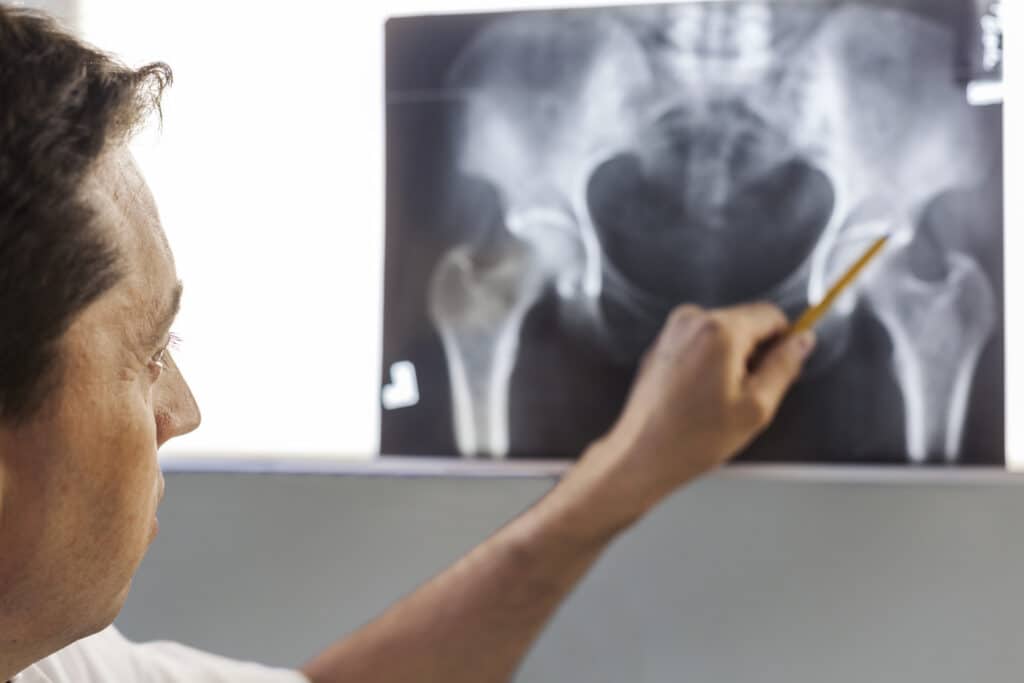
The labrum is a ring of cartilage around the hip joint socket. It helps the ball-and-socket joint move smoothly and adds stability. When the labrum tears, it often causes deep pain in the front of the hip or groin. You may also notice clicking, catching, stiffness, or a stuck feeling during walking, running, squatting, sitting for long periods, or getting in and out of a car.
These symptoms can be easy to miss because they may feel like a groin strain, hip flexor tightness, or general hip pain.
A 2015 systematic review found signs of femoroacetabular impingement, or FAI, in 37% of asymptomatic people and 54.8% of asymptomatic athletes. That doesn’t mean every FAI-related bone change causes pain, but it helps explain why persistent hip labral tear symptoms deserve a closer look.
Key Takeaways
- A hip labral tear often causes deep groin pain or front-of-hip pain, sometimes with clicking, catching, or stiffness.
- Common causes include FAI, hip dysplasia, repetitive motion, wear and tear, sports injuries, and traumatic injury, such as a fall or car accident.
- A physical exam and imaging can help a healthcare provider understand what’s causing the pain.
- Many people start with nonsurgical treatments, including physical therapy, activity changes, and, when safe, anti-inflammatory medications.
- Hip arthroscopy may be considered if nonsurgical treatment doesn’t help or the hip joint has structural damage.
Quick Navigation
- Common Hip Labral Tear Symptoms
- Causes and Risk Factors
- How Hip Labral Tears Are Diagnosed
- Nonsurgical Treatment With Physical Therapy
- When Hip Labral Tear Surgery Is Considered
Common Hip Labral Tear Symptoms
Hip labral tear symptoms often show up in the groin or the front of the hip. Pain may start during certain movements and become more noticeable if irritation persists.
Symptoms may include:
- Deep groin or hip pain that worsens with activity.
- A catching sensation, clicking, locking, or pinching feeling in the hip joint.
- Stiffness or limited range of motion, especially with bending or rotation.
- Pain with prolonged sitting, walking, running, squatting, or pivoting.
- Discomfort that travels into the thigh, buttock, or outside of the hip.
Some people can still walk, but they may notice pain on stairs, during workouts or sports, or after sitting in one position for a long time.
Causes and Risk Factors
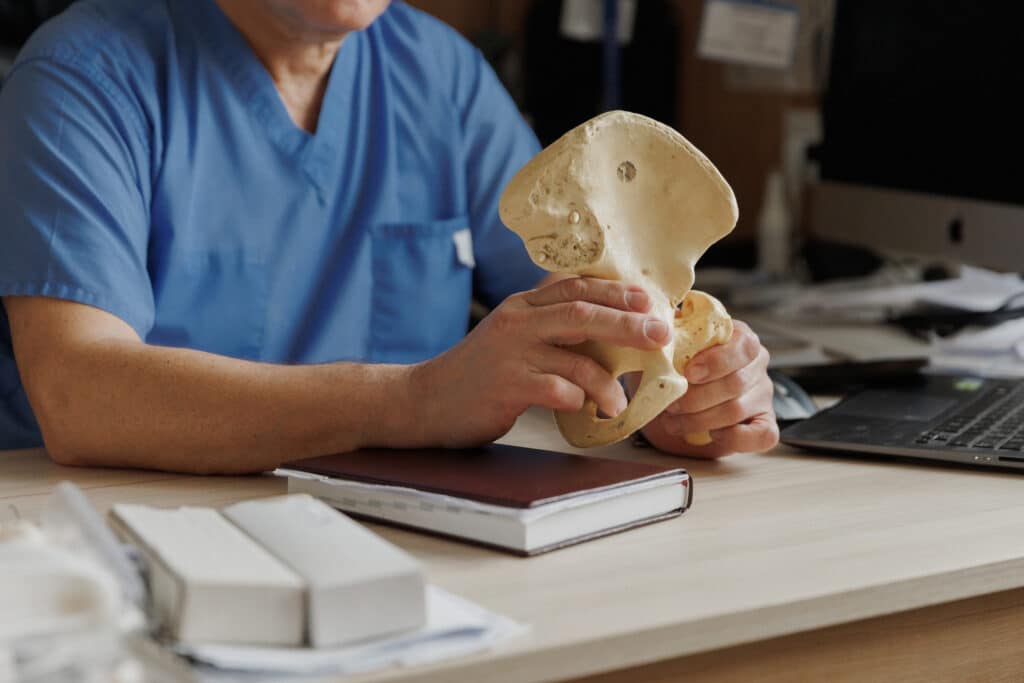
A hip labral tear can happen suddenly after an injury or build slowly from repeated stress. The cause of pain matters because treatment options depend on what’s irritating the labrum.
Possible causes and risk factors include:
- FAI or hip impingement, which can create abnormal contact in the joint during movement.
- Hip dysplasia, which can make the labrum work harder to support the hip.
- Repetitive motion from sports or jobs that involve twisting, pivoting, kicking, or deep hip bending.
- Traumatic injury, including a fall, collision, sports injury, or car accident.
- Wear and tear or osteoarthritis, which can affect the cartilage and other tissues in the hip.
Athletes may be at higher risk because the hip absorbs repeated forces during skiing, skating, dancing, running, or rotation.
How Hip Labral Tears Are Diagnosed
A physical therapist can start with a movement assessment. They’ll ask about your symptoms, activity level, injury history, and what movements make the pain better or worse. They’ll also check strength, range of motion, walking pattern, hip stability, and whether certain positions recreate groin pain.
A healthcare provider may also order imaging. X-rays can show bone shape, hip dysplasia, osteoarthritis, or signs of FAI. An MRI or MR arthrogram may help show a torn hip labrum.
Imaging is only one part of the picture. Some people have labral changes without pain, so the diagnosis should match both the scan and the symptoms.
Nonsurgical Treatment With Physical Therapy
Physical therapy for a hip labral tear focuses on reducing stress on the labrum and improving hip movement. The goal isn’t to “repair” the tear with exercise. It’s to help the hip joint move with better control so daily activities feel less painful.
Orthopedic therapy may include:
- Core and hip strengthening: Weakness in the glutes, hip muscles, or core can place more stress on the hip joint. Strengthening these areas can help the femoral head move more controlled within the socket.
- Movement retraining: A physical therapist can help identify movements, sports mechanics, or daily habits that irritate the labrum, then adjust them.
- Manual therapy: Hands-on treatment may help improve range of motion and reduce muscle guarding around the hip.
- Activity changes: You may need to temporarily reduce painful movements while building strength and control.
Ivy Rehab’s hip pain treatment and athletic therapy can help address hip labral tear symptoms with a plan based on your pain, hip movement, activity level, and daily goals.
When Hip Labral Tear Surgery Is Considered
Arthroscopic surgery may be considered when nonsurgical treatments don’t help, the hip keeps catching or locking, or imaging shows a problem that rehab can’t fix.
Hip arthroscopy is a common surgical treatment for a labral tear. An orthopedic surgeon uses a camera and makes small incisions to repair or trim damaged tissue. If FAI is part of the problem, they may also reshape the bone to reduce hip impingement.
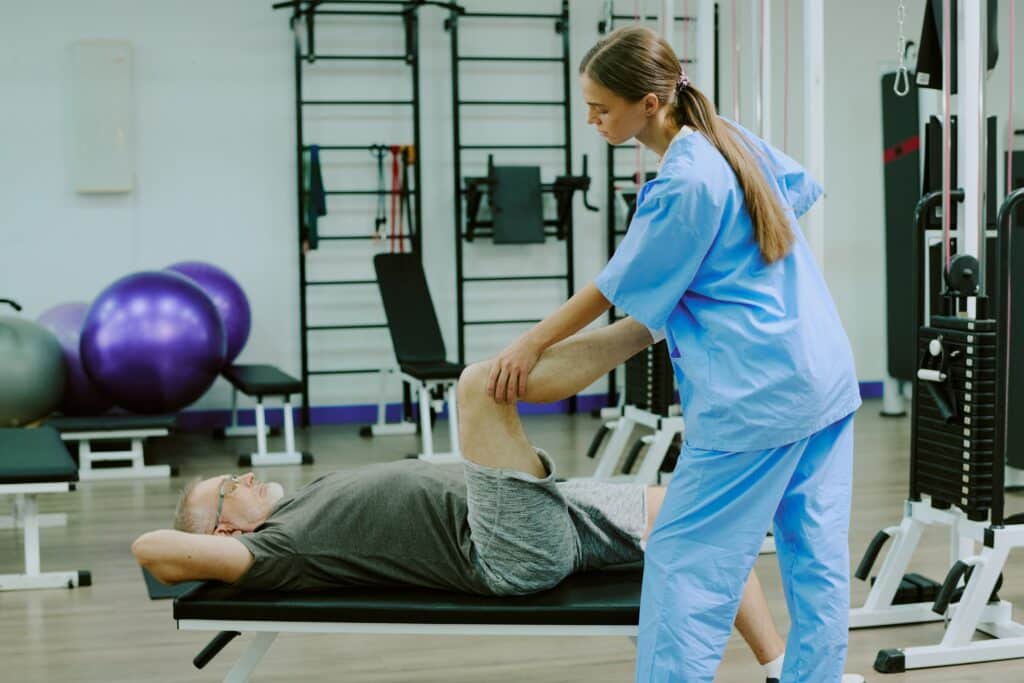
Physical therapy is often part of post-surgical treatment. The focus shifts from protecting the hip to rebuilding strength, control, and confidence.
FAQs
Can a Hip Labral Tear Heal Without Surgery?
The torn tissue may not always heal the same way a simple muscle strain does, but symptoms can often improve without surgery. Many people feel better when they reduce irritation, build strength around the hip, and avoid movements that overload the labrum.
Can Physical Therapy Help a Hip Labral Tear?
Yes. Physical therapy helps many people with a hip labral tear, especially when symptoms are related to strength, mobility, movement habits, or hip joint loading. A physical therapist can help build hip and core strength, modify painful activities, and improve how the hip moves.
What Does a Hip Labral Tear Feel Like?
A hip labral tear often feels like deep groin pain or front-of-hip pain. Some people also feel clicking, catching, locking, or pinching in the hip joint. Pain may get worse with sitting, squatting, pivoting, running, or end-range hip motion.
When Should I See a Healthcare Provider?
See a healthcare provider if hip pain lasts more than a few days, keeps coming back, limits walking or exercise, or you notice clicking, catching, locking, or sharp groin pain. Get medical care right away after a fall, car accident, or traumatic injury, especially if you can’t bear weight or the pain is severe.
Get Support for Hip Pain That Keeps Coming Back
Hip pain can be frustrating when it comes and goes or feels hard to explain. You don’t have to figure out hip labral tear symptoms on your own.
A physical therapist can help identify what’s contributing to your pain and guide your next step with more confidence. Find an Ivy Rehab Therapy location near you to connect with care close to home.
References
- Prevalence of Femoroacetabular Impingement Imaging Findings in Asymptomatic Volunteers: A Systematic Review. Arthroscopy. Accessed March 2026. https://www.arthroscopyjournal.org/article/S0749-8063(14)00787-1/fulltext
- A Comprehensive Review of Hip Labral Tears. Current Reviews in Musculoskeletal Medicine. Accessed March 2026. https://pmc.ncbi.nlm.nih.gov/articles/PMC2697339/
- Femoroacetabular Impingement. OrthoInfo. Accessed March 2026. https://orthoinfo.aaos.org/en/diseases–conditions/femoroacetabular-impingement
- Hip Arthroscopy. OrthoInfo. Accessed March 2026. https://orthoinfo.aaos.org/en/treatment/hip-arthroscopy/

Before you go
Find the right therapy today.
Discover how Ivy Rehab can help you get back to doing what you love.