
When the brain doesn’t properly interpret sensory stimuli, the result is a disorganized picture of the environment. This can be both confusing and overwhelming to those experiencing it. Awareness of sensory processing disorder symptoms in children has grown, but it is important to be informed about the patterns, signs, difficulties, and support that exists for these individuals to better understand the world around them and be successful in meaningful occupations!
What Is Sensory Processing Disorder (SPD)?
Sensory processing disorder (SPD) occurs when the brain processes sensory information in an unexpected way. This can affect how a child responds to input from multiple senses, such as touch, sound, movement, and body awareness.
In children with SPD, the brain processes sensory signals differently, which can lead to overreaction, underreaction, or difficulty organizing information. SPD may impact how a child moves, plays, learns, and interacts with others.
What Are the 3 Patterns of Sensory Processing Disorders?
Sensory processing disorders typically present in 3 patterns. Signs and symptoms of these sensory difficulties in children vary depending on the pattern they exhibit. The three patterns of sensory processing disorders are sensory modulation disorder, sensory-based motor disorder, and sensory discrimination disorder.
Sensory Modulation Disorder
This relates to a child’s ability to regulate their response to their environment and the sensations it provides. Sensory modulation can be further broken down by the type of reaction to sensory input. An overreaction indicates sensory hyper-responsivity. This means the individual is feeling a sensation more intensely than others would, and they enter a “fight or flight” state, much as others would if they encountered something annoying, uncomfortable, or painful. An under-reaction indicates sensory hypo-responsivity. This means the individual is not very sensitive to environmental input, and more intense input is required to alert their body.
Sensory-based Motor Disorder
This refers to trouble processing information the senses provide to understand an environment, the task demands, and to carry out motor action. Sensory-based motor disorder means the child may have difficulty developing ideas, creating a plan, and successfully carrying it out.
Sensory Discrimination Disorder
This indicates that the child will have difficulty understanding sensory stimuli and their qualities to interact with their environment.
What Is the Main Cause of Sensory Processing Disorder?
While children may experience sensory challenges, the main cause of sensory processing disorder remains unknown. Emerging research reveals that sensory processing disorder may be impacted by genetics, prenatal complications, birth complications, and environmental components.
What Are Examples of Sensory Issues?
Generally, a child experiencing sensory processing disorder may have difficulty understanding their environment and where their body is in relation to space, and demonstrate decreased engagement in activities and limited performance in childhood occupations, such as play. Symptoms of a sensory processing disorder in children vary depending on the pattern that they present with, and the sensory system is impacted.
Some sensory processing disorder symptoms that demonstrate difficulty with understanding qualities of the sensory stimuli or motor planning that you may recognize in your child can include:
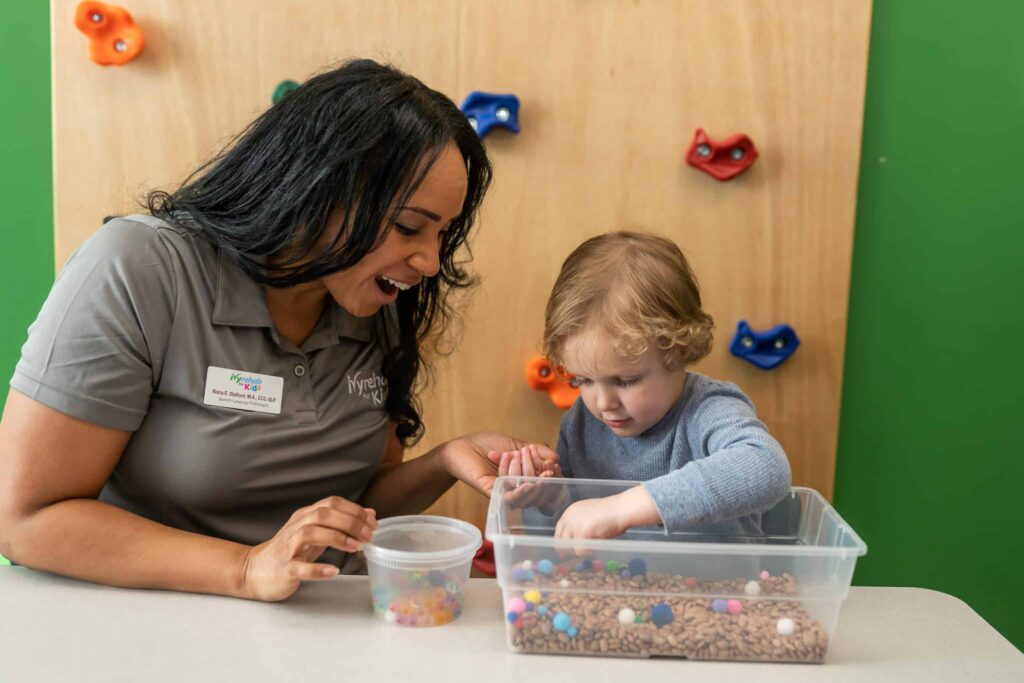
- A desire to touch all objects around them or put objects in their mouth
- Difficulty grading pressure when playing with toys (Does your child frequently break crayons or crush juice boxes? Does your child often drop objects on the floor because they are not holding them tightly?)
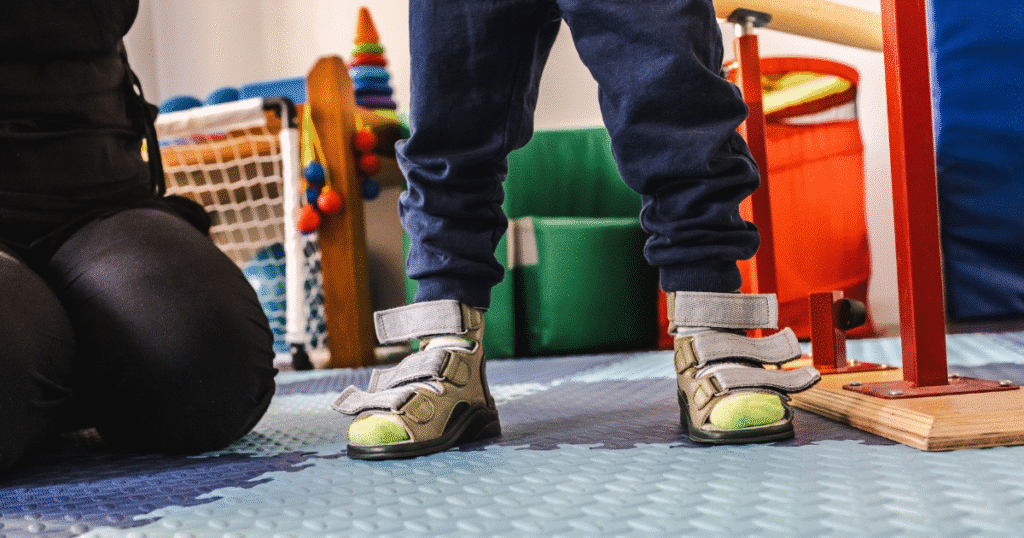
- Decreased balance and falling over, or slouching and unable to sit upright during an activity
- Seeking movement such as climbing on furniture, jumping up and down
- Avoiding movement, such as climbing on the playground with peers
Some sensory processing disorder symptoms that indicate modulation difficulties include:
Hypo-responsivity
- The child does not recognize the urgency and may appear “lazy.”
- Your child may not run to keep up with friends or rush to take his/her turn on the playground.
- The child may be slow to react.
- The child may seem to ignore you or be unfazed by a fall.
Children who are under-responsive may not respond to sensory input as expected, appearing disengaged or slow to respond. In contrast, some children seek additional sensory stimulation, such as jumping, spinning, or crashing into objects, to feel regulated.
Hyper-responsivity
- The child may be bothered by a tag in their shirt, a wrinkle in a sock inside a shoe, or other things touching them, to the point of being bothered or avoiding them entirely.
- The child may dislike swinging, sliding, or going upside down, and become very upset by this motion, or try to avoid it.
- The child may gag or spit out foods.
- The child may cover their ears or become upset and startle easily from sounds in their environment.
- The child may seek other calming sensory input or sensory input that they can control when feeling dysregulated (jumping up and down, rocking, biting, pushing, lying on the ground).
How SPD Affects Daily Life
Children with SPD may experience challenges during everyday activities at home, school, and in social settings. These difficulties can impact participation and independence. For example, a child may struggle with fine motor skills, such as holding a pencil or buttoning a shirt, or with gross motor tasks, such as running, climbing, or throwing a ball. They may also have difficulty focusing in busy environments or responding appropriately to sensory stimulation. These challenges can affect confidence, behavior, and learning if not properly supported.
Can You Have Sensory Processing Disorder Without Autism?
Yes! A child can experience sensory processing issues without having autism. Although it’s difficult for some to understand sensory processing disorder vs autism, the two aren’t interchangeable. While many children with autism spectrum disorder (ASD) diagnoses experience sensory processing disorder, not all children with symptoms of sensory processing difficulties have ASD. Children can also experience sensory differences on their own.
Sensory Processing Disorder Treatment
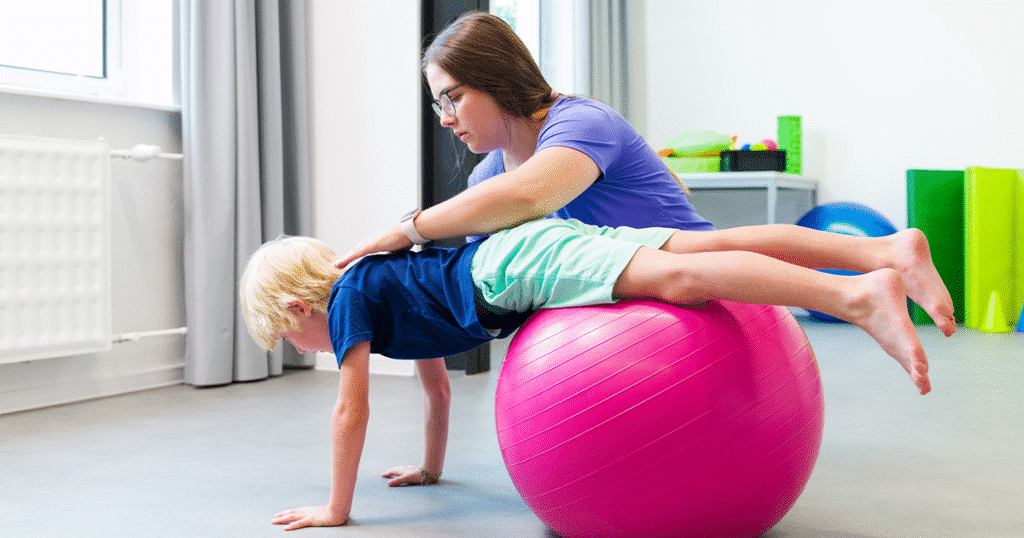
Sensory processing disorder treatment usually involves therapy designed to help children respond more effectively to sensory input. Occupational therapy often focuses on sensory integration techniques that gradually expose children to different types of sensory information in a structured way.
Therapy may also target fine motor skills, gross motor coordination, and daily activities to improve independence and participation.
With the right support, many children with SPD learn to better interpret sensory input, develop coping skills, and participate more fully in daily activities.
Pediatric Occupational Therapy Can Help
Pediatric occupational therapists are knowledgeable and skilled in identifying patterns of sensory processing disorder symptoms in children. If your child is experiencing symptoms of sensory processing disorder that interfere with their ability to complete meaningful activities, such as school, play, sleep, or mealtime, occupational therapy may help. During a session, our occupational therapists will use evidence-based practice activities to increase body awareness and regulation, which can positively impact motor planning and behavioral concerns, as well as provide ideas for strategies parents can use at home. Visit our website for location information or to request an appointment online.

Before you go
Find the right therapy today.
Discover how Ivy Rehab can help you get back to doing what you love.