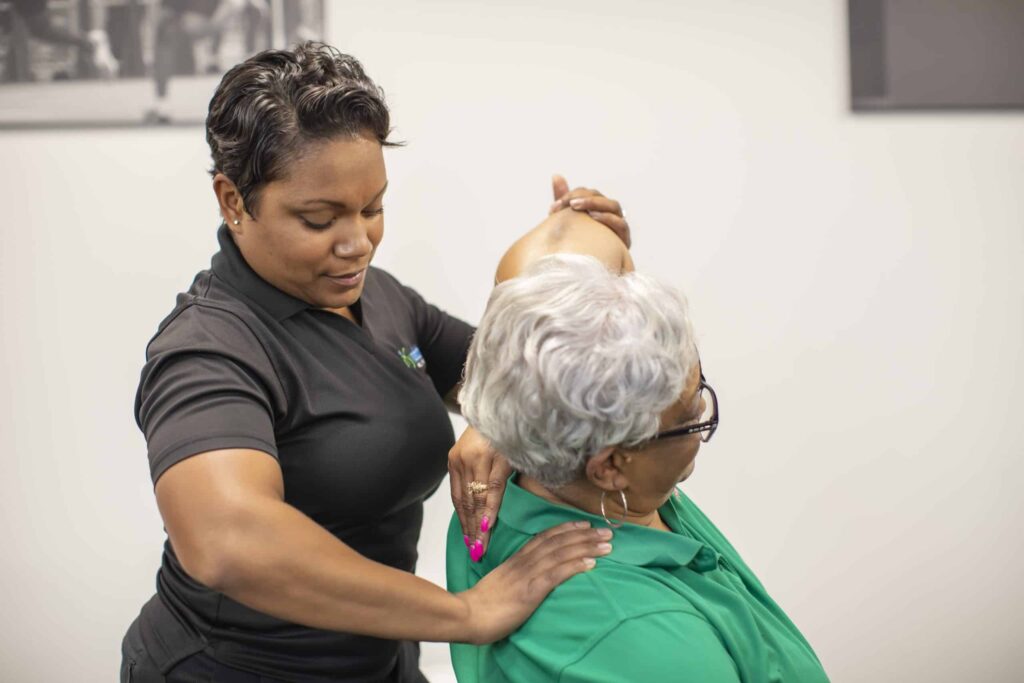


Whether you’re an athlete, a weekend warrior, or just trying to carry groceries without discomfort, shoulder pain can be frustrating. It limits your movement, interrupts your sleep, and makes everyday tasks harder than they should be, so rotator cuff injuries shouldn’t be ignored.
With over 3 million Americans annually seeking treatment for shoulder pain and a significant rise in certain shoulder surgeries over the past decade, it’s clear that understanding and caring for your shoulders are more important than ever. This guide breaks down crucial information about rotator cuff muscles, common rotator cuff injury symptoms, and how you can relieve pain, treat a torn rotator cuff naturally, and prevent future problems through rehabilitation physical therapy.
Shoulder Anatomy 101
To understand rotator cuff injury symptoms, it helps to know the key parts of your shoulder:
Bones:
- Humerus (upper arm)
- Scapula (shoulder blade)
- Clavicle (collarbone).
Joints:
- Glenohumeral joint – The “ball-and-socket” joint that allows movement.
- Acromioclavicular joint – Connects the scapula to the clavicle.
- Sternoclavicular joint – Where the clavicle meets the sternum.
Supporting Structures:
- Rotator cuff tendons – Keep the joint stable and enable arm movement.
- Bursae – Fluid-filled sacs that reduce friction.
- Labrum – A ring of cartilage that deepens the shoulder socket, providing stability.
So, What Is the Rotator Cuff?
The rotator cuff is a group of four muscles and tendons that stabilize your shoulder joint and help you lift and rotate your arm. These rotator cuff muscles—supraspinatus, infraspinatus, teres minor, and subscapularis—connect your upper arm bone (humerus) to your shoulder blade (scapula). When healthy, they work together to keep your shoulder moving smoothly. When injured, even simple movements can become painful.
Common Causes and Symptoms of Shoulder Pain
If you’re experiencing shoulder pain, this may be due to one of the following reasons:
Rotator Cuff Tear
A tear in the rotator cuff can cause pain, weakness, and limited movement. Tears can vary in size, often resulting from repetitive strain, degeneration, or sudden injury.
Symptoms:
- Weakness when lifting or rotating your arm
- Shoulder pain with reaching, lifting, pulling, or pushing activities
- Pain is often present when lying on the affected shoulder
Impingement Syndrome
Occurs when parts of your shoulder, like the rotator cuff and bursa, get pinched in the shoulder joint during overhead movements.
Symptoms:
- Sharp pain when reaching up
- Reduced range of motion
Bursitis and Tendinitis
Bursitis is inflammation of the bursa, while tendinitis is inflammation of the tendons, and both are common with overuse.
Symptoms:
- Tenderness in the shoulder
- Swelling, stiffness, and reduced shoulder range of motion
Frozen Shoulder (Adhesive Capsulitis)
A painful condition where the shoulder gradually stiffens over time. It has three phases:
- Freezing (pain and limited motion)
- Frozen (stiffness)
- Thawing (gradual improvement)
Shoulder Instability
If your shoulder moves too much due to an injury or weak supporting tissues, it can lead to dislocations or chronic pain.
Rotator Cuff Tear Diagnosis
Understanding what’s causing your shoulder pain is the first step toward feeling better. When you visit a healthcare provider for suspected rotator cuff issues, they’ll start by listening to your symptoms, your daily challenges, and the movements that make your pain flare. From there, they use a combination of physical examination and imaging to get a clear picture of what’s going on inside your shoulder.
Here’s what the diagnostic process typically includes:
- Symptom review – Your provider will ask about your pain, weakness, and how your shoulder has been affecting your daily activities.
- Movement and strength testing – Simple arm lifts and resisted motions help identify which rotator cuff tendons may be involved.
- Imaging:
- X-rays help rule out bone-related issues.
- Ultrasound or MRI offers a more detailed look at the soft tissues, showing exactly where a tear may be located.
Partial vs. Complete Rotator Cuff Tears
Rotator cuff tears aren’t one-size-fits-all. Understanding the type of tear helps determine the best treatment plan.
Partial Thickness Tear
The tendon is damaged but not fully torn. People often still have some shoulder strength but experience pain with overhead activities or lifting. Many partial tears respond well to physical therapy, which helps restore strength and reduce strain on the injured tendon.
Full Thickness (Complete) Tear
The tendon fully detaches from the bone. This type of tear may lead to more noticeable weakness or difficulty lifting the arm. While some complete tears can still be managed conservatively, others may require surgical consultation. Physical therapy plays an essential role before and after surgery by improving mobility and supporting long-term shoulder health. At Ivy Rehab Physical Therapy, we help you understand each step of your diagnosis so you can make confident, informed decisions.
How to Treat a Torn Rotator Cuff Naturally
Catching shoulder pain early is key to a smooth recovery. Many rotator cuff injuries improve with non-surgical treatment, including:
- Rest and activity modification – Reduce strain but keep moving to prevent stiffness.
- Pain relief – Over-the-counter acetaminophen or nonsteroidal anti-inflammatory drugs (NSAIDs) like ibuprofen can help.
- Physical therapy – Specific rotator cuff exercises designed for your condition can relieve pain and improve function.
Research shows targeted physical therapy exercises outperform general workouts for shoulder recovery. Physical therapy not only promotes healing but also reduces the likelihood of re-injury by strengthening the supporting muscles and improving movement. For those looking to recover effectively and avoid surgery, working with a physical therapist provides the best path forward.
Advanced Interventions
For more severe rotator cuff injuries, additional treatment options may be needed:
- Corticosteroid injections – Provide temporary relief for severe pain and inflammation when other treatments aren’t enough.
- Platelet-rich plasma (PRP) – A regenerative treatment that may help healing, though research is still developing.
- Surgery – Recommended for complete rotator cuff repair or injuries that don’t improve with conservative treatments.
5 Rotator Cuff Exercises for Strength and Injury Prevention
The best way to avoid rotator cuff injuries is to strengthen and stabilize your shoulders. Try adding these rotator cuff exercises to your routine:
1. Standing Rows
This exercise strengthens the supportive upper back and postural muscles.
- Stand with feet shoulder-width apart, holding a resistance band or light weights.
- Pull your elbows back, squeezing your shoulder blades together.
- Slowly return to the starting position and repeat.
2. Rotator Cuff Strengthening (with Bands)
This exercise strengthens the rotator cuff muscles, such as the infraspinatus and teres minor.
- Anchor a resistance band to a sturdy object at elbow height.
- Stand tall with your elbow bent at 90 degrees and tucked against your side.
- Pull the band outward (external rotation) or inward (internal rotation) while keeping your elbow close to the body.
- Slowly return to the starting position and repeat.
3. “No Money” Exercise
This improves shoulder external rotation and posture while strengthening stabilizing muscles.
- Stand tall with elbows bent at 90 degrees and palms facing up
- Keeping elbows at your sides, rotate your hands outward as if “opening up” the space in front of you.
- Squeeze the shoulder blades together, then slowly return to the start position.
4. Pendulums
This relieves shoulder stiffness and promotes mobility with gentle movement.
- Lean forward slightly, placing one hand on a table for support.
- Let the opposite arm hand relax, then gently swing it forward and backward, side to side, or in circles.
- Perform slow, controlled motions before switching arms.
5. Thoracic Rotation
This enhances spinal mobility, reducing stiffness and improving posture.
- Sit or stand tall with arms crossed over your chest.
- Rotate your torso to one side while keeping your lower body still.
- Return to center and rotate to the other side.
- Move slowly with control to maximize mobility.
- Coordinate your breathing: exhale as you rotate, inhale as you return to the starting position.
Exercises to Avoid
If you’re dealing with a rotator cuff injury or even mild shoulder irritation, certain movements can place extra stress on the healing tissues. Avoiding these exercises protects your shoulder while you focus on rebuilding strength safely.
Here are some common exercises and motions to skip until a physical therapist clears you:
- Overhead presses – Heavy overhead lifting forces the rotator cuff to work overtime, which can worsen pain or contribute to further tearing.
- Upright rows – This exercise narrows the space where tendons pass through the shoulder, increasing the risk of impingement.
- Deep or heavy bench pressing – Lowering the bar too far or using excessive weight places significant strain on the front of the shoulder and rotator cuff.
- Dips – The deep backward shoulder position can irritate inflamed or weakened tendons.
- Sudden, jerking movements – High-velocity or explosive motions—like certain cross-training or overhead throwing drills—can overload the injured tissue.
- Behind-the-neck lat pulldowns or presses – These positions place the shoulder in an unstable, vulnerable angle.
If you’re unsure whether an exercise is safe, that’s where we come in. Ivy’s clinical team can guide you toward movements that help—not hurt—your progress. Our goal is to help you keep moving confidently while protecting your shoulder every step of the way.
How to Relieve Rotator Cuff Pain at Night
Shoulder pain can make sleeping miserable. Try these tips to rest easier:
- Sleep on your back or the opposite side. If lying on your bad shoulder, try sleeping on the other side and use a small pillow under your arm for support.
- Use a supportive pillow. Consider a contoured or orthopedic pillow that keeps your neck in a neutral position. Avoid too many or too few pillows to prevent strain.
- Apply heat before bed. A heating pad can help loosen tight muscles.
- Do gentle stretches before sleep. Keeping the shoulder and upper back mobile can prevent stiffness.
Your Journey to Recovery Starts at Ivy Rehab
Your shoulders are essential for everything from workouts to daily tasks. If you’re struggling with pain, don’t wait for it to get worse. At Ivy Rehab, we specialize in expert guidance, personalized treatment plans, and hands-on care to get you back to moving comfortably. Take control of your shoulder health. Schedule an appointment at an Ivy Rehab clinic near you and start your recovery today.
FAQs
Can I relieve rotator cuff pain at night?
Yes, strategies such as adjusting your sleeping position, using a supportive pillow, applying heat before bed, and doing gentle stretches can help alleviate rotator cuff pain at night.
How long does it take to heal a torn rotator cuff naturally?
Though the rotator cuff has limited ability to heal on its own, improving how the body moves can support shoulder function, reduce pain, and help you return to prior activity levels. This involves optimizing posture, maintaining range of motion (ROM), rotator cuff exercises, and strengthening the shoulder girdle. Healing time can vary, but these strategies can significantly aid recovery. Severe cases may still require medical intervention.
What are the best rotator cuff exercises for injury prevention?
Exercises that support the shoulder girdle, including upper back mobility, shoulder mobility, and rotator cuff strengthening, can help improve overall shoulder function. However, the most effective exercises vary by individual, so it’s important to seek professional guidance for a tailored approach.
What are the symptoms of a rotator cuff injury?
Common rotator cuff injury symptoms include shoulder pain, weakness when lifting or rotating the arm, reduced range of motion, and discomfort, especially at night when lying on the affected side.
When should I see a doctor for a rotator cuff injury?
If pain persists for more than a few weeks, worsens over time, was due to an injury, or significantly limits movement, it’s best to consult a physical therapist or orthopedic specialist. Severe tears may require advanced medical treatment, including rotator cuff repair.
References
- PubMed Central. “Prevalence of Shoulder Arthroplasty in the United States and the Increasing Burden of Revision Shoulder Arthroplasty.” https://pmc.ncbi.nlm.nih.gov/articles/PMC8280071/.
- PubMed Central. “Effectiveness of conservative interventions including exercise, manual therapy and medical management in adults with shoulder impingement: a systematic review and meta-analysis of RCTs.” https://pmc.ncbi.nlm.nih.gov/articles/PMC5574390/.
- PubMed Central. “Nonoperative Treatment of Rotator Cuff Disease With Platelet-Rich Plasma: A Systematic Review of Randomized Controlled Trials.” https://pubmed.ncbi.nlm.nih.gov/31000394/.

Before you go
Find the right therapy today.
Discover how Ivy Rehab can help you get back to doing what you love.