


Sciatica isn’t subtle. It announces itself loud and clear: a sharp streak of pain down your leg, a deep ache in your hip, or that odd burning, buzzing numbness that just won’t quit. Sciatica pain is frustrating, and sometimes downright scary if you’ve never felt it before.
The good news? Movement helps. More specifically, physical therapy provides guided, therapist-approved movements designed to ease irritation and restore confidence in how your body moves.
Physical therapy for sciatica can help relieve irritated nerves, ease muscle tension, and restore mobility in a way that feels gentle and safe. At Ivy Rehab, our therapists guide patients through these stretches every day, helping them understand their bodies and get back to moving with confidence.
Below are therapist-approved moves to help you reduce pain and regain control.

What Is Sciatica?
Sciatica isn’t a diagnosis; it’s a symptom. It is a common type of back pain that occurs when the sciatic nerve—the largest nerve in your body—becomes compressed or irritated along its path from your lower back through your hips and down your leg.
Common causes include:
- A herniated disc
- Spinal stenosis
- Tight hip or glute muscles
- Poor posture or prolonged sitting
- Lumbar joint dysfunction
Symptoms may include shooting pain, tingling, numbness, weakness, or a deep ache that travels down one leg. The pattern can change day to day, but the underlying issue is the same: the nerve feels crowded and cranky.
How Stretching Helps Sciatica Relief
Targeted, gentle stretching does a few important things all at once:
- Releases tension in the muscles that surround or irritate the nerve
- Improves flexibility in the hips, glutes, and lower back
- Reduces compression around the nerve
- Promotes circulation to support healing
Think of PT stretches for sciatica as giving your nervous system a little more breathing room—without forcing anything or pushing into pain.

Therapist-Approved PT Stretches for Sciatica Relief
These physical therapy stretches for sciatica are chosen because they’re gentle, effective, and safe for most people. If any movement creates sharp pain, tingling, or numbness, pause and talk with an Ivy Rehab therapist about modifications.
1. Seated Piriformis Stretch
The piriformis is a small hip muscle that can cause big problems when it tightens around the sciatic nerve.
How to do it:
- Sit tall in a chair.
- Cross one ankle over the opposite knee.
- Lean forward slowly until you feel a stretch in your hip.
- Hold 20–30 seconds.
Why it helps: Reduces tension where the nerve is often irritated.
2. Figure 4 Stretch (Supine Piriformis Stretch)
A gentler version performed on your back.
How to do it:
- Lie on your back.
- Cross one ankle over the opposite thigh like a figure “4.”
- Pull the uncrossed leg toward you.
- Hold 20–30 seconds.
Why it helps: Allows relaxation while opening the hip—ideal for nerve-sensitive days.
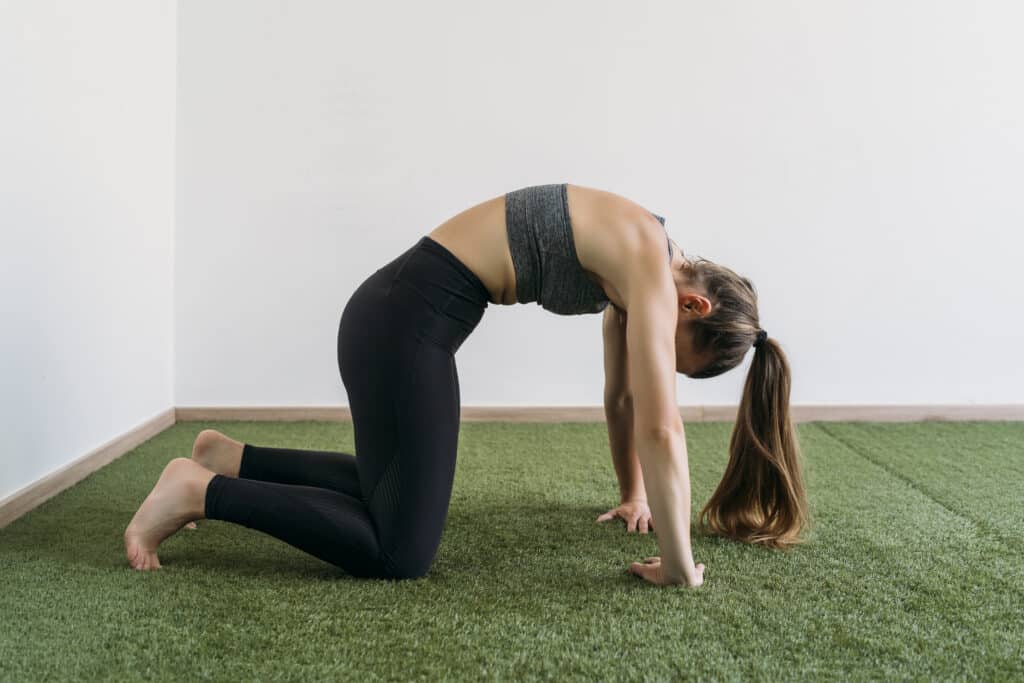
3. Cat–Cow Stretch
A gentle way to mobilize your spine without forcing anything.
How to do it:
- Start on hands and knees.
- Round your back upward (“cat”).
- Slowly lift your chest and drop your belly (“cow”).
- Move slowly with your breath.
Why it helps: Improves spinal mobility and reduces lower-back tension.
4. Child’s Pose
A calming position for irritated nerves.
How to do it:
- Sit back on your heels.
- Reach arms forward and lower your chest.
- Breathe deeply into your lower back.
Why it helps: Gently decompresses the spine and creates space for the nerve.
5. Hamstring Stretch (Seated or Standing)
Tight hamstrings can tug on the pelvis and irritate the sciatic nerve.
How to do it:
- Seated: Extend one leg and hinge forward.
- Standing: Place your heel on a step and lean forward slightly.
- Hold 20–30 seconds.
Why it helps: Reduces tension along the back of the leg.
6. Knee-to-Chest Stretch
Simple, gentle, and often relieving.
How to do it:
- Lie on your back.
- Bring one knee toward your chest.
- Keep your back relaxed.
- Hold 15–20 seconds, then switch sides.
Why it helps: Opens space in the lower spine and reduces pressure on the nerve.

When to Avoid or Modify Stretches
Safe movement matters. Avoid or modify stretching when:
- Pain increases instead of decreases
- Tingling or numbness spreads
- Forward bends feel sharp or unstable
- Twisting triggers symptoms
- Balance feels unsafe
Tools like straps, towels, pillows, or a chair can make stretches more comfortable. A PT can also tailor movements to your specific symptoms.

Personalized Therapy for Lasting Relief
Experience tailored physical therapy programs designed to alleviate pain and restore function.
How PT Supports Long-Term Sciatica Relief
Stretching is a starting point, but lasting relief comes from a comprehensive PT approach that may include core stabilization, hip and glute strengthening, manual therapy, nerve gliding techniques, and posture education.
At Ivy Rehab, therapists help you understand what your body needs—not just what worked for someone else.
Get Back to the Good Part
PT stretches for sciatica are one of the safest, most effective ways to reduce nerve irritation and restore mobility. With Ivy Rehab’s guidance, you can return to walking, sitting, working, and living with more comfort and confidence.
Whenever you’re ready, we’re here to help you take that next step. Find an Ivy Rehab location near you and schedule your appointment today.
References
- American Physical Therapy Association. Physical Therapy Guide to Sciatica. ChoosePT.com. https://www.choosept.com/guide/physical-therapy-guide-lumbar-radiculopathy-sciatica
- Harvard Health Publishing. Stretches and exercises for sciatica relief. https://www.health.harvard.edu/pain/sciatica-gentle-stretches-to-help-relieve-pain-and-improve-mobility
- OrthoInfo – American Academy of Orthopaedic Surgeons. Low Back Pain. https://orthoinfo.aaos.org/en/diseases–conditions/low-back-pain

Before you go
Find the right therapy today.
Discover how Ivy Rehab can help you get back to doing what you love.