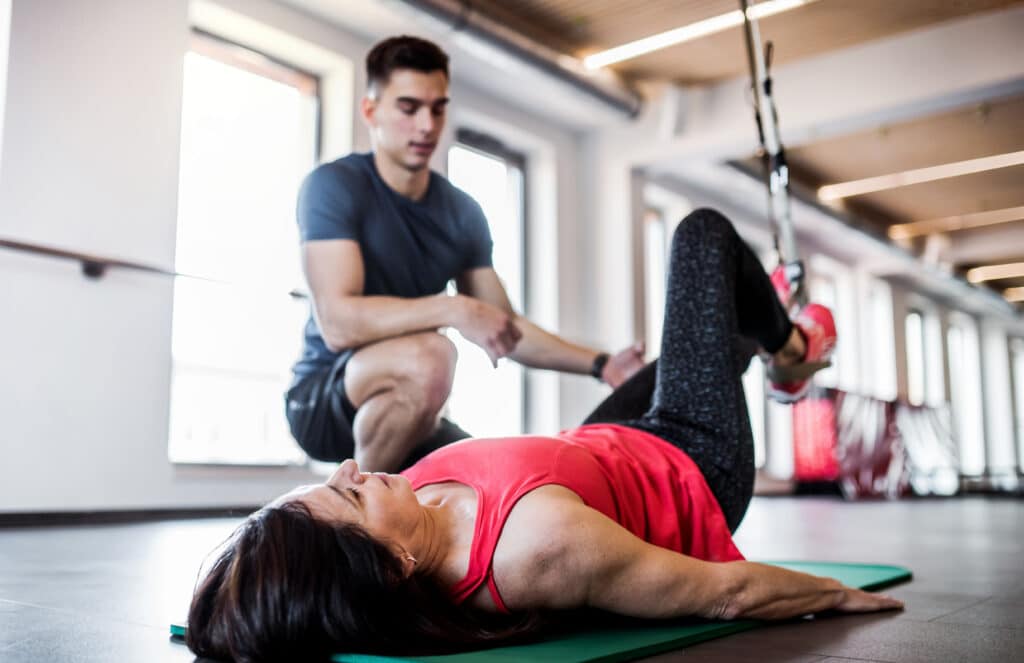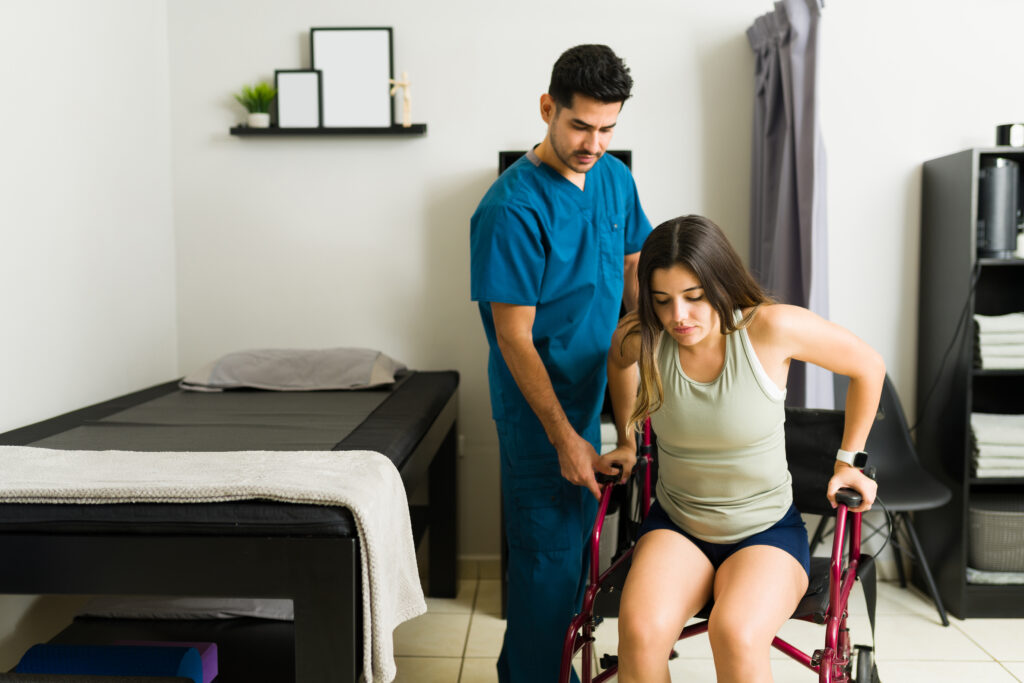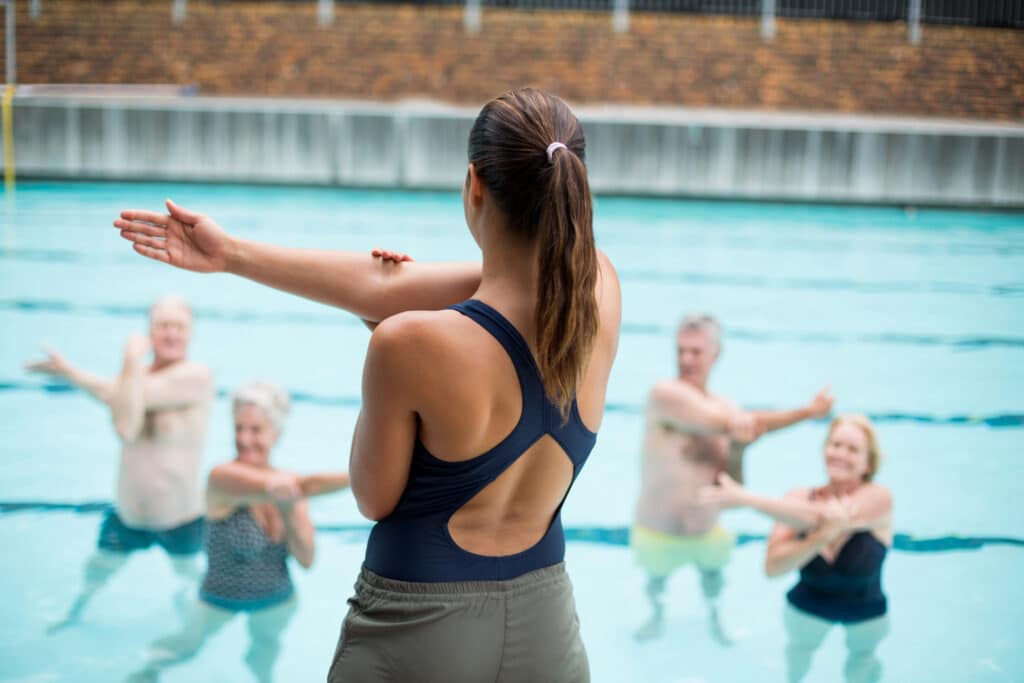


When moving hurts, consistency gets tricky. And no, powering through it isn’t a personality trait. That’s why so many people look into aquatic therapy benefits. Water supports your body, making movement feel smoother and reducing pressure on your joints compared to land-based movement.
Physical therapists use aquatic therapy (also called hydrotherapy or water therapy) as a structured form of physical therapy to rebuild mobility, muscle strength, balance, and confidence while reducing stress on your body. At Ivy Rehab, sessions are guided by certified physical therapists with advanced aquatic training. Your plan is matched to your diagnosis, your goals, and how you’re feeling that day. We do not rush rehabilitation and recovery, ensuring that you make progress at your own pace.
Below are 10 meaningful aquatic therapy benefits worth exploring, plus what a PT-led plan can look like in a warm-water setting that’s a little easier on your joints and your patience.
1. Reduces Joint Load Through Buoyancy
Buoyancy is the water’s “lift.” It reduces the weight your joints have to manage—counteracting gravity’s effects—which can be a game-changer if walking, squatting, or standing feels painful.
This is one of the most practical benefits of hydrotherapy for people with arthritis, chronic pain, or post-surgical stiffness. Less load often means you can practice better movement patterns sooner, with fewer flare-ups getting in the way.
2. Relieves Pain and Muscle Tension
Warm water promotes relaxation and can help calm muscle guarding. It’s like turning the volume down on the body’s alarm system. When muscles loosen up, it’s often easier to move without bracing through your neck, low back, or hips.
A simple way to use this benefit is to start with a few minutes of easy water walking or gentle arm sweeps before you try strengthening. It’s a chance to reduce stress and let your body relax into the work. That settling-in time can make the rest of the session feel better for both your body and mind.
3. Improves Mobility and Flexibility
Stiff joints can make everyday tasks feel like work. Sometimes it’s not motivation that’s missing; it’s comfort. The water’s support can help you explore the range of motion more securely, especially when you’re rebuilding movement after injury or surgery.
PTs often use water-based mobility work as a bridge. Improve motion comfortably now, then carry those gains into land-based exercises later to support strength and flexibility.

4. Builds Strength with Gentle Resistance
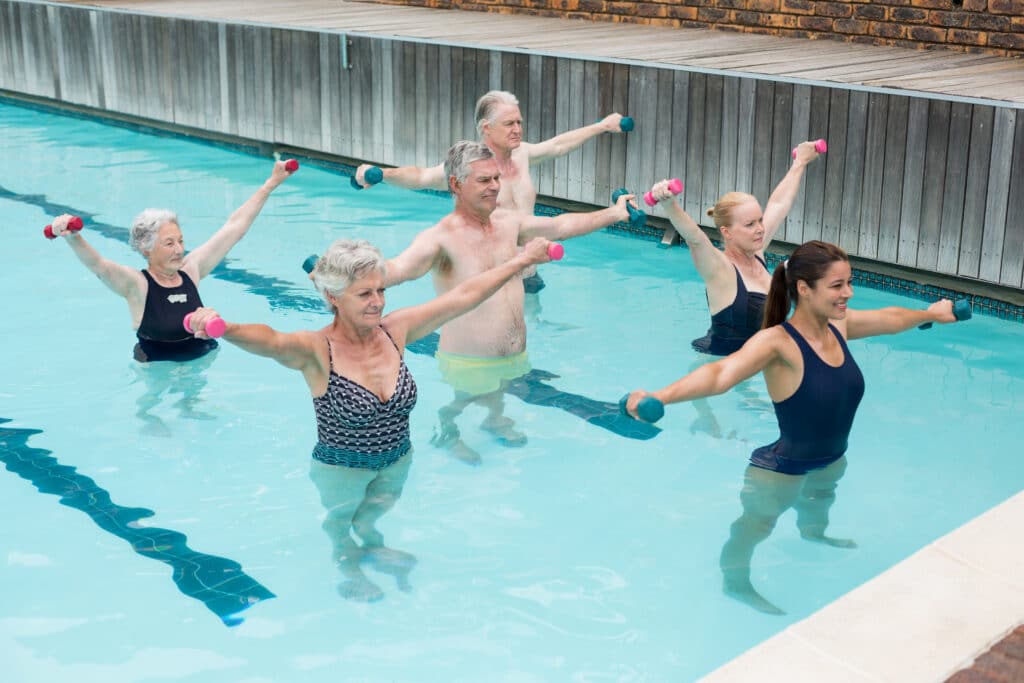
Water creates natural resistance in every direction. That means you can strengthen without heavy weights, and the harder you push, the more resistance you get.
This is one of the aquatic therapy benefits that surprises people most. Water provides a challenge that still feels controlled. The pool can be gentle and still demand your best effort. Strength work can still be challenging, but it can feel kinder on painful joints.
5. Enhances Balance and Coordination
Balance training can feel scary if you’re worried about falling. The pool gives you a little courage without asking you to be reckless. In the pool, slower movement and water support give you a safer place to practice weight shifts, single-leg stance, and controlled stepping.
As coordination improves in water, your PT can progress you to land-based balance drills that match your daily needs.
6. Supports Early Post-Surgical Recovery
After surgery, you often need movement before you’re ready for higher loads. The goal is progress, not a dramatic comeback montage. With surgeon clearance and a fully healed incision, aquatic therapy can help many people start moving more comfortably during rehabilitation.
Because water reduces joint stress, it can support early gait training, gentle strengthening, and range-of-motion work during phases when land exercise still feels too intense.
7. Helps Manage Chronic Conditions
Aquatic therapy is often used as part of care for chronic conditions where pain or stiffness can make land-based exercise tough. It can be helpful for osteoarthritis, rheumatoid arthritis, chronic low back pain, and some neurologic conditions.
If you’re navigating flare-ups, a PT can adjust water depth, intensity, and exercise choice so you keep moving without overdoing it. That’s the smart part: listening to your body, then still moving forward.
8. Builds Cardiovascular Endurance Safely
Not everyone can tolerate jogging or cycling right away. Water-based aerobic work can build cardiovascular fitness with less impact, which is useful for seniors, people with joint pain, and athletes easing back into conditioning.
Depending on your needs, a PT might use intervals like brisk water walking, deep-water running, or steady tempo work, all while keeping mechanics clean. Your heart can work even when your joints want a lighter day.
9. Reduces Fear of Movement
If pain has made you cautious, you’re not alone. Fear of movement is common after injury, surgery, or prolonged discomfort.
One of the most overlooked benefits of aquatic therapy is the boost in confidence it provides. When movement feels safer, your brain stops arguing with every step. When you can move with less pain and less worry in the pool, it’s easier to trust your body again on land.
10. Promotes Overall Well-Being
When movement feels possible again, one’s mood often improves. Many people report less stress, better sleep, and more enjoyment when exercise doesn’t feel like a struggle.
This doesn’t mean every session feels easy. It means the environment can make consistency more realistic, and consistency is where progress tends to show up.
How a PT Shapes Your Aquatic Therapy Plan
Aquatic therapy works best when it’s personalized. Your PT will evaluate mobility, pain, balance, and strength, then build a plan that fits your goals and your tolerance.
A PT-led plan often includes:
- Establishing a clear starting point based on symptoms, movement quality, and function.
- Building gradual progressions by adjusting range, speed, and resistance.
- Coaching form, breathing, and pacing so you don’t compensate.
- Creating a transition plan from water to land-based therapy when appropriate.
You should always know what you’re doing, why you’re doing it, and what the next step is. That’s where the expert physical therapists at Ivy Rehab come in.
What a Session Looks Like at Ivy Rehab
Warm-water PT sessions aren’t random exercises. They’re purposeful, coached, and designed to make your everyday life feel less like an obstacle course. They’re structured rehab sessions led by certified physical therapists who have completed advanced training in aquatic therapy techniques.
Depending on location and pool set-up, a session may include:
- Getting one-on-one PT guidance with real-time form cues and pacing support.
- Practicing functional movements that relate to daily tasks like walking, stairs, and reaching.
- Using smart modifications based on pain, fatigue, and joint tolerance.
- Following a plan to progress from mobility to strength to function, then carry improvements to land.
You’ll leave with a clearer sense of what to practice between visits and how to maintain steady progress.
Accessible Care, Close to Home
Use our locator to find the nearest Ivy Rehab facility.
When Aquatic Therapy Might Be Right for You
Aquatic therapy can be a strong option when you need PT-guided, joint-friendly movement and a plan that meets you where you are.
It’s often worth considering if you’re dealing with:
- Chronic pain
- Arthritis
- Balance issues
- Post-surgery stiffness
- Limited tolerance for land exercises
If one of these options feels familiar, a PT can help you decide whether water-based rehab is the right choice now or if another starting point is better. Either way, you’ll have a plan that respects your body and your goals.
Start with Support, Then Build Strength
The best rehab plan is the one you can stick with. For many people, the benefits of aquatic therapy come from making movement feel doable again, without risking pain spikes that could ruin the streak.
If you’re curious about the benefits of hydrotherapy for your diagnosis, a PT can help you use the pool as a bridge. Start with comfort and control, then build strength and confidence you can use everywhere else.
If you’re ready for joint-friendly movement with PT guidance, find a location near you.
References
- Arthritis Foundation. “In the Swim: Aquatic Exercise for Arthritis.” Aug. 15, 2022. Accessed Dec. 26, 2025. https://www.arthritis.org/health-wellness/healthy-living/physical-activity/other-activities/water-exercise-benefits-for-arthritis Arthritis Foundation
- Wang, Tianyue, et al. “Efficacy of Aquatic Exercise in Chronic Musculoskeletal Disorders: A Systematic Review and Meta-Analysis of Randomized Controlled Trials.” Journal of Orthopaedic Surgery and Research. 2023;18:942. doi:10.1186/s13018-023-04417-w. Accessed Dec. 26, 2025. https://link.springer.com/content/pdf/10.1186/s13018-023-04417-w.pdf

Before you go
Find the right therapy today.
Discover how Ivy Rehab can help you get back to doing what you love.