Literacy is a process by which one expands one’s knowledge of reading and writing to develop one’s thinking and learning to understand oneself and the world. This process is fundamental to achieving competence in every educational subject. Lacking basic reading and writing skills is a tremendous disadvantage. Early literacy skills not only enrich an individual’s life but also create opportunities for people to develop skills that will help them provide for themselves and their families. The early years are crucial for literacy instruction and early literacy development.
Language and early literacy development are some of the major domains of early childhood development. They involve the development of skills for communicating with others through language (language development) as well as the ability to read and write (literacy development). An example of language and emergent literacy skills in childhood learning is to speak the native language of one’s parents and read basic words of that parents’ language, which helps to build oral language skills.
Phonological Awareness
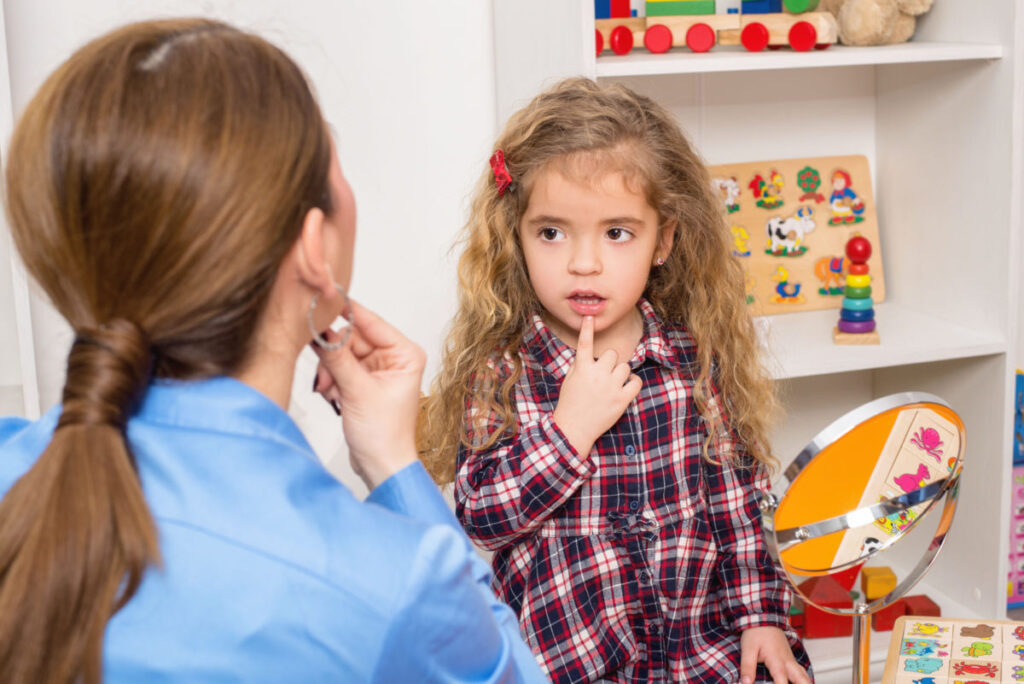
Phonological awareness includes many specific skills related to hearing and interpreting sounds in isolation, words, and sentences. Phonological awareness is one’s sensitivity to, or explicit awareness of, the phonological or sound structure of words in one’s language; it involves the ability to notice, think about, or manipulate the individual sounds in words. Children must be able to hear individual sounds in words, pull apart individual sounds in words, and blend separate individual sounds into whole words. They must be able to do this with and without written letters or graphemes. Research overwhelmingly indicates that phonemic and oral language awareness are skills critical for emergent readers. Deficient development of phonological awareness can be a critical diagnostic sign of dyslexia or a reading disability.
These foundational skills allow children to begin decoding words by connecting letters to sounds. As learners develop phonemic awareness, they become better able to decode unfamiliar words and recognize language patterns.
This ability to decode is one of the most important steps in learning to read and supports long-term reading success.
The Stages of Literacy Development
The stages of literacy development describe how children learn to read over time, from early exposure to language through fluent reading and comprehension. While development varies, most learners progress through predictable phases of literacy development.
These stages of reading include:
- Pre-reading and emergent literacy
- Early decoding and word recognition
- Developing reading fluency
- Reading for meaning and comprehension
Understanding these stages helps parents and educators support children as they build essential reading skills and confidence.
Pre-Reading Stage (Birth to Age 4)
This stage is often called the pre-reading phase, during which children develop early language and literacy awareness before they can read words.
Newborn to 6 months
Some authors believe language, phonology, and literacy skills development begin in utero. Studies have shown that moms who talked, sang lullabies, played soothing music, and read to their unborn children responded to them. From birth, babies listen, look, and learn. Early on, they are cooing, making gurgling sounds, and listening to sounds. At 4-6 months, they’re making sounds, combining them, producing vowels, and beginning to babble. So from newborn to 6 months, find and enjoy those everyday moments when you can talk, sing, read, and play, play, and play some more together.
6 to 12 months
As they get a little older, around 6- 12 months, so much is going on in the newborn’s world. They respond to people with basic sounds and recognize their names. They begin copying sounds from others. They are getting ready to ambulate and explore their environment, putting almost everything into their mouths, they’re saying their first words. We expose them to those thick cardboard books or material books, and we sing rhyming song games to them. We continue to play and encourage them to explore their worlds. We incorporate early reading time into their busy schedules. Expose them to cloth-and-board literacy materials, books with baby faces, bright colors, and nursery rhymes.
12 to 24 months
At 12-24 months, their vocabulary is beginning to take off. They are saying words and combining 2-3 words; they are beginning to respond to others’ requests; they communicate with gestures; and by 18 months, they are beginning to use more words than gestures to communicate. We expose them to picture books, getting them to point to vocabulary, imitate/name objects and actions, and continue those song games of simple vocabulary and repetition. Reading time is beginning to last a little longer, offering another way to explore their worlds and environments.
24 to 36 months
At 24-36 months, their vocabulary is exploding. They can form phrases and short sentences, repeat and use many words by others, and can hold “conversations.” They are asking the “why’s and “what’s that?’ We start reading to them simple stories and expose them to those- can you find books or “I Spy.” They want to listen to the same book over and over. They can begin completing sentences and rhymes in the stories. Their attention and imagination are growing rapidly. Keep using books in daily activities. Expose them to rhyming books, picture books that tell stories, and search-and-find books.
3 to 4 years
At 3-4 years, that child is listening longer, reciting whole phrases from books, beginning to detect rhymes, learning letter recognition, beginning to notice words and pictures that begin with the same sound, and may even pretend to read to dolls or stuffed animal friends. The child, who is beginning proper early childhood education, wants to know what happens next in the stories. Young children want to listen to made-up stories when looking at picture books, or make up their own versions! Expose them to picture books that tell longer stories; counting and alphabet books.
Early Reading Stage: Learning to Decode (Ages 5–7)
During this stage, children begin to learn to read by connecting letters and sounds more consistently. The learner starts to decode simple words and recognize high-frequency words more quickly.
Children in this stage may still rely on sounding out unfamiliar words, and reading may feel slow or effortful. With practice, they become more accurate and confident in their reading skills.
4 to 5 years
At 4-5 years of age, the child can speak in clear sentences. They can understand verb tense (e.g., past vs. future) and begin to recite more complex material, such as their personal information. The child is listening even longer, retelling stories, recognizing letters and numbers, rhyming, and learning letter names and sounds. Let your early readers see you read, ask your child to tell the story to you, and let them point out the letters in their own name. Expose them to fairy tales and legends, books with long stories and fewer pictures.
6 to 7 years
At 6-7 years, children begin to map letters to their corresponding sounds, effectively bridging the gap between print awareness and spoken word. Their reading comprehension skills advance, allowing them to weave simple stories and comprehend the layout of printed text. When confronted with new words, particularly those of single syllables, they can apply their phonetic knowledge to sound them out. This exciting period marks the transition from an emergent reader to an early reader, a key stage in their reading development.
Developing Reading Fluency and Comprehension
As children become more skilled readers, they begin to read more smoothly and with greater expression. This stage focuses on reading fluency and understanding what is being read.
Instead of focusing solely on decoding, the learner begins to use background knowledge and context to make sense of the text. Working memory also plays a role as children hold and process information while reading.
At this stage, children are typically able to read independently and understand more complex stories and information.
Dyslexia
The authors believe that by the end of Kindergarten, one’s phonological skills should be mastered. So, what if it’s not? What is this thing called Dyslexia? Dyslexia means difficulty with words. It is an unexpected and persistent weakness in the ability to read, write, and spell, despite average or above-average intelligence and effective classroom instruction.
Contrary to popular misconception, dyslexia is not characterized by letter or word reversal, although dyslexics do exhibit reversals in many cases. Students with dyslexia have difficulty recognizing, manipulating, and learning the speech sounds, or phonemes, that correspond to letters of the alphabet. Phonological awareness is a core deficit in dyslexia. Students with dyslexia have difficulty making rapid and accurate associations between speech sounds and letters for reading and spelling development.
Dyslexia is a lifelong disability, but it can be improved greatly with specific instructional methods. Most people who work with dyslexics subscribe to treatment programs called multisensory, structured language instruction. These methods work for dyslexics but must be implemented intensively by highly trained teachers or professionals.
Students with dyslexia do not intuitively learn the rules and codes of the English language. Reading programs that require them to internalize the language’s structure through exposure and word memorization are not successful. Memorizing spelling lists is usually not an effective way of teaching spelling to dyslexics. These students do respond; however, when teaching is direct and explicit, the content is carefully sequenced, each new skill is taught to a level of mastery and automaticity before moving on to the next, and all skills are regularly cumulatively reviewed. Early reading and spelling should be taught simultaneously, covering the same concepts, so they will reinforce each other.
Practice Makes Perfect
When it comes down to it, many children, especially those with literacy development issues, could benefit from speech therapy or pathology. Many physical therapy offices offer this type of therapy for children, which can improve their development and literacy skills. Find a location today for the best rehabilitation physical therapy option near you!

Before you go
Find the right therapy today.
Discover how Ivy Rehab can help you get back to doing what you love.