

Communicating with a child who is non-verbal or non-speaking can be challenging. There are several reasons that a child may be non-verbal, including autism, cerebral palsy, dyspraxia, selective mutism, and learning difficulties. Non-verbal people have equal communication needs, and those needs can be met in several ways. There are also different ways a nonverbal child can learn communication and even social skills. Let’s take a look at common questions about non-verbal children and some methods for communicating with them.
Communication and Autism Spectrum Disorder
Many non-verbal children are diagnosed with autism spectrum disorder (ASD). Children with ASD may communicate differently due to differences in social interaction, sensory processing, and language development.
A child with autism may rely more on gestures, visual supports, or assistive communication tools. Understanding how to engage with children with ASD can help create more meaningful interactions and support communication growth.
Can a Nonverbal Child Become Verbal?
A non-verbal child may or may not become verbal. While there is no clear-cut answer to this question, examining the reasons they may be non-verbal can help indicate whether they will use words. A professional diagnosis of a disorder may indicate a cause for non-verbal behavior. For example, a child diagnosed with childhood apraxia of speech (CAS), which affects specific brain pathways, has difficulty formulating and speaking the words that they want to say. With skilled speech therapy services, a child diagnosed with CAS will typically communicate verbally.
In other instances, a non-verbal child may receive support in using alternative modes of communication when a therapeutic evaluation indicates that these may be best to help them succeed. Some children may respond more positively to forms of nonverbal communication. For example, a child who is non-verbal may use a speech-generating device, a form of augmentative and alternative communication (AAC), or supplement spoken language with gestural sign language.
Augmentative and Alternative Communication (AAC)
Augmentative and alternative communication (AAC) refers to methods that support nonverbal communication and promote language development. These methods work in two ways: augmentative communication adds to someone’s speech, while alternative communication is used instead of speech. AAC is often used in speech therapy for kids to support communication for individuals of all ages and abilities.
Consistency is key when introducing new communication methods. Repeating the same signs, words, or tools during daily routines helps children understand and use communication more effectively over time. AAC methods can be classified as low-tech, no-tech, or high-tech.
Low-Tech or No-Tech AAC
Low-tech or no-tech AAC supports communication without advanced technology. These methods do not require screens or devices. They include:
- Gestures and facial expressions
- Writing
- Drawing
- Spelling words by pointing to letters
- Pointing to photos, pictures, or written words
Everyday interactions, like playtime, can also be a meaningful way to practice and build communication skills with your child.
High-Tech AAC
High-tech AAC uses technology to support communication. These methods often include devices such as an iPad or tablet with customized or preloaded words and phrases that a child can use to communicate with others.
- Using a computer with a “voice” (speech-generating device)
- Using an app on an iPad or tablet
These tools can give children a consistent, reliable way to express their needs, thoughts, and feelings as their communication skills continue to grow.
Empower Your Child’s Communication Journey
Early intervention matters—get your child the help they need to thrive in school and life.
Using Play to Encourage Communication
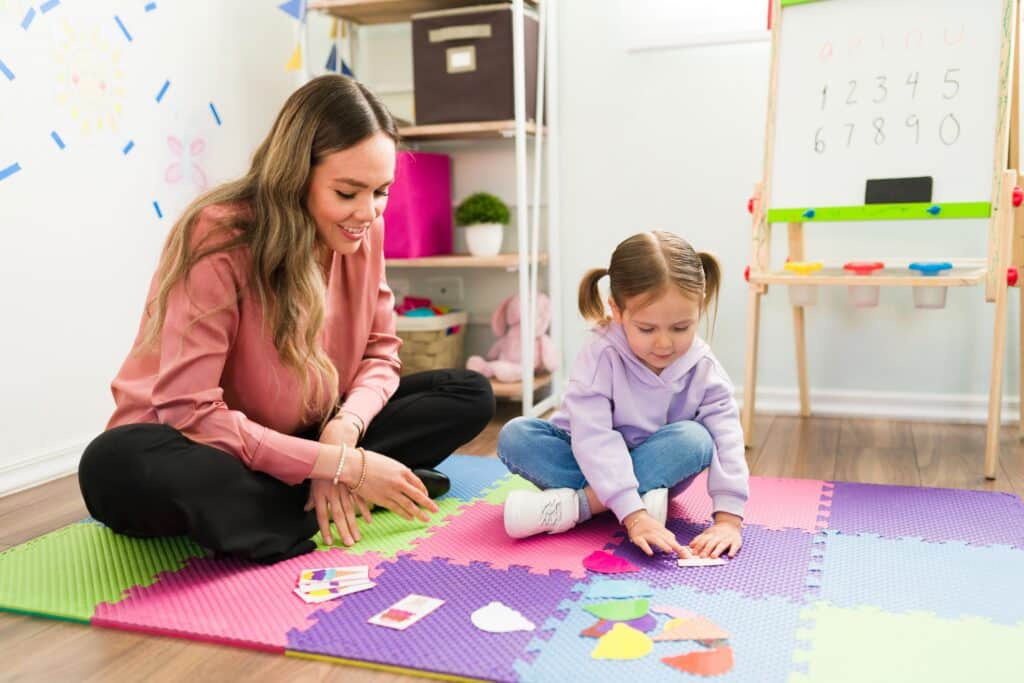
Play is one of the most effective ways to engage a non-verbal child. Through play, children can practice communication in a natural and enjoyable way.
You can model gestures, point to objects, and use repetition during play activities. This helps children learn how to communicate while staying engaged and motivated.
Tips for Communicating with a Non-Verbal Child
Here are some helpful strategies to improve communication:
- Get at the child’s level and maintain eye contact
- Use simple language and short phrases
- Give the child time to respond without interrupting
- Use gestures, visuals, or objects to support understanding
- Follow the child’s lead during play to help engage them
- Offer choices to encourage interaction
Each tip can help create a supportive environment that encourages communication and connection.
How Do You Know if a Child Is Nonverbal?
Nonverbal does not mean noncommunicating. A child who is nonverbal does not use spoken language, but they can still communicate in many other ways. They may make sounds in response to people or situations, or they may not vocalize at all and instead use signs, gestures, or augmentative and alternative communication (AAC).
Children who are nonverbal often communicate through facial expressions, body language, gestures, and eye contact. These methods can be used in place of or alongside speech.
If you have concerns about your child’s communication, it’s important to seek an evaluation with a licensed speech-language pathologist to better understand their strengths and needs.
Building Communication Over Time
With the right support, many non-verbal children develop stronger communication skills over time. This may include using gestures, AAC, or spoken language, depending on the child’s strengths and needs.
Every child develops differently, and progress may look different for each individual.
Speech Therapy and Non-Verbal Children
Speech therapy can be a vital part of supporting a nonverbal child.
Speech-language pathologists (SLPs) are trained professionals who use a variety of tools, techniques, and strategies to help children communicate effectively. They can introduce multiple communication methods based on what works best for each child.
Because communication is not one-size-fits-all, speech therapists work closely with families to find the right approach. A skilled speech-language pathologist will evaluate your child and create a plan that supports their unique strengths, needs, and goals.
Click here to find a location near you.

Before you go
Find the right therapy today.
Discover how Ivy Rehab can help you get back to doing what you love.