
Most sports injuries don’t arrive with fireworks and a dramatic slow‑motion replay. They show up quietly, build gradually, and then one day make it very clear they’ve had enough.
Repetitive stress can overload muscles, tendons, and joints over time. Overuse injuries are one of the most common reasons athletes miss training or competition. Physical therapy helps by improving mechanics, strength, and recovery habits so your body can keep up with your ambition.
Ivy Rehab Therapy builds personalized plans focused on overuse injury prevention so athletes can stay active, consistent, and confident through comprehensive sports physical therapy.

What Is an Overuse Injury?
An overuse injury develops when muscles and joints are repeatedly stressed without adequate recovery time. Instead of a single dramatic event, the breakdown occurs gradually.
Think of it like bending a paperclip. One bend? No problem. A hundred bends? Different story.
These injuries are often linked to repetitive motion, training errors, or inefficient mechanics. They can affect tendons, bones, joints, or muscles.
Symptoms usually begin as mild discomfort. If ignored, that discomfort can slowly progress into persistent pain that limits performance.
Understanding this pattern is the first step toward smarter overuse injury prevention.
Why Overuse Injuries Are So Common in Sports
Athletes are wired to push. The challenge is that the body adapts more slowly than motivation. Young athletes feel this tension too—but those who specialize in one sport year-round face a higher risk. Their still-developing muscles and joints take on repetitive load without the benefit of varied movement.
Many common sports injuries occur when training increases faster than the body can recover. A large systematic review with meta-analysis found that 42% of athletes in individual sports experience an overuse injury over a given period, underscoring the widespread prevalence of these conditions across high-repetition disciplines. Even small spikes in volume or intensity can overload tissue if strength and mechanics aren’t ready.
Factors that increase risk for overuse injuries include:
- Rapid increases in mileage, load, or intensity.
- Limited recovery, poor sleep, or inconsistent rest days.
- Muscle imbalances or underlying weakness.
- Technique breakdown and compensation patterns.
- Poor warm-up routines or restricted mobility.
None of these factors guarantees injury. But together, they can tip the balance from progress to overload. The good news? Most of them are modifiable.
Common Sports Injuries Caused by Overuse
Overuse injuries affect athletes across sports, from runners and lifters to tennis and soccer players. Many of these conditions are preventable when addressed early.
Examples of common sports injuries related to repetitive loading include:
- Tendinitis, including Achilles, patellar, and rotator cuff tendinopathy.
- Stress reactions and stress fractures.
- Shin splints, also known as medial tibial stress syndrome.
- Iliotibial (IT) band syndrome.
- Runner’s knee, or patellofemoral pain syndrome (PFPS).
- Tennis elbow and golfer’s elbow.
- Shoulder impingement.
Research shows that overuse injuries account for a significant portion of athletic injuries, particularly in endurance sports. Encouragingly, many contributing factors can be addressed with the right plan and guidance.
Early Warning Signs of Repetitive Stress Injuries
Overuse injuries rarely appear overnight. Your body typically sends signals that something needs to change. The trick is listening before the whisper turns into a shout.
Watch for these early warning signs:
- Pain that increases during or after training.
- Stiffness that lasts longer than typical post-workout soreness.
- Tenderness in one specific, consistent area.
- Swelling or warmth near a joint or tendon.
- A noticeable drop in performance or endurance.
Catching symptoms early makes overuse injury prevention far more effective than waiting until pain becomes constant.

How Physical Therapy Helps Prevent Overuse Injuries
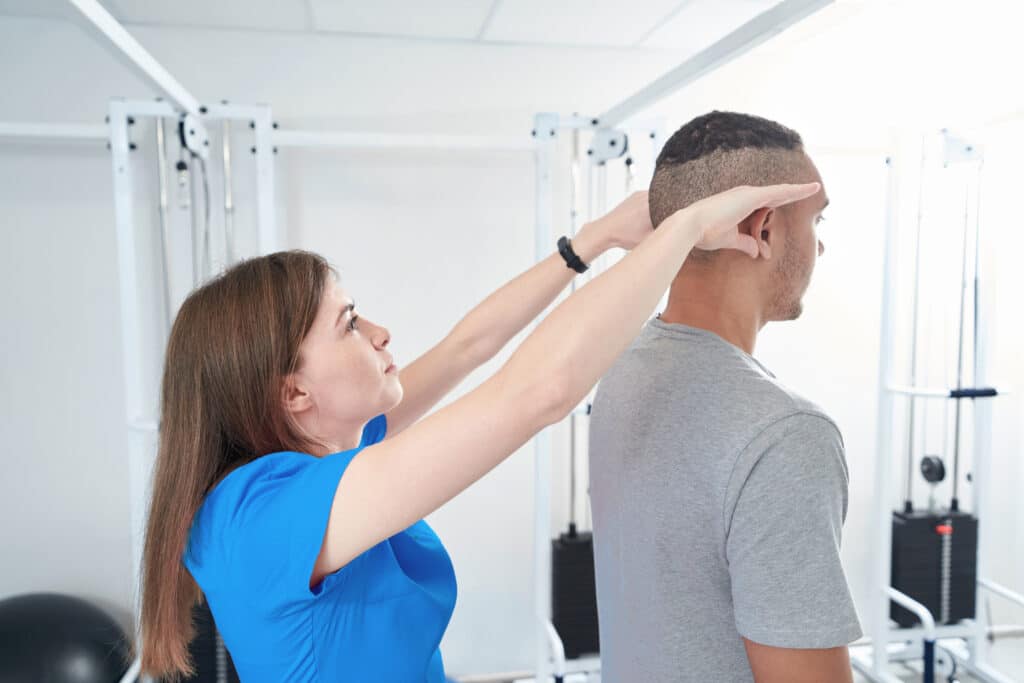
Physical therapy focuses on the root cause of pain. Instead of only calming symptoms, it examines how you move, how you load tissue, and where compensation occurs.
This is where repetitive-stress-injury PT becomes powerful. It’s not about doing less. It’s about doing what you do better.
Movement & Biomechanics Assessment
For athletes who rely heavily on running mechanics, tools like a professional running analysis can identify stride inefficiencies and loading patterns that contribute to repetitive stress.
A physical therapist evaluates joint alignment, mobility, strength, balance, and sport-specific mechanics. Subtle inefficiencies, the kind you’d never notice mid‑workout, can overload the same structure repeatedly.
Identifying those patterns allows for targeted correction before tissue breakdown progresses.
Strength & Stability Training
Resilient tissue tolerates stress better. Strengthening key regions such as the hips, core, shoulders, and calves improves force absorption and load sharing.
Evidence supports progressive strengthening as a cornerstone of managing and preventing tendinopathy and other overuse conditions. Done correctly, strength training doesn’t just protect you; it enhances performance.
Mobility & Flexibility Work
A restricted range of motion can force the body to compensate elsewhere. Addressing mobility deficits reduces unnecessary strain and helps movement feel smoother and more efficient.
Improved mobility supports cleaner mechanics and long-term overuse injury prevention.
Load Management & Training Guidance
Even perfect form can’t overcome poor programming. Physical therapists help athletes adjust training variables such as frequency, intensity, and recovery.
Strategic progression supports adaptation without overload. Progress is the goal, not punishment. Physical therapists often partner with a coach or trainer to align your rehab plan with the specific demands of your sport.
Sport-Specific Retraining
Running stride, lifting mechanics, throwing motion, and cutting patterns all influence stress distribution. PT-led retraining refines technique to reduce unnecessary load while maintaining performance.
This individualized, practical approach defines effective PT for repetitive-stress injuries.
Get Back in the Game Stronger
Comprehensive rehabilitation for sports injuries and performance enhancement.
The Role of PT in Repetitive Stress Injury Recovery
When an overuse injury has already developed, complete rest is rarely the only solution. In many cases, controlled loading supports healing.
Physical therapy during recovery may include:
- Gradual return-to-activity planning.
- Tendon loading progressions.
- Strength rebuilding and movement corrections.
- Education to prevent recurring flare-ups.
Research on tendon rehabilitation supports progressive loading over prolonged immobilization. The goal is recovery with resilience, not temporary relief.
Overuse Injury Prevention Tips for Athletes
Small habits, done consistently, can dramatically reduce injury risk. There’s nothing flashy about them, but they work.
To support overuse injury prevention, consider:
- Increasing training gradually, typically no more than 10 percent per week.
- Strength training at least two times per week.
- Prioritizing recovery and consistent sleep.
- Using sport-specific warm-ups and preseason conditioning before high-intensity sessions.
- Cross-training to vary repetitive load.
- Addressing early pain signals instead of pushing through them.
Consistency beats intensity when it comes to durability. Build smart routines, and your body will reward you.

When to See a Physical Therapist
Early intervention can prevent minor discomfort from becoming a chronic injury that sidelines your goals.
Consider scheduling an evaluation if you notice:
- Symptoms lasting more than one to two weeks.
- Pain that returns every time you train.
- Discomfort that changes your form or movement.
- Difficulty progressing in training due to soreness.
- A history of repeated common sports injuries.
Proactive care is one of the smartest investments you can make in long-term performance.
Why Choose Ivy Rehab for Overuse Injury Prevention
Athletes need more than ice and a pep talk. They need a plan.
Ivy Rehab Therapy combines sports physical therapy expertise with individualized programming focused on movement quality and long-term durability.
Our approach emphasizes:
- Sports-focused physical therapists and movement experts.
- One-on-one care and progressive programming.
- A prevention-first mindset, not just symptom relief.
- Return-to-sport and performance-ready guidance.
We believe overuse injury prevention isn’t about holding back. It’s about building a body that can handle what you ask of it.
Stay Strong, Stay in the Game
Overuse injuries are common, but they’re not inevitable. When movement mechanics, strength progression, and load management align, the body adapts and thrives.
Through targeted assessment, progressive strengthening, and practical guidance, physical therapy helps athletes stay consistent, resilient, and goal-focused.
If recurring soreness is interrupting your training, explore your options. Find a location near you and learn how smarter movement can support long-term performance.
References
- DiFiori, J.P., et al. (2014). Overuse injuries and burnout in youth sports: A position statement. British Journal of Sports Medicine, 48(4), 287–288. https://doi.org/10.1136/bjsports-2013-093299
- Malliaras, P., et al. (2015). Patellar tendinopathy: Clinical diagnosis, load management, and advice for challenging case presentations. Journal of Orthopaedic & Sports Physical Therapy, 45(11), 887–898. https://www.jospt.org/doi/10.2519/jospt.2015.5987
- American Physical Therapy Association. (2023). Physical Therapy Guide to Shin Splints (Medial Tibial Stress Syndrome). https://www.choosept.com/guide/physical-therapy-guide-shin-splints-medial-tibial-stress-syndrome-

Before you go
Find the right therapy today.
Discover how Ivy Rehab can help you get back to doing what you love.