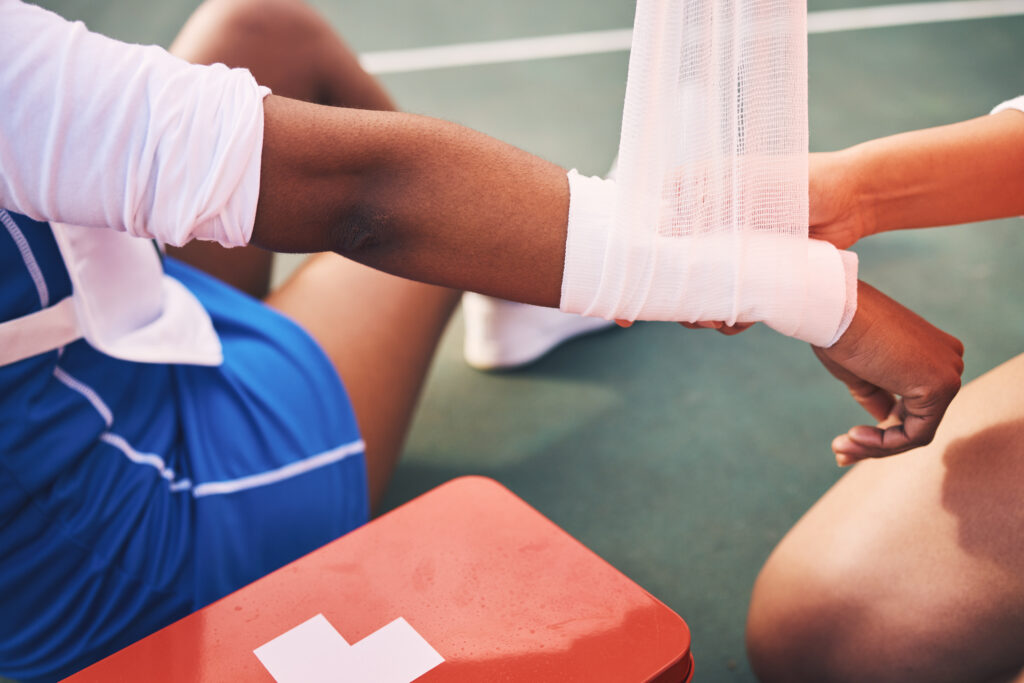


Youth sports can start feeling high-stakes long before kids reach high school. Club teams, travel seasons, private training, and recruiting talk can make families feel like choosing one sport is the only way to keep up.
But specializing early isn’t the only path. In many cases, playing more than one sport helps young athletes build a stronger foundation. Cross-training gives their bodies different movement challenges, their minds a break from one constant pressure, and their confidence more than one way to grow.
That’s why multisport athletes flourish on and off the field. The goal isn’t to do everything. It’s to build a healthier, more flexible path through sports.
Key Takeaways
- Early specialization can increase the risk of overuse injuries and burnout, especially when young athletes train in one sport year-round.
- Playing multiple sports exposes young athletes to different movements, which can support coordination, strength, balance, and overall athletic skill.
- Multisport participation can also support friendships, confidence, adaptability, and long-term enjoyment.
- Parents and coaches can help by protecting rest, watching for burnout signals, and letting young athletes have a say in their schedule.
- Sports injury screenings and physical therapy can help identify movement issues, manage pain, and support a safer return to play.
Quick Navigation
- Why Early Specialization Can Backfire
- How Playing Multiple Sports Helps the Body
- What Multisport Athletes Gain off the Field
- What the Research and Elite Sports Suggest
- What Parents and Coaches Can Do
- How Physical Therapy Supports Young Athletes
Why Early Specialization Can Backfire
The idea behind early specialization sounds simple: more time in one sport should lead to more skill in that sport. Sometimes it does help in the short term.
The harder part is what happens over months and years. Young athletes are still growing. When joints, tendons, and muscle groups repeat the same motions all year, stress can build up faster than the body can recover.
That doesn’t mean a young athlete can never have a favorite sport. It means year-round pressure before the body is ready can have trade-offs, such as overuse injuries, fatigue, and loss of enjoyment.
Several sports medicine groups have raised concerns about intensive early specialization. The American Academy of Pediatrics recommends a balanced approach that includes rest, varied activity, and attention to the athlete’s physical and emotional well-being.

How Playing Multiple Sports Helps the Body
Different Sports Build Different Skills
Each sport teaches the body something different. Soccer builds running, cutting, and foot control. Basketball adds jumping, landing, and quick direction changes. Swimming builds upper-body endurance and breath control. Gymnastics can support balance, body awareness, and flexibility.
That variety of sports gives young athletes more ways to move, adapt, and learn. A child who can run, rotate, jump, throw, balance, and react in various settings often becomes more adaptable than one who repeats the same patterns all year.
Season Changes Can Support Recovery
Switching from one sport to another can give overworked areas a break while keeping the athlete active. For example, a baseball player’s throwing shoulder may get relief during soccer season, while the legs and core continue developing in other ways.
That seasonal shift can help reduce the repeated stress that often contributes to overuse injuries. It also gives young athletes a mental reset, which matters when sports start to feel intense.
Athletic Skills Can Transfer
A skill set from one sport can often be used in another. Balance from gymnastics can help with landing mechanics. Hip rotation from baseball or softball can support power in other rotational sports. Agility from soccer or basketball can help with quick reactions almost anywhere.
That’s one reason many coaches value multisport athletes. They often have versatility, teamwork, and problem-solving skills from learning different rules, roles, and movements.
What Multisport Athletes Gain off the Field
The benefits aren’t only physical. Playing more than one sport lets young athletes experience different teammates, coaches, and team cultures. That can build communication skills, confidence, and social flexibility.
It can also protect a young athlete’s identity from becoming tied to one sport. When one season feels hard, another activity may still be fun. That balance can make sports feel less like a constant test and more like a healthy part of life.
This is another reason playing multiple sports can support young athletes beyond physical training. They have chances to lead, learn, struggle, adjust, and belong in more than one setting.

What the Research and Elite Sports Suggest
A review published in Pediatrics found that sport specialization is associated with a higher risk of overuse musculoskeletal injuries. A review in Sports Health notes that specialized training can increase the risk of injury and burnout, while broader exposure may support long-term athletic development.
Elite sports tell a similar story. A study of NFL first-round draft picks found that most played multiple sports in high school. That doesn’t mean every young athlete should aim for a professional career. It does show that a broad athletic background can support high-level development instead of blocking it.
The takeaway for families is simple: Choosing more than one sport isn’t a sign that an athlete is less serious. It may be one of the ways they build a stronger, more sustainable foundation.
What Parents and Coaches Can Do
Parents and coaches can’t remove every pressure from youth sports, but they can help student-athletes stay healthier across seasons by:
- Protecting rest time between seasons and during busy stretches.
- Watching for signs of burnout, such as ongoing fatigue, irritability, dreading practice, or loss of enjoyment.
- Keeping practice volume realistic, especially when school, sleep, and recovery are already stretched.
- Letting the athlete have a say in which sports they play and when they need a break.
- Treating pain as information, not something to push through every time.
A young athlete can be committed without being overloaded. The goal is steady development, not constant pressure.
How Physical Therapy Supports Young Athletes
Even with a balanced sports schedule, sports injuries in kids can still happen. A physical therapist can help with lingering soreness, limited movement, or sports injury recovery.
Sports injury screening can also identify strength, mobility, balance, or movement patterns that may raise the risk of injury. From there, care can focus on what the child actually needs, whether that’s pain relief, safer movement, strength work, or return-to-play support.
Ivy Rehab offers athletic therapy services for athletes at all levels, including kids and teens who play multiple sports and families who want to be proactive about staying healthy.
FAQs
At What Age Is Early Specialization Most Concerning?
There’s no single age that applies to every child or every sport. In general, intensive year-round specialization before adolescence raises more concern because the body is still developing and needs varied movement. Many experts recommend delaying intense single-sport specialization until at least the teen years, when possible.
How Many Sports Is Too Many?
It’s less about the number of sports and more about the total load. If a young athlete has little time for sleep, school, friends, recovery, or unstructured play, the schedule may be too full. Ongoing soreness, fatigue, or mood changes are also signs to slow down.
What if My Child Only Loves One Sport?
That’s okay. A child can have a favorite sport and still benefit from rest, off-season variety, and general strength or mobility work. The key is to avoid nonstop pressure and give the body time to recover.
When Should a Young Athlete See a Physical Therapist?
A physical therapy evaluation may help if pain lasts more than a few days, keeps coming back, changes how the athlete moves, or makes them nervous about playing. Sharp pain, swelling, numbness, tingling, or pain that travels down an arm or leg should be checked sooner.
Will Playing Multiple Sports Hurt My Child’s Chances of Playing in College?
Not necessarily. Many high-level athletes played more than one sport in high school. College coaches often value athletes who are adaptable, coordinated, coachable, and physically well-rounded. A broad sports background can support those qualities.
Support Your Athlete’s Long-Term Health
Multisport athletes flourish on and off the field when their bodies have time to grow, recover, and adapt. If your child is dealing with pain, coming back from an injury, or trying to stay healthy across seasons, physical therapy for athletes can help you understand what’s happening and what may help.
Find an Ivy Rehab location near you, or explore our athletic therapy services, sports injury screenings, and ACL rehab to learn more.
References
- Sports Specialization and Intensive Training in Young Athletes. Pediatrics. Accessed March 2026. https://publications.aap.org/pediatrics/article/138/3/e20162148/52612/Sports-Specialization-and-Intensive-Training-in
- Sport Specialization and Risk of Overuse Injuries: A Systematic Review With Meta-Analysis. Pediatrics. Accessed March 2026. https://publications.aap.org/pediatrics/article/142/3/e20180657/38602/Sport-Specialization-and-Risk-of-Overuse-Injuries
- Sport Specialization, Part I: Does Early Sports Specialization Increase Negative Outcomes and Reduce the Opportunity for Success in Young Athletes? Sports Health. Accessed March 2026. https://dash.harvard.edu/entities/publication/73120378-fe21-6bd4-e053-0100007fdf3b
- The Prevalence of High School Multi-Sport Participation in Elite National Football League Athletes. The Physician and Sportsmedicine. Accessed March 2026. https://doi.org/10.1080/00913847.2020.1856632

Before you go
Find the right therapy today.
Discover how Ivy Rehab can help you get back to doing what you love.