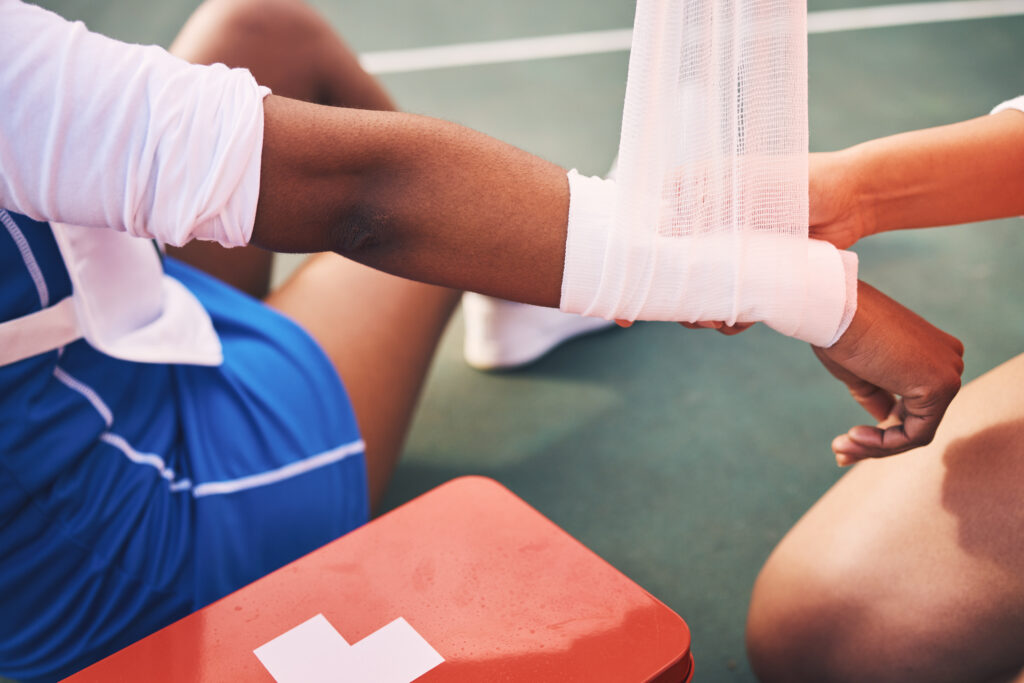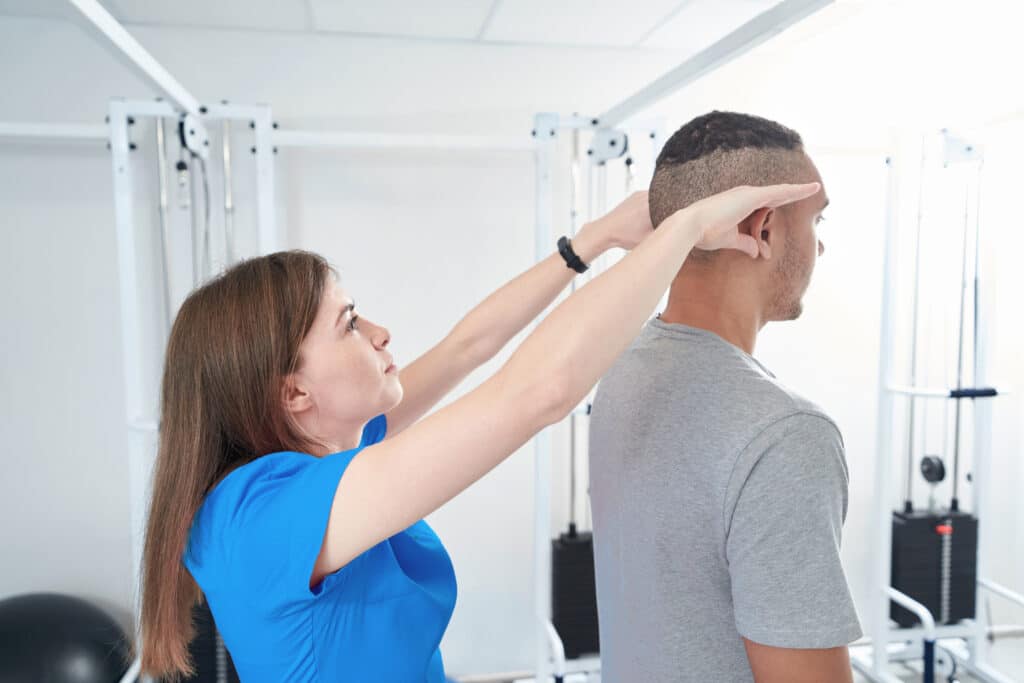

Anterior Cruciate Ligament (ACL) surgery recovery can feel like the ultimate test of patience for athletes. You want to train. Your knee wants to heal. Swelling, pain, and a “shut down” quad can make early rehab feel slow, even when you’re doing everything right.
That’s where the effects of aquatic therapy on athletes with ACL surgery can really shine. In the pool, water supports your body weight, reduces knee stress, and allows you to practice clean, controlled movement before higher-load land drills make sense. With a PT leading the plan, the goal isn’t to rush. It’s to rebuild quality, confidence, and conditioning while protecting the graft after ACL reconstruction.
In this guide, we’ll break down why the use of aquatic therapy can be a smart early tool for athletes, when it typically starts, and what PT-led water sessions may include.
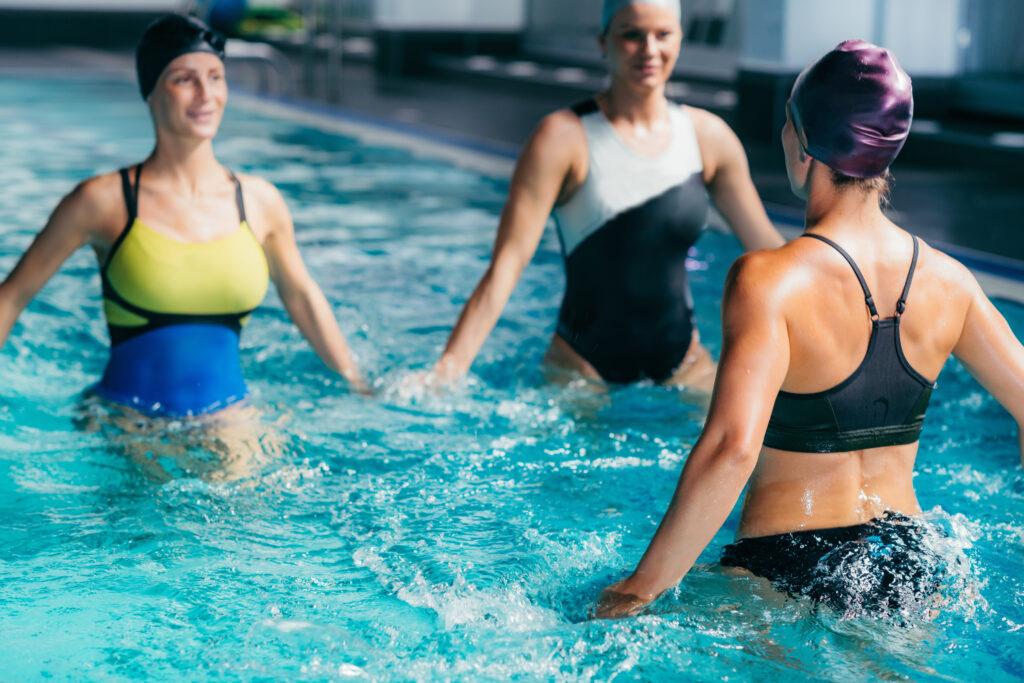
Why Aquatic Therapy Supports ACL Recovery in Athletes
Water lets athletes work on key rehab goals without picking a fight with the graft. You still need a structured plan and land-based conventional rehabilitation, but the pool can be a valuable bridge when impact and heavier loads are not yet appropriate.
Buoyancy Reduces Knee Joint Load
Buoyancy and hydrostatic pressure reduce loads on the knee, allowing you to rehearse walking mechanics and control knee motion with less joint load.
That often supports:
- Earlier gait practice with better symmetry.
- Smooth weight shifts without “protecting” the surgical side.
- Controlled knee bending and straightening in a more comfortable range of motion.
The big win is movement quality. Clean reps now set you up for stronger reps later.
Warm Water Reduces Pain and Swelling
Warm water can relax muscles and help you move with less guarding. Many athletes find they can bend their knees more comfortably in the pool, especially when swelling makes land-based motion feel stiff.
A simple tip: Treat the first few minutes as your warm-up. Easy walking and gentle knee motion usually beat jumping straight into strength work.
Resistance Supports Gentle Strength Work
Water provides resistance in all directions, making it useful for early strengthening without heavy impact. Your PT can adjust the challenge while keeping joint stress low.
In athletic terms, this is controlled loading without the big forces that come with running, jumping, or aggressive gym work. You’re still training, just with the volume turned down on joint stress.
Allows Athletes to Maintain Conditioning
One of the hardest parts of ACL rehab is feeling like your conditioning is slipping. Water-based sessions can help you keep your cardio up while land-based jogging is still off-limits.
Think steady deep-water running, interval walking, or controlled tempo work that keeps joint stress low. Your lungs get a workout even when your knee is still on a strict schedule.
When Aquatic Therapy Begins After ACL Surgery
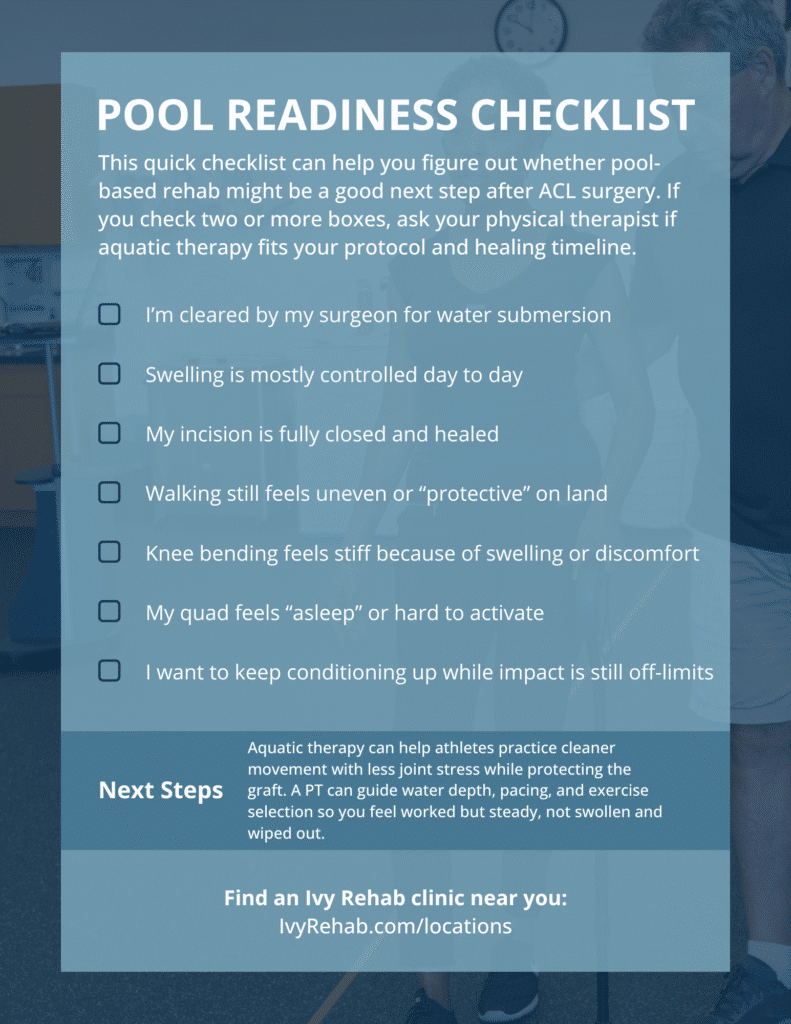
Start times depend on the graft type and the surgeon’s recommendations. Many athletes begin rehab in an aquatic environment around 2 to 4 weeks post-op, but only once wounds are fully healed and the surgeon has cleared submersion.
Before you get in the pool, your physical therapist typically confirms:
- Incisions are fully closed and cleared for water.
- Swelling is controlled and not spiking day to day.
- Knee flexion is progressing, and you can move within safe ranges.
Early exercises stay within safe ranges to protect the graft. The goal is to build motion, cleaner walking mechanics, and muscle activation, without pushing intensity yet.
If you’ve done aquatic PT for shoulder surgery, the theme is similar. Water supports early motion and allows controlled progression. The difference is what the knee needs later for cutting and landing, so your rehabilitation program must stay sport-specific.
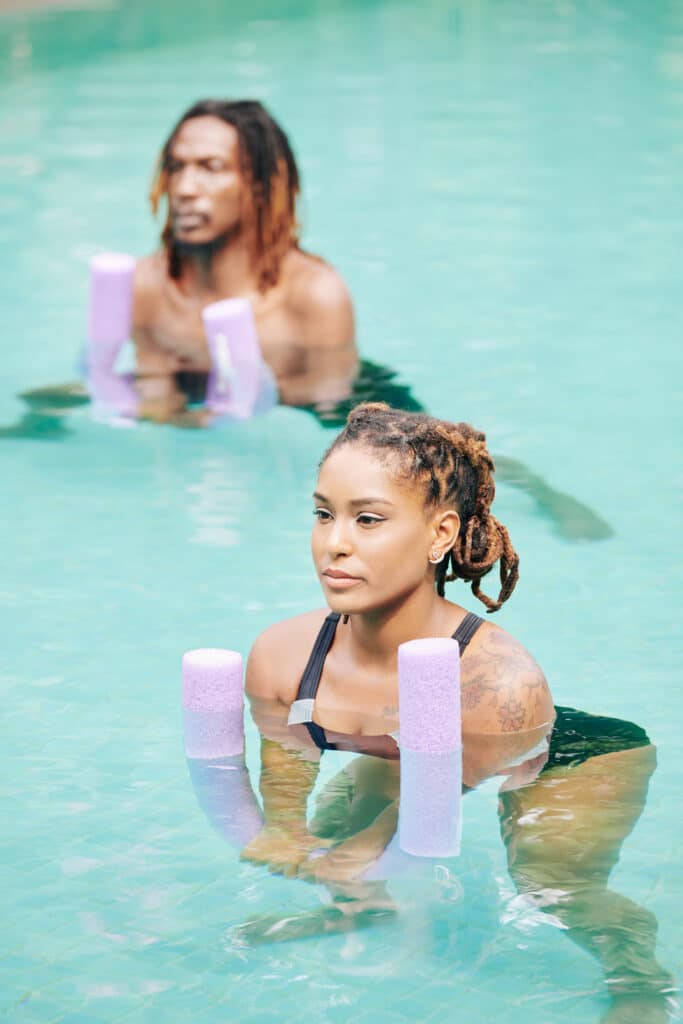
PT-Recommended Aquatic Exercises for ACL Recovery
Aquatic exercises help athletes retrain gait, mobility, and strength, while keeping loads appropriate for healing. Your PT will choose exercises based on your phase and surgeon protocol.
Below are examples of the effects of aquatic therapy on athletes after ACL surgery in the pool. These aren’t a DIY routine. Your PT will adjust depth, speed, and volume to keep you in the right zone.
Water Walking and Slow Jogging (Chest-Deep Water)
Chest-deep water reduces impact while letting you practice rhythm, posture, and knee control.
A session may include:
- Slow forward walking with even steps and quiet hips.
- Backward walking to challenge control and wake up hip muscles.
- Later, light jogging intervals once cleared.
A simple tip: If your stride gets choppy or you start limping, slow down. Quality steps are the goal.
Heel Slides and Knee Flexion with Water Support
Water support can make knee bending feel smoother, especially when swelling is limiting your range.
Your PT may use:
- Supported heel slides at the wall.
- Gentle knee bends while standing.
- Supported knee bends and straightening that feel comfortable.
A simple tip: Stay in the “stretch zone,” not the pain zone. Sharp pain or pinching is a cue to back off.
Straight-Leg Raises in Water
Straight-leg raises can help address quad lag and improve knee stability. In the pool, buoyancy can make the movement feel more achievable early on.
A progression may include:
- Straight-leg raises on your back or in a supported float, if available.
- Standing straight-leg raises with your knee kept long.
- Short sets with rest breaks to help you avoid compensating.
A simple tip: If your hip flexors take over, pause and reset. A smaller range often brings the quad back online.
Hip Strengthening (Abduction, Extension, Flexion)
Strong hips play a crucial role in controlling the knee during athletic movements. Hip work in water can be a joint-friendly way to build strength and alignment early for hip and knee control.
Common options include:
- Side leg lifts for hip stability.
- Backward leg lifts for glute strength.
- Controlled knee lifts to support gait mechanics.
A simple tip: Keep your pelvis level. If you’re hiking a hip or leaning, the knee usually loses alignment.
Gentle Wall Squats or Mini-Squats
Mini-squats build quad strength, while buoyancy reduces load. Your PT will keep the range appropriate and watch knee tracking.
A set may include:
- Using the wall or rail for support.
- Keeping your knees tracking in line with your toes.
- Working in a small, smooth, and controlled squat.
A simple tip: Exhale as you rise. Steady breathing helps you avoid bracing and shifting weight away from the surgical leg.
Core and Balance Drills Using Water Resistance
Balance and trunk control matter for cutting, pivoting, and deceleration later in rehab. Water adds gentle challenges while helping you stay safe.
Examples may include:
- Single-leg stance progressions in shallow water.
- Marching drills with steady posture.
- Controlled reach patterns that challenge balance.
A simple tip: Keep your knee aligned over your foot. If it dives inward, reduce the range and let your PT adjust the drill.
These sessions should leave you feeling worked but steady, not swollen and drained. That’s how you know the workout is doing its job.
Athletic Benefits of Aquatic Therapy After ACL Surgery
Water can offer a few perks that are tough to replicate on land early on. For athletes, the goal is not just healing. It’s helping you relearn clean, controlled movement.
Athletic benefits can include:
- Faster mobility gains with less pain.
- Improved neuromuscular control and cleaner movement patterns.
- Early confidence rebuilding for athletes who feel stuck.
- Safe cardiovascular training during restricted land phases.
- Enhanced gait mechanics and symmetry.
For many athletes, the confidence piece is huge. When you can move well in the pool, it’s easier to trust your knee again on land.
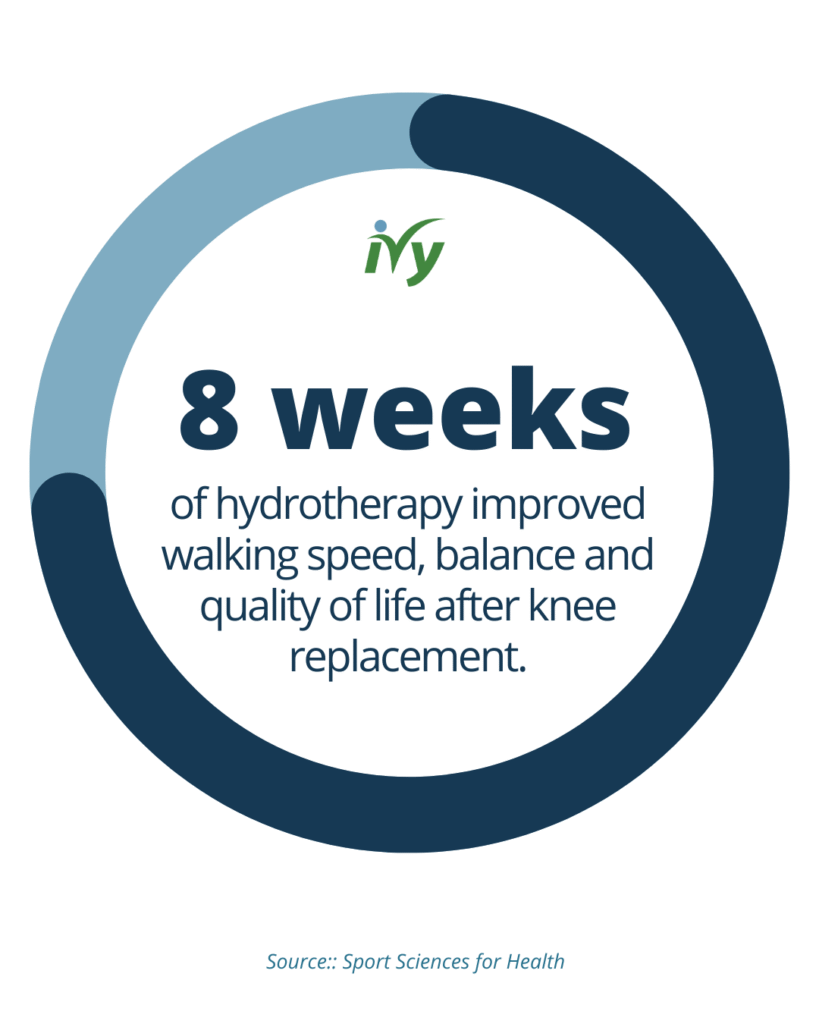
How Aquatic Therapy Fits into the Full ACL Rehab Timeline
Water is a bridge from early healing to advanced land-based training. It doesn’t replace strength and field work later, but it can support better progression while the knee is still sensitive.
Here’s how aquatic therapy often fits:
- Phase 1: Mobility, swelling control, and quad activation.
- Phase 2: Strength building with reduced load and better movement quality.
- Phase 3: Transition to land-based strengthening and controlled agility.
- Phase 4: Return-to-sport testing and sport-specific progression.
A simple tip: Your knee’s swelling response is a guide. If you’re consistently more swollen the next day, your PT can adjust volume, depth, or exercise selection.
Recover Faster, Perform Better
Comprehensive rehabilitation for sports injuries and performance enhancement.
Safety Considerations for Athletes Using Aquatic Therapy
Protecting the graft is a top priority. Aquatic work should follow the same rule as land rehab: the right exercise at the right time.
Key safety considerations include:
- Avoiding kicking motions or sharp directional changes early on.
- Skipping high-resistance water jets in early phases.
- Monitoring knee swelling after sessions and reporting changes.
- Letting your PT adjust water depth based on load tolerance and movement quality.
A simple tip: Don’t add intensity on your own. If something feels too easy, tell your PT so they can increase it safely.
Why Athletes Choose Ivy Rehab for Aquatic ACL Recovery
Athletes need more than basic rehab after ACL injuries. They need a structured plan that restores movement mechanics, builds strength, and boosts confidence for a successful return to sport.
Ivy Rehab supports that with:
- ACL-trained PTs who understand athletic demands.
- Progressions built for return-to-sport goals.
- One-on-one sessions focused on form and movement quality.
- Integrated land and water rehab so improvements carry over.
If you’d like to learn more about sport-specific ACL rehab, explore Ivy Rehab’s ACL Rehab program and our aquatic therapy services.
Train Smart and Heal Strong
Aquatic therapy can give athletes a low-impact, high-benefit start to ACL recovery. When it’s timed correctly and guided by PT, the effects of aquatic therapy on athletes with ACL surgery can include better early mobility, cleaner mechanics, and safer conditioning while land-based impact is still off-limits.
Together, we’ll turn pool progress into the kind of confidence that shows up on game day. Find a location near you.
References
- Massachusetts General Brigham Sports Medicine. “Rehabilitation Protocol for Anterior Cruciate Ligament (ACL) Reconstruction.” PDF. Accessed Dec. 26, 2025. https://www.massgeneral.org/assets/mgh/pdf/orthopaedics/sports-medicine/physical-therapy/rehabilitation-protocol-for-acl.pdf
- Otayek, Mansour. “The Role of Hydrotherapy After ACL Reconstruction.” Aspetar Sports Medicine Journal. Nov. 16, 2023. Accessed Dec. 26, 2025. The Role of Hydrotherapy After ACL Reconstruction
- Buckthorpe, Matthew, et al. “Benefits and Use of Aquatic Therapy During Rehabilitation After ACL Reconstruction: A Clinical Commentary.” International Journal of Sports Physical Therapy. Dec. 2019;14(6). Accessed Dec. 26, 2025. https://europepmc.org/article/MED/31803530Europe

Before you go
Find the right therapy today.
Discover how Ivy Rehab can help you get back to doing what you love.