
Recovering from spinal fusion is a journey that takes patience, strength, and the right kind of support. Early on, the idea of exercise may feel overwhelming. Your body is healing, your movements feel limited, and your confidence might not be where it used to be. But there is a gentle, powerful way to rebuild strength and mobility.
Aquatic therapy creates a safe, low-impact environment that lets you move freely again. The buoyancy of the water supports your body weight and reduces stress on your healing spine. At Ivy Rehab, our physical therapists use targeted water-based exercises to help you move comfortably, build strength, and regain confidence step by step.
This article walks you through how using aquatic therapy after spinal fusion can support your recovery and help you return to the activities you love.
Why Aquatic Therapy Is Helpful After Spinal Fusion
After spinal fusion surgery, your body is working hard to heal. The bone graft needs time to grow, and the muscles around your spine are still adjusting. Too much pressure, strain, bending, or twisting can slow that healing down.
Aquatic therapy helps because:
- The water supports your weight. This takes pressure off your healing spine, almost like being in “zero gravity.”
- Warm water helps tight muscles relax. Many people have muscle tension after surgery, and the heat helps you move more comfortably.
- Water gives gentle resistance. You can start strengthening without lifting heavy weights or stressing your back.
- It feels safer. Many people are nervous to move after surgery. The pool makes it easier to start because the water helps you stay steady.
These benefits make water therapy after spinal fusion an excellent starting point before progressing to land-based strengthening.
When Aquatic Therapy Typically Begins
Most people start water therapy 6-12 weeks after surgery, but your surgeon will make the final call. Before you begin, your physical therapist will check that:
- The surgical incision is fully healed
- You can sit, stand, and walk short distances without increased pain
- You can keep your core muscles engaged enough to stay safe in the water
At this stage, the goal is not to push hard. The goal is to help your body move again, rebuild trust in your spine, and ease back into daily activity.
Disclaimer: Always follow your surgeon’s clearance before entering a pool after spinal fusion. It’s important not to rush the recovery process.
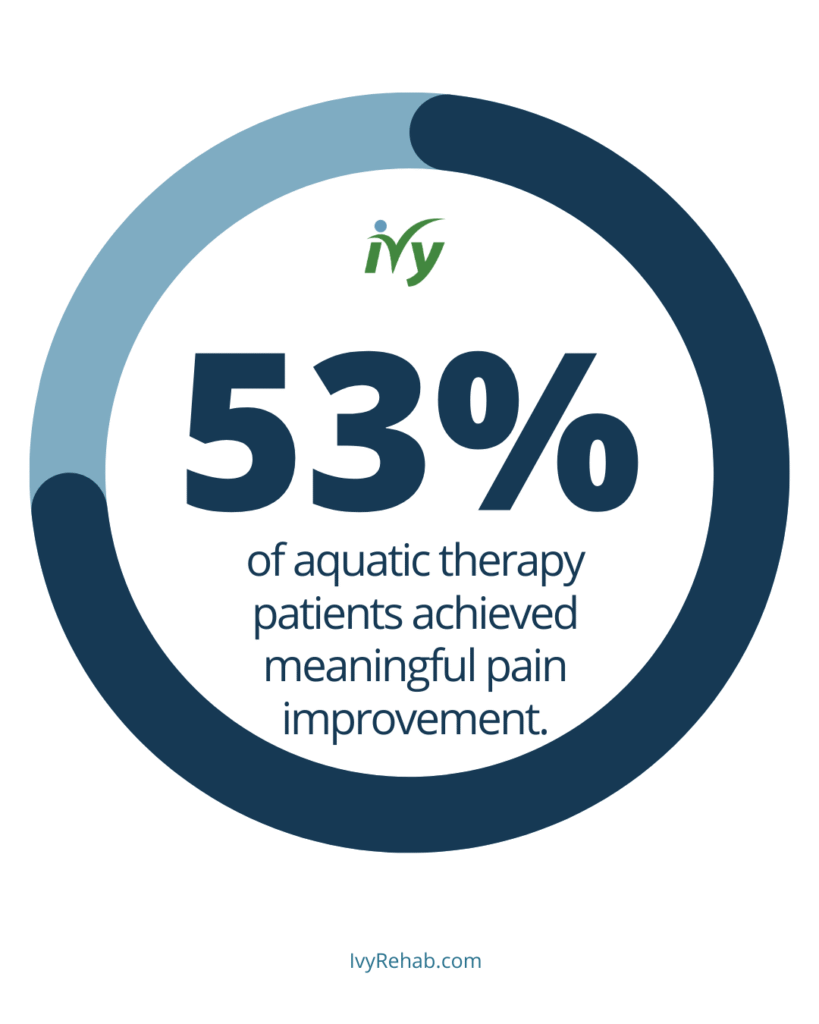
Benefits of Aquatic PT After Spinal Fusion
Water-based movement can be gentle and incredibly effective during the early recovery process.
Pain Reduction & Muscle Relaxation
Warm water can calm tight or overworked muscles. This helps reduce the “guarding” many people feel after surgery. When your muscles relax, you can move freely and with less stiffness.
Improved Mobility Without Overloading the Spine
Because the water holds up much of your body weight, you can safely practice:
- Walking
- Gentle stretching
- Relearning good posture
These movements are often uncomfortable on land but feel easier in the pool.
Safe Strengthening with Water Resistance
Your back muscles, core, and hips need to get stronger after a fusion. In the water, you can begin this work safely because:
- The resistance is light and even
- You can move slowly and with control
- There is no impact or jarring on the spine
This helps prepare your body for more challenging exercises later.
Balance & Gait Training Support
After a fusion, people often change how they walk, sometimes without realizing it. The water gives you a safe place to practice:
- Even steps
- Better weight shifting
- Standing upright with confidence
The support of the water reduces the fear of falling, which makes new movement patterns easier.
Innovative Therapies for Complex Needs
Our specialized programs are designed to address unique health challenges.
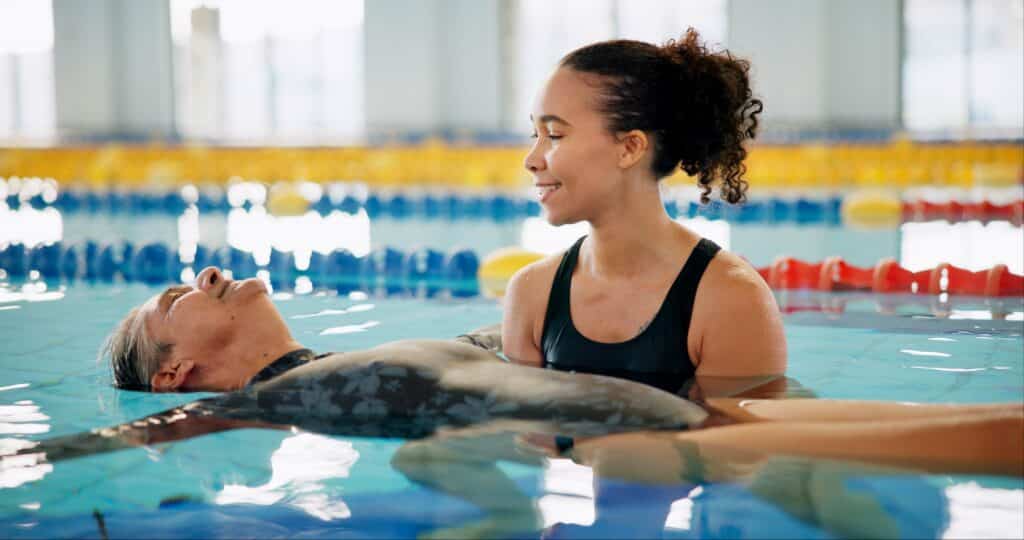
PT Exercises Commonly Used in Aquatic Therapy
Your physical therapist will guide you through slow, controlled exercises tailored to your healing and comfort level. Here’s what some of these movements may look like in the pool:
Water Walking (Forward, Backward, Lateral)
You’ll walk through the water at a comfortable pace while your therapist watches your posture and step pattern. The resistance of the water makes your muscles work without putting stress on your spine.
Gentle Core Stabilization Exercises
These movements often involve standing tall in the water while lightly tightening your deep abdominal muscles. Your therapist may have you press your hands into the water, shift your weight, or perform small leg movements while keeping your trunk steady.
Standing Leg Lifts / Hip Strengthening
Holding the pool wall or using a flotation device for balance, you’ll lift your leg forward, backward, or to the side. The goal is controlled motion, not height. Water resistance helps strengthen your hips and improve your range of motion without loading your lower back.
Supported Water Squats
You may hold onto a rail or the pool wall while slowly lowering into a squat. The buoyancy of the water makes standing back up easier and takes pressure off your knees and spine.
Aquatic Upper Body Movements
Using the water’s resistance, you’ll move your arms forward, out to the side, or overhead. These movements help improve posture and support the muscles that keep your spine aligned during daily activities.
What to Expect During Aquatic PT at Ivy Rehab
Your program is personalized to your goals, comfort level, and stage of healing. You can expect:
- One-on-one guidance from highly trained aquatic PT specialists
- Progressive goals that match your recovery timeline
- Education on posture and safe movement habits
- A smooth transition to land-based therapy once your spine and supporting muscles are ready
Safety Considerations for Aquatic Therapy
Your safety always comes first. At Ivy Rehab:
- We avoid twisting or excessive bending early in recovery
- Movements are kept slow, controlled, and intentional
- Therapy begins only after your surgeon confirms the incision has healed
- Your therapist monitors pain, fatigue, and confidence throughout each session
When Aquatic PT Is Especially Beneficial
Water therapy after spinal fusion can be especially helpful for people with:
- Difficulty tolerating land-based exercise
- A history of chronic back pain
- Weight-bearing limitations
- Fear of movement after surgery
The water meets you where you are and gives you space to rebuild safely.
Why Choose Ivy Rehab for Post-Fusion Aquatic PT
Ivy Rehab offers one of the most comprehensive aquatic therapy programs in the region.
- Warm-water therapy pools designed for spine-friendly exercise
- Clinicians with advanced training in orthopedic and spine rehabilitation
- Personalized progressions based on your recovery
- Seamless transition from water to land-based strengthening
We’re here to help you make a power move toward healing—one gentle step at a time.
Your Journey to Healing Starts in the Water
Aquatic therapy after spinal fusion offers a supportive, empowering path to recovery. It allows you to move without fear, build strength with confidence, and reconnect with your body in a safe space. With the support of the Ivy Rehab team, your healing becomes a partnership, and your progress becomes possible.
Ready to begin? Find an Ivy Rehab location and see how aquatic therapy can transform your recovery after spinal fusion.
References
- GBD 2021 Low Back Pain Collaborators. (2023). Global, regional and national burden of low back pain, 1990–2020, its attributable risk factors, and projections to 2050: A systematic analysis of the Global Burden of Disease Study 2021. The Lancet Rheumatology, 5(6), e316–e329. https://doi.org/10.1016/S2665-9913(23)00098-X
- Baena-Beato, P. Á., Artero, E. G., Arroyo-Morales, M., Robles-Fuentes, A., Gatto-Cardia, M. C., & Delgado-Fernández, M. (2013). Aquatic therapy improves pain, disability, quality of life, body composition and fitness in sedentary adults with chronic low back pain: A controlled clinical trial. Clinical Rehabilitation, 28(4), 350–360. https://doi.org/10.1177/0269215513504943

Before you go
Find the right therapy today.
Discover how Ivy Rehab can help you get back to doing what you love.