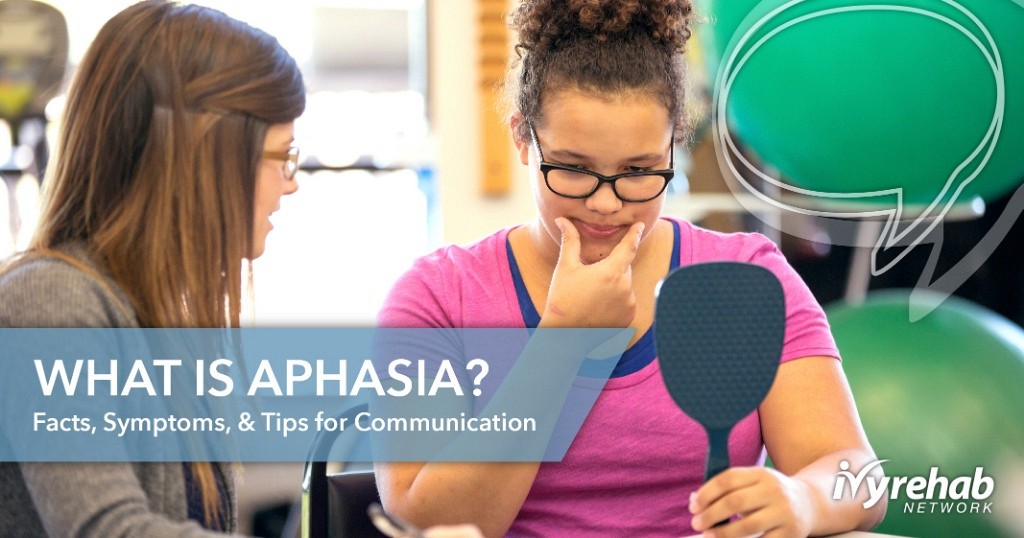
River Steinberg, a speech therapy graduate student clinician from Ivy Rehab partner clinic, Southeastern Physical Therapy in Virginia Beach, VA, defines aphasia as well as facts, symptoms, and tips to help communicate:
What is Aphasia?
After a person has experienced a stroke, it is likely they may have some difficulty in everyday functioning afterward while healing. The stroke can produce a variety of consequences that come about during recovery, such as muscle weakness, problems eating or swallowing, and impairments with communication. When a person suffers from a stroke or brain damage and develops difficulties with language, it is called “aphasia”.
Aphasia vs Other Communication Disorders
Aphasia affects how a person understands and uses speech and language, but it is not the same as other communication disorders. For example, dysarthria is a motor speech disorder that affects how clearly a person speaks due to muscle weakness, while aphasia affects language processing.
Some individuals may experience both conditions, and the effects on communication can differ depending on the area of the brain involved.
Signs and Symptoms
Aphasia can cause a variety of communication difficulties, including trouble talking, understanding, reading, or writing. Examples include:
- Can’t think of the words you want to say.
- Saying the wrong word (ex. saying “fish” instead of “chicken”) or making up words that don’t make sense.
- Not understanding what others say, especially when speaking fast, using longer sentences, or talking in a group.
- Have trouble reading forms, books, or computer screens.
- Difficulty using numbers like counting money, adding/subtracting, or telling time.
How Aphasia Affects Daily Life
Aphasia can impact many aspects of daily life. People with aphasia may find it difficult to participate in conversations, follow directions, or express their needs clearly. This can frustrate both the patient and their caregivers.
Simple activities like ordering food, making phone calls, or asking questions can become challenging, which may affect independence and confidence.
Statistics
According to a 2016 national survey on aphasia awareness, 84.1% of people can make the connection between stroke injury and difficulties with communication. Yet, 84.5% of people have NEVER heard of the term. More people have it than many other common conditions like Parkinson’s disease, cerebral palsy, and multiple sclerosis. It occurs in 25-40% of stroke survivors, and over 2,000,000 people in the United States struggle with it. This communication struggle has a greater negative impact on the quality of life than Alzheimer’s disease or cancer.
Tips to Improve Communication
You can support better communication with a few simple strategies:
- Talk in a quiet place and limit distractions (for example, turn off the TV or radio).
- Keep eye contact, and use gestures or facial expressions to reinforce meaning.
- Use short, simple sentences, and speak slowly.
- Ask yes-or-no questions when possible.
- Give them time to respond; it may take longer than expected. Avoid finishing their sentences.
- Write down keywords or topics in large, clear print.
Caregivers can also use gestures, drawings, or communication apps to support interaction and keep conversations engaging.
Supporting Someone with Aphasia
Caregivers and family members play an important role in recovery. Being patient, offering encouragement, and using supportive communication strategies can make a meaningful difference.
It is helpful to focus on what the person can do, rather than what they cannot. Providing consistent support can improve communication and overall quality of life.
Innovative Therapies for Complex Needs
Collaborative approach to ensure comprehensive care.
Recovery and Treatment
While there is no “cure”, most people improve over time – especially if speech therapy is enacted within the first 6 months of onset. Yet, a person’s aphasia can still be treated even if the onset occurred 10 or more years ago, as long as they have access to appropriate intensive therapy! A licensed speech-language pathologist (SLP) can diagnose the condition and develop a treatment plan to help the person achieve personal goals, such as having a conversation with family members, reading the newspaper, or returning to work.
We’re Here to Help
If you have suffered a stroke (or another type of brain injury) and find that you experience symptoms as described above, be sure that you or a caregiver speaks with a doctor, neurologist, or licensed SLP to schedule an appointment for further evaluation.
References
- Aphasia. American Speech-Language-Hearing Association. Accessed April 7, 2026. http://www.asha.org/public/speech/disorders/Aphasia/

Before you go
Find the right therapy today.
Discover how Ivy Rehab can help you get back to doing what you love.