

Pelvic floor dysfunction isn’t just a women’s health issue; it affects men from all backgrounds, ages, and lifestyles. If you’re living with pelvic pain, urinary challenges, or uncomfortable muscle tension, you’re not alone—there’s genuine hope for relief and a better tomorrow. The good news is you can regain comfort and confidence. Rehabilitation physical therapy is a proven, non-invasive path to feeling better and getting back to living life to the fullest.
At Ivy Rehab, you’ll find experienced, compassionate pelvic health specialists who truly understand men’s unique needs. We’re here to provide expert, confidential care that supports you every step of the way. In this guide, you’ll learn what pelvic floor dysfunction in men is, what causes it, and how specialized physical therapy can make a powerful difference.
What Is Pelvic Floor Dysfunction in Men?
Your pelvic floor is made up of muscles that support your bladder, bowel, and pelvic organs. These muscles play a vital part in daily life, helping you control urination and bowel movements, and even affecting sexual health. Sometimes these muscles become too tight, too weak, or stop working together smoothly. When this happens, you may feel pain, discomfort, or a sense of heaviness in your pelvic region.
It’s important to remember that pelvic floor dysfunction isn’t only about weakness. Many men, especially those with pelvic pain, have muscles that are overactive. These muscles often need to learn how to relax and reset before they can work their best. Understanding what your body needs is often the first step toward lasting relief.
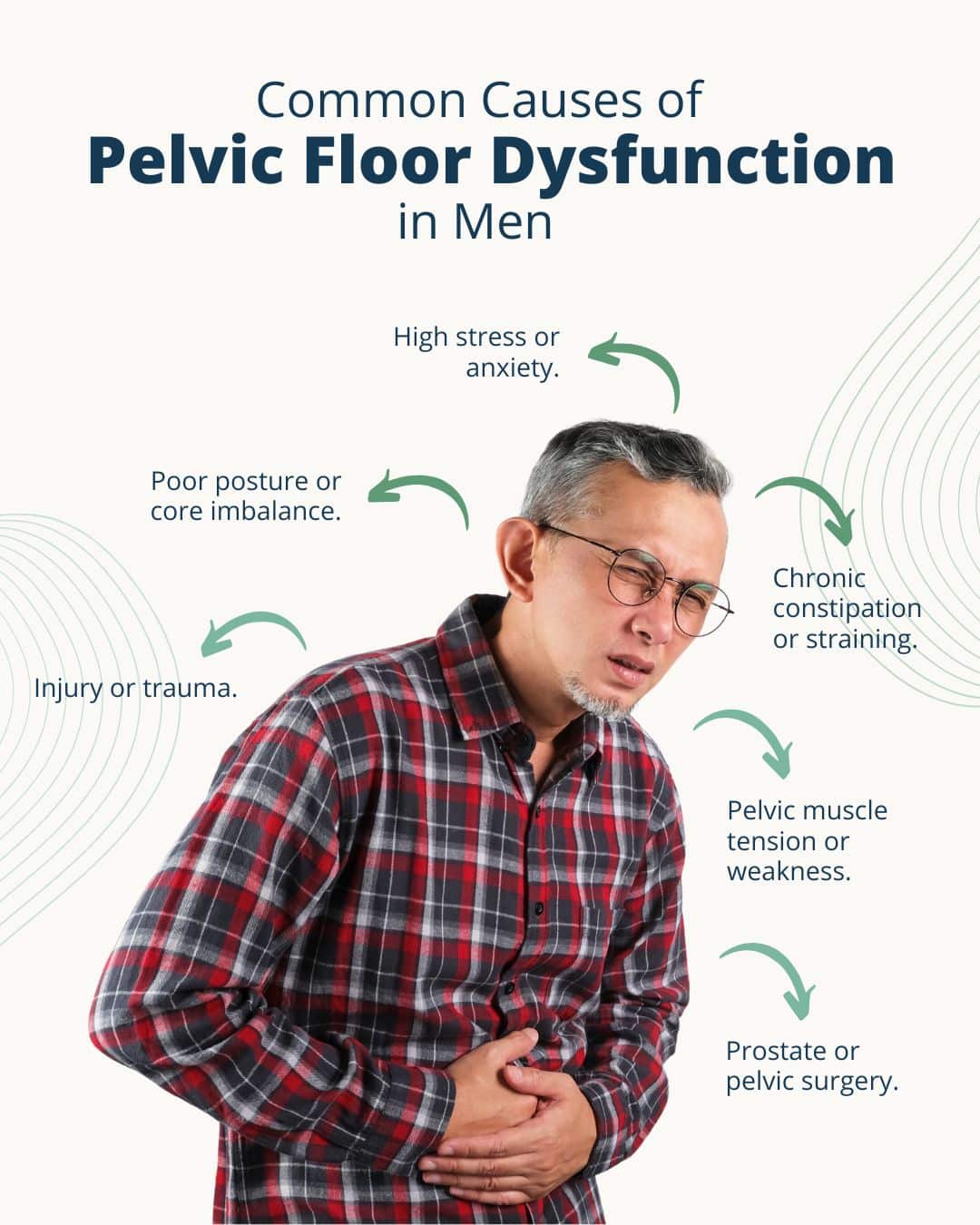
Common Causes of Pelvic Floor Dysfunction in Men
Pelvic floor issues can develop gradually or sometimes seem to appear after an injury, surgery, or period of stress. Most of the time, there’s a combination of physical, emotional, and lifestyle factors involved.
Here are some common contributors:
- Pelvic Muscle Tension or Weakness: Ongoing stress, poor posture, or repeated straining can cause your pelvic muscles to tighten or weaken.
- Prostate or Pelvic Surgery: Surgeries such as prostatectomy can lead to scar tissue or nerve irritation, especially affecting the pudendal nerve.
- Chronic Constipation or Straining: Regular difficulty with bowel movements puts ongoing stress on the pelvic floor.
- Poor Posture or Core Imbalance: Weak core muscles or slouching alters alignment, and your pelvic floor tries to compensate, which can lead to dysfunction.1
- High Stress or Anxiety: Emotional stress often shows up in your body, with the pelvic floor being a common area where tension builds.
- Injury or Trauma: Accidents, falls, or sports injuries can impact the pelvic muscles and nerves, sometimes causing lasting discomfort.
Symptoms of Pelvic Floor Dysfunction in Men
The symptoms of pelvic floor dysfunction can show up in many ways and are often mistaken for other health concerns like chronic prostatitis. Your pelvic region is a complex area, with muscles, nerves, and organs working together—so any disruption can affect everyday comfort, confidence, and even your relationships.
Common signs to look out for:
- Ongoing pelvic, genital, or lower abdominal pain (sharp, aching, or burning)
- A frequent urge to urinate or a feeling of incomplete emptying
- Discomfort after sitting, especially for longer periods
- Pain that feels worse after exercise or activity
- Constipation, trouble passing stool, or pain during bowel movements
- Erectile issues or pain with sexual activity
If you notice these symptoms, know that help is available. You deserve answers and a meaningful path to feeling better.
How Physical Therapy Helps Treat Pelvic Floor Dysfunction in Men
Specialized physical therapy is a cornerstone of true, lasting relief for pelvic floor dysfunction in men. At Ivy Rehab, our approach looks at your whole experience—body and mind included. Our hands-on techniques aren’t just about short-term fixes; they address the source of discomfort so you can move forward with confidence.
Manual Therapy
Your therapy may start with gentle, professional hands-on care to release tension, address scar tissue, and improve movement. This can include focused massage for tight spots (trigger points), help for healing after surgery, or techniques to loosen fascia. Every approach is tailored to what your body needs for sustained relief.1
Pelvic Floor Muscle Training
Not everyone needs Kegels. For many men, the real work begins with helping the pelvic floor relax and move in sync with the rest of the body. After a thorough evaluation, Ivy Rehab therapists understand if your muscles need help relaxing, strengthening, or a bit of both. Tools like biofeedback help you build better control and confidence.
Posture & Core Alignment Work
The pelvic floor works together with your whole core. By supporting better posture and strengthening core and hip muscles, you reduce stress on tight or sore spots and help everything work smoothly. Simple, guided exercises and coaching make daily movement feel easier and less likely to aggravate symptoms.
Breathing & Relaxation Training
Recovery often begins with something as natural as a breath. Tension, anxiety, and pain are all linked, and healthy breathing patterns can break the cycle. Ivy Rehab therapists teach practical breathing techniques—like slow, equal-count inhales and exhales—to help you learn to relax your pelvic muscles and calm your system. Relaxation is more than a feeling; it’s a powerful part of your recovery.2
Education & Lifestyle Adjustments
Getting better is a 24/7 process, not just something that happens in the clinic. That’s why we make sure you have practical strategies for daily life:
- Bowel and bladder tips: Simple habits that help prevent straining or discomfort
- Smart sitting: Posture tips and cushions for more comfortable sitting
- Stress reduction: Everyday mindfulness and strategies to help you relax
- Healthy routines: Nutrition and hydration tweaks for pelvic and gut health
- Movement made easy: Ways to stay active—like walking or swimming—that work for your routine

Personalized Therapy for Lasting Relief
Experience tailored physical therapy programs designed to alleviate pain and restore function.
Benefits of Physical Therapy for Men with Pelvic Floor Dysfunction
You deserve more than temporary relief. Our specialized programs help you reclaim trust in your body and get back to what matters most. The benefits go well beyond easing symptoms.
Here’s what you can look forward to with consistent therapy:
- Relief from Chronic Pain: Enjoy daily life with less pelvic and lower back discomfort.
- Better Bladder & Bowel Control: Experience greater comfort and confidence in daily routines.
- Improved Sexual & Pelvic Function: Restore healthy, pain-free function and regain a sense of normal intimacy.
- Renewed Confidence: Reconnect with what you love—work, family, fitness—with the assurance that comes from feeling better.
Why Choose Ivy Rehab for Men’s Pelvic Health
Your privacy, comfort, and goals are always our priority. At Ivy Rehab, you receive one-on-one care from advanced-trained therapists who specialize in men’s pelvic health. We coordinate with your other healthcare providers to ensure your care is seamless and complete. Most importantly, you’ll always be treated with compassion and respect.
Take the First Step Toward a Healthier You
You shouldn’t have to accept discomfort or pain as your “new normal.” Pelvic floor dysfunction in men is common, but it’s also treatable. With the right team and a tailored plan, you can rediscover comfort, strength, and confidence. If pelvic pain, bladder issues, or any of these symptoms sound familiar, don’t wait. Reach out today to schedule an evaluation with an Ivy Rehab men’s pelvic health specialist. Let’s take the next step forward—together—so you can get back to living life on your terms. Your journey to relief and lasting wellness starts here.
References
- “Pelvic Floor Physical Therapy: What Men Should Know,” Franciscan Health. https://www.franciscanhealth.org/community/blog/pelvic-floor-therapy-men
- Tu FF, Fitzgerald CM, Kuiken T, Farrell K, Van der Velde J, He C. “Physical Therapy for Chronic Pelvic Pain in Men,” The Journal of Urology, 2022. https://pubmed.ncbi.nlm.nih.gov/40954612/

Before you go
Find the right therapy today.
Discover how Ivy Rehab can help you get back to doing what you love.