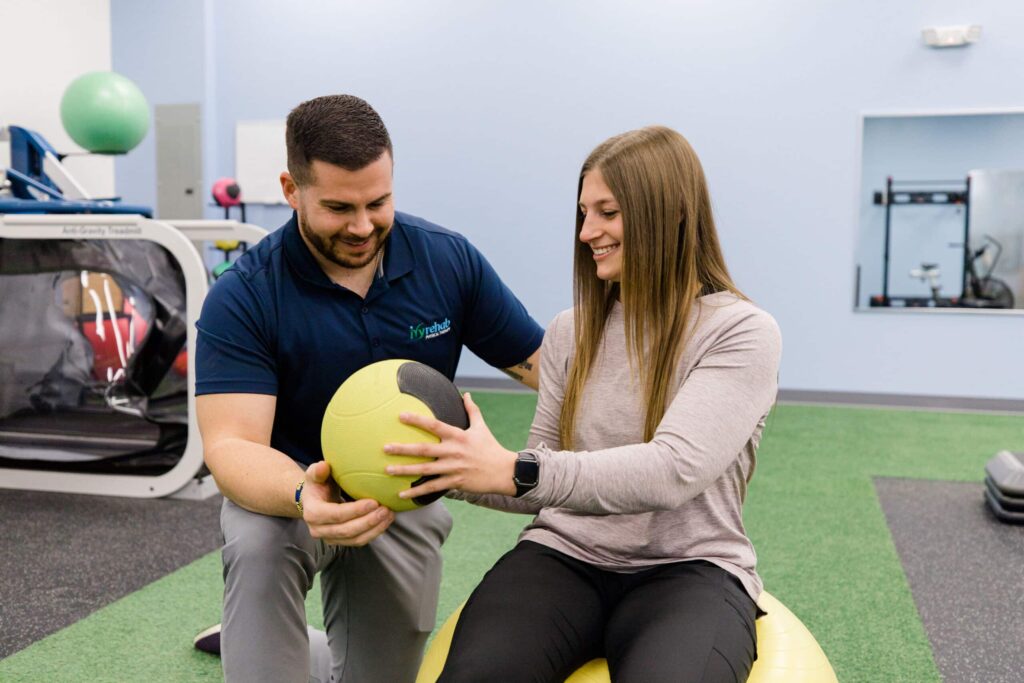
The number of U.S. emergency room visits, pain medication orders, injections, imaging studies, and surgical interventions directed at lower back pain continues to rise. Physical therapists frequently meet people who report their fitness efforts have been hampered by low back pain. Here are five recommendations to help those with lower back pain achieve more success in the gym.
What Not to Do When Your Back Hurts
When your back hurts, the instinct may be to push through discomfort or stretch aggressively. However, certain movements can worsen symptoms and delay recovery. Exercises that involve repeated spinal bending, twisting, or heavy compression may aggravate sensitive tissues such as ligaments, discs, or joints.
For individuals with a herniated disc or a history of spinal surgery, improper weightlifting technique or excessive loading can increase irritation. Poor posture during exercise is another common cause of flare-ups. Maintaining good posture during workouts and daily activities helps reduce strain on the lower back.
Before increasing intensity, listen to your body and avoid movements that reproduce sharp pain or radiating symptoms.
Five Ways To Find Fitness With Lower Back Pain
#1 Do Not Exercise First Thing in the Morning
Ergonomic experts have found that many more industrial lower back injuries happen in the morning. The theory is that the discs in the lower back imbibe, or take in, fluid overnight and are more likely to deform under physical stress. Give your lower back one or two hours of walking around time before starting an exercise session.
#2 Isometric Strengthening of the Spinal Stabilizers
The function of your “core” muscles is to limit movement of the lumbar spine and pelvis. Your abdominal and back muscles work together to support the spine and control movement. When these muscles are weak or poorly coordinated, excessive motion can strain discs and ligaments. Targeted stabilization exercises help reduce strain and improve control without excessive spinal movement.
It’s best to avoid crunches, toes to bar, side bends, sit-ups, and seated twisting. Instead, focus on learning how to perform bird dogs, side hovers, Pallof press, planks, and carries.
Consistently applying this approach could significantly reduce the burden of lower back pain nationwide.
#3 Enhance Function of Hip Flexors and Gluteal Muscles
Eliminate forward spine flexion, toe touching, and spine twisting activities. Greater lumbar spine range of motion is associated with more—not less—lower back pain problems. Learn how to foam roll and mobilize the hip flexors and gluteal muscles. Prolonged sitting and the most popular “cardio training” deaden these muscles. Properly functioning hip flexors and gluteal muscles keep the pelvis stable and take the stress off the lower back. Reawakening dormant gluteals and hip flexors are the magic that resolves long-term lower back pain.
It is also important to address posture outside of the gym. Sitting for prolonged periods with a slouched posture can contribute to stiffness and reduced hip mobility. Improving hip and glute strength can help improve pelvic alignment, which carries over into better posture during daily activities.
#4 Focus on Single Leg Strength Training
Ditch the front-loaded hip hinges, deadlifts, cleans, snatch, and drop the loaded squats. Swear off the lower lumbar deranging leg press. Reduce spinal compression and train the legs, one at a time. Single-leg training reveals the right-left asymmetries that drive lower back pain. Resolving these asymmetries and sparing the spine goes a long way to abolishing back pain.
While reducing spinal compression is helpful during flare-ups, complete avoidance of movement is rarely the answer. Gradual reintroduction of load under supervision can help improve tolerance and resilience in the lower back. The goal is not to eliminate movement forever, but to rebuild strength without aggravating symptoms. You may need guidance on exercise selection and execution—which brings us to #5.
#5 Get Some Help
Exercise is the most powerful medication on the planet. Nothing else comes close. Take the proper dose of appropriate training, and the results will be amazing. Take the wrong dose of inappropriate activity, and the results can be devastating. This is especially true for people with a history of lower back pain. Find a qualified physical therapist to guide you through your fitness journey. One way or another, you will spend time and money on your health. Proactive spending is always cheaper and more beneficial than reactive spending.
We’re Here to Help
If you would like to be seen right away to learn how to set up an exercise program to mitigate your lower back pain, please schedule an appointment at your local Ivy Rehab Physical Therapy clinic.
A physical therapist can assess movement patterns, posture, and strength imbalances to design a program tailored to your goals. By identifying which exercises help reduce pain and which movements aggravate symptoms, therapy provides a structured path back to fitness.With one-on-one care, our therapists develop a personalized program designed for you. Click HERE to find the nearest location to you!

Before you go
Find the right therapy today.
Discover how Ivy Rehab can help you get back to doing what you love.