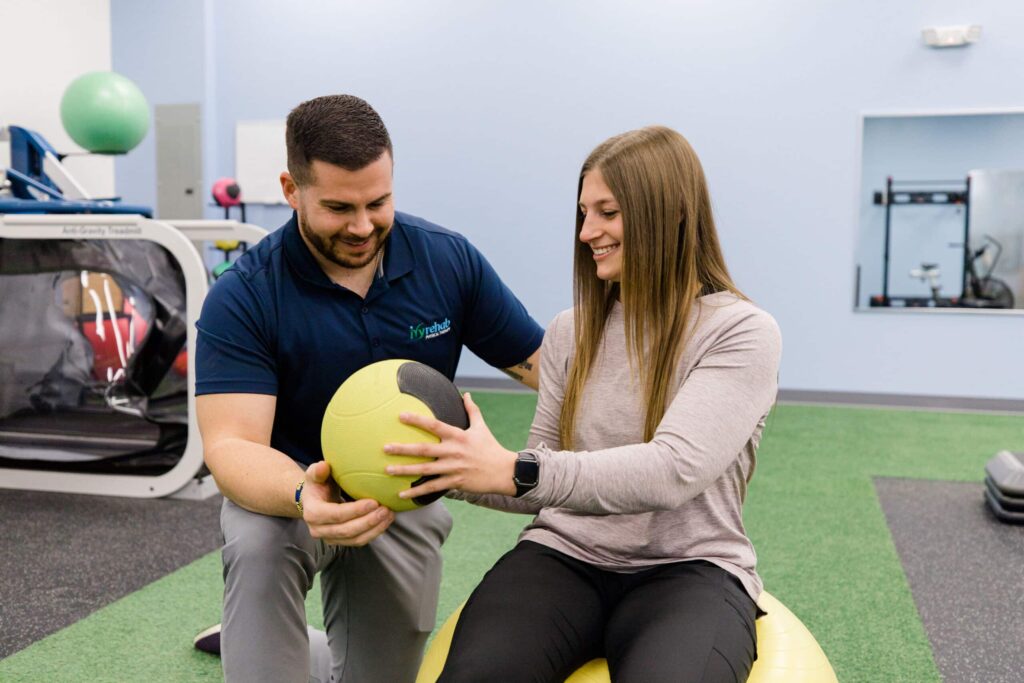
A weak core can affect much more than ab strength. It can quietly influence posture, balance, movement control, and how your body handles everyday stress—often before you even realize what’s happening.
If you’ve ever wondered, “Why is my core so weak?” You’re not alone. Many people start noticing the effects during daily activity, workouts, or while recovering from pain. It tends to show up in subtle ways at first, then gradually becomes harder to ignore.
The good news: this is something you can improve. Physical therapy helps identify weak points, restore core function, and reduce strain on the back and surrounding joints—so you can move with more confidence and a lot less guesswork.
What Does It Mean to Have a Weak Core?
A weak core means the muscles that support your spine, trunk, and pelvis are not providing enough strength or stability during movement.
Your core is not just your abdominal muscles. It includes deep core stabilizing muscles, your back, your diaphragm, and even your hips. These muscle groups work together to control posture and movement.
When the system isn’t working well, other parts of the body often compensate.

Can a Weak Core Cause Back Pain?
Yes, a weak core can cause back pain, especially in the lower back.
Without adequate trunk support, the spine bears greater stress during sitting, standing, lifting, and exercise. Over time, this can lead to fatigue, tightness, and discomfort.
Many people dealing with chronic discomfort are experiencing how a weak core can cause lower back pain without realizing it.
6 Common Signs of a Weak Core
Weak core muscles often show up through common movement problems and recurring discomfort.
Here are some of the most common ways it tends to show up:
Lower Back Pain
One of the most common signs of a weak core is ongoing lower back discomfort.
When the core isn’t supporting the spine well, the lower back muscles overwork to compensate. This can lead to tightness, fatigue, or pain during everyday activity.
Poor Posture
Slouching or difficulty sitting upright for long periods often points to reduced postural core support.
Without endurance in the trunk muscles, it becomes harder to maintain good posture and alignment throughout the day.
Balance Issues
Feeling unsteady on one leg or during movement can signal poor core control.
The core plays a key role in stabilizing the body during dynamic tasks. When it’s weak, balance often suffers.
In fact, a systematic review and meta-analysis found that core training improved balance outcomes with a large overall effect, highlighting how targeted strengthening can directly support stability and movement control.
Difficulty With Everyday Movements
Simple activities or tasks may feel harder than they should when core stability is limited.
Examples include:
- Getting up from a chair.
- Carrying groceries.
- Bending or reaching.
These movements rely on the core’s ability to coordinate force across the entire body.
Lack of Endurance During Workouts
If exercises like planks, squats, or lunges feel exhausting quickly, the issue may be a lack of core endurance.
This doesn’t always mean you’re out of shape. It can mean your core muscles are not sustaining effort effectively.
Frequent Injuries
Recurring strain in the lower back, hips, or knees may be linked to a weak core.
Without proper trunk stability, joints and muscles absorb more stress than they should. Muscles help compensate for this instability, but only up to a point.
Why Is My Core So Weak?
Core weakness can develop for several reasons, and it’s rarely just one factor.
Common contributors include:
- Prolonged sitting or inactivity.
- Poor posture habits.
- Returning to activity after injury.
- Exercise programs that focus on intensity over control.
Pain can also reduce muscle activation, disrupting movement patterns and creating a cycle of weakness and compensation.

How to Fix a Weak Core
Improving a weak core takes more than basic core exercises like sit-ups or crunches. It requires building control, stability, and strength in a progressive way.
Here’s how that progression typically begins:
Start With Core Stability
Begin with exercises that focus on control and alignment:
- Dead bugs.
- Modified planks.
- Bird dogs.
These movements teach your body how to stabilize the spine without excessive strain, building a strong core foundation over time.
After practicing these consistently, you should feel better control during both exercise and daily movement.
Progress to Functional Strength
Once stability improves, progress to movements that reflect real-life demands.
This may include:
- Squats and hinges with proper form.
- Carrying movements.
- Single-leg balance and control exercises.
The goal is to build strength that carries over into daily activity and sport.
Personalized Therapy for Lasting Relief
Our expert therapists are committed to helping you achieve your health goals.
How Physical Therapy Helps
Physical therapy looks at how your core functions within your entire movement system.
Here’s what that process usually includes:
Assessment and Movement Analysis
A PT evaluates:
- Posture and alignment.
- Trunk control and endurance.
- Balance and coordination.
- Breathing patterns and muscle activation.
This helps determine why your core feels weak and where to focus.
Personalized Exercise Progression
Your plan is based on your body, not a generic program.
Treatment may include:
- Targeted stability and strength exercises.
- Movement retraining for daily tasks.
- Gradual progression toward activity or sport.
This approach improves results while reducing the risk of aggravation.
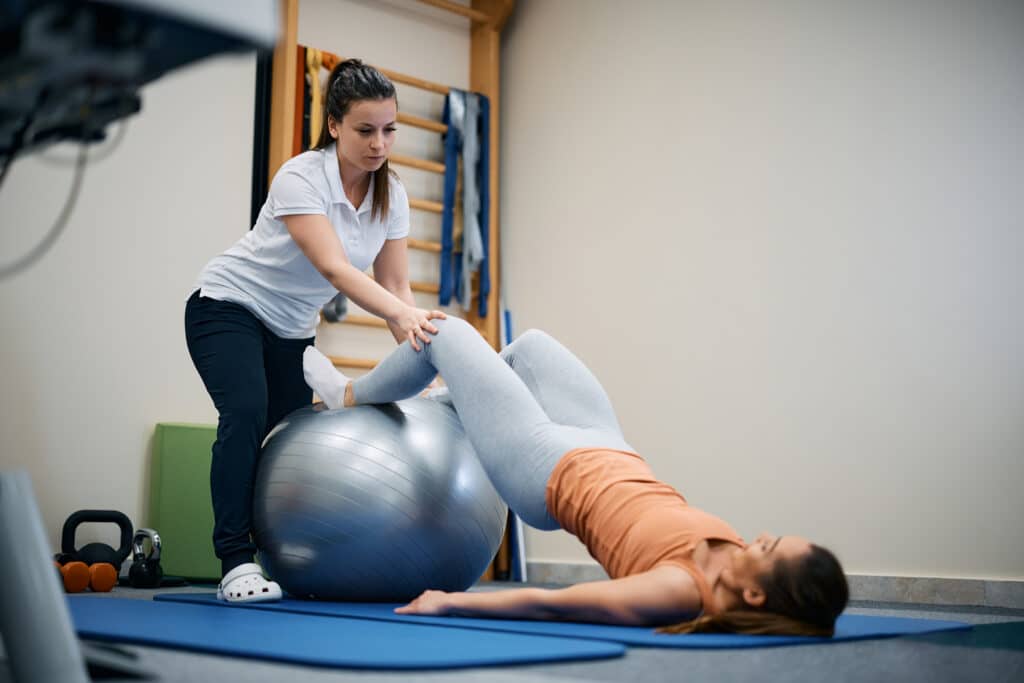
Why Choose Ivy Rehab for Core Strengthening
Ivy Rehab provides personalized, non-surgical care focused on improving movement, not just symptoms.
Care includes:
- One-on-one evaluation and guidance.
- Customized exercise programming.
- Focus on long-term strength and control.
This helps patients build a stronger foundation for everyday life and activity.
Rebuild Your Core, Reclaim Your Movement
The signs of a weak core often show up in posture, balance, endurance, and back comfort. These changes can affect how you move and how your body feels day to day.
With the right approach, core strength and stability can improve. A structured plan guided by physical therapy helps you build support, reduce strain, and move with more confidence over time.
If a weak core is making everyday movement feel harder than it should, you do not have to work through it alone. The right plan can help you build strength, improve control, and move with more confidence.
Find an Ivy Rehab Therapy location near you to get started with a personalized core-strengthening and movement-support plan.
References
- Rodríguez-Perea, Á., et al. (2023). Core training and performance: a systematic review with meta-analysis. Biology of Sport. https://pmc.ncbi.nlm.nih.gov/articles/PMC10588579/
- Mayo Clinic. “Exercises to improve your core strength.” Accessed Aug. 25, 2023. https://www.mayoclinic.org/healthy-lifestyle/fitness/in-depth/core-strength/art-20546851
- Hodges, P.W., Richardson, C.A. Core stability exercise principles for low back pain. Journal of Orthopaedic & Sports Physical Therapy. https://pubmed.ncbi.nlm.nih.gov/18296944/

Before you go
Find the right therapy today.
Discover how Ivy Rehab can help you get back to doing what you love.