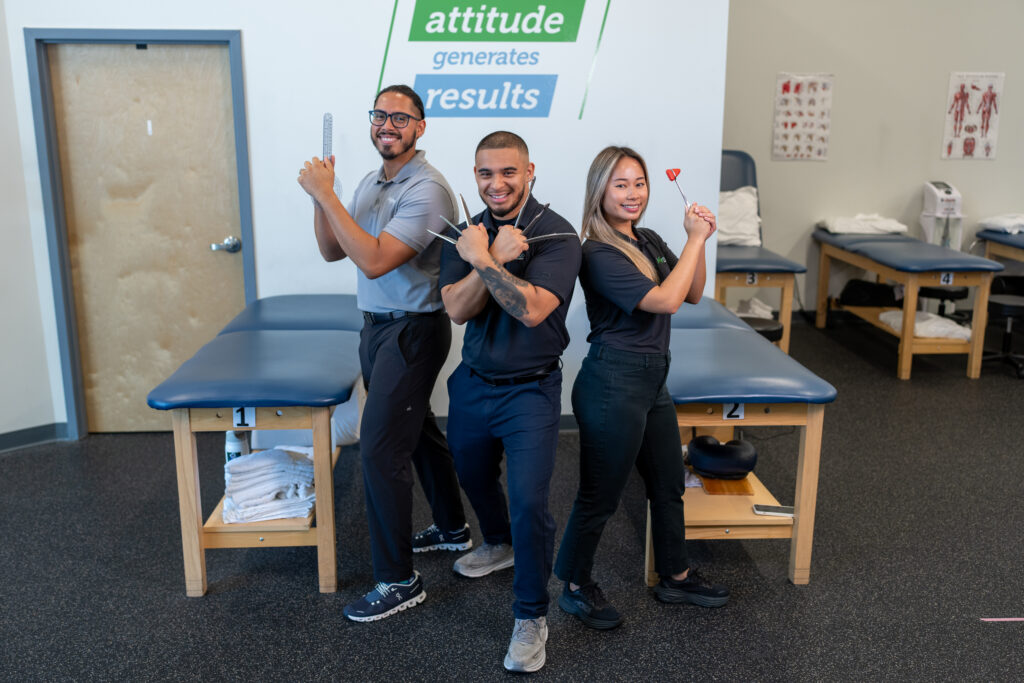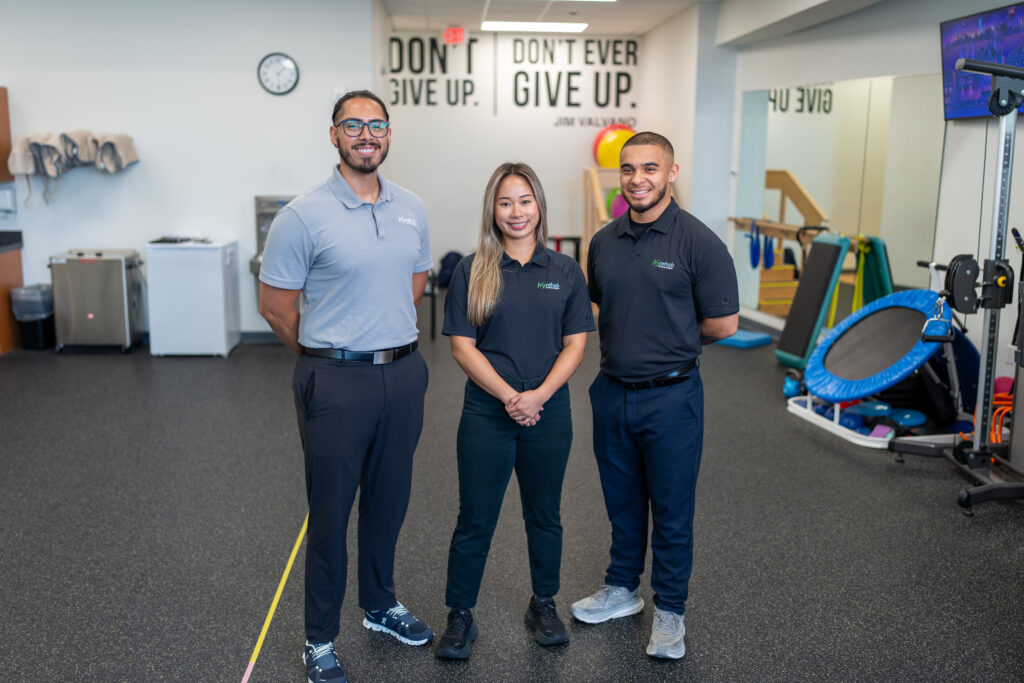
Starting your first clinical role can bring up a lot at once: excitement, nerves, pride, pressure, and at least a few moments that make you realize school did not, in fact, hand out a script for this part.
You studied. You completed rotations. You passed exams. You built your clinical foundation. Then day one arrives, and everything gets more real, fast. You’re meeting patients, making decisions in the moment, documenting care, navigating insurance, building trust, and trying to become the kind of clinician you hoped you’d be, usually all before lunch.
Ivy’s social media manager and host of “Clinically Speaking,” Bismarie Plasencia, sat down with Alexis Del Palazo, a clinic director and partner; Brena Mson, a speech-language pathologist; Christa Hefner, a clinic director and doctor of physical therapy; and Heather Ayanelli, senior manager of university relations, to talk about what they wish they knew when they were just starting out.
The “Oh No” Moments Are Part of the Process
Every new grad clinician has a moment when they look up from the textbook and think, “Cute plan. Now let’s see what real life has to say about it.”
For Brena, one early “oh no” moment came while working with a child who had big emotions and didn’t want to transition into the planned activity. As she put it, “A simple ‘Okay, come on, let’s go play’ quickly turned into, ‘No, I don’t want to.’”
What seemed simple in theory quickly became a real-time lesson in flexibility, collaboration, and helping a child feel supported through the moment. As Christa put it, “You overthink every single detail.”
Alexis added another part of the new-grad experience that can catch people off guard: “I remember just being so surprised at the emotional weight that I felt.” For many clinicians, the challenge is not only clinical. It’s also the shift in energy, responsibility, and emotional load.
Those moments can feel brutal when you’re new. They’re also some of the fastest teachers in the room. Good clinical care is not just about knowing the material. It also takes judgment, humility, and the ability to pause, ask for help, and lean on the people around you.

What School Does Not Always Prepare You For
School builds a strong foundation, but the first few weeks in the clinic are usually where you find out which parts of the job live in the syllabus and which parts absolutely do not.
As Brena put it, “I could write a really good soap note.” But when it came to billing, coding, and insurance, there was still a lot to learn.
Alexis said it plainly: “When it came to coding and how to really show the value of the care that I was delivering, I had no clue.” Christa echoed that same challenge, noting that “different insurances ask different things.”
In other words, the clinical work is only part of the job. New grads also have to learn how to show progress clearly. Objective findings, outcome scores, range of motion, and other metrics help make that progress visible in a way insurance can actually follow.
For students preparing for this transition, Ivy Rehab student programs offer structured clinical experiences that help bridge the gap between school and practice.
Confidence Builds One Question at a Time
Imposter syndrome is common in healthcare, and it has impeccable bad timing.
Brena shared that it returned when she moved from one Ivy clinic to another. Even though she was still within the same organization, a new environment, new team, and new routines brought familiar doubts back to the surface.
As she put it, “Wait a minute, am I doing it right? They’re doing it differently than I am?” She added, “I feel like it comes in waves.”
Alexis explained that imposter syndrome can shift over time. Early in her career, it showed up clinically. Later, it appeared again as she stepped into new roles, responsibilities, and leadership opportunities.
Christa shared a similar experience when she completed a dry needling course and treated her first dry needling patient afterward. Even with training, it made her feel “like being a new grad all over again.”
Mentors, teammates, and colleagues can make those moments a lot easier to navigate. Brena described that mindset shift well: “These are my teammates, and I can learn from them.”
That’s where a lot of early confidence starts. Not in pretending you know everything, but in learning out loud, talking through patient cases, and remembering you’re not supposed to figure it all out alone.
That’s also why new grad mentorship can make such a meaningful difference in those first months of clinical practice.

Documentation Does Not Have to Be Two Pages Long
Documentation is one of the biggest non-clinical skills new grads have to figure out, and almost nobody feels good at it right away.
Brena said that in school, clinicians often learn to write long, highly detailed notes. In practice, she realized notes can still be effective without turning into a short novel. Strong documentation should be clear, concise, useful, and easy to follow.
The group also discussed Scribe IQ and how technology can support more efficient documentation. For Christa, it took her a few weeks to really start using it, but once she did, it became “a game changer.”
Patient Communication Is a Skill You Build With Practice
One of the hardest parts of early clinical practice is learning how to explain care clearly without sounding like you swallowed a textbook.
Alexis brought another layer to that challenge. As she put it, “I want to give the patients the why of what we’re doing and why we’re doing it.” Early on, part of the difficulty wasn’t just explaining care well, but trusting herself enough to know she was giving patients what they needed in the moment.
Christa remembered catching herself using too much medical terminology after school and boards. Patients would look at her like, “Wait, what?” and she realized, as she put it, “I need to put it down in easier terms.”
Over time, those conversations get easier. You learn how to read the room, slow down, and meet each person where they are instead of giving the world’s most accurate explanation to someone who understandably just needs the simple version.
Rapport Is Part of the Intervention
One of the strongest themes from the conversation was also one of the most human: relationships matter.
Christa put it simply: “I like to talk about life with the patients.” She builds trust by getting to know people, not just their diagnoses. She talks with them about life, asks about their weekends, remembers important events, and creates the kind of connection that helps patients feel comfortable.
Brena agreed, joking that she is a “professional yapper” because she talks with kids for a living. For her, authenticity matters.
Therapy becomes more meaningful when clinicians understand what motivates a child, what excites them, and how care can connect to the things they love.
Alexis described trust-building as “meeting people where they are.” Sometimes that means adjusting your communication. Sometimes it means realizing a patient can only take in one thing that day and letting that be enough.
Rapport isn’t extra. It’s part of the work. When patients feel heard and supported, they’re more likely to stay engaged and work toward their goals.

What Actually Matters More Than Being Perfect
New grads often spend a lot of energy trying to find the perfect intervention, collect the perfect data, or get every detail exactly right. Over time, many clinicians realize that patient care often calls for something a little messier and a lot more human.
In pediatric care, Brena used to stress about collecting exact data on every utterance or every instance. Over time, she learned that rapport may need to come first.
If a child needs time to trust you before they fully participate, that matters. A few sessions with less concrete data may still be a meaningful part of the process if they help the child feel safe and excited to return.
Brena captured that shift well when she said, “rapport is part of your intervention.”
Strong clinicians stay curious, respond to the person in front of them, and keep learning as they go. The best care often comes from paying close attention, adjusting with purpose, and not letting one imperfect session convince you the whole day was a disaster.
Advice for Your First Day in the Clinic
By the end of the conversation, the advice got refreshingly simple. No grand speech. No fake confidence. Just the kind of reminders new clinicians actually need:
- Give yourself grace. This is new, and it will get easier.
- Ask for help. You’re still learning, and that’s expected.
- Be confident. As Christa said, “You know more than you think you do.”
- Lean on your team. Mentors and teammates are there to help.
Heather may have said it best: “Everyone has had a day one.”
Your First Day Can Lead Somewhere Meaningful
Your first day in the clinic isn’t a final exam. It’s the beginning of a career shaped by learning, connection, and the people you get to help along the way.
If you’re ready to grow with support from day one, explore Ivy Rehab’s New Grad Mentorship Program or available positions at Ivy Rehab.
Watch the full episode: Clinically Speaking: Day 1 in the Clinic: What We Wish We Knew as New Grad
References
- U.S. Bureau of Labor Statistics. “Physical Therapists.” (2025). https://www.bls.gov/ooh/healthcare/physical-therapists.htm
- U.S. Bureau of Labor Statistics. “Speech-Language Pathologists.” (2025). https://www.bls.gov/ooh/healthcare/speech-language-pathologists.htm

Before you go
Find the right therapy today.
Discover how Ivy Rehab can help you get back to doing what you love.