
BioSway Balance Assessment and Training
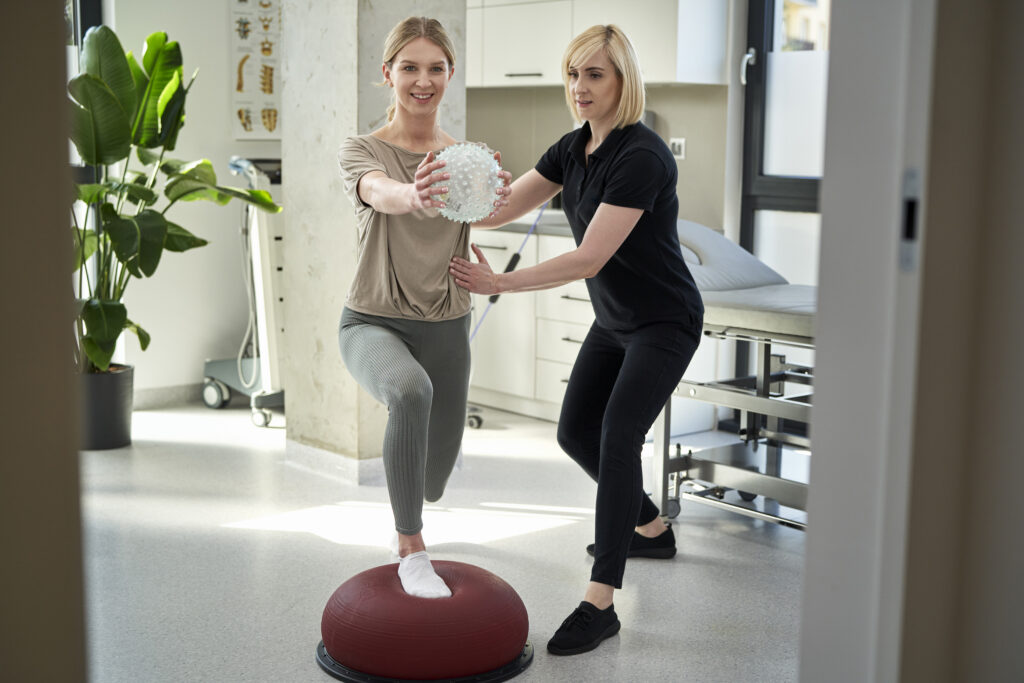
Balance problems can affect walking, stability, and confidence during everyday activities. BioSway balance assessment and training helps physical therapists evaluate balance impairments, guide treatment, and track progress throughout rehabilitation.
Ivy Rehab physical therapists use BioSway as part of a broader therapy plan to assess balance, guide training, and track progress over time.
What Is BioSway?
BioSway is a portable balance assessment and training system. It uses an instrumented platform and touchscreen display to help measure and train postural stability, which is the body’s ability to stay steady during standing or movement.
During a BioSway assessment, you stand on the platform while the system measures how your body shifts to maintain balance. Your physical therapist may use different testing conditions, such as standing with your eyes open or closed, to better understand how your balance system responds.
Balance depends on several systems working together. These include vision, the inner ear, muscle strength, joint awareness, reaction time, and the body’s ability to sense position in space.
BioSway gives your physical therapist objective data to help guide care. It can also be used during training, with visual feedback and interactive exercises that help you practice balance control in a focused way.
BioSway at Ivy Rehab
BioSway is not used on its own. It’s one tool your physical therapist may use as part of a full evaluation and treatment plan.
Your physical therapist may recommend BioSway if balance, stability, fall risk, gait, concussion recovery, or lower extremity control is part of your therapy plan. The assessment helps create a baseline, so progress can be measured over time.
BioSway can help your physical therapist see how you shift your weight, how steady you are in different conditions, and how your balance changes with training. Those findings can guide exercises for strength, coordination, vestibular control, walking, and functional movement.
The goal is to make balance care more specific, not more complicated.
Who Can Benefit From BioSway?
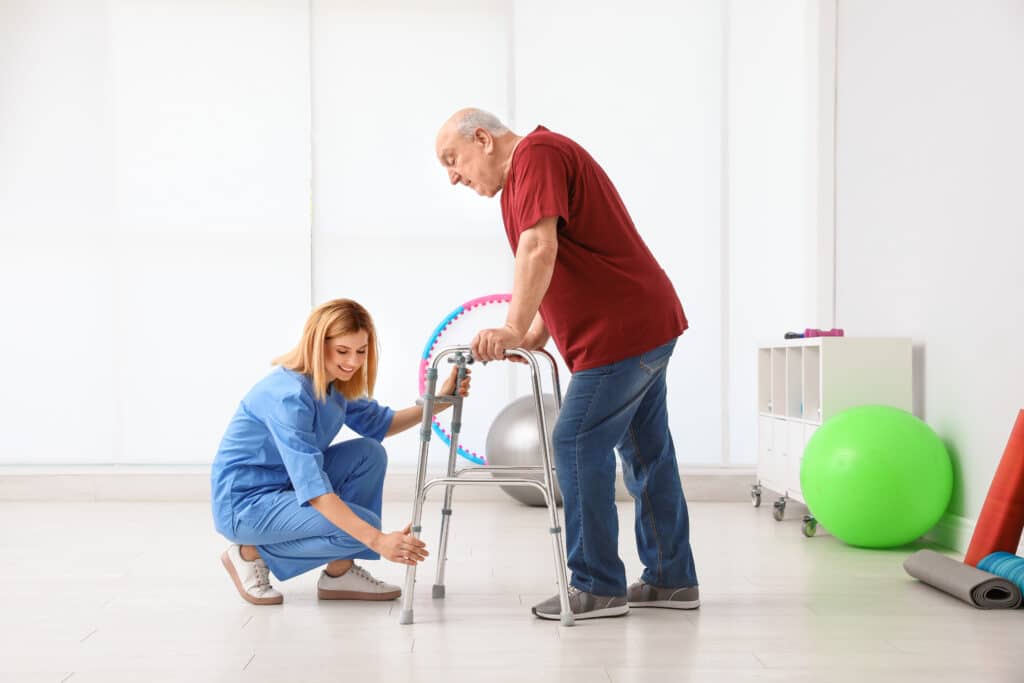
BioSway may help people who need a balance assessment, fall-risk screening, gait training, or balance-focused rehab.
BioSway may be helpful if you:
- Have concerns about balance or falling.
- Have had a fall or near fall.
- Are recovering from a concussion.
- Have dizziness, vestibular symptoms, or inner ear-related balance problems.
- Have Parkinson’s disease, stroke, or another neurological condition that affects balance.
- Are recovering from lower extremity surgery or injury.
- Have an ankle, knee, hip, or foot injury that affects stability.
- Are an athlete who needs balance training or return-to-activity support.
- Feel less steady walking, turning, standing, or moving on uneven surfaces.
If balance concerns are affecting how confidently you move, an objective assessment can help your physical therapist decide where to start.
Our BioSway Services
Balance Assessment and Fall Risk Screening
BioSway can help measure postural sway, weight shifting, and stability during balance tasks. These measurements give your physical therapist a clearer picture of how your balance system works.
For people concerned about falling, BioSway may be used as part of a fall risk screening. Your physical therapist can combine the results with strength testing, walking assessment, medical history, and functional movement testing to build a more complete plan.
Concussion Management and Return-to-Activity Support
Balance testing can be one part of concussion care. BioSway may help your physical therapist measure changes in balance after a concussion and monitor progress as symptoms improve.
For athletes, BioSway results may support return-to-activity planning, but they don’t make that decision alone. Your physical therapist will use balance data along with symptoms, medical guidance, sport demands, and other clinical findings.
Balance Training Programs
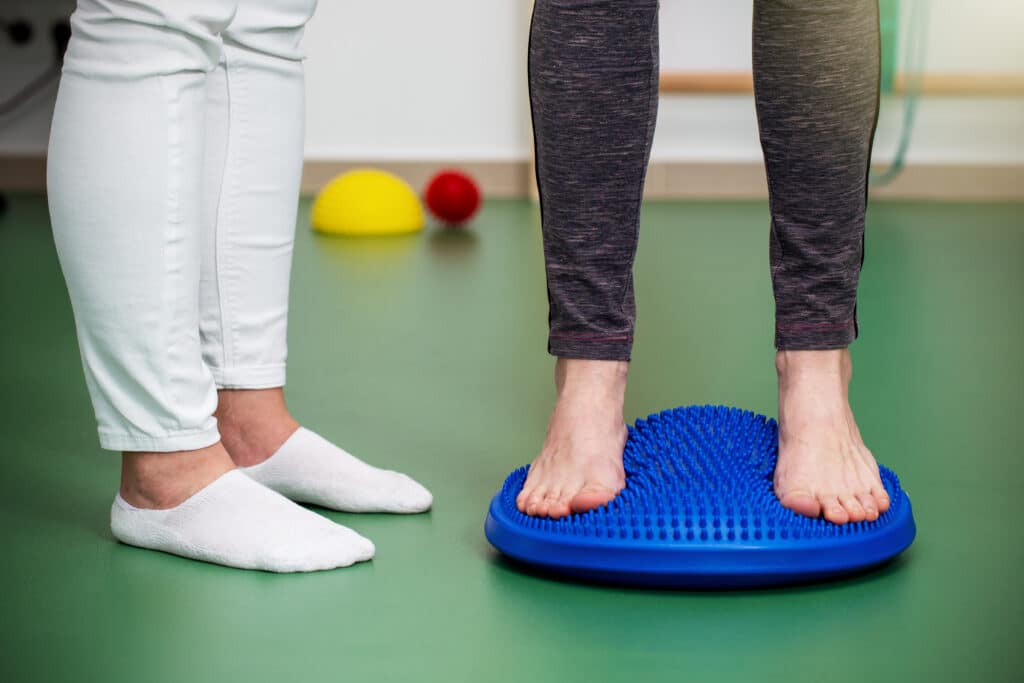
BioSway can also be used for balance training. The system may provide visual feedback that shows how your body shifts during standing or movement tasks.
That feedback can help you practice weight shifting, postural control, coordination, and steadiness. Your physical therapist may combine BioSway training with strengthening, walking practice, vestibular exercises, and real-life balance tasks.
Neurological Balance Support
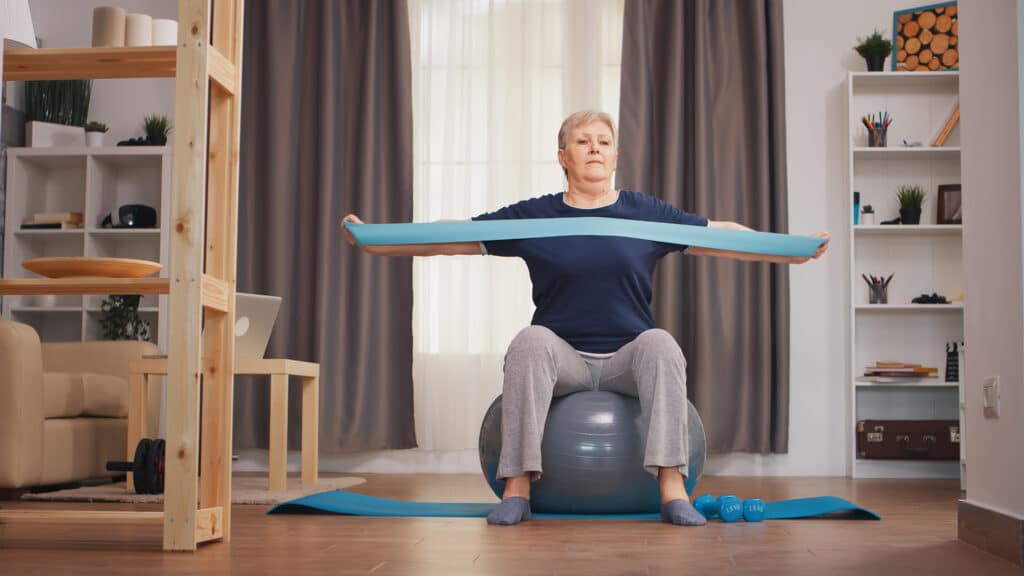
Neurological conditions can affect how the body controls balance, posture, walking, and movement. BioSway may help your physical therapist assess balance and guide training for people with conditions such as Parkinson’s disease, stroke, or other neurological concerns.
The goal is to practice safe, supported balance challenges that match your ability. Your therapist may focus on weight shifting, posture, stepping, walking, reaction time, and confidence with daily movement.
Lower Extremity and Post-Surgical Balance Training
Injuries or surgeries involving the foot, ankle, knee, hip, or leg can affect balance and body awareness. Even after pain improves, the body may need to practice using the injured area again.
BioSway may help your physical therapist assess stability and guide balance training during recovery. It may be used alongside a range-of-motion work, strengthening, gait training, and functional exercises.
How We Approach BioSway Assessment and Training
Step 1: Balance Evaluation
Your physical therapist starts by learning about your symptoms, health history, falls, injuries, surgeries, dizziness, activity level, and goals.
If BioSway is appropriate, they’ll guide you through balance testing on the platform. Your therapist will stay with you during testing and select tasks that align with your safety needs and ability level.
Step 2: Targeted Balance Training
After the assessment, your physical therapist uses the results to shape your therapy plan. Training may focus on strength, weight shifting, coordination, walking, visual control, vestibular input, or body awareness.
BioSway exercises can be used with real-time feedback to help you see and adjust your movement. Your therapist may also add floor-based balance exercises, stepping drills, strength work, and daily movement practice.
Step 3: Progress Tracking and Reassessment
As therapy continues, BioSway may be used again to track changes in balance and stability. The reassessment helps your physical therapist to see what is improving and where more work may be needed.
Progress isn’t measured by one score alone. Your therapist will also consider how you feel, how you move, your confidence, your safety, and your ability to return to daily activities, work, or sports.
FAQs
Can BioSway Help Prevent Falls?
BioSway can support fall prevention by helping identify balance concerns and guide targeted training. It does not prevent falls by itself.
Your physical therapist may use BioSway results to build a plan that includes strength, walking practice, balance exercises, home safety education, and movement strategies. Together, those pieces can help reduce fall risk and build confidence.
How Is BioSway Different from Other Balance Tests?
Many balance tests rely on observation, timing, or simple movement tasks. Those tests can still be useful.
BioSway adds objective measurements. It can help track postural sway, weight shifting, and balance performance over time. Your physical therapist may use BioSway results along with other tests to get a fuller picture of your balance and movement.
How Many BioSway Sessions Will I Need?
The number of sessions depends on why you are using BioSway, your starting point, your goals, and how your balance responds to therapy.
Some people may use BioSway mainly for assessment and progress checks. Others may use it regularly as part of balance training. Your physical therapist will explain how it fits into your care plan.
Is BioSway Only for Older Adults?
No. BioSway can be used for many people, including older adults, athletes, people recovering from concussion, patients with neurological conditions, and people recovering from lower extremity injury or surgery.
The reason for using BioSway depends on your needs. For one person, the goal may be fall risk screening. For another, it may be balance training after an ankle injury or return-to-sport support after a concussion.
What Does a BioSway Balance Assessment Involve?
A BioSway assessment usually involves standing on a platform while the system measures how your body moves to stay balanced. Your physical therapist may ask you to stand in different positions or under different conditions, such as with your eyes open or closed.
Your therapist will be nearby throughout the assessment. They’ll explain what to do, monitor your safety, and use the results to help guide your care plan.

Take the first step toward relief.
You don’t have to live with back pain. Ivy Rehab’s expert team is ready to help you move better, feel stronger, and enjoy life without limitations. Schedule an appointment today for the best treatment for back pain.