

Blood Flow Restriction
Blood flow restriction (BFR) is FDA-approved to be a safe and effective system that trained medical professionals can use to help patients improve muscle strength.
What is blood flow restriction?
Blood Flow Restriction therapy has been around since 1966 but has recently gained significant traction in recent years—particularly among physical therapists, athletic trainers, and rehabilitation specialists. A surge in clinical research over the past decade has helped validate its effectiveness, especially following its early use by military personnel recovering from traumatic injuries. Today, BFR is also widely adopted by collegiate and professional athletes as part of their strength and recovery programs.|
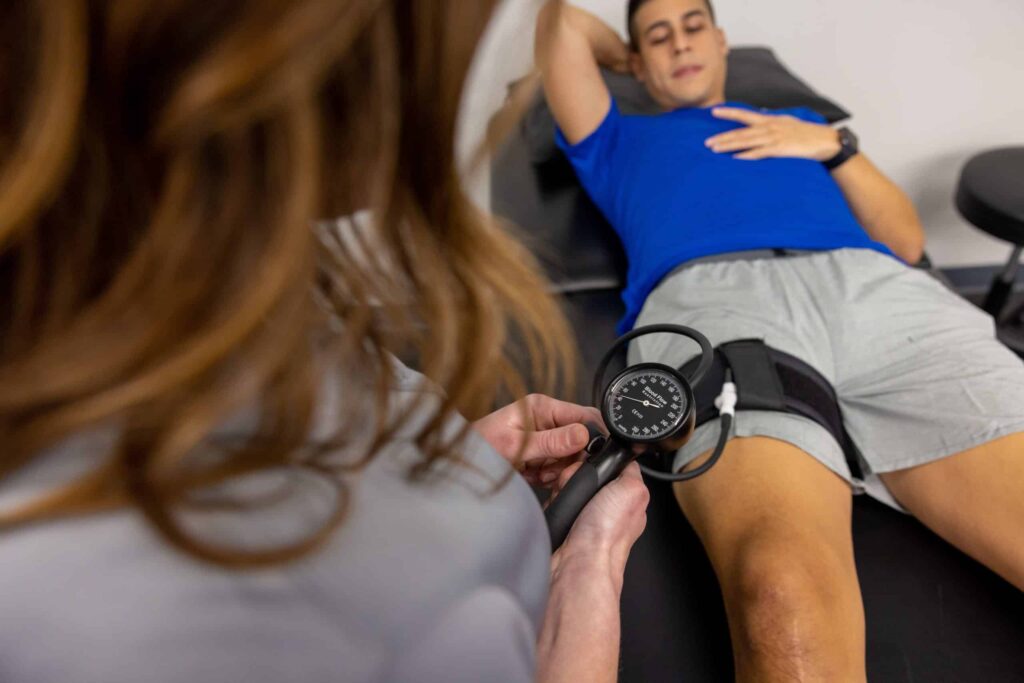
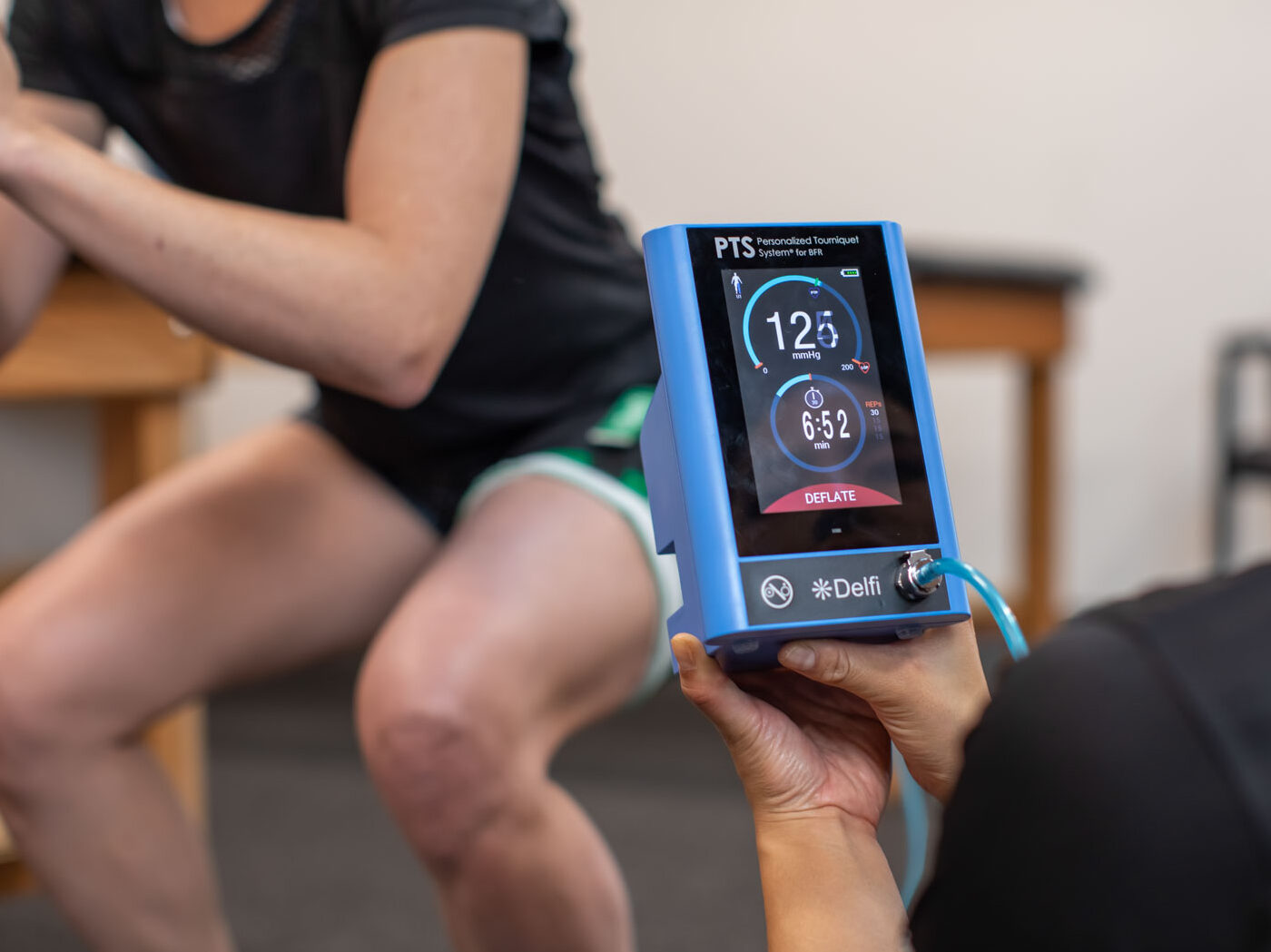
Blood flow restriction (BFR) is FDA-approved to be a safe and effective technique when performed by trained medical professionals using FDA-cleared devices. It is done by using pneumatic tourniquet-like cuffs used to restrict blood to the limb. Doing so decreases the amount of blood that returns through the veins. This restriction reduces venous return while maintaining arterial inflow, creating an environment within the muscle that promotes strength and hypertrophy without placing excessive stress on the joints.
BFR mimics the anaerobic environment of high-intensity exercise at 20-30% of a person’s 1 rep max—making it ideal for patients who are unable to tolerate heavy loads during recovery.


How does it work?
BFR uses specialized cuffs that are applied to a patient’s injured arm or leg. The cuff is then inflated to a specific pressure, based upon the patient’s arterial flow. Once blood flow is restricted, personalized strengthening exercises are performed at high repetitions and low weight. Request an appointment.
This controlled restriction creates an internal environment similar to high-intensity training, even though the external load is much lighter. As a result, patients can achieve strength and hypertrophy benefits while minimizing stress on joints, tendons, and healing tissues. BFR is especially effective for individuals recovering from surgery or injury, or those who cannot tolerate traditional heavy-load exercise.
What are the benefits of BFR? Individualized services include:
- Gain muscle
- Improve muscle endurance
- Increase muscle power
- Faster return to function after injury
- Prevent injury
- Reduce recovery time
- Helping prevent re-injury during recovery
- Building muscle strength with lower loads

Who can benefit from BFR?
The risks associated with BFR are similar to the risks associated with general exercise, thus making it useful for a wide population, including those recovering from injury or surgery. BFR is beneficial for conditions such as:
- Sport-specific training
- Arthritis
- Deconditioning
- Post-op ACL
- Fractures
- Muscle sprains/strains
- RTC surgery
- Elbow tendonitis
- Post-op total knee and hip replacements
Request an appointment today to see how one of our BFR-skilled physical therapists can help you!
FAQs
Can BFR be used if I have arthritis?
Yes—BFR is especially helpful for patients with arthritis who want to build strength but can’t tolerate high-impact or heavy-load exercises. It allows safe muscle strengthening while protecting painful joints.
How long is a BFR therapy session?
BFR training is typically performed in 15–30 minutes and is incorporated into your overall physical therapy session. Your therapist will determine how often and how long BFR should be used based on your condition and goals.
Is Blood Flow Restriction Therapy safe?
Yes—BFR is FDA-approved and considered safe when administered by a trained professional. The risks are minimal and similar to general exercise. At Ivy Rehab, we use validated equipment and protocols to ensure your safety during every session.

Find the right therapy today.
Discover how Ivy Rehab can help you achieve your therapy goals.
