


Developmental Delays
Helping Kids Reach Milestones – One Step at a Time
Early support makes a big difference. We help children build confidence and skills through fun, play-based therapy.
What Are Developmental Delays?
Every child grows at their own pace. But there are some signs that extra support might be needed.
Understanding Developmental Delays
Developmental delays occur when a child does not reach age-appropriate milestones in one of more areas, including:
- Gross motor skills (movement and balance)
- Fine motor skills (hand use, grasping)
- Speech and language
- Social and emotional development
- Cognitive or problem-solving skills
Delays can be temporary or ongoing — and early therapy can make a big difference in long-term outcomes.

Common Causes of Developmental Delays
While sometimes the cause is unknown, delays may be related to:
- Premature birth or low birth weight
- Genetic or neurological conditions
- Speech or hearing difficulties
- Autism spectrum disorder (ASD)
- Lack of early exposure to movement or language
- Environmental factors or early trauma
At Ivy Rehab for Kids, our therapists empower children to build on their unique strengths. Whether supporting one skill or many, we collaborate with families to nurture growth, confidence, and independence through individualized, play-based therapy.

Signs Your Child May Benefit from Developmental Delay Therapy
Not sure if your child’s development is on track? Some signs to watch for include:
- Missed gross motor milestones (not sitting by 9 months, not walking by 18 months)
- Speech delays (no babbling by 12 months, fewer than 50 words by age 2)
- Delayed fine motor milestones (not reaching by 9 months, not grasping by 12 months)
- Difficulty with coordination, frequent falling
- Trouble using hands together or with fine motor tasks
- Sensory sensitivities to touch, textures, or noise
- Short attention span or difficulty following directions
- Limited social interaction or delayed play skills
How Pediatric Therapy Can Help
At Ivy Rehab for Kids, we offer comprehensive pediatric therapy that targets your child’s unique strengths and needs. Therapy begins with a thorough evaluation and a personalized plan created with family input.
Our team includes:
- Occupational Therapists (OTs) – support fine motor skills, play, self-care, sensory processing, and feeding
- Physical Therapists (PTs) – improve movement, strength, balance, gross motor development and coordination
- Speech-Language Pathologists (SLPs) – support speech, understanding, social communication, and cognitive skills
Therapy starts with a comprehensive evaluation and always includes family input, age-appropriate activities, and personalized goals.
Therapy May Include:
- Hands-on activities that target milestone development
- Sensory play and integration strategies
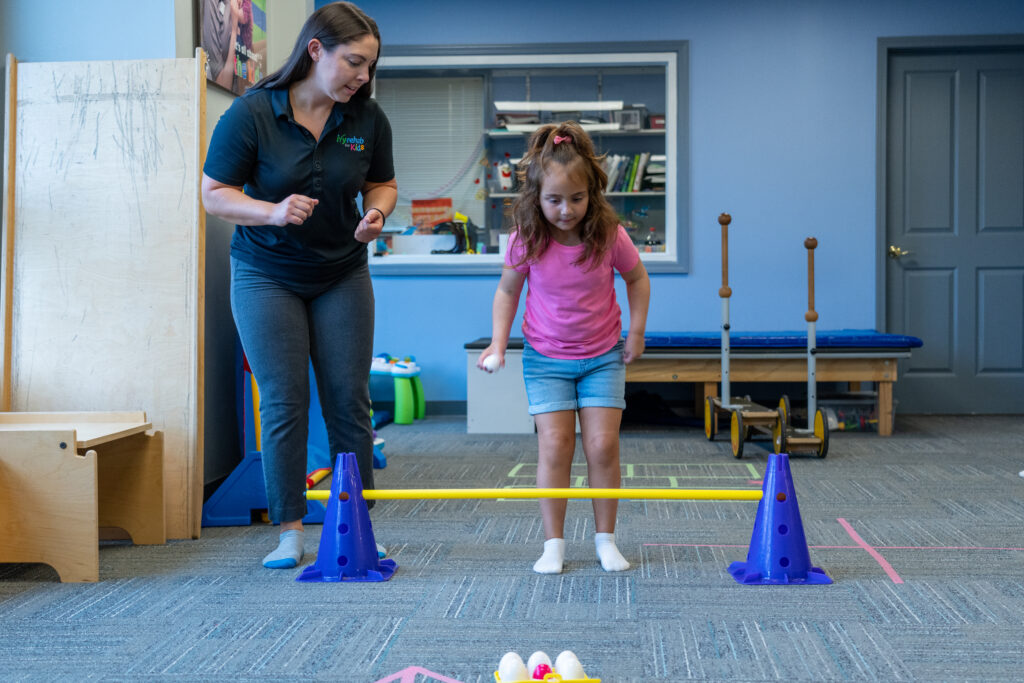
- Motor skill-building through fun, engaging exercises
- Parent coaching and home strategies
- Collaborative progress reviews with your care team
Why Choose Ivy Rehab for Kids?
We believe therapy should feel like play, progress should feel achievable, and families should feel supported every step of the way.
- Collaborative, family-centered approach
- Fun, play-based sessions rooted in child development
- Experienced pediatric therapists across multiple specialties
- Clear communication and support between visits
- Focus on real-life progress at home, school, and in the community
We believe therapy should feel like play, progress should feel possible, and families should feel supported every step of the way.
FAQs
Is a developmental delay the same as a disability?
Not always. Some developmental delays are temporary or mild and improve with therapy, while others may be linked to underlying conditions. An evaluation helps determine the difference and best path forward.
What age should a child be evaluated for developmental delays?
Pediatricians may screen for delays as early as infancy. If your child isn’t meeting expected milestones or you have concerns, early intervention can begin at any age — often starting between 6 months and 3 years.
What happens during a developmental therapy evaluation?
Your child will participate in age-appropriate play and activities that assess movement, communication, and cognitive skills. Our therapists also talk with caregivers to understand daily routines and challenges.

Let’s Get Started
The earlier we support development, the better. If you have questions about your child’s progress – or just want to be sure – we’re here to help.