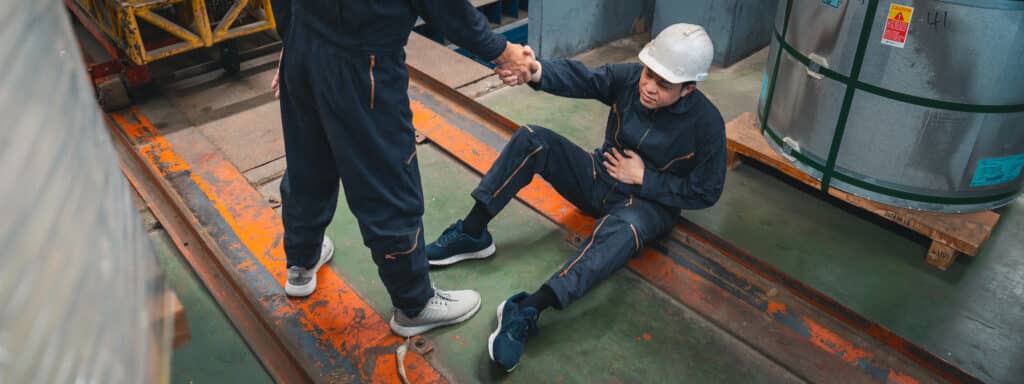

Seasonal hiring allows businesses to meet increased demand, maintain performance, and support customers during peak operational periods. Yet onboarding a large influx of temporary workers – often in physically demanding jobs – can significantly increase the risk of workplace injuries. When employees are unfamiliar with job tasks or environmental stressors, musculoskeletal strain, slips and falls, and equipment-related injuries become more likely.
For employers and providers involved in occupational health and workers’ compensation, a structured seasonal workforce injury prevention strategy is essential to protecting employees, controlling claim costs, and ensuring productive operations.
Why Seasonal Workers Face Higher Injury Risk
Seasonal employees frequently start work quickly, sometimes with limited training and minimal exposure to job tasks. This combination increases physical demands and injury risk across many industries, including:
- Agriculture: repetitive bending, lifting, outdoor exposure, and machinery operation
- Retail & hospitality: slips, trips, stocking-related strains, long shifts, and repetitive motion
- Construction: elevated fall and tool hazards, heavy materials handling
- Warehousing & logistics: high-volume lifting, conveyor work, forklift use, and loading/unloading
Large employers such as UPS, FedEx, Amazon, and the U.S. Postal Service hire thousands of seasonal workers each year, and peak demand correlates with increases in injury frequency if prevention measures are not in place.
The Data Behind Temporary Workforce Injuries
Research confirms what employers experience on the ground: without adequate preparation, seasonal workers face greater injury risk.
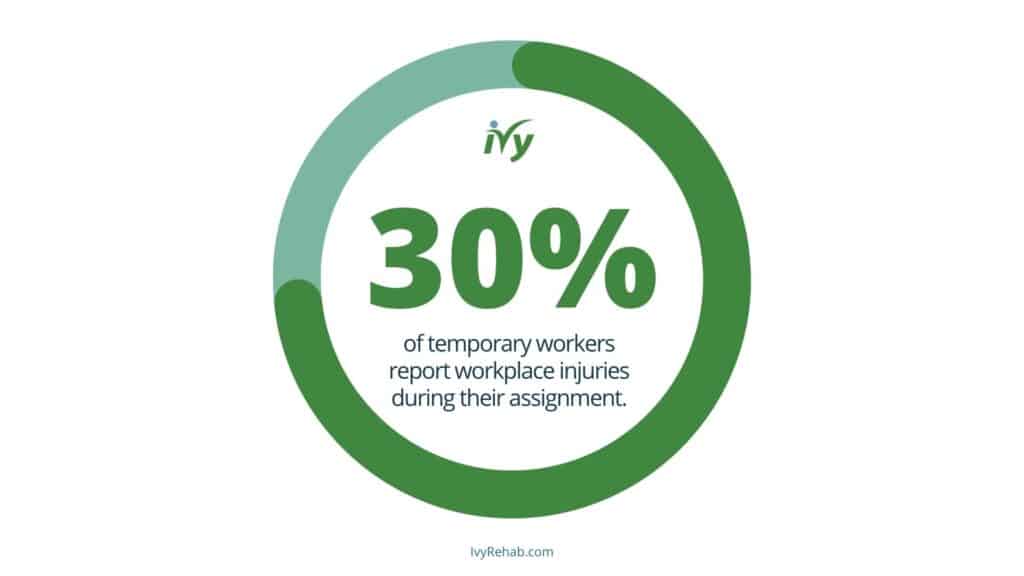
According to the U.S Bureau of Labor Statistics, nearly 30% of temporary workers report workplace injuries during their assignment – significantly higher than permanent staff. In retail environments, over 40% of seasonal employees report at least one injury or near-miss during peak periods.
Contributing factors include:
- Accelerated onboarding / condensed safety training
- Increased physical requirements
- Irregular or extended shifts contributing to fatigue
- Pressure to perform quickly to secure future employment
These injuries can result in higher workers’ compensation costs, lost productivity, and avoidable operational disruption, making early prevention and structured hiring processes essential.
How Prescreen Hiring Reduces Injury Risk
An evidence-based prescreen hiring program includes post-offer employment testing and functional capability assessments to determine whether candidates can safely meet job demands before starting work. This approach is designed to match capability to task to prevent avoidable injury.
A strong prescreen hiring protocol includes:
- Job-specific physical demand testing
- Functional movement screening for lifting mechanics, balance, core stability, and positional tolerance
- Medical history review to identify risk factors and protect employee safety
- Work-simulation tasks aligned with real job demands
- Clear, objective fitness-for-duty criteria
When aligned with validated job demands and properly administered, prescreen hiring reduces injury frequency, limits severity, and supports employee success from day one. Effective prescreen hiring ensures seasonal employees enter the job prepared, protected, and positioned to succeed safely.
Training: Essential to Seasonal Worker Injury Prevention
Prescreening alone is not enough. Comprehensive onboarding and safety training programs ensure seasonal employees understand workplace risks, proper movement patterns and safety expectations.
Core training recommendations include:
- Proper lifting and carrying mechanics
- Pre-shift warm-up and stretching routines for physically demanding roles
- Correct use of equipment and personal protective equipment (PPE)
- Hazard recognition and near-miss reporting
- Injury and fatigue-prevention strategies
- Emergency response and safety communication systems
Even short, structured safety programs significantly reduce the likelihood of acute and repetitive-stress injuries.
For seasonal workers, consistent reinforcement through refresher training and job coaching builds confidence, competence, and safety awareness.
The Role of Physical Therapists in Workforce Safety
Physical therapists with industrial and occupational health expertise play an essential role in workplace musculoskeletal injury prevention, early intervention, and safe return-to-work.
Ivy Rehab’s industrial rehabilitation specialists support employers by:
- Conducting functional job analysis and physical demand profiles
- Delivering post-offer employment testing and ergonomic assessments
- Creating pre-shift warm-up, micro-break, and conditioning routines
- Providing employee education on safe body mechanics and task sequencing
- Addressing early musculoskeletal symptoms to prevent escalation
- Designing modified-duty and return-to-work programs
- Facilitation structured work conditioning and work hardening programs
This clinically driven, employer-focused approach bridges healthcare and industry needs, improving employee safety, preventing lost-time injuries, and supporting optimal recovery. Physical therapists help keep employees working safely and help injured workers recover efficiently and confidently.
Why Injury Prevention Is a Smart Business Strategy
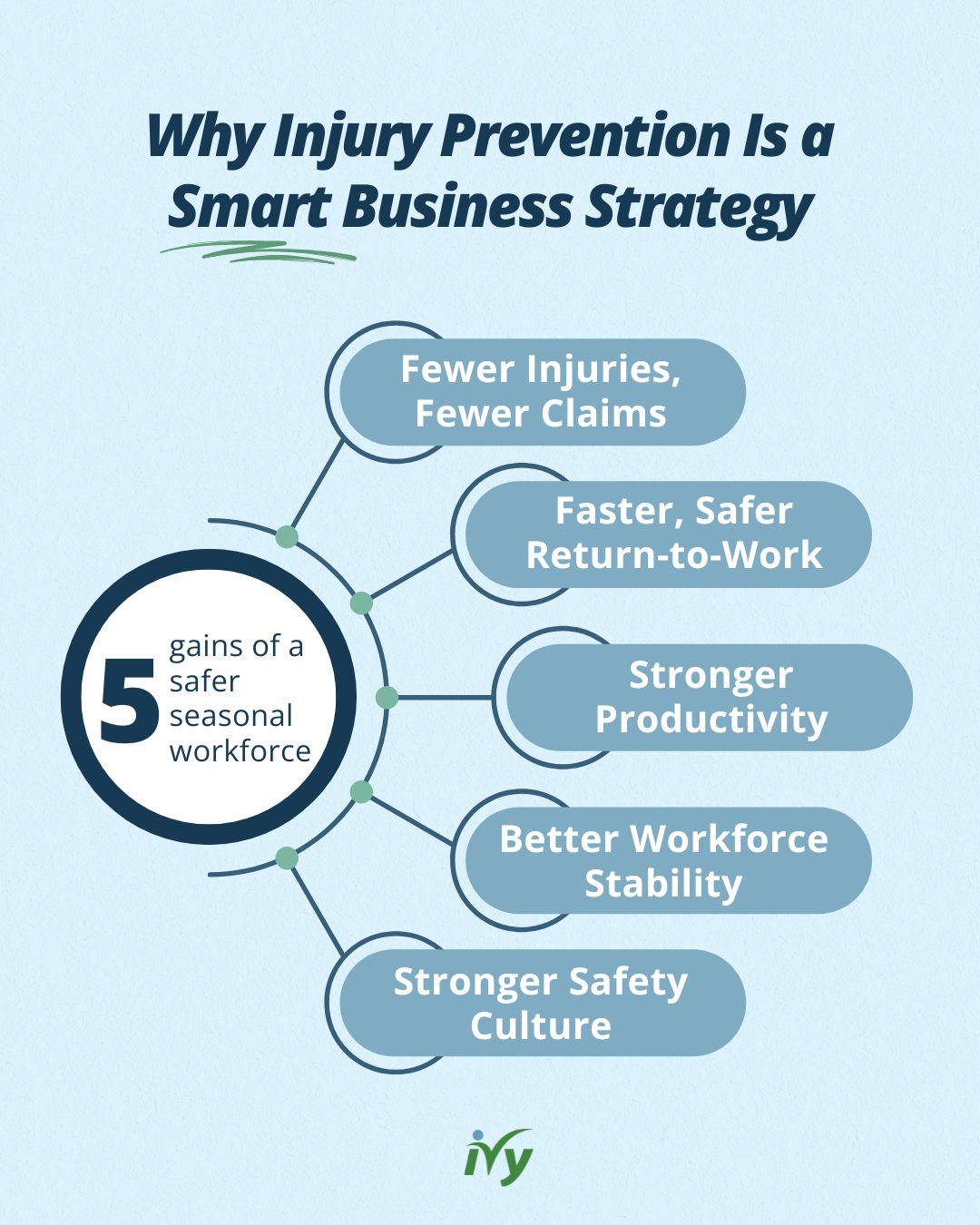
A proactive workforce safety program creates value far beyond compliance. Employers who invest in structured seasonal worker safety programs and ergonomic support gain:
- Lower injury rates and reduced workers’ compensation claims
- Faster return-to-work timelines
- Higher productivity and operational efficiency
- Better retention of seasonal and permanent workers
- Stronger safety culture and employee morale
Injury prevention isn’t a cost center; it’s a performance multiplier and risk-reduction strategy.
Partner with Ivy Rehab to Strengthen Workforce Safety
Ivy Rehab partners with employers nationwide to implement evidence-based season workforce injury prevention strategies and workplace musculoskeletal programs. Our services include:
- Job demand analysis and ergonomic evaluation
- Post-offer employment testing and fit-for-duty screening
- Functional capacity evaluations
- Early symptom intervention programs
- Work conditioning and work hardening
- On-site injury prevention education
- Return-to-work planning and employer communication
Learn how our Workers’ Compensation programs can support your organization and help seasonal employees stay safe, healthy, and ready to perform.
Call today to learn more: 1-877-548-9266 or find an Ivy Rehab clinic near you.
For additional seasonal worker safety guidance, visit OSHA’s Temporary Worker Initiative.

Before you go
Find the right therapy today.
Discover how Ivy Rehab can help you get back to doing what you love.