When surgery is part of a workers’ compensation claim, most people focus on what happens in the operating room and the rehabilitation that follows. That focus makes sense. Surgery often feels like the main event, and the moment everything else hinges on. However, some of the most important recovery work can happen before surgery even begins.
One of the most common missed opportunities in workers’ compensation is treating the time between injury and surgery as a waiting period. The employee is waiting. The employer is waiting. The claim is waiting.
Meanwhile, the body continues to adapt to pain, limited movement, and reduced activity.
Strength may decline. Mobility can become more limited. Confidence in movement often fades. By the time surgery arrives, recovery may already have a few extra hurdles to clear.
That’s where prehab comes in. It helps support shorter claim duration, lower disability exposure, and better overall outcomes.
What Is Prehab Physical Therapy?
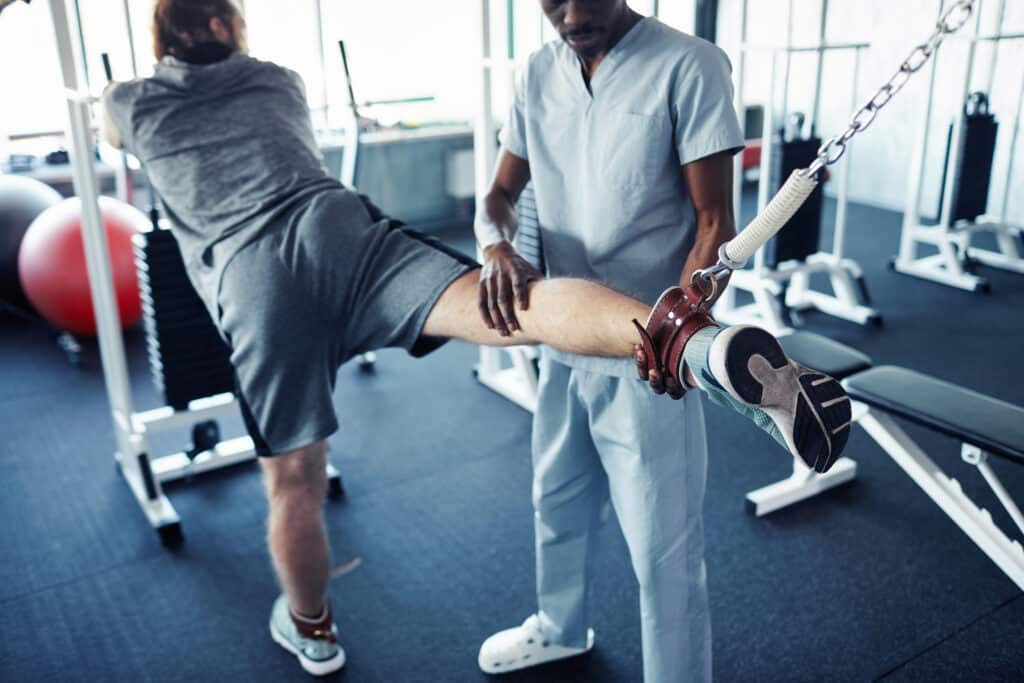
Prehab is a personalized physical therapy program completed before surgery. Think of it this way: if surgery is the main event, prehab is the training camp.
No athlete would show up on game day without preparing first. Yet injured workers are often expected to enter surgery after weeks or months of reduced activity and then immediately begin the demanding work of rehabilitation.
That can be a tough assignment.
In many cases, the body has already lost some of the strength, mobility, and endurance needed to support recovery.
Physical readiness before surgery can influence how well someone moves through recovery afterward.
A typical prehab program may include:
- Strength and conditioning exercises.
- Mobility and flexibility training.
- Pain management strategies.
- Education about post-surgical expectations.
- Functional movement training.
- Work-specific activity preparation.
The goal is straightforward: help employees build and maintain the function they’ll need for recovery. That work matters because the weeks leading up to surgery can influence how rehabilitation unfolds afterward.
Why the Recovery Timeline Starts Before Surgery
In workers’ compensation, the time before surgery can shape everything that follows.
Once surgery is on the calendar, it’s easy for attention to shift to the procedure itself and the rehabilitation that follows. When progress slows before surgery, the road back to function and work can become more complicated.
According to the U.S. Bureau of Labor Statistics, private industry employers reported nearly 2.5 million nonfatal workplace injuries and illnesses in 2024, with more than 888,000 cases resulting in days away from work. For many injured workers, lost workdays also mean reduced activity levels, which can contribute to physical deconditioning.
Pain can lead to inactivity, inactivity can contribute to weakness, and weakness can make recovery more difficult. Over time, that cycle can gain momentum if left unchecked.
During the waiting period before surgery, employees may experience:
- Muscle weakness.
- Joint stiffness.
- Reduced mobility.
- Decreased endurance.
- Fear of movement.
- General deconditioning.
These changes rarely happen overnight. More often, they build gradually in the weeks leading up to surgery and make rehabilitation harder once it begins.
Prehab helps interrupt that cycle by keeping employees engaged in the recovery process and preserving momentum before surgery.
The Case for Prehab
Workers’ compensation stakeholders constantly balance two priorities: helping employees recover and controlling claim costs. In many cases, those goals support each other.
Prehab supports both by helping employees prepare for surgery in ways that can influence recovery, rehabilitation, and return-to-work progress.
The potential advantages include:
Reduced Recovery Time
Recovery isn’t determined only by what happens after surgery. The condition someone brings into surgery can influence how efficiently they move through rehabilitation.
Employees who maintain function before surgery may be better positioned to progress through rehabilitation afterward.
Potential benefits include:
- Shorter rehabilitation timelines.
- Fewer delays in functional progression.
- Earlier return-to-work milestones.
- Reduced disability duration.
A stronger starting point often creates a smoother path forward and can make each stage of recovery easier to navigate.
Fewer Obstacles During Rehabilitation
Recovery can stall for several reasons. In many cases, progress becomes harder when employees go into surgery already dealing with weakness, stiffness, limited mobility, or hesitation around movement.
Prehab helps address barriers that can interfere with rehabilitation, including:
- Severe deconditioning.
- Poor movement mechanics.
- Limited mobility.
- Fear-avoidance behaviors.
By addressing those challenges before surgery, employees may be better equipped to meet the physical demands of rehabilitation and work conditioning and less likely to stall early in the recovery process.
Improved Functional Outcomes
Recovery isn’t measured only by imaging results. Success is reflected in what someone can comfortably and safely do in everyday life. Whether that means performing job duties or getting back to favorite activities, functional ability remains the ultimate goal.
Areas of focus may include:
- Strength.
- Endurance.
- Mobility.
- Stability.
- Functional movement patterns.
These improvements can support post-surgical rehabilitation and everyday function.
Reduced Long-Term Disability Exposure
One of the most overlooked effects of inactivity extends beyond physical conditioning. When people stop moving regularly, they can begin to lose confidence in their ability to move safely and comfortably. The longer employees remain disconnected from normal movement and activity, the harder it can become to re-engage physically and mentally.
Prehab encourages safe, guided activity before surgery, helping employees maintain a sense of progress during a period that can otherwise feel uncertain.
Confidence doesn’t usually appear overnight. It grows through small wins, steady progress, and the realization that recovery is already underway.
Supporting the Entire Workers’ Compensation Team
Prehab benefits the injured worker, but its value extends beyond the individual employee.
When physical therapy begins early, stakeholders gain valuable insight into functional status, recovery barriers, and return-to-work readiness. That information can support better communication, clearer expectations, and more informed decision-making throughout the claim.
That team may include:
- Employers.
- Physicians.
- Nurse case managers.
- Adjusters.
- Insurance carriers.
- Third-party administrators.
- Attorneys.
Early involvement can help establish objective baselines, identify functional limitations, monitor progress, and support a coordinated recovery strategy.

Confidence Is Part of Recovery
A workplace injury affects more than muscles, joints, or tissues. It can also affect a person’s sense of certainty about what comes next.
Employees may worry about their recovery, their job, their finances, and whether they’ll be able to return to the activities that matter most to them. The prospect of surgery can add another layer of uncertainty.
Prehab helps answer many of those questions before the operating room comes into view. Through education and guided movement, individuals gain a better understanding of what to expect and how they can take an active role in their recovery.
Employees may learn:
- What recovery may look like after surgery.
- How rehabilitation typically progresses.
- Strategies for safe movement during daily activities.
- Functional goals connected to return-to-work expectations.
- Ways to stay engaged throughout the recovery process.
Knowledge may not eliminate every concern, but it often provides employees with greater clarity and direction. When confidence and physical readiness improve together, recovery often feels more manageable and easier to approach.
Ready to Support Better Recovery Outcomes?
Successful surgical outcomes rarely depend on a single procedure. Preparation, engagement, education, and consistent support all play a role in what happens next.
Taking proactive steps before surgery can create meaningful advantages throughout the recovery journey. With the right support, employees can move through rehabilitation more effectively and return to work with greater confidence.
If you’re ready to help an injured worker move forward, explore Ivy’s workers’ compensation services or find an Ivy Rehab location near you to connect with a team that understands recovery and return-to-work goals.
References
- U.S. Bureau of Labor Statistics. Employer-Reported Workplace Injuries and Illnesses, 2024. https://www.bls.gov/news.release/pdf/osh.pdf
- Wang L, Lee M, Zhang Z, Moodie J, Cheng D. Does Preoperative Rehabilitation for Patients Planning to Undergo Joint Replacement Surgery Improve Outcomes? A Systematic Review and Meta-Analysis of Randomised Controlled Trials. National Institutes of Health. https://pmc.ncbi.nlm.nih.gov/articles/PMC6059529/

Before you go
Find the right therapy today.
Discover how Ivy Rehab can help you get back to doing what you love.