Dizziness after a concussion can make everyday movements unpredictable. You might feel lightheaded when you stand, off-balance in busy places, or dizzy when you turn your head.
A concussion is a mild traumatic brain injury (mTBI) that can affect how the brain, inner ear, eyes, neck, and autonomic nervous system work together. The Centers for Disease Control and Prevention (CDC) lists dizziness or balance problems, vision problems, brain fog, and difficulty concentrating as common post-concussion symptoms.
Dizziness during the acute stage of concussion has been reported in up to 81% of cases, according to a systematic review in the International Journal of Sports Physical Therapy.
Post-concussion dizziness can often improve with the right care. Vestibular rehabilitation can help identify the type of dizziness and retrain balance, eye movements, and head movements.
Key Takeaways
- Dizziness after a concussion can feel like spinning, lightheadedness, unsteadiness, motion sensitivity, or a mix of symptoms.
- Common causes include benign paroxysmal positional vertigo (BPPV), vestibular dysfunction, oculomotor issues, neck injuries, and autonomic changes that affect blood pressure, heart rate, or blood flow.
- Vestibular rehabilitation can help treat post-concussion dizziness through exercises for balance, gaze stabilization, head movement, and daily activities.
- Dizziness that lasts longer than two to four weeks, worsens, or limits school, work, driving, or sports should be evaluated by a healthcare provider.
Quick Navigation
- What Causes Dizziness After a Concussion?
- What Does Post-Concussion Dizziness Feel Like?
- Long Does Dizziness After a Concussion Last?
- What Is Vestibular Rehabilitation?
- When to See a Physical Therapist

What Causes Dizziness After a Concussion?
Dizziness after a concussion can come from more than one system. These are common causes.
Benign Paroxysmal Positional Vertigo (BPPV)
A head injury can move tiny calcium crystals in the inner ear. When they drift into the wrong canal, head movement can send the wrong signal to the brain.
BPPV often causes brief spinning while turning in bed, looking up, bending down, or changing positions. A physical therapist may use canalith repositioning maneuvers, such as the Epley maneuver, to help move the crystals back into place.
Vestibular Dysfunction
A concussion can disrupt the vestibular system and cause unsteadiness, nausea, motion sensitivity, or dizziness with head movement. A physical therapist can provide specific exercises to help the brain adapt to changes in vestibular input and improve balance and tolerance for head movement.
Vision, Neck, and Autonomic Changes
The visual system and vestibular system need to work together. After a concussion, oculomotor problems can make reading, screens, busy visual spaces, and quick eye movements feel harder.
Neck injuries can also contribute to dizziness and headaches. Some people feel lightheaded because autonomic nervous system changes affect blood pressure, heart rate, or blood flow during standing or exercise.
What Does Post-Concussion Dizziness Feel Like?
Dizziness isn’t one single feeling. Common patterns include:
- Spinning or vertigo: The room feels like it’s moving or rotating, often when rolling over, looking up, or turning the head.
- Lightheadedness: You feel faint, woozy, or unsteady when standing up or changing positions.
- Unsteadiness: You feel off balance while standing, walking, or turning, even without spinning.
- Motion or vision-related dizziness: Car rides, scrolling, reading, screens, eye movements, or quick head turns make symptoms worse.
How Long Does Dizziness After a Concussion Last?
Many people start to improve within the first few weeks. The CDC notes that most children with a concussion feel better within two to four weeks, but symptoms can last longer for some children and adolescents.
If dizziness lasts longer, it may be part of post-concussion syndrome or another treatable issue, such as BPPV, vestibular dysfunction, vision problems, neck involvement, or autonomic symptoms.
BPPV-related dizziness can sometimes improve quickly once it’s correctly identified. More complex vestibular and oculomotor problems often need a progressive rehabilitation plan that builds tolerance safely.
What Is Vestibular Rehabilitation?
Vestibular rehabilitation is a type of physical therapy that helps the brain, inner ear, eyes, and body work together again. ChoosePT notes that vestibular physical therapy may help reduce dizziness and balance problems after a concussion.
A physical therapist trained in vestibular therapy may check balance, eye movements, neck movement, walking, head movement tolerance, and symptom response during activity.
Treatment may include:
- Canalith repositioning for BPPV.
- Gaze stabilization exercises to help the eyes stay focused while the head moves.
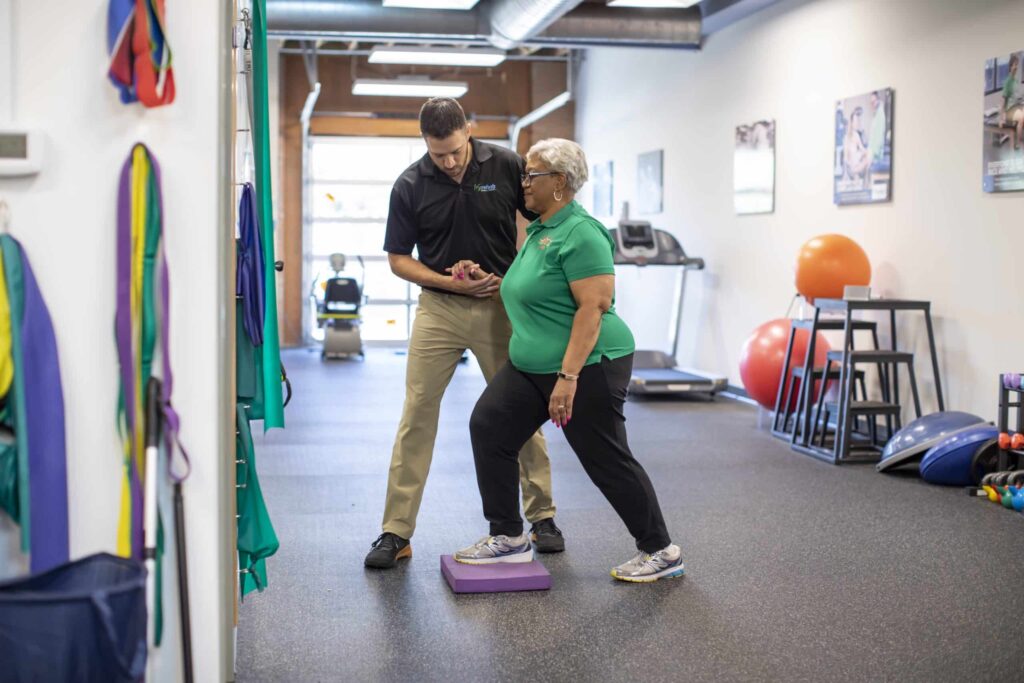
- Balance and coordination training for unsteadiness and fall risk.
- Habituation exercises that gradually reduce dizziness with specific movements.
- Neck treatment when neck pain, stiffness, or headaches contribute to symptoms.
- A gradual return-to-activity plan for school, work, sports, and daily activities.
The goal is to challenge the vestibular system at the right level so symptoms calm down.
When to See a Physical Therapist
Consider a vestibular physical therapy evaluation if:
- Dizziness after a concussion.
- You feel spinning or vertigo when moving your head.
- Dizziness limits work, school, driving, sports, or daily activities.
- You’ve fallen or have balance problems, unsteadiness, or motion sensitivity.
- Symptoms come with neck pain, headaches, vision problems, brain fog, or difficulty concentrating.
For pediatric and adolescent patients, a healthcare provider can also guide return-to-school and return-to-sports plans. Some people may need a referral to another healthcare professional.
Seek medical care right away after a head injury if symptoms include a worsening headache, repeated vomiting, seizures, slurred speech, weakness, numbness, worsening confusion, one pupil larger than the other, double vision, or trouble waking up.
A referral is not required to start treatment due to Direct Access laws. If symptoms are changing or you’re unsure what care you need, check with a healthcare provider first.
FAQs
Can Physical Therapy Help with Post-Concussion Dizziness?
Yes. Vestibular rehabilitation can help many people reduce dizziness, improve balance, steady eye movements, and return to daily activities more comfortably.
How Long Does Post-Concussion Dizziness Take to Go Away?
Many people improve within a few weeks, but recovery varies. Dizziness that lasts longer than two to four weeks, limits daily life, or keeps coming back should be evaluated.
What Are Three Delayed Symptoms of a Concussion?
Delayed post-concussion symptoms can include persistent dizziness, sleep changes, difficulty concentrating, brain fog, headaches, or mood changes. Symptoms may show up hours or days after a head injury.
Find a Vestibular Physical Therapist Near You
Post-concussion dizziness can be frustrating, but it’s not something you just have to wait out. The right evaluation can help show whether symptoms are coming from the inner ear, vestibular system, neck, vision, or another source.
Ivy Rehab offers vestibular rehabilitation at locations across the country. Find an Ivy Rehab location near you to schedule an evaluation and get a plan that supports steadier movement, safer activity, and a better quality of life.
References
- Centers for Disease Control and Prevention. “Signs and Symptoms of Concussion.” (2025). https://www.cdc.gov/heads-up/signs-symptoms/index.html
- Centers for Disease Control and Prevention. “What to Do After a Concussion.” (2025). https://www.cdc.gov/heads-up/guidelines/recovery-from-concussion.html
- Traumatic Brain Injury Center of Excellence. “Managing Dizziness Following Concussion/Mild Traumatic Brain Injury.” (2026). https://www.health.mil/Reference-Center/Fact-Sheets/2026/02/04/Head-Injury-and-Dizziness-Fact-Sheet
- American Physical Therapy Association. “Physical Therapy Guide to Concussion.” (2024). https://www.choosept.com/guide/physical-therapy-guide-concussion
- Babula G, et al. “Vestibular Rehabilitation as an Early Intervention in Athletes Who Are Post-Concussion: A Systematic Review.” (2023). https://pubmed.ncbi.nlm.nih.gov/37425112/

Before you go
Find the right therapy today.
Discover how Ivy Rehab can help you get back to doing what you love.