

Chronic pelvic pain affects millions of adults, often disrupting sleep, work, exercise, and relationships. For many, it develops slowly and lingers for months or years before an accurate diagnosis is made. Understanding chronic pelvic pain causes is the first step toward lasting relief.
While medical conditions can play a role, much of this pain is driven by how the muscles, nerves, and joints of the pelvis function together. That’s where physical therapy for pelvic pain can make a difference.
Ivy Rehab’s rehabilitation physical therapy and pelvic health specialists take a whole-person approach to uncover what’s contributing to discomfort and create a plan to restore mobility, balance, and confidence.
This guide explains common chronic pelvic pain causes and how pelvic health physical therapy helps relieve symptoms.
What Is Chronic Pelvic Pain?
Chronic pelvic pain refers to pain or pressure felt in the lower abdomen, hips, or pelvic area that lasts three months or longer. It can come and go or be constant, mild, or severe. Because the pelvis houses muscles, joints, nerves, and multiple organ systems, even a small problem in one area can trigger widespread pain or tightness.
For some, the pain began after surgery, childbirth, or injury. For others, it developed without a clear reason. Understanding what’s driving your pain is key to effective pelvic floor dysfunction treatment.
Common Causes of Chronic Pelvic Pain
Pelvic pain rarely has a single cause. It often stems from overlapping physical and physiological factors that influence each other over time.
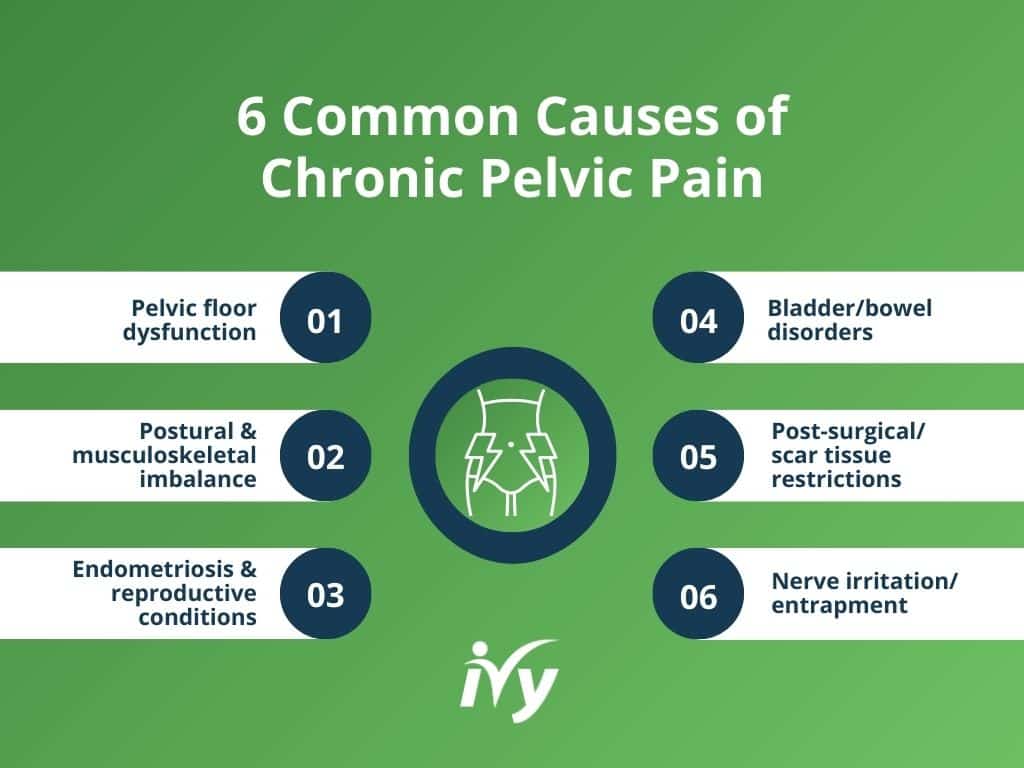
1. Pelvic Floor Muscle Dysfunction
The pelvic floor muscles support organs and control bladder and bowel function. If these muscles become tight, weak, or uncoordinated, they can cause pain, pressure, or spasms. Many people develop this from stress, injury, or guarding against pain.
This is one of the most common causes of pelvic pain seen in pelvic health physical therapy.
2. Postural or Musculoskeletal Imbalances
Issues in the hips, spine, or abdominal muscles can refer pain to the pelvis. Poor posture, repetitive strain, or movement avoidance often lead to muscle imbalance and joint stiffness. Over time, these changes place excess load on pelvic structures.
Learn how pelvic health physical therapy supports core strength and posture to reduce pelvic strain.
3. Endometriosis and Other Reproductive Conditions
In people with ovaries and/or a uterus, inflammation from endometriosis, fibroids, or pelvic inflammatory disease can cause significant pelvic and lower-back pain. Physical therapy complements medical management by easing muscle tension and improving circulation around affected tissue.
4. Bladder or Bowel Disorders
Chronic bladder pain (interstitial cystitis) and digestive conditions such as irritable bowel syndrome (IBS) or constipation can irritate nearby pelvic nerves. Repeated straining or inflammation often leads to pelvic floor dysfunction.
Learn about physical therapy for bladder health and related pelvic floor conditions.
5. Post-Surgical or Scar Tissue Restrictions
Abdominal or pelvic surgeries—including C-sections or hysterectomies—can leave scar tissue that limits movement of muscles and fascia. Restricted tissue can pull on surrounding structures, creating lingering pain or tightness.
6. Nerve Irritation or Entrapment
Nerves in the pelvis, such as the pudendal or obturator nerve, may become irritated or compressed. This can cause burning, tingling, or sharp pain with sitting, movement, or intimacy.
Our men’s pelvic health therapy program helps men experiencing chronic pelvic pain or urinary symptoms regain function and confidence.
How Physical Therapy Helps Relieve Pelvic Pain
A physical therapist trained in pelvic health can assess how muscles, posture, and movement patterns contribute to symptoms. Treatment focuses on retraining the body to move efficiently, relax where needed, and rebuild strength safely through evidence-based pelvic floor dysfunction treatment.
Pelvic Floor Muscle Training
Therapists teach patients how to recognize when pelvic muscles are overactive or underactive. Through relaxation, coordination, and gentle strengthening, the goal is to restore normal support and control, not simply to “do Kegels.” Biofeedback tools may also be used to help patients see and feel muscle activity in real time.
Manual Therapy Techniques
Hands-on techniques help release trigger points, stretch tight fascia, and mobilize scar tissue or stiff joints. This can reduce pressure, improve circulation, and decrease nerve irritation in the pelvic region.
Posture and Core Alignment Work
Pelvic pain often improves when the hips, spine, and abdomen move in sync. Physical therapists guide patients through exercises that retrain posture and body mechanics, lessening strain on the pelvis during daily activities.
Education and Lifestyle Strategies
Physical therapy also addresses everyday habits that may worsen symptoms, such as poor sitting posture, holding the breath during exertion, or delaying bathroom breaks. Therapists often provide guidance on:
- Bladder and bowel habits
- Gentle stretching and movement routines
- Stress management and breathing techniques
- Sleep hygiene and nutrition for tissue recovery
Benefits of Physical Therapy for Chronic Pelvic Pain
Physical therapy offers sustainable relief by targeting the underlying contributors to pain rather than masking symptoms.
Key benefits include:
- Decreased muscle tension and tenderness
- Improved flexibility and posture
- Better bladder and bowel control
- Enhanced confidence with movement and intimacy
- Greater body awareness and relaxation
Because chronic pain affects both the body and mind, physical therapy for pelvic pain often leads to improvements in mood, energy, and overall well-being.

Personalized Therapy for Lasting Relief
Experience tailored physical therapy programs designed to alleviate pain and restore function.
Why Choose Ivy Rehab for Pelvic Pain Relief
Ivy Rehab’s certified pelvic health therapists understand that pelvic pain is personal and complex. Each session is one-on-one, in a private setting, and customized to your needs—whether you’re managing postpartum changes, recovering from surgery, or seeking relief from long-term discomfort.
Our clinicians collaborate closely with referring physicians, gynecologists, and urologists to provide comprehensive, evidence-based care. Many patients experience meaningful improvement within just a few weeks of consistent treatment.
Your Path to Lasting Pelvic Pain Relief
Chronic pelvic pain can arise from many sources—muscle tension, inflammation, nerve irritation, or postural imbalance—but it doesn’t have to define your daily life. With skilled guidance and individualized care, pelvic floor dysfunction treatment through physical therapy for pelvic pain helps restore comfort and confidence. Find relief and rediscover movement with Ivy Rehab’s expert pelvic health team. Schedule a free screening today and start your path toward lasting relief.
References
- Mayo Clinic. “Chronic Pelvic Pain – Symptoms and Causes.” (2024).
- National Institutes of Health (NIH). “Pelvic Floor Disorders Overview.”

Before you go
Find the right therapy today.
Discover how Ivy Rehab can help you get back to doing what you love.