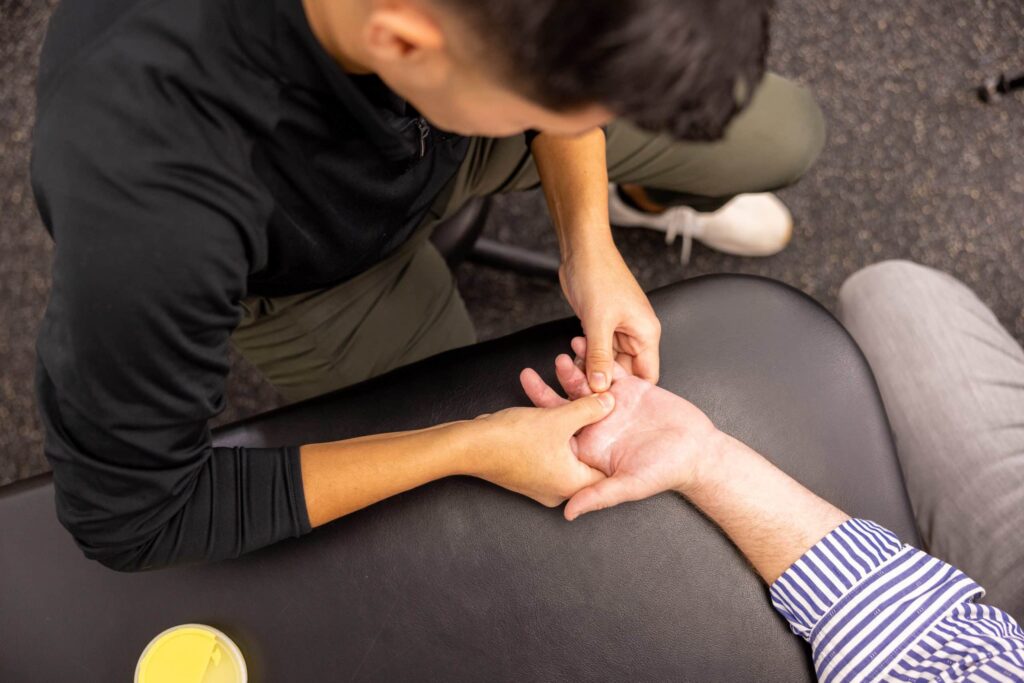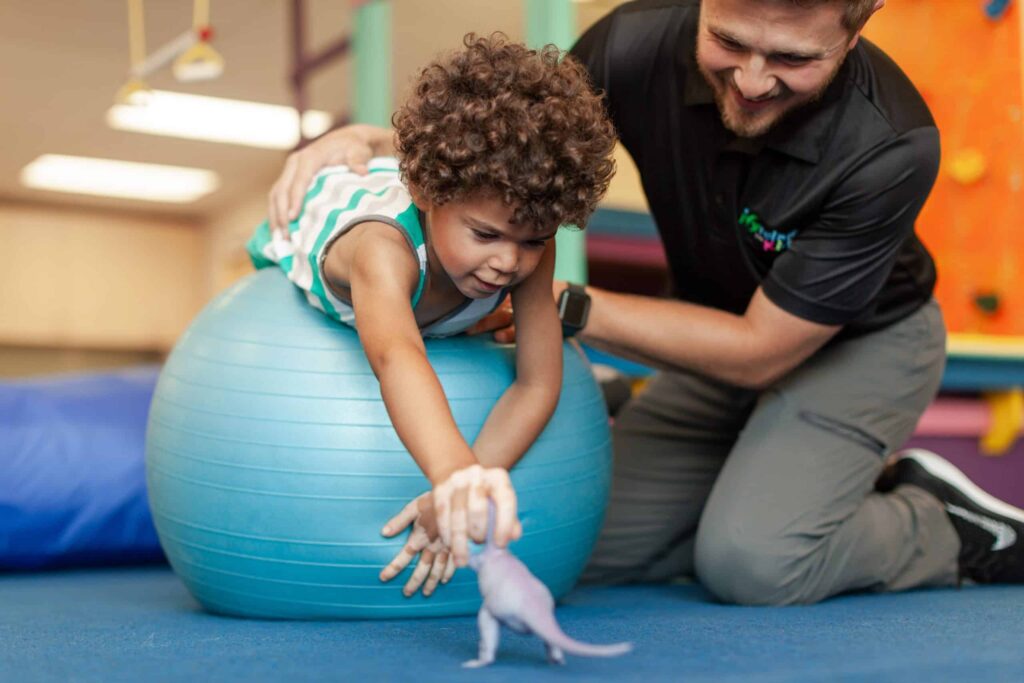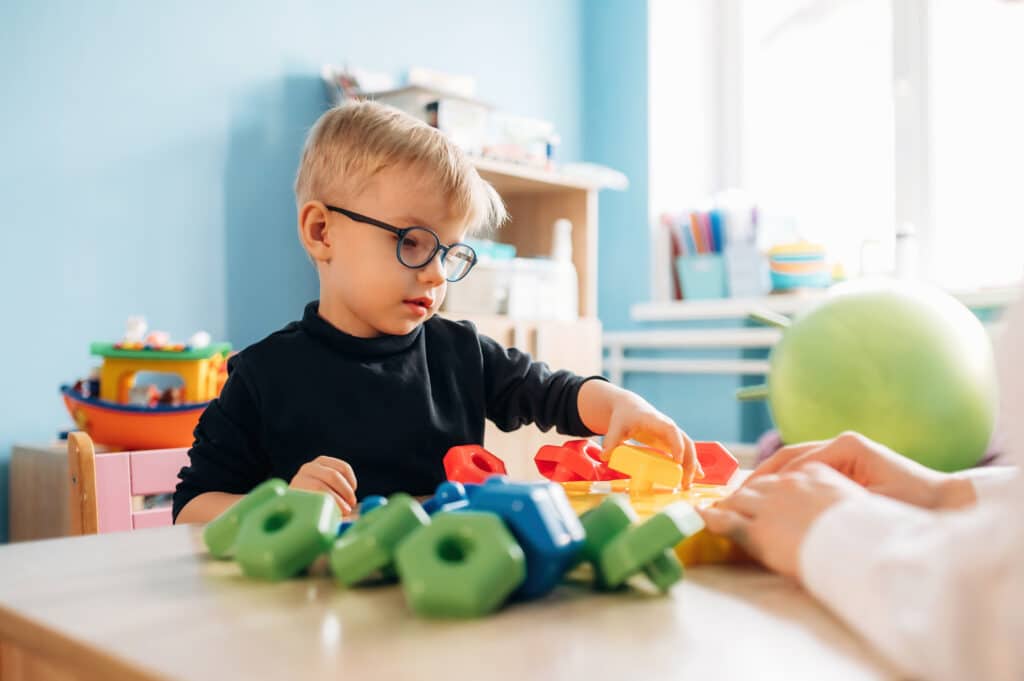
When most people hear “exercise,” they think of treadmills, weights, and reps. Occupational therapy exercises for children are different. They might look like a game, a chore, a school task, or a fun challenge.
Pediatric occupational therapy helps children build skills for daily life, such as getting dressed, brushing their teeth, and going to school. The goal is to make everyday activities feel more manageable for the child and caregiver.
That support matters for many families. The Centers for Disease Control and Prevention estimates that about one in six children ages 3 through 17 in the United States has one or more developmental disabilities. A pediatric occupational therapist can create a personalized treatment plan based on your child’s sensory, motor, and self-care needs.
Key Takeaways
- Occupational therapy for kids can support fine motor skills, sensory processing, self-care, school tasks, social skills, and daily activities.
- Pediatric occupational therapy exercises often look like play, but each activity has a specific purpose.
- Simple home activities, such as animal walks, pillow paths, chalk games, and copycat games, can support coordination, balance, visual motor skills, and self-care skills.
- A pediatric occupational therapist can help decide which activities fit your child’s age, goals, safety needs, and daily routines.
Quick Navigation
- What Is Pediatric Occupational Therapy Used For?
- Pediatric Occupational Therapy Exercises
- Occupational Therapy Exercises to Try at Home
- Tips for Making Exercises Work at Home
What Is Pediatric Occupational Therapy Used For?
For kids, an “occupation” is anything they need or want to do in daily life. That can include eating, playing, learning, joining family routines, or taking part in school activities.
Pediatric occupational therapy helps children build the skills to do those everyday tasks. A child may need support with fine motor skills, sensory processing, self-care, motor planning, social skills, visual motor skills, or daily routines.
Some children have been diagnosed with autism spectrum disorder, cerebral palsy, Down syndrome, attention-deficit/hyperactivity disorder (ADHD), or developmental disabilities. Others just need help with daily activities that feel harder than expected for their age.
Consider asking your pediatrician, teacher, or healthcare provider about an occupational therapy evaluation if your child needs extra support with:
- Dressing, feeding, brushing teeth, toileting, or other self-care tasks.
- Handwriting, cutting, coloring, pencil grip, or using small objects.
- Strong reactions to clothing textures, food textures, sounds, touch, or busy places.
- Attention, transitions, self-regulation, or following multi-step routines.
- Coordination, playground skills, balance, or everyday independence.
An evaluation can help you understand what feels hard, why it may feel hard, and what support your child needs.

Pediatric Occupational Therapy Exercises
Pediatric occupational therapy exercises are usually built into play, movement, and daily activities. They’re not random games. Each activity supports a specific skill, such as strength, coordination, fine motor control, sensory processing, attention, visual motor skills, or self-care.
An occupational therapist may use crawling, jumping, tossing, drawing, climbing, carrying objects, or pretend play to help a child practice real-life skills. These activities can support the same movements a child needs for writing, dressing, eating, playing, and moving through the school day.
Occupational therapy and physical therapy can overlap, especially when a child needs help with movement or coordination. In general, occupational therapists focus on daily tasks and participation, while physical therapists focus on mobility, strength, balance, and larger movement patterns.
Occupational Therapy Exercises to Try at Home
Home activities should be simple, safe, and adjustable. You don’t need a sensory gym. A living room, hallway, yard, or sidewalk can work with supervision. Here are four activities to try:
Couch Cushions and Pillows
Spread pillows on the floor and pretend the ground is hot lava. Your child can step, crawl, or balance from one safe spot to the next. You can also make a pillow tunnel for army crawling, which helps build shoulder, arm, and core strength.

Hula Hoops or Sidewalk Chalk
Make a hopscotch pattern, draw circles to jump into, or create a path with arrows. To change the challenge, place circles farther apart, add a “freeze” space, or ask your child to carry a small toy.
Animal Walks
Animal walks can build upper body strength, coordination, motor planning, and body awareness. Try bear walks, crab walks, snake crawls, frog jumps, or short cheetah runs. Skip any movement that causes pain, fear, or feels unsafe.
Mime Me
Copycat games can support motor planning, social interaction, attention, and body awareness. Take turns being the leader, then copy arm raises, one-foot balance, claps, freeze poses, slow-motion movements, or silly faces.
Tips for Making Exercise Work at Home
The best occupational therapy exercises are the ones your child can practice without feeling defeated. Short, positive sessions often work better than long sessions that end in frustration.
To make home practice easier, try to:
- Start with 5 to 10 minutes.
- Give one direction at a time.
- Let your child help choose the activity.
- Make the task easier before it becomes frustrating.
- Stop if your child has pain, dizziness, or unsafe movement.
- Ask your occupational therapist how to modify activities.
A caregiver’s observations can be really helpful. Tell your child’s therapist what feels easier at home and what daily routines still need support.
FAQs
Can Occupational Therapy Help Children With Sensory Processing Issues?
Yes. Occupational therapy may help children with sensory processing needs. Therapy can support body awareness, self-regulation, everyday sensory input, and participation at home and school.
How Do I Know if My Child Needs Occupational Therapy?
Consider asking about occupational therapy if daily tasks feel harder than expected for your child’s age. Signs may include trouble with dressing, feeding, handwriting, transitions, sensory reactions, coordination, or school routines.
What Are Examples of Pediatric Occupational Therapy Activities?
Examples include obstacle courses, animal walks, bead stringing, scissor practice, sensory bins, buttoning games, vertical drawing, and dressing or brushing-teeth practice. The right activities depend on the child’s goals and safety needs.
What Does Occupational Therapy Do for Kids?
Occupational therapy programs help children build skills for everyday life, including fine motor skills, sensory processing, self-care, feeding, handwriting, play, and routines.
Help Your Child Build Everyday Skills
Occupational therapy exercises for children should feel useful, realistic, and connected to daily life. Play can be powerful when it helps a child build confidence with movement, self-care, school, and everyday activities.
If you’re wondering whether occupational therapy for kids could help your child, an evaluation can give you clearer answers. Find an Ivy Rehab for Kids location near you to connect with a pediatric occupational therapist.
Key Terms
Motor planning: How the brain plans, organizes, and carries out a movement.
Occupational therapy: Healthcare that helps people take part in daily activities that matter to them.
Fine motor skills: Small hand and finger movements used for tasks, such as writing, cutting, and buttoning.
Gross motor skills: Larger movements that use the arms, legs, and core, such as crawling, jumping, climbing, and balancing.
Sensory processing: How the brain responds to touch, sound, movement, body position, and other sensory input.
References
- Developmental Disability Basics. Centers for Disease Control and Prevention. Accessed March 2026. https://www.cdc.gov/child-development/about/developmental-disability-basics.html
- What Is Occupational Therapy? American Occupational Therapy Association. Accessed March 2026. https://www.aota.org/about/what-is-ot
- Occupations and Everyday Activities. American Occupational Therapy Association. Accessed March 2026. https://www.aota.org/about/what-is-ot/occupations-and-everyday-activities

Before you go
Find the right therapy today.
Discover how Ivy Rehab can help you get back to doing what you love.