Tight hamstrings are common, but they’re not always just a flexibility issue. If stretching were the full answer, you’d have fixed this already.
In many cases, hamstring tightness is linked to muscle overuse, movement habits, nerve sensitivity, or nearby restrictions. In other words, your hamstrings might be doing extra credit work they never signed up for.
In fact, hamstring injuries account for about 10% of all injuries in field-based team sports, highlighting just how common and impactful these issues can be.
Physical therapy helps uncover the real cause and builds a plan to improve mobility without relying solely on stretching.
What Causes Tight Hamstrings?
Tight hamstrings can come from more than one source, which is why a quick stretch often feels like a temporary win.
Your hamstrings respond to how your body moves and loads. When other areas fall behind, the hamstrings tend to step in and carry more of the workload.
Why Are My Hamstrings So Tight?
If you keep asking why your hamstrings are so tight, the answer often isn’t length. It’s function.
Chronic tightness is usually your body’s way of compensating, protecting, or adapting to repeated stress. The muscle can feel tight even if it’s not actually shortened, which is frustrating, but also useful information.
Common Causes of Tight Hamstrings
Hamstring tightness may be related to muscle issues, nerve irritation, movement mechanics, or recovery patterns:
Muscle Overuse and Compensation
Weak glutes or limited hip and pelvis control can shift more of the workload to the hamstrings.
When that happens, the hamstrings stay active longer and work harder than they should. Over time, that creates a constant “always on” feeling.
Neural Tension or Sensitivity
Sometimes, tight hamstrings are influenced by the nervous system, not just the muscle itself.
If symptoms change with sitting, with changes in lower back or spine position, or with travel below the knee, nerve sensitivity may be part of the story.
Recovery and Training Load
Repeated soreness, high training volume, or poor sleep can increase baseline muscle tension.
If your hamstrings never fully recover, they may keep feeling tight no matter how often you stretch your hamstrings.
Nearby Joint or Tissue Problems
Issues in the hips, low back, or surrounding tissues can create the sensation of tight hamstrings.
Examples include:
- Hip stiffness.
- Lumbar spine referral and low back pain.
- Previous muscle strain or hamstring tear.
- Tendon irritation.
These factors change how the hamstrings function, not just how they feel. Addressing nearby areas often makes a noticeable difference.
Can Tight Hamstrings Cause Knee Pain?
Yes, tight hamstrings can influence how the knee moves and handles load.
When the hamstrings stay overly tense, they can change joint mechanics during walking, running, squatting, and climbing stairs. Over time, that added stress can contribute to discomfort.
Many people with knee pain are also dealing with tight hamstrings that are quietly affecting their movement.
How to Loosen Tight Hamstrings
Learning how to loosen tight hamstrings starts with understanding what’s actually driving the tightness. There’s no one-size-fits-all fix, and that’s not a bad thing.
Here’s how to start addressing the root causes, step by step:
Mobility and Gentle Movement
Some people benefit from controlled, low-pressure movement:
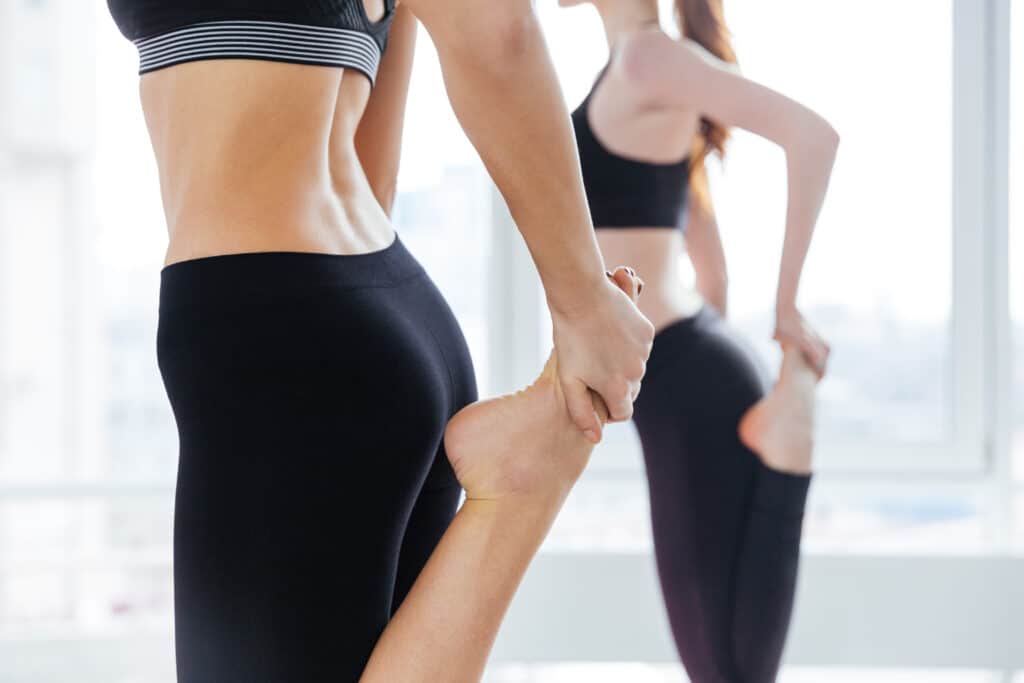
- Dynamic stretches and hamstring mobility drills.
- Gentle range-of-motion exercises.
- Light movement before activity.
These help reduce stiffness without forcing the muscle. You should feel gradual improvement, not a sharp pull. Think “ease into it,” not “fight through it.”
Strength and Movement Retraining
Improving how your body shares the workload can reduce hamstring overuse:
- Glute strengthening.
- Hip control exercises.
- Posterior chain training.
As strength improves, the hamstrings don’t have to compensate as much. This often leads to less tightness and better overall movement.
Load Management and Recovery
If tightness keeps coming back, recovery may be the missing piece:
- Adjust training volume or intensity.
- Improve sleep and hydration.
- Allow time between harder sessions.
Reducing overload helps reset muscle tone. When recovery improves, stretching tends to work better, if it’s needed at all.
When Stretching Helps and When It Doesn’t
Stretching can help when true muscle stiffness is present, but it’s not always the right tool.
If tight hamstrings are driven by:
- Nerve sensitivity.
- Compensation patterns.
- Overuse or fatigue.
Then aggressive stretching may not help and can sometimes make things worse.
The goal isn’t to stretch more. It’s to match the right strategy to the real cause.
How Physical Therapy Helps
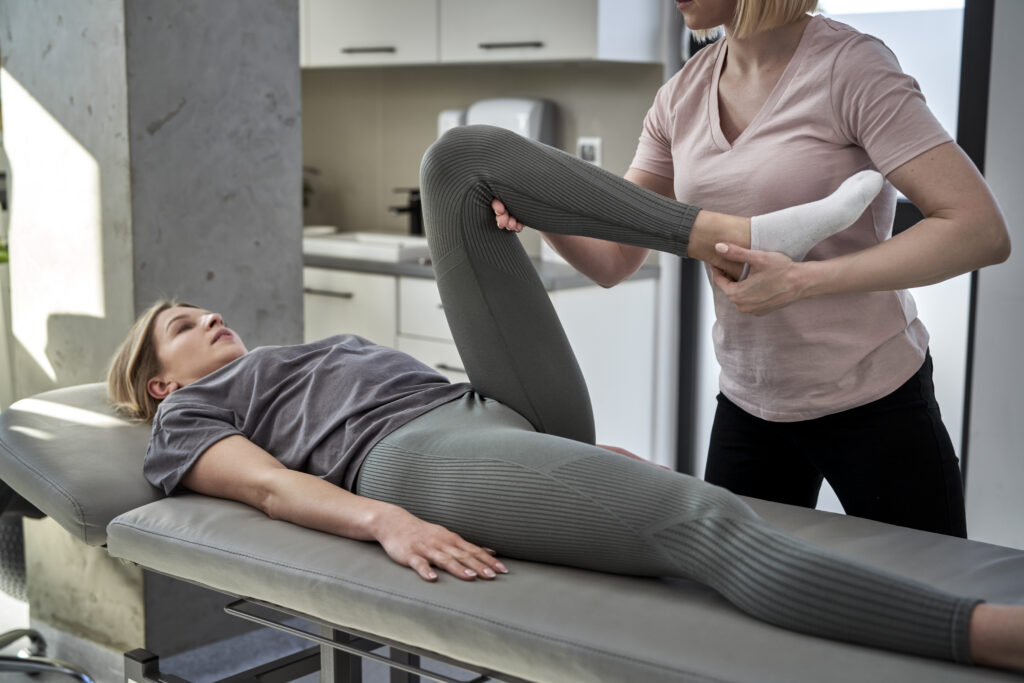
Physical therapy looks beyond the hamstrings to understand the full movement picture.
Here’s what that deeper look typically involves:
Assessment and Diagnosis
A physical therapist evaluates:
- Flexibility and range of motion.
- Strength and muscle activation.
- Neural tension and sciatic nerve sensitivity.
- Hip and spine mobility.
- Movement patterns.
This helps determine whether the issue is local or coming from somewhere else.
Personalized Treatment Plan
Treatment is built around the root cause, not just the symptom.
It may include:
- Targeted exercise and strengthening.
- Mobility and manual therapy.
- Movement retraining.
- Activity modification.
This approach leads to longer-lasting results, not just short-term relief.
Your Journey to Recovery Starts Here
No prescription needed—start your recovery today.
Why Choose Ivy Rehab for Tight Hamstrings
Ivy Rehab Therapy provides personalized, non-surgical care focused on improving your body’s movement.
Care includes:
- One-on-one evaluation.
- Customized treatment plans.
- Focus on long-term mobility and function.
The goal is simple: help you move better, feel better, and keep doing what matters to you.
You Can Move Freely Again
Tight hamstrings aren’t always about flexibility. More often, they reflect how your body moves, loads, and recovers.
With the right plan, you can identify the real cause, improve mobility, and reduce strain. Physical therapy helps you move with less frustration and more confidence, which is a win worth keeping.
Ready to feel that difference for yourself? Find an Ivy Rehab Therapy location near you and get a plan that helps you move better, starting now.
References
- Maniar, N., et al. (2022). Incidence and prevalence of hamstring injuries in field-based team sports: a systematic review and meta-analysis. British Journal of Sports Medicine. https://doi.org/10.1136/bjsports-2021-104936
- American Council on Exercise (ACE). “The Hamstrings Blueprint: Evidence-Based Exercises for Better Function.” Accessed 2026. https://www.acefitness.org/resources/pros/expert-articles/9015/the-hamstrings-blueprint-evidence-based-exercises-for-better-function/
- Mayo Clinic. “Hamstring injury: Symptoms and causes.” Accessed 2026. https://www.mayoclinic.org/diseases-conditions/hamstring-injury/symptoms-causes/syc-20372985

Before you go
Find the right therapy today.
Discover how Ivy Rehab can help you get back to doing what you love.